Complete guide
Cornbread Recipe: The Complete Guide
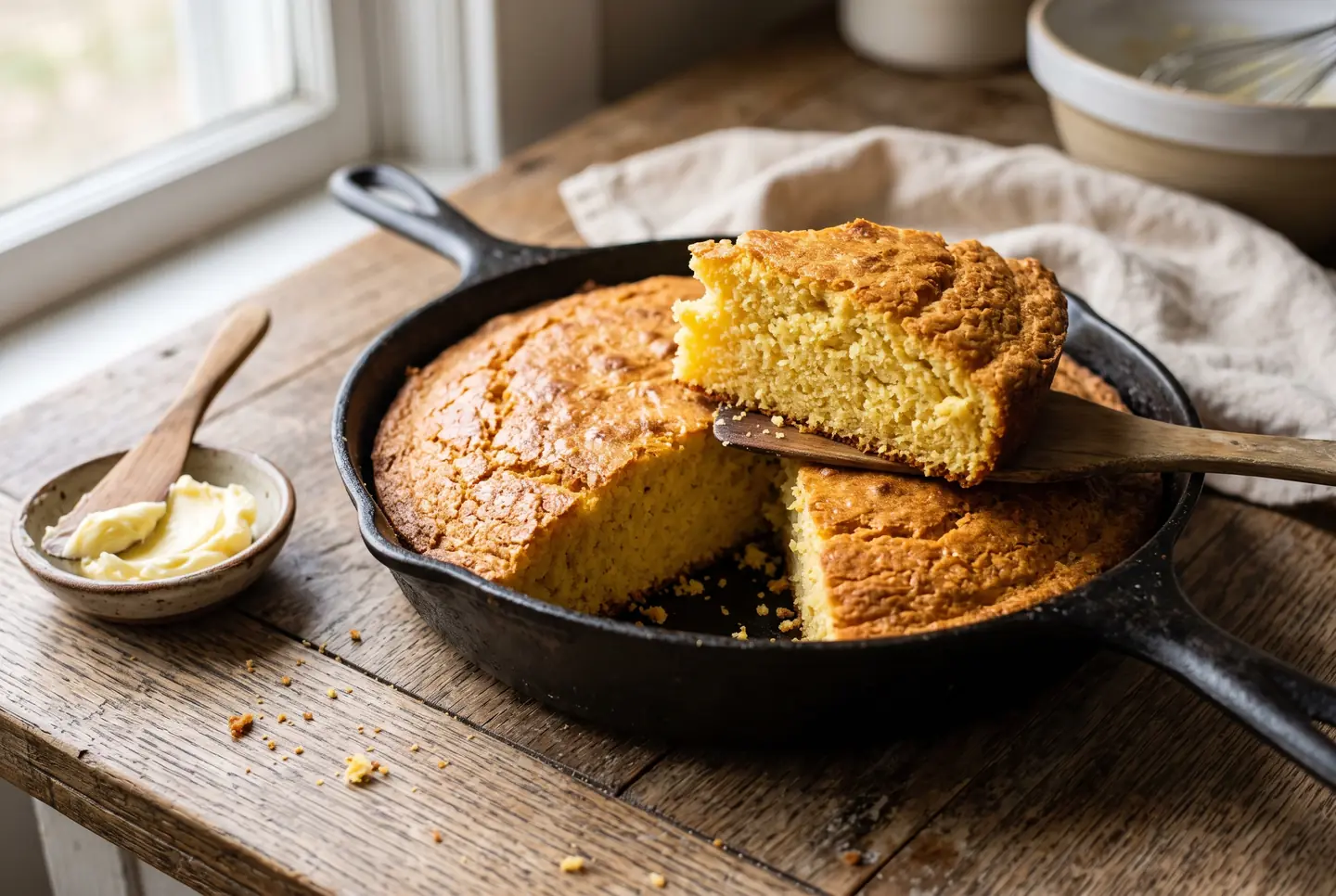
Two cooks can follow the word cornbread to two completely different breads. One is barely sweet, dense and crumbly, baked dark in a hot iron pan. The other is pale, tender and cakey, sweet enough to pass for dessert. Neither is wrong. They are two answers to the same question, and the whole argument comes down to two dials: how much sugar goes in, and how coarse the cornmeal is.
Most recipes just hand you their answer and move on. This guide does the opposite. Once you see what the sugar and the grind actually do to the crumb, you stop copying recipes and start steering your own: crumbly and savory next to a bowl of chili, or soft and sweet with butter and honey, from the same bag of cornmeal.
One promise before we start. By the end you will know why a cornbread comes out dry, why it crumbles when you cut it, and why the middle stays raw while the edges brown, because each of those has one main cause and none of them is bad luck.
Cornbread: the classic recipe
Cornbread is a quick bread, which means no yeast and no waiting. Baking powder and baking soda do the lifting, so the batter goes from bowl to oven in minutes. Here is a middle of the road recipe that leans neither fully sweet nor fully savory, a good place to start before you push it either way.
| Ingredient | Amount | What it does |
|---|---|---|
| Yellow cornmeal | 1.5 cups (about 210 g) | The corn flavor and the grain of the crumb |
| All purpose flour | 1 cup (about 125 g) | Gluten for structure, keeps it from crumbling |
| Sugar | 2 tablespoons (about 25 g) | Barely sweet, a nudge toward the middle |
| Baking powder | 1 tablespoon | The main rise |
| Baking soda | 0.5 teaspoon | Reacts with the buttermilk acid |
| Salt | 1 teaspoon | Seasoning, not optional |
| Buttermilk | 1.25 cups (about 300 ml) | Acidity and tenderness |
| Eggs | 2 large | Bind and enrich |
| Melted butter | 4 tablespoons (about 55 g) | Fat for a moist crumb and a rich edge |
Two leaveners share the work here, and it is worth knowing why. Baking powder is the main rise and works on its own. Baking soda is added because buttermilk is acidic: the soda neutralizes that acid, which both lifts the batter and stops the finished bread tasting sour. Buttermilk earns its place beyond the acid, too, because its slight tang and its fat give a tender crumb that plain milk does not. If you swap in regular milk, lean more on the baking powder and cut the soda right back, since there is no acid left for it to react with.
The method is short. Whisk the dry things in one bowl, the wet things in another, then fold them together until the flour just disappears. Overmixing is the fastest way to a tough, tunnelled cornbread, so stop while the batter still looks a little rough.
- Put a cast iron skillet in the oven and heat to 220 °C (425 °F). Let the pan heat for 10 to 15 minutes so it is properly hot.
- Whisk cornmeal, flour, sugar, baking powder, baking soda and salt in a large bowl.
- In a second bowl whisk the buttermilk, eggs and most of the melted butter.
- Pour the wet into the dry and fold just until combined. Do not beat it smooth.
- Swirl the last of the butter into the hot pan so it sizzles, then pour in the batter.
- Bake 20 to 25 minutes, until the top is golden and a tester comes out clean.
That base is the reference the rest of this guide bends. The two levers, sugar and grind, are the whole game, and the next two sections are about each of them.
The right cornmeal: fine, coarse and what it changes
Cornmeal is not one thing. It is sold in grinds from powdery fine to almost gritty, in white and yellow, and the grind you pick decides the texture of the crumb more than any other single choice. This is the lever most people never touch, and it is half of what separates the two schools of cornbread.
| Grind | Feels like | Crumb it makes | Typical use |
|---|---|---|---|
| Fine | Flour with a little grit | Smooth, tender, cake-like | Northern style, muffins |
| Medium | Clearly grainy | Balanced, a little bite | The all rounder |
| Coarse (stone ground) | Small hard grains | Hearty, crumbly, more corn taste | Southern style, skillet |
Color is mostly regional habit, not flavor: white cornmeal is the Southern default, yellow the Northern one, and the taste difference between them is small next to the difference the grind makes (Chefs Corner Store). Stone ground meal keeps more of the germ and its oil, so it tastes more of corn and can go rancid faster, which is why it is worth storing in the fridge.
A few things sold near cornmeal are not the same and will not behave. Corn flour is cornmeal ground to a powder, and it bakes dense and pasty on its own. Grits are coarser than any cornmeal and made for the pot, not the oven. Masa harina is nixtamalized corn for tortillas and tamales, with a flavor of its own that is wrong for cornbread. And self-rising cornmeal already has leavening and salt mixed in, so if you use it, leave out the baking powder, soda and salt in the recipe above or you will overshoot on both.
If you only own fine cornmeal, you can still bake a fine cornbread, just do not expect the rugged crumb of a Southern loaf. Which grind to buy and how to store it is a topic of its own.
Southern vs Northern: no sugar or sweet
Here is the fault line. Southern cornbread is savory, made with coarse white meal, little or no flour, and no sugar or barely a spoonful. Northern cornbread is sweet and cakey, made with finer yellow meal, a good amount of wheat flour, and a quarter to a half cup of sugar in the batch. Same oven, same pan, two different breads, and the two dials do it.
Sugar does more than sweeten. It holds water, so a sweeter batter bakes into a moister, softer crumb, and it browns faster, so a sweet cornbread darkens sooner. Flour brings gluten, which is what lets a slice hold together instead of shattering, so the more wheat flour, the more cake-like and sliceable and the less crumbly. Put the two together and you can place any cornbread on a line.
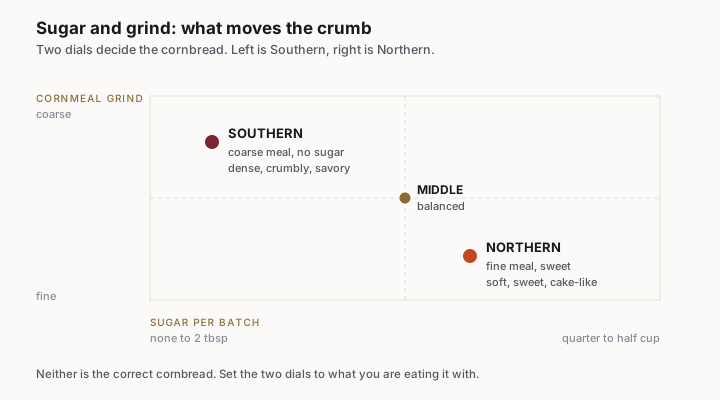
| Southern | Middle | Northern | |
|---|---|---|---|
| Sugar per batch | 0 to 2 tablespoons | about 2 tablespoons | quarter to half cup |
| Cornmeal | coarse, often white | medium yellow | fine yellow |
| Wheat flour | little or none | some | plenty (up to 3 parts flour to 2 of meal) |
| Crumb | dense, crumbly, savory | balanced | soft, sweet, cake-like |
| Best with | chili, greens, barbecue | most things | butter and honey, on its own |
The sugar ranges are the common ones cited in the sweet versus savory debate: Southern traditionalists keep it under two tablespoons or leave it out, while Northern recipes run a quarter to a half cup (DDR).
The split is not a modern food fight, it comes from what the corn used to be. Early Southern cooks worked with fresh, oily, stone ground meal that tasted sweet on its own, so it needed no sugar. As industrial milling spread, it stripped the germ and the oil, and with them much of that natural sweetness, and recipes started adding sugar to make up the difference. That is part of why sweeter, cakier cornbread took hold where the corn was more processed. Knowing the history does not make one right, but it explains why the two camps feel so strongly. Decide what you are eating it with, then set the two dials. The full Southern method, buttermilk and hot fat and no sugar is worth its own walkthrough.
Cornbread in a cast iron skillet
The skillet is not nostalgia, it does real work. A cast iron pan preheated in the oven is screaming hot when the batter hits it, and that instant heat sets a crisp, deep-brown bottom crust that a cold pan or a glass dish never gives you. It is the single biggest upgrade to a plain recipe.
The move is simple: heat the empty skillet in the oven while it comes up to 220 °C (425 °F), give it 10 to 15 minutes, then add the fat right before the batter so it sizzles (Damn Delicious). That sizzle is the sound of the crust starting before the bread even goes in. A well seasoned pan also releases the bread cleanly, so it turns out in one piece.
Bacon fat or butter both work, each leaving its own flavor at the edge. The one rule is to get the pan hot first: pour cold batter into a cold pan and you get a pale, soft bottom instead of the crackly one that makes skillet cornbread worth the trouble.
Pan size matters more than it looks. A batter that fills a wide skillet in a thin layer bakes fast and gives lots of crust, while the same batter crowded into a small deep pan bakes slowly and risks a raw center under browned edges. A 25 cm (10 inch) skillet suits a single batch. If all you have is a deeper dish, drop the oven a little and give it more time. The cast iron method, pan sizes and how to build the crust is a guide of its own.
Mexican cornbread: chilies and cheese
Mexican cornbread turns the plain loaf into a meal. The base batter stays close to the classic, then gets loaded: diced jalapeños or green chilies, sharp cheese folded through, and often corn kernels for pockets of sweetness and creamed corn for moisture. Some versions add a little ground beef and become dinner on their own.
The trick with a loaded batter is that all those wet add-ins hold water, so the middle takes longer to set. Give it a few extra minutes and lean on the tester rather than the clock, or you get browned edges around a raw center. Keep the cheese mostly folded in rather than all on top, where it can scorch before the inside cooks, and drain the corn and chilies well so you are not pouring their liquid into an already wet batter. Heat is a dial too: seeded fresh jalapeños run hot, canned green chilies stay mild, so pick to taste. The full Mexican cornbread version, with ratios for the chilies and cheese, is worth its own recipe.
Cornbread muffins
Muffins are cornbread with more crust per bite, which is the point: every muffin is edges. The same batter works, poured into a muffin tin instead of a skillet, though a slightly thicker batter holds its dome better than a loose one.
Fill the cups about three quarters full and bake at the same 220 °C (425 °F), but check early: the smaller portions cook faster, usually 15 to 18 minutes against the 20 to 25 of a full pan. A greased metal tin gives crisper sides than paper liners, which trap steam and soften the crust. Preheating the empty tin, the way you would the skillet, gives the same jump to the bottoms. For grab and go, muffins also freeze and reheat better than a cut loaf, since each one keeps its own crust. The muffin method and how to keep them from drying out is a guide of its own.
Cornbread for Thanksgiving dressing
Half the cornbread baked in November is not eaten as bread at all, it is baked to be torn up and turned into dressing. That changes what you want from it. Dressing cornbread should be plain, on the savory side, and above all a little dry, because it has to soak up stock and eggs without turning to mush.
The usual move is to bake it a day or two ahead and let it stale on the counter, or dry the crumbs in a low oven, so they drink the liquid instead of dissolving in it. A sweet, moist Northern cornbread makes a heavy, pudding-like dressing, so this is the one time you want the drier Southern style even if sweet is your everyday preference. Many cooks cut the cornbread with a little day-old white bread or biscuit for structure, and season hard with sage, onion and celery cooked in butter, because the bread itself is mild. Get the bread right, dry and plain, and the dressing almost makes itself. The full dressing method, from the bread to the bake, is a guide of its own.
Hot water cornbread, the skillet kind
Hot water cornbread is the oldest and simplest form, and it never sees an oven. You stir boiling water straight into cornmeal, which scalds the starch and makes a thick, shapeable batter, then fry spoonfuls in a hot greased skillet like little cakes. Crisp outside, soft and steamy inside.
It is naturally close to gluten free, because the classic version is mostly just cornmeal, water, salt and fat. The two things that go wrong are water that is not actually boiling, which leaves a gritty raw texture, and a pan that is not hot enough, which gives you a greasy cake instead of a crisp one. Let the scalded batter rest a couple of minutes so the cornmeal drinks the water and firms up, then shape it with a wet spoon or wet hands so it does not stick. Fry in a shallow layer of hot fat and turn once, when the edges look set and lacy. It is the fastest cornbread there is, done in the time the oven versions are still preheating. The step by step, including how thick to make the batter, is a guide of its own.
Gluten free cornbread (almost there already)
Cornbread has a head start on gluten free that most breads do not: cornmeal has no gluten to begin with, and a Southern style loaf with little or no wheat flour is nearly there. The wheat flour is doing one job, holding the crumb together, so gluten free cornbread is really about replacing that binding without the gluten.
A good gluten free all purpose blend swapped one for one for the wheat flour is the simplest route, and because cornbread never needed much stretch, it works better here than in most breads. A little extra egg or a spoonful of ground psyllium or xanthan helps a slice hold its shape instead of crumbling. One caution worth repeating: check that your cornmeal is labelled gluten free, because corn is naturally safe but cheaper meal is often milled on shared lines and can pick up wheat. The full gluten free method and the blend ratios are a guide of its own.
Vegan cornbread, no egg and no dairy
Cornbread takes to vegan swaps kindly. The eggs and the buttermilk are the two things to replace, and both have clean substitutes that do not change the character of the bread.
For the buttermilk, stir a tablespoon of vinegar or lemon juice into plant milk and let it sit a few minutes until it curdles: that gives back the acidity the baking soda needs. For the eggs, a flax egg (a tablespoon of ground flax in three of water per egg) binds well enough for a quick bread, and melted coconut oil or a neutral oil covers the butter. Soy and oat milks curdle and bake more reliably than thin nut milks, which can leave the crumb loose. The result is close enough that most people will not notice. The full dairy free and egg free method is a guide of its own.
Where it goes wrong: dry, crumbly or raw in the middle
Cornbread has three classic failures, and the good news is that each points at one cause, not a mystery. Almost every complaint about a homemade loaf is one of these, and the fix is a small change to the batter or the bake, not a whole new recipe. Diagnose by the symptom.
| Symptom | Main cause | The fix |
|---|---|---|
| Dry | Too much cornmeal, too little fat or sugar, or overbaked | Add flour and fat, pull it the moment a tester is clean |
| Crumbly, falls apart | Not enough wheat flour or binder holding it | Raise the flour, add an egg, let it cool before cutting |
| Raw in the middle, dark edges | Oven too hot, pan too deep, or heavy wet add-ins | Lower to 200 °C (400 °F), use a wider pan, bake by tester not clock |
| Tough, with tunnels | Batter overmixed | Fold just until the flour disappears, lumps are fine |
| Pale, soft bottom | Cold pan | Preheat the cast iron in the oven first |
The biggest one is dryness, and it is usually two small things stacking: a lean, all-cornmeal batter that has little to hold moisture, then a few minutes too long in the oven. Cornbread keeps cooking on residual heat, so a tester that comes out just clean means it is done, not almost done. The full symptom by symptom diagnosis is a guide of its own.
How to store and reheat cornbread
Cornbread is best the day it is baked and goes stale faster than a yeasted loaf, because it has no gluten network holding water. Keep it at room temperature, wrapped, for two days at most. The fridge dries it out and is worse than the counter, so skip it.
For longer, freeze it: wrap cooled pieces well and they keep for a couple of months, and thaw at room temperature before reheating. To bring a slice back, warm it in a low oven or a hot skillet with a little butter rather than the microwave, which steams it soft and loses the crust. A stale piece is also exactly what you want for dressing, so nothing is wasted. The full storing and reheating method is a guide of its own.
Frequently asked questions
Should cornbread have sugar? It depends entirely on the style you want. Southern cornbread uses no sugar or barely a spoonful and is savory, while Northern cornbread uses a quarter to a half cup and is sweet and cake-like. Neither is more correct, so match it to what you are eating it with.
Why is my cornbread dry? Usually a batter with too much cornmeal and too little fat or flour, then a few extra minutes in the oven. Add wheat flour and butter for a moister crumb, and pull it the moment a tester comes out clean, because it keeps cooking as it cools.
Why does my cornbread fall apart when I cut it? Not enough wheat flour or binder. Cornmeal has no gluten, so the wheat flour is what holds a slice together. Raise the flour a little, add an egg, and let it cool before cutting, since a hot cornbread is at its most fragile.
What cornmeal is best for cornbread? For a smooth, cake-like crumb use fine cornmeal, and for a hearty, crumbly Southern loaf use coarse stone ground. Medium is a safe all rounder. White and yellow taste nearly the same, so the grind matters far more than the color.
Do I need a cast iron skillet? No, but it gives the best result. A skillet preheated in the oven sets a deep, crisp bottom crust that a cold pan or a glass dish cannot. If you use another pan, still get the fat hot before the batter goes in.
What oven temperature is best for cornbread? Around 220 °C (425 °F) for most recipes, with the pan preheated. If the edges brown before the middle sets, especially with heavy add-ins, drop to 200 °C (400 °F) and give it a little longer.
Can I make cornbread without buttermilk? Yes. Stir a tablespoon of vinegar or lemon juice into a cup of milk and let it sit a few minutes, which gives back the acidity the baking soda needs. Plain milk works too, but you may want a touch more baking powder and a little less soda.
How do I store cornbread? Wrapped at room temperature for up to two days, or frozen for a couple of months. Skip the fridge, which dries it out. Reheat in a low oven or a buttered skillet rather than the microwave to keep the crust.
This guide keeps getting updated as new details turn up. Good baking, and set those two dials to the cornbread you actually want.
Where I checked
Keep reading
 Guide
Guide
Bagel Dough: Why It Is So Firm, and How to Knead It
Bagel dough feels stiff and dry on purpose. Here is why it runs at 50 to 60% water and high protein flour, how to knead it, and the windowpane to aim for.
6 min read Guide
Guide
Bagel Recipe: New York Style, Step by Step
A weight-based New York bagel recipe, step by step: the firm 58% dough, an overnight cold retard, how long to boil, and the oven heat that sets a glossy crust.
6 min read Complete guide
Bagels: The Complete Guide
Make a real bagel at home: the firm 58% dough, why bagels are boiled before baking, New York vs Montreal, sourdough and gluten free, and how to fix flat ones.
18 min read