Guide
Southern Cornbread Recipe: Savory, No Sugar, Crackly Crust
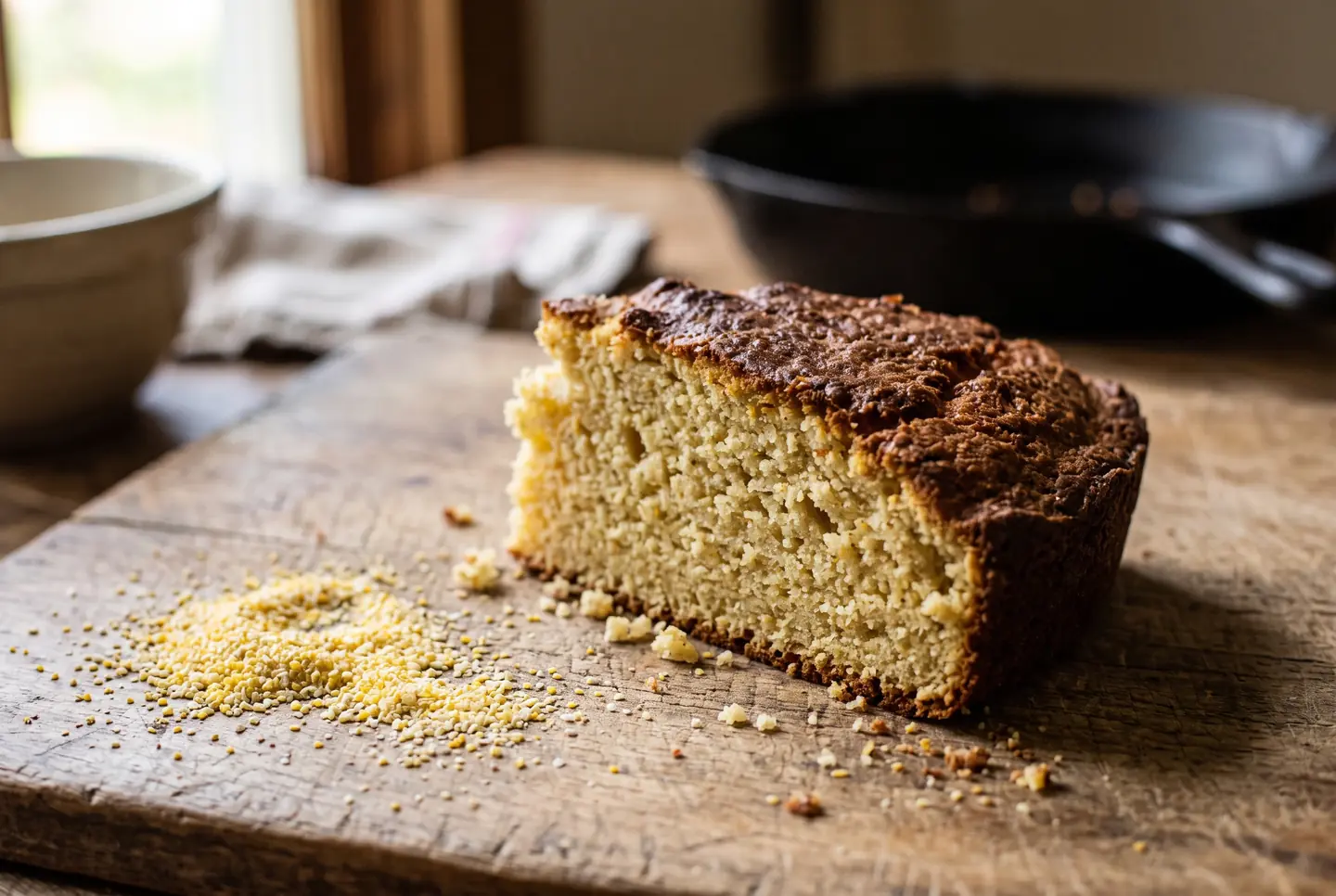
Southern cornbread is savory. It leans on coarse cornmeal, often white, with little or no wheat flour and little or no sugar, and it bakes up dense, crumbly and corn-forward with a crackly crust from a hot skillet. That is the whole style in one line, and it is the opposite of the sweet, cakey Northern loaf most boxed mixes copy. If you have only ever had the sweet kind, the savory one tastes like a different bread. This page is the deep version of the sweet-versus-savory split from the complete cornbread recipe guide, where sugar and grind are the two dials that set the whole loaf.
The short answer for the search that brought you here: real Southern cornbread has no sugar, or barely a spoonful. Everything else follows from that one decision and from the coarse meal it goes with.
The two dials: sugar and flour
You can place any cornbread on a line with just two levers. Sugar and wheat flour are what separate the savory Southern loaf from the sweet Northern one, and once you see them as dials rather than a fixed recipe, you can bake either on purpose.
Sugar does more than sweeten. It holds water, so a sweeter batter bakes into a moister, softer crumb, and it browns faster in the oven. Wheat flour brings gluten, the protein that lets a slice hold together instead of shattering, so the more wheat you add, the more cake-like and sliceable the bread and the less it crumbles. Southern cornbread turns both dials down; Northern turns both up.
| Southern | Middle | Northern | |
|---|---|---|---|
| Sugar per batch | 0 to 2 tablespoons | about 2 tablespoons | quarter to half cup |
| Cornmeal | coarse, often white | medium yellow | fine yellow |
| Wheat flour | little or none | some | plenty, up to 3 parts flour to 2 of meal |
| Crumb | dense, crumbly, savory | balanced | soft, sweet, cake-like |
| Fat | bacon fat or butter, hot | butter | butter or oil |
| Best with | chili, greens, barbecue | most things | butter and honey, on its own |
The sugar ranges are the common ones cited in the sweet-versus-savory debate: Southern traditionalists keep it under two tablespoons or leave it out, while Northern recipes run a quarter to a half cup (DDR). Set the two dials for what you are eating with, and you have your bread.
Why Southern cornbread skips the sugar
The split is not a modern food fight, it comes from what the corn used to be. Early Southern cooks worked with fresh, oily, stone ground meal that tasted sweet on its own, so it needed no help. As industrial milling spread it stripped the germ and the oil, and with them much of that natural sweetness, so recipes started adding sugar to make up the difference (Chefs Corner Store). Sweeter, cakier cornbread took hold where the corn was more processed. Knowing the history does not settle which is better, but it explains why the two camps feel so strongly. In the South, sugar in cornbread is close to a personal insult; in the North, cornbread without it tastes unfinished.
There is a practical reason to keep it savory too. A Southern loaf is a side, not a snack. It sits next to a bowl of chili, a plate of collard greens or a pile of barbecue, and it soaks up the pot liquor and the sauce. Sugar would fight all of that. The savory crumb is built to go with the meal, not to be the sweet at the end of it.
The ingredients that make it Southern
Four choices carry most of the style. Get these and the bread is Southern whether or not you follow any single recipe to the letter.
- Coarse cornmeal, often white. The grind is the biggest lever on texture, and a coarse stone ground meal gives the hearty, crumbly bite. White is the Southern default, though the taste gap between white and yellow is small next to what the grind does. The grind and type of cornmeal is worth its own read.
- Little or no wheat flour. All cornmeal makes the most crumbly, corn-forward loaf. A little wheat flour, up to about a quarter of the dry weight, buys some structure without turning it cakey.
- Buttermilk. Its tang is part of the savory flavor, and its acidity reacts with baking soda for lift. Plain milk works but tastes flatter.
- Hot fat in a hot pan. Bacon fat or butter, melted in a preheated skillet so it sizzles when the batter hits. This is what builds the crust.
Salt and a real dose of leavening round it out. Because there is little or no sugar to soften things, the seasoning and the crust do the work that sweetness does in a Northern loaf.
Method: the savory skillet loaf
The savory style and the cast iron skillet grew up together, and the method is simple once the pan is hot.
- Put a 25 cm (10 inch) cast iron skillet in the oven and heat it to 220 °C (425 °F). Give the empty pan 10 to 15 minutes so it is properly hot (Damn Delicious).
- Whisk the dry: coarse cornmeal, a little wheat flour if you want some structure, baking powder, a pinch of baking soda and salt. No sugar, or one spoonful at most.
- Whisk the wet: buttermilk and eggs.
- Combine just until no dry streaks remain. Lumps are fine. Overmixing toughens the crumb.
- Pull the hot skillet out, add a spoonful of bacon fat or butter and swirl so it coats and sizzles, then pour in the batter. It should hiss.
- Bake at 220 °C (425 °F) until the top is golden and a pick comes out clean, then turn it out of the pan so the bottom crust stays crisp.
The one rule that matters most is the hot pan. Pour cold batter into a cold skillet and you get a pale, soft bottom instead of the crackly one that makes the style worth it. The full cast iron method covers pan sizes and crust in depth.
Can you make Southern cornbread a little sweet?
Yes, and plenty of Southern cooks do. The dials are a line, not two boxes, and a tablespoon or two of sugar sits comfortably in the middle without turning the bread into cake. If you grew up on the sweet kind and the fully savory loaf tastes stark, start with a spoonful and work down over a few bakes. What tips a loaf out of the Southern style is not a hint of sugar, it is a quarter cup or more together with fine meal and a lot of wheat flour, which is the Northern setup. Keep the coarse meal and the hot fat and you keep the character even with a touch of sweetness.
Frequently asked questions
Does real Southern cornbread have sugar? Little or none. Traditional Southern cornbread keeps sugar under two tablespoons or leaves it out entirely, which is what makes it savory rather than cake-like. A quarter cup or more, together with fine meal and lots of wheat flour, is the Northern style.
What makes cornbread Southern instead of Northern? Four things: coarse cornmeal (often white), little or no wheat flour, little or no sugar, and hot fat in a preheated skillet. Northern cornbread flips all four, with fine yellow meal, plenty of wheat flour, a good amount of sugar, and a soft cakey crumb.
What cornmeal should I use for Southern cornbread? A coarse, stone ground meal, white by tradition, gives the hearty crumbly bite the style is known for. The grind matters more than the color. See the guide on the right cornmeal for how fine, medium and coarse change the crumb.
Why is my Southern cornbread dry or crumbly? Some crumble is normal without wheat flour and sugar, since both hold a loaf together and hold water. If it is too dry, add a little wheat flour for structure, do not overbake, and make sure the fat and buttermilk are measured generously. The savory style is meant to be sturdy, not powdery.
Do I have to use a cast iron skillet? No, but it is the biggest single upgrade. A preheated cast iron pan sets the crackly bottom crust that defines skillet cornbread. A cake pan or glass dish still bakes a good loaf, just with a softer bottom.
Is Southern cornbread the same as hot water cornbread? No. Hot water cornbread is a different thing, cornmeal scalded with boiling water and fried in small cakes rather than baked in a pan. Both are savory and Southern, but the method and the shape are not the same.
Where I checked
Keep reading
 Guide
Guide
Bagel Dough: Why It Is So Firm, and How to Knead It
Bagel dough feels stiff and dry on purpose. Here is why it runs at 50 to 60% water and high protein flour, how to knead it, and the windowpane to aim for.
6 min read Guide
Guide
Bagel Recipe: New York Style, Step by Step
A weight-based New York bagel recipe, step by step: the firm 58% dough, an overnight cold retard, how long to boil, and the oven heat that sets a glossy crust.
6 min read Complete guide
Bagels: The Complete Guide
Make a real bagel at home: the firm 58% dough, why bagels are boiled before baking, New York vs Montreal, sourdough and gluten free, and how to fix flat ones.
18 min read