Guide
Bagel Recipe: New York Style, Step by Step
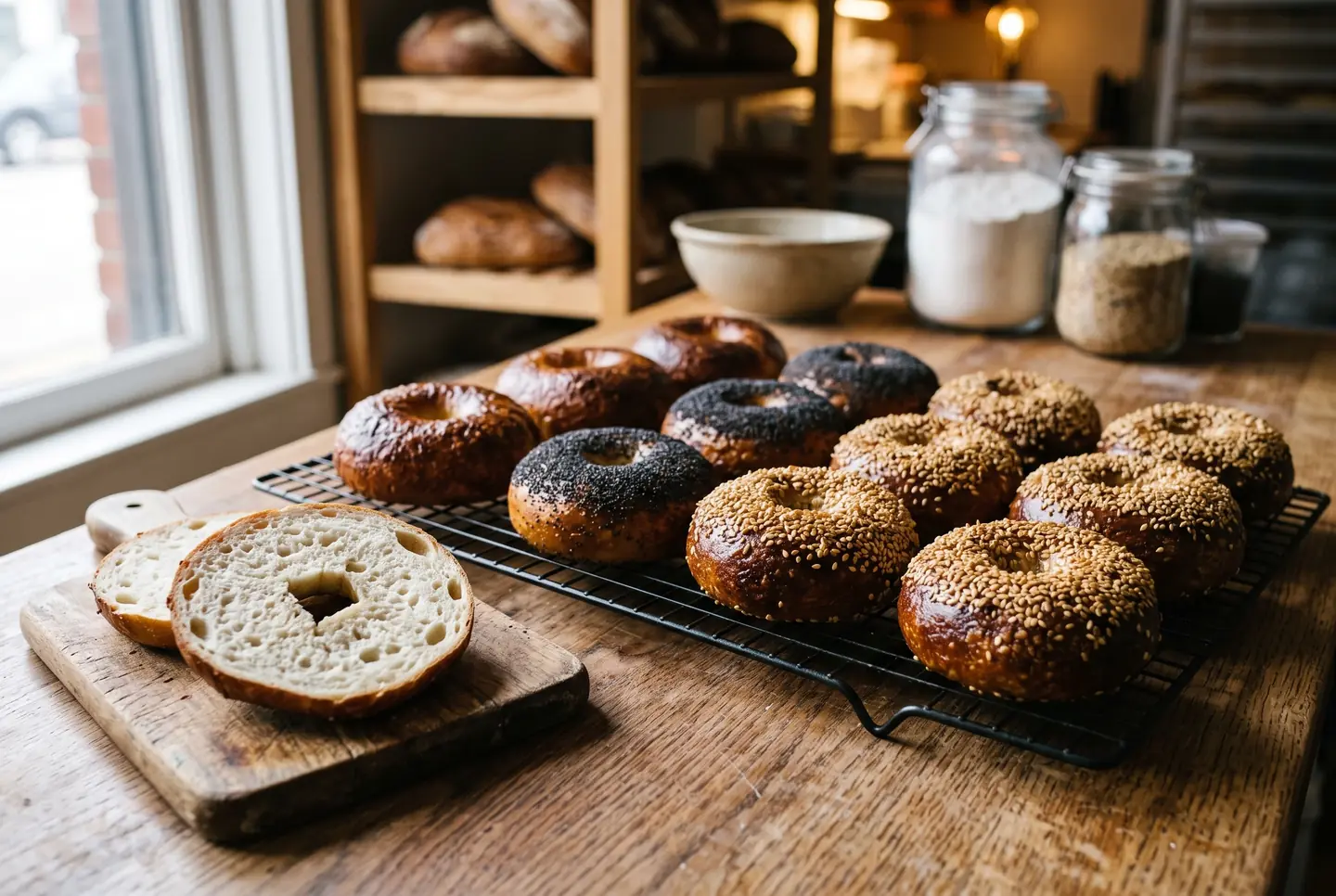
Here is the whole recipe in one breath: mix a firm dough at 58% water, let it rise once, divide and shape into rings, rest them cold overnight, boil each one for about a minute a side, then bake hot until dark. The overnight fridge rest and the boil are not optional flourishes. They are the two steps that turn a round roll into a bagel.
If you want the reasoning behind every choice below, the complete bagel guide covers why the dough is so dry and why the boil matters. This page is the working recipe: weights, times, temperatures, in order.
The formula, in baker's percentages
Weights beat cups for bread, because a cup of flour can vary by 20% depending on how you scoop. This is one well-tested New York style formula, scaled to eight bagels of about 120 g each (The Curious Chickpea).
| Ingredient | Baker's % | For 600 g flour |
|---|---|---|
| Bread flour (about 12.7% protein) | 100% | 600 g |
| Water (at 32 to 35 °C) | 58% | 350 g |
| Instant yeast | 0.75% | 4.5 g |
| Fine salt | 2.4% | 14.5 g |
| Barley malt syrup | 4.7% | 28 g |
The two numbers that make this a bagel and not a roll are the low water, 58% is dry for bread, and the malt, which feeds browning and a faint malty depth rather than sweetness. Use bread flour, not all-purpose: the extra protein is what gives the chew and holds the ring through the boil.
The method, step by step
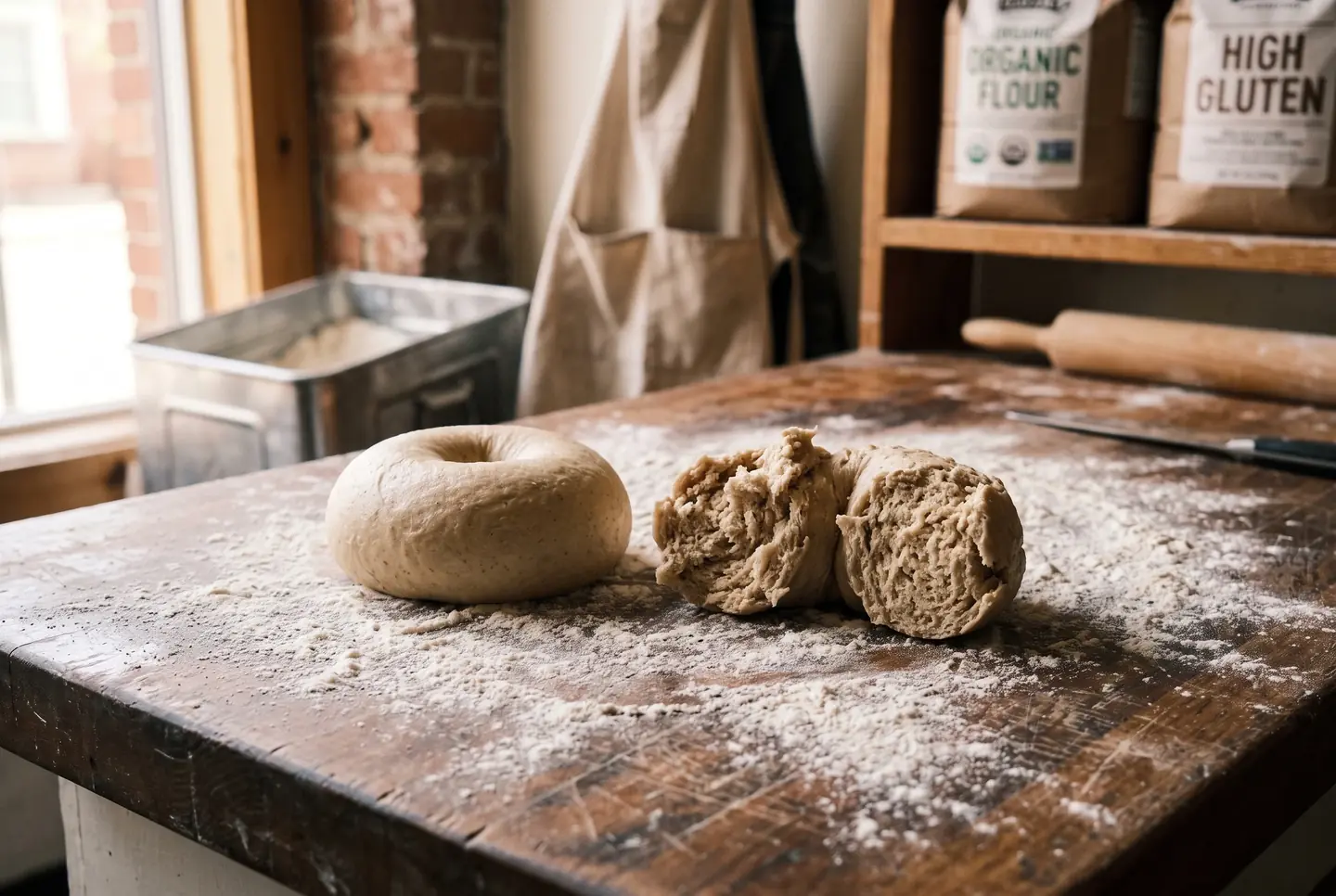
- Mix. Combine flour, yeast, salt, malt and the warm water. Stir to a shaggy mass. It will look dry and stiff, and that is right.
- Knead. Work it about 3 minutes, rest 5 minutes, then knead another 3 minutes (The Curious Chickpea). A stand mixer earns its keep here. Stop when the dough is smooth and passes a windowpane without tearing. Why the dough fights you, and how to knead it by hand, is its own guide on the bagel dough.
- First rise. Cover and leave at room temperature 45 to 75 minutes, until it has roughly doubled.
- Divide and shape. Cut into 8 pieces of about 120 g. Shape each into a ring: roll a rope and weld the ends, or poke a hole and stretch it wide. Make the hole much bigger than looks sensible, because it closes in the boil and again in the oven. The full shaping walkthrough is a guide of its own.
- Cold retard. Lay the rings on a floured tray, cover, and refrigerate overnight, up to 48 hours. This slow cold ferment deepens the flavour and, just as important, keeps the bagels tight so they do not spread.
- Boil. Bring a wide pot of water to a strong simmer with 1 tablespoon barley malt and 1 tablespoon baking soda per about 2 litres. Boil each bagel straight from the fridge, 60 seconds, flip, then another 45 to 60 seconds (The Curious Chickpea).
- Top and bake. While the tops are still wet from the boil, press on seeds if you want them, they only stick to a wet surface. Bake as below.
| Stage | Time | What to look for |
|---|---|---|
| Knead | 3 min, rest 5, then 3 min | smooth, passes windowpane |
| First rise | 45 to 75 min | roughly doubled |
| Cold retard | overnight to 48 h | rings firm, slightly puffed |
| Boil | ~60 s + ~60 s | rings float and set a skin |
| Bake | 18 to 20 min | dark, glossy, sounds hollow |
The boil, in one paragraph
This is the step most home recipes rush, and it is the one doing the work. When a raw ring hits boiling water, the starch on its surface gelatinizes into a thin skin in seconds, which seals the shape, stops it ballooning, and builds the shine and chew (The Kitchn). Longer in the water means a firmer, denser bagel; shorter means a lighter, puffier one (FoodCrumbles). Sixty seconds a side is the classic middle. If yours come out cakey, boil longer next time; if tough, boil less.
The bake
Preheat as hot as your oven goes, around 260 °C (500 °F). When the bagels go in, drop to 230 °C (450 °F) and bake about 10 minutes, rotate the tray, then 8 to 10 minutes more until they are dark golden (The Curious Chickpea). Bake on a preheated stone or a heavy sheet so the bottoms brown instead of steaming pale. The initial blast of heat sets the crust fast, and the boil has already done most of the surface work, so you need far less steam than a lean hearth loaf.
If it goes wrong
| What happened | Most likely cause | Fix next time |
|---|---|---|
| Flat, spread thin | over proofed, or dough too wet | proof less, boil straight from the fridge |
| Cakey, soft, no chew | boiled too briefly | boil longer, up to 90 s a side |
| Tough, dense, hard | boiled too long, or under kneaded | boil less, knead more |
| Pale, dull crust | oven too cool, no malt in the water | bake hotter, add malt and a little soda |
| Hole closed up | shaped too small | make the hole much bigger, rest before boiling |
Frequently asked questions
Do I have to boil bagels? Yes. The boil sets a starch skin that seals the shape and builds the chewy, shiny crust. Skip it and you bake a soft round roll, not a bagel.
Can I make bagels in one day, without the overnight rest? You can, but the cold retard is what keeps them tight and deepens the flavour. Same day bagels tend to spread more and taste plainer. If you skip it, proof gently and boil as soon as the rings look barely puffed.
What flour should I use? High protein bread flour, around 12 to 14% protein. The strong gluten it builds is what gives the chew and holds the ring through boiling. All purpose flour makes a softer bagel.
What goes in the boiling water? Barley malt syrup for even browning and flavour, and a little baking soda to raise the pH for a darker, shinier crust. About a tablespoon of each per 2 litres is plenty.
How many bagels does this make? Eight bagels of about 120 g each. The recipe scales cleanly by baker's percentage: keep the ratios and change the flour weight.
What can I use instead of barley malt syrup? Diastatic malt powder is the closest swap, about 10 g in place of the 28 g of syrup (The Curious Chickpea). If you have neither, a little honey or brown sugar in the dough and the boiling water will stand in for the browning, though the flavour is plainer and it can colour less evenly than malt.
Can I halve the recipe? Yes. Because it is written in baker's percentages, halve every weight and you get four bagels with the same texture. The times and temperatures do not change.
Make it once with the overnight rest before you judge the recipe. The fridge does quiet work you cannot rush, and the difference on the plate is not subtle.
Where I checked
Keep reading
 Guide
Guide
Bagel Dough: Why It Is So Firm, and How to Knead It
Bagel dough feels stiff and dry on purpose. Here is why it runs at 50 to 60% water and high protein flour, how to knead it, and the windowpane to aim for.
6 min read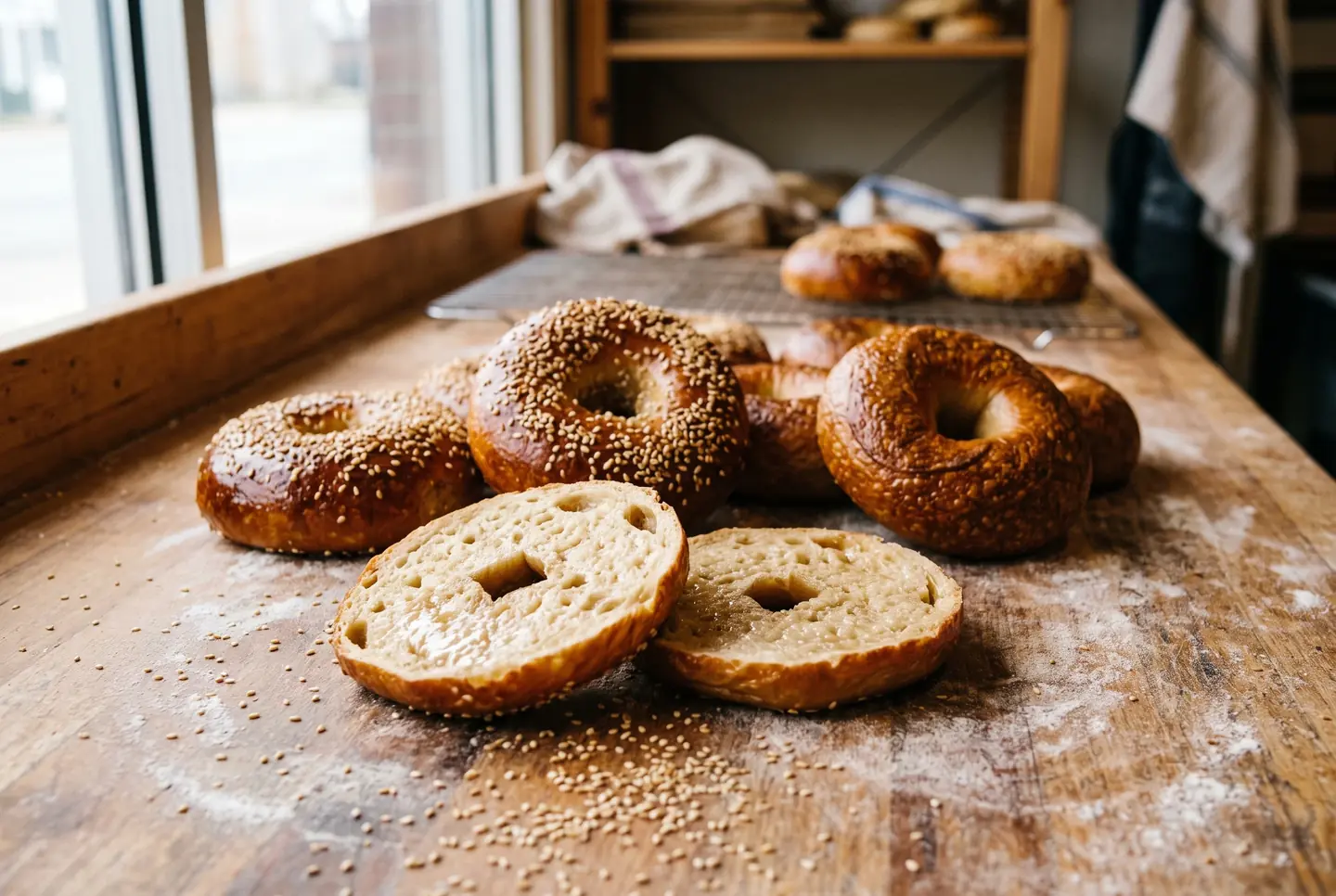 Complete guide
Bagels: The Complete Guide
Make a real bagel at home: the firm 58% dough, why bagels are boiled before baking, New York vs Montreal, sourdough and gluten free, and how to fix flat ones.
18 min read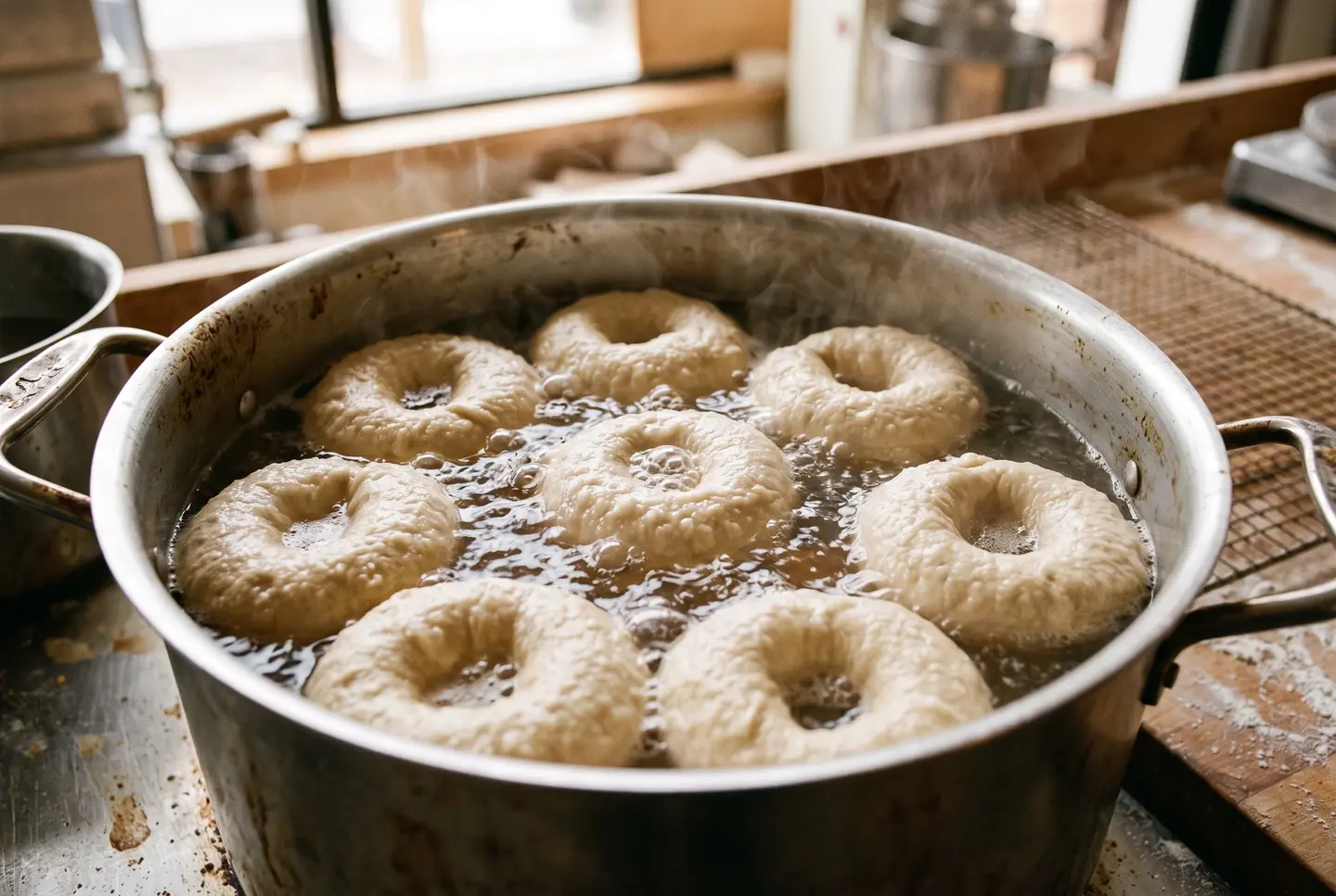 Guide
Guide
Boiling Bagels: How Long, and What Goes in the Water
How long to boil bagels and what changes with time: 30 vs 60 vs 90 seconds, plus what baking soda and malt do to the crust. The one step that makes a bagel.
6 min read