Guide
Cast Iron Cornbread: Hot Skillet, Crackly Crust
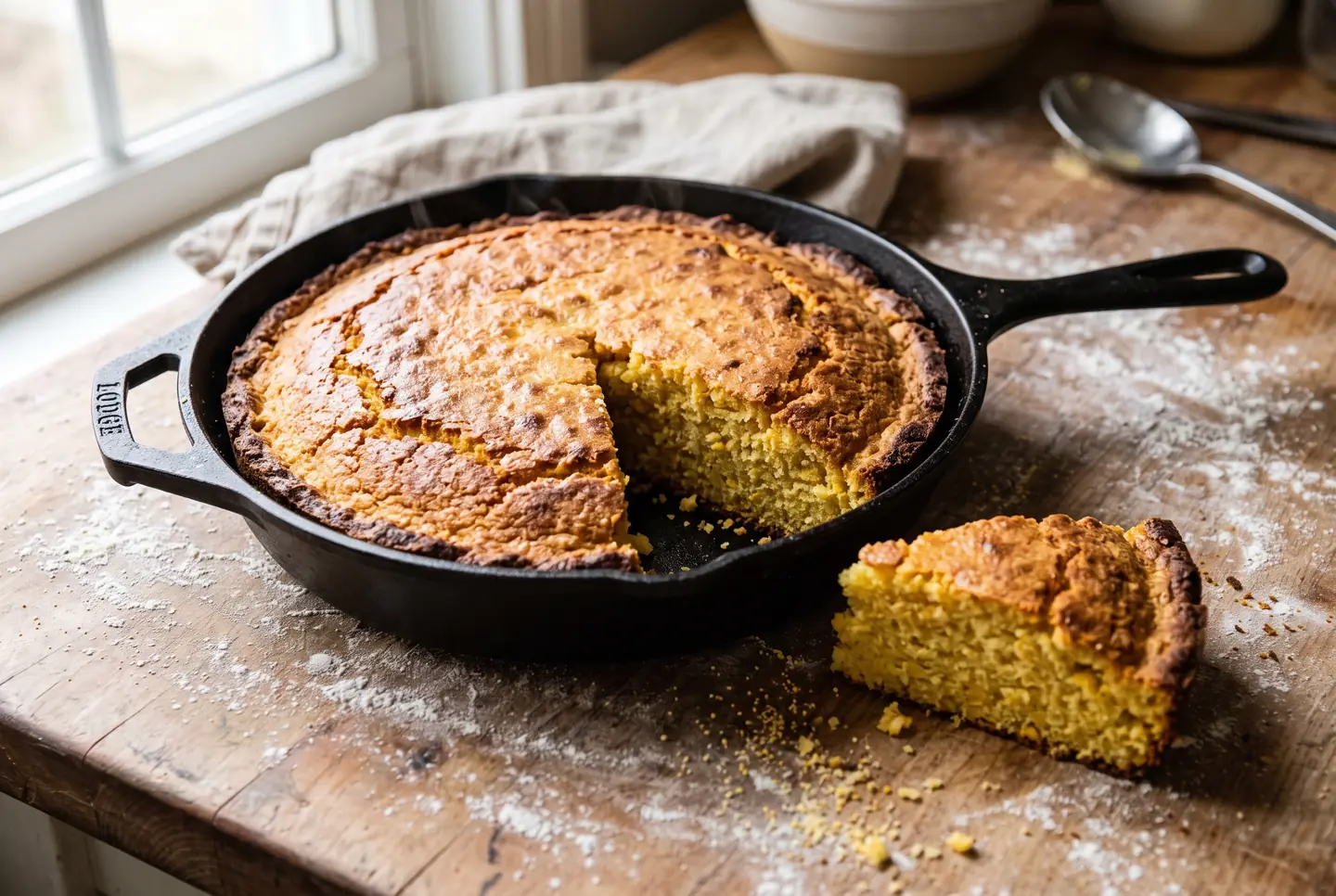
The single biggest upgrade to any cornbread is a hot cast iron skillet. Preheat the empty pan in the oven, add fat right before the batter so it sizzles, and pour the batter into the screaming-hot pan. That instant heat sets a crisp, deep-brown bottom crust that a cold pan or a glass dish never gives you. Everything else about cast iron cornbread, pan size, fat, releasing the loaf, follows from getting the pan hot first. This page is the deep version of the skillet section from the complete cornbread recipe guide.
If you take only one thing from here: heat the empty skillet while the oven comes up to temperature, and add the fat at the last second. That is where the crust comes from.
Why cast iron beats a cake pan
Cast iron is not nostalgia, it does real work. The pan holds a lot of heat, and when a preheated skillet meets cold batter, the bottom starts cooking and browning immediately instead of slowly warming up with the rest of the loaf. That head start is the whole trick. A cold metal pan, and especially a glass dish, warms up gradually, so the bottom sets at about the same pace as the middle and never crisps.
| Vessel | Bottom crust | Notes |
|---|---|---|
| Preheated cast iron | Crisp, deep brown | The reason to bother; get it hot first |
| Cold cast iron | Pale, soft | You lose the main advantage |
| Metal cake pan | Light | Fine loaf, softer bottom |
| Glass dish | Soft, slow | Bakes gently, no crust; may need a few extra minutes |
The pan also carries flavor. Fat melted in a hot skillet, whether butter or bacon fat, browns at the edges and leaves a savory rim on the bread that a lined cake pan cannot match.
The method, step by step
- Preheat the empty skillet. Put the pan in the oven and let both come up to 220 °C (425 °F) together, giving the empty pan 10 to 15 minutes to get properly hot (Damn Delicious).
- Mix while it heats. Whisk your dry and wet separately, then combine just until no dry streaks remain. A batter that sits a minute is fine; a pan that is not hot enough is not.
- Add the fat last. Pull the hot skillet out, drop in a spoonful of butter or bacon fat, and swirl so it coats the bottom and sides and sizzles. That sizzle is the crust starting before the bread even goes in.
- Pour and listen. Add the batter. It should hiss on contact. Spread it level and put it straight back in the oven.
- Bake and turn out. Bake until the top is golden and a pick comes out clean. Turn the loaf out of the pan within a few minutes so steam does not soften the bottom crust you just built.
The order is the point. Fat goes in after the pan is hot, not at the start, or it burns while the oven comes up. Batter goes in the instant the fat sizzles.
Pan size matters more than it looks
The same batter behaves differently depending on how deep it sits. Spread thin across a wide skillet it bakes fast and gives lots of crust; crowded into a small deep pan it bakes slowly and risks a raw center under browned edges.
| Skillet size | One standard batch | Result |
|---|---|---|
| 20 cm (8 inch) | Thick, deep fill | Slower bake, softer crumb, watch for a raw middle |
| 25 cm (10 inch) | Just right | The all rounder for a single batch |
| 30 cm (12 inch) | Thin layer | Fast bake, maximum crust, drier if overbaked |
A 25 cm (10 inch) skillet suits a single batch. If all you have is a deeper dish or a smaller pan, drop the oven a little and give it more time so the center catches up before the edges go too far. When in doubt, a pick in the middle tells you more than the clock.
Seasoning, sticking and cleanup
A well seasoned pan releases the bread cleanly, so it turns out in one piece. The fat you add before the batter is part of that: it greases the hot surface right as the loaf sets. If your skillet is new or stripped, cornbread is a good bread to break it in gently, but expect a little sticking until the seasoning builds.
After baking, let the pan cool, then wipe it out or rinse with hot water and a brush. Skip the long soak and the harsh detergent, which strip the seasoning, and dry it fully so it does not rust. A thin film of oil after drying keeps it ready for the next loaf.
Common cast iron cornbread mistakes
- Cold pan. The most common one. No preheat, no crust. Get the empty skillet hot first.
- Fat added too early. Butter dropped in a cold oven-bound pan browns past the point you want. Add it at the end, right before the batter.
- Wrong pan size. A batch built for a 25 cm pan poured into a small deep one bakes raw in the middle. Match the batch to the pan or adjust time and temperature.
- Leaving it in the pan. Cornbread left sitting steams itself soft on the bottom. Turn it out within a few minutes.
Get the pan hot, add the fat last, match the size to the batch, and turn it out. The style is savory by tradition, so this pairs naturally with a Southern, no-sugar loaf.
Frequently asked questions
Do you preheat a cast iron skillet for cornbread? Yes, and it is the most important step. Heat the empty skillet in the oven as it comes up to 220 °C (425 °F), for 10 to 15 minutes, so the pan is screaming hot when the batter hits it. That is what sets the crisp bottom crust.
Do you grease a cast iron skillet for cornbread? Yes. Add a spoonful of butter or bacon fat to the hot pan right before the batter, swirl to coat, and pour the batter in while it sizzles. It greases the surface and starts the crust at the same time.
What size cast iron skillet is best for cornbread? A 25 cm (10 inch) skillet suits one standard batch. A wider pan bakes faster with more crust; a smaller, deeper one bakes slower and can leave a raw center, so lower the oven and add time if that is all you have.
Why does my cornbread stick to the cast iron? Usually a pan that is not well seasoned, or not enough hot fat before the batter. Preheat the pan, add fat right before pouring, and use a well seasoned skillet. Turning the loaf out while it is still warm also helps it release cleanly.
Can I use butter or should I use bacon fat? Both work and both build the crust. Bacon fat leaves a savory, smoky edge that suits a Southern loaf; butter is milder and browns to a nutty rim. The rule is not which fat, it is getting the pan hot first.
Why is the bottom of my cornbread soft, not crackly? Either the pan was not hot enough, or the loaf sat in the pan and steamed after baking. Preheat the empty skillet properly, and turn the cornbread out within a few minutes of coming out of the oven.
Where I checked
Keep reading
 Guide
Guide
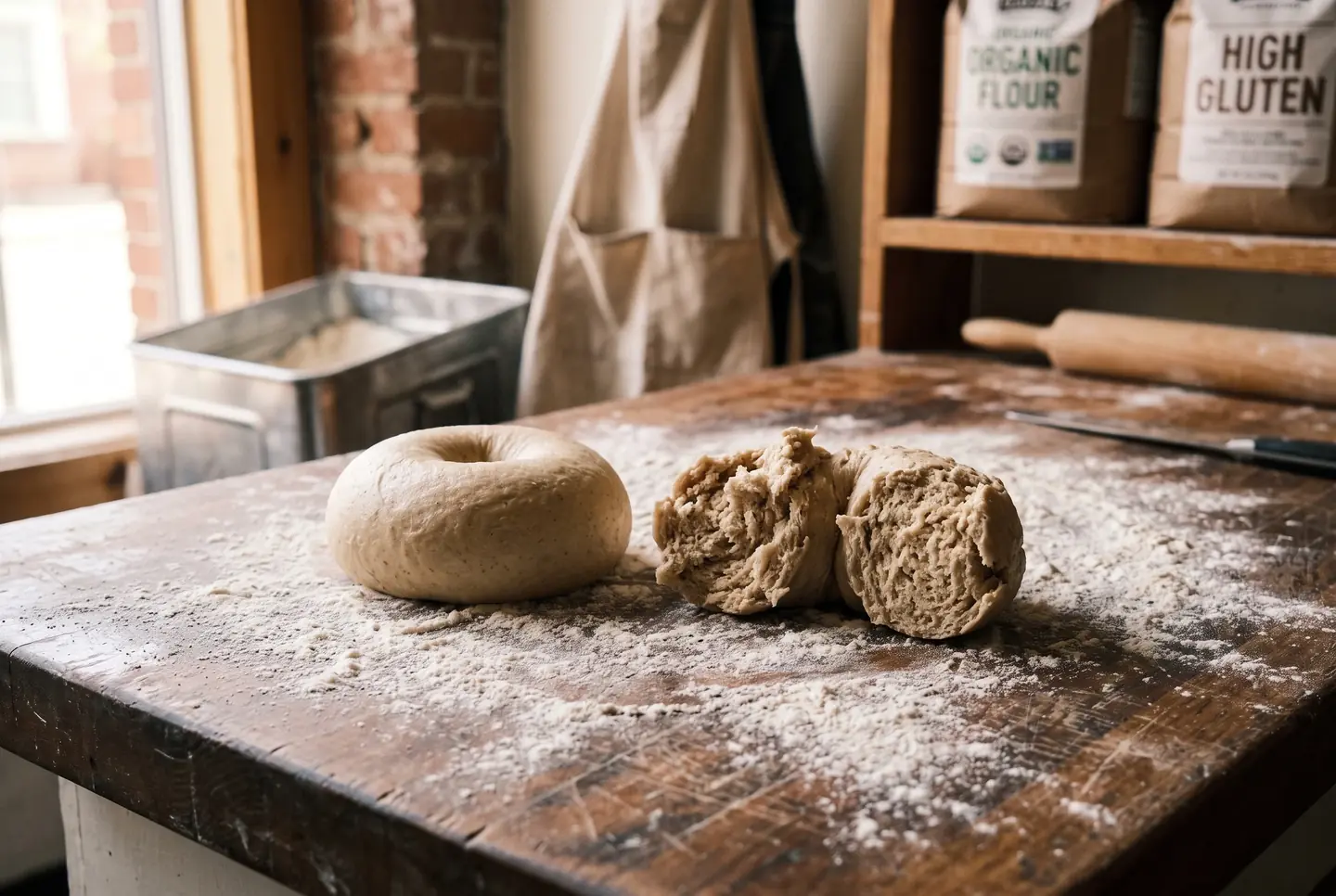
Bagel Dough: Why It Is So Firm, and How to Knead It
Bagel dough feels stiff and dry on purpose. Here is why it runs at 50 to 60% water and high protein flour, how to knead it, and the windowpane to aim for.
6 min read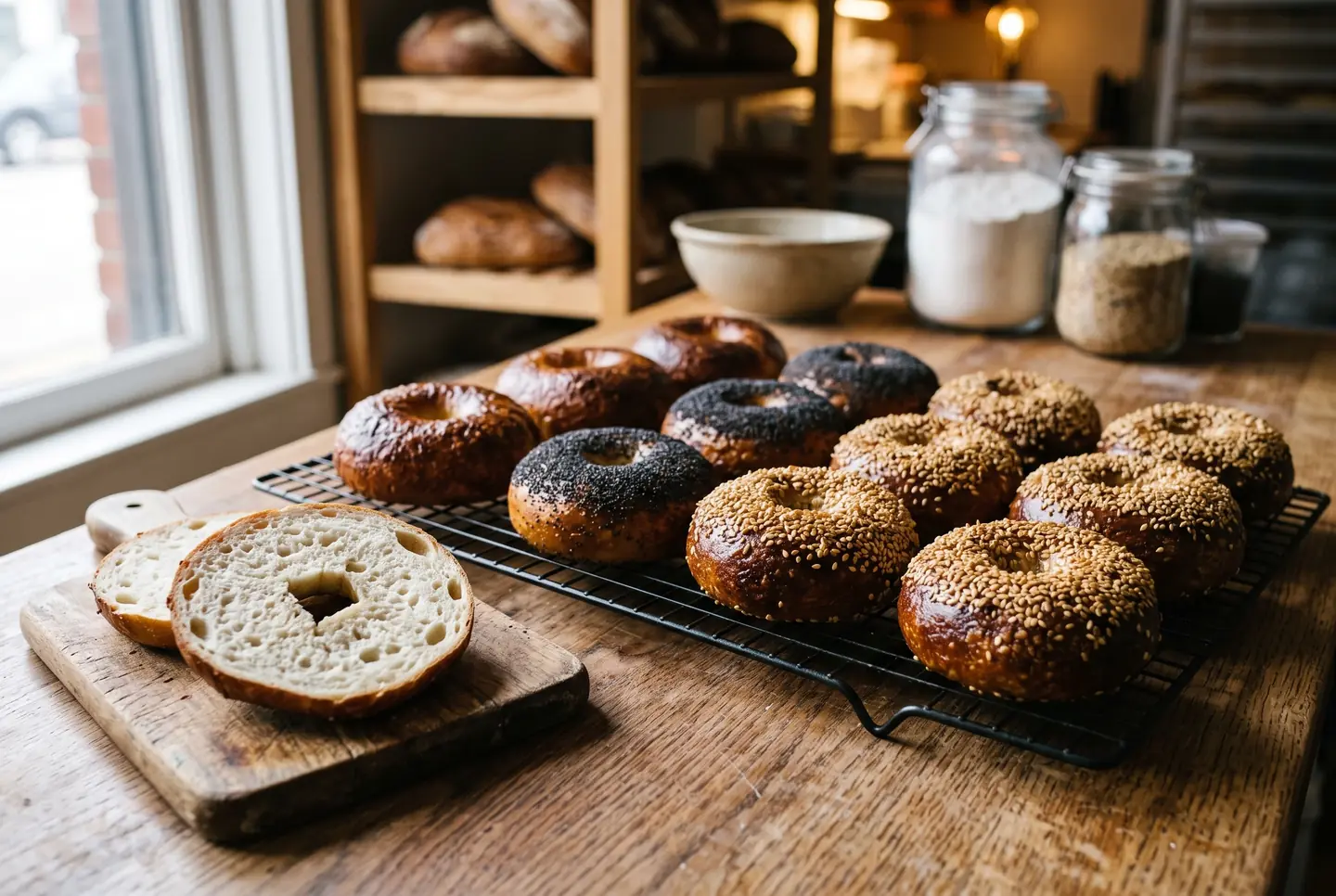 Guide
Guide
Bagel Recipe: New York Style, Step by Step
A weight-based New York bagel recipe, step by step: the firm 58% dough, an overnight cold retard, how long to boil, and the oven heat that sets a glossy crust.
6 min read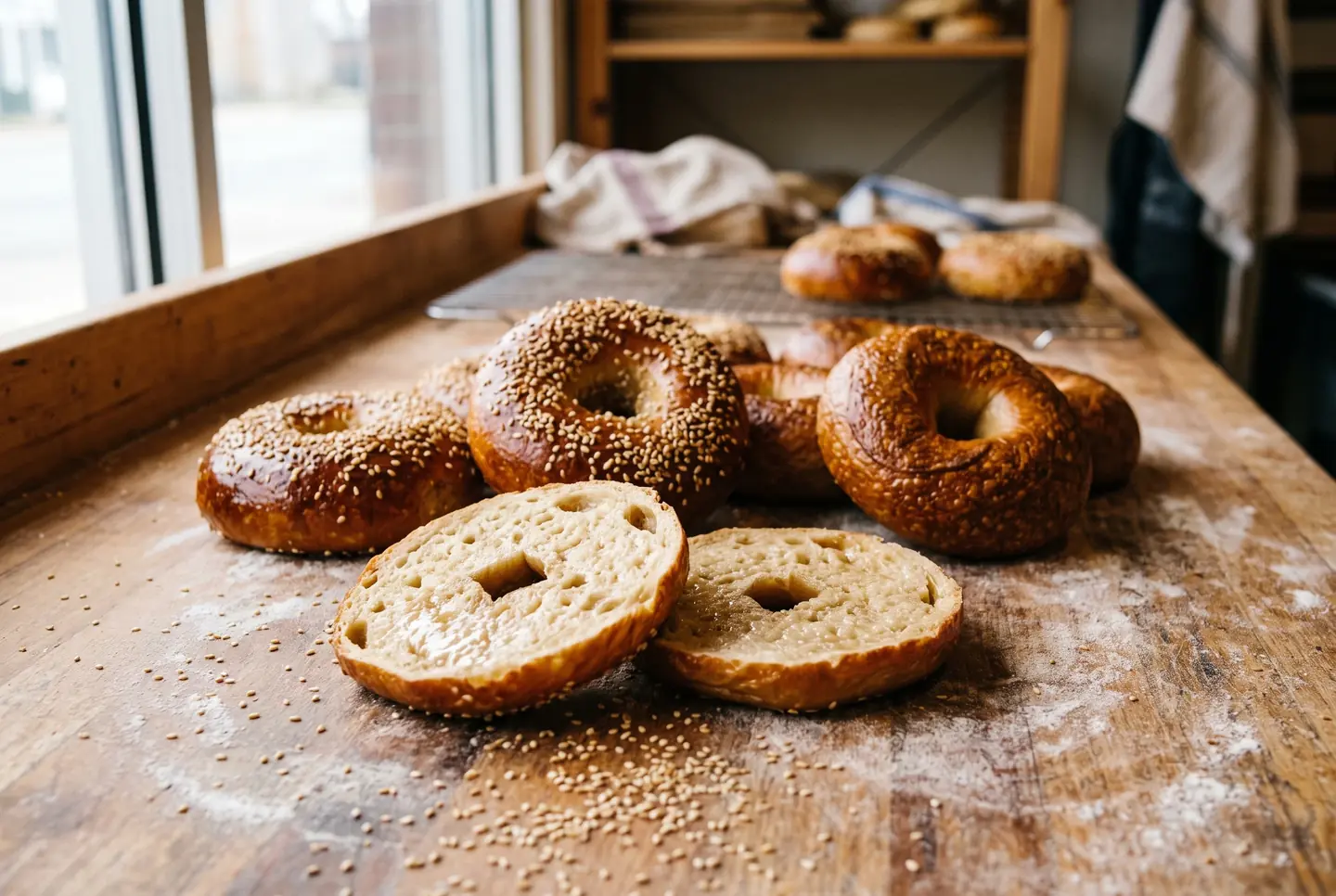 Complete guide
Bagels: The Complete Guide
Make a real bagel at home: the firm 58% dough, why bagels are boiled before baking, New York vs Montreal, sourdough and gluten free, and how to fix flat ones.
18 min read