Guide
Cornmeal for Cornbread: Which Grind and Type to Use
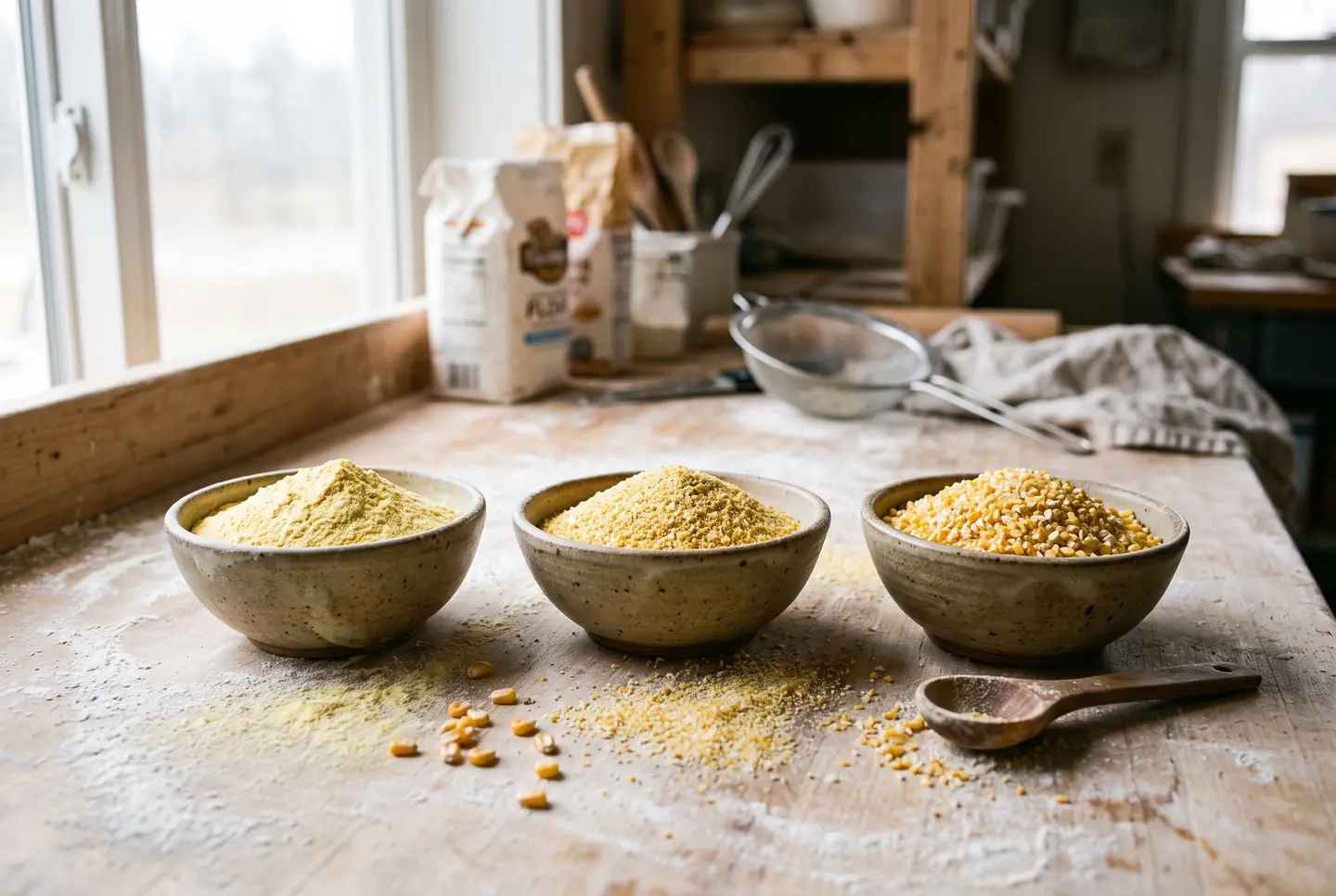
For a balanced cornbread, reach for a medium grind cornmeal, yellow or white. It gives you corn flavor and a little bite without turning gritty, and it works in almost any recipe. Go finer and the crumb turns smooth and cakey, the Northern style; go coarse and stone ground and it turns hearty and crumbly, the Southern style. The grind is the lever, not the brand, and it changes the texture of the crumb more than any other single choice you make. This page is the deep version of the grind question from the complete cornbread recipe guide, where the grind is one of the two dials that set the whole loaf.
The other thing that matters is not grabbing the wrong bag. Several corn products sit next to cornmeal on the shelf, look similar, and behave nothing like it in a cornbread. Sorting those out is half the battle, so this guide covers both: which grind to pick, and which lookalikes to leave alone.
Grind: fine, medium, coarse
Cornmeal is sold in grinds that run from almost powdery to nearly gritty, and the grind you pick decides the crumb. Finer meal packs tighter and bakes smooth; coarser meal leaves small hard grains that keep their bite through the oven.
| Grind | Feels like | Crumb it makes | Best for |
|---|---|---|---|
| Fine | Flour with a little grit | Smooth, tender, cake-like | Northern style, muffins |
| Medium | Clearly grainy | Balanced, a little bite | The all rounder, most recipes |
| Coarse (stone ground) | Small hard grains | Hearty, crumbly, more corn taste | Southern skillet cornbread |
If you own only one bag, make it medium. It sits in the middle of both cornbread schools, so you can push a batch sweet and cakey or savory and rugged with the other levers (sugar and wheat flour) instead of being locked in by the meal itself. If you only have fine cornmeal, you can still bake a good cornbread, just do not expect the rugged crumb of a coarse Southern loaf.
Yellow or white: barely a difference
Color is mostly regional habit, not flavor. White cornmeal is the Southern default and yellow the Northern one, but the taste gap between them is small next to the difference the grind makes (Chefs Corner Store). Yellow corn carries a little more of the pigment that reads as "corny" and looks sunnier in the pan; white bakes paler and a touch milder. Ground yellow corn gives yellow meal, ground white corn gives white meal, and either one makes fine cornbread. Pick the color you like the look of and spend your attention on the grind instead.
Stone ground vs degerminated, and why it changes storage
There is a second split hiding inside "coarse." Stone ground cornmeal is milled from the whole kernel, so it keeps the hull and the oil-rich germ. That is what gives it fuller corn flavor, and also what makes it go rancid faster: the germ's oil turns over time (Virginia Willis). Degerminated cornmeal, the standard supermarket kind, has the germ and hull removed to extend shelf life, which is why it keeps for a long time in the pantry but tastes a little flatter.
| Type | Flavor | Where to store | Keeps |
|---|---|---|---|
| Stone ground / whole grain | Fuller, more corn | Fridge or freezer | Weeks to a few months |
| Degerminated (standard) | Milder, cleaner | Cool, dry pantry | Up to a year |
The practical rule: if you buy stone ground meal for the flavor, store it cold and use it while it is fresh. If it smells sharp, bitter or like old oil, it has turned, and it will carry that off note straight into the bread.
What is not cornmeal: the lookalikes to avoid
This is where most ruined cornbread starts, with the wrong bag. Several corn products sit near cornmeal and will not behave like it.
| Product | What it is | In cornbread |
|---|---|---|
| Corn flour | Cornmeal ground to a powder | Bakes dense and pasty on its own |
| Grits | Coarser ground corn, softer starch, made for the pot | Too coarse, cooks to porridge, not bread |
| Polenta | Coarse meal from flint corn, for slow cooking | Similar to coarse grits, wrong for a quick batter |
| Masa harina | Corn treated with lime (nixtamalized), for tortillas | Distinct flavor, cannot substitute |
| Cornstarch | Pure starch, a thickener | Not corn flavor at all, wrong entirely |
| Self-rising cornmeal | Cornmeal with leavening and salt mixed in | Works, but skip the baking powder, soda and salt in your recipe |
A few of these deserve a word. Corn flour and cornmeal are the same corn, just different fineness, so grinding cornmeal finer gets you toward corn flour but a flour-fine grind alone bakes gummy in cornbread. Grits and polenta are both made for slow simmering and stay too gritty in a fast oven batter (food52). Masa harina is nixtamalized, meaning the corn was soaked in an alkaline solution before grinding, which gives it the taco and tamale flavor and makes it a wrong turn for cornbread. And self-rising cornmeal is the one that will surprise you: it already has the leavening and salt, so if you use it and follow a from-scratch recipe, you double up and the bread overshoots.
How much cornmeal versus wheat flour
The grind decides texture, but the ratio of cornmeal to wheat flour decides how much the slice holds together. More cornmeal means more corn flavor and a more crumbly, tender crumb; more wheat flour brings gluten, which is what lets a slice hold instead of shattering. Southern loaves lean heavily on cornmeal with little or no wheat, so they are savory and crumbly. Northern loaves cut in a good amount of wheat flour, so they slice clean and cakey. The full recipe guide walks the whole line from savory to sweet; here it is enough to know that a coarse meal with a lot of wheat flour still bakes sturdy, and a fine meal with no wheat flour still bakes fragile.
Frequently asked questions
What is the best cornmeal for cornbread? A medium grind, yellow or white, is the safest all rounder. It gives corn flavor and a little texture without turning gritty, and it takes a recipe either sweet or savory. Choose fine for a smooth cakey crumb and coarse stone ground for a hearty Southern one.
Can I use corn flour instead of cornmeal? Not one for one. Corn flour is cornmeal ground to a powder, so it lacks the texture cornbread wants and bakes dense and pasty on its own. If it is all you have, blend it with wheat flour and expect a smoother, more cake-like result.
Is polenta or grits the same as cornmeal? No. Both are coarser ground corn made for slow cooking in liquid, so they stay gritty in a quick oven batter. Coarse cornmeal is the closest, but true polenta and grits are the wrong texture for cornbread.
Can I use masa harina for cornbread? No. Masa harina is nixtamalized, treated with lime before grinding, which gives it the distinct tortilla and tamale flavor. It will not taste like cornbread and does not substitute for cornmeal.
Does yellow or white cornmeal make better cornbread? Both make good cornbread. Yellow is a touch sweeter looking and tasting, white is milder, and the difference is small next to what the grind does. Pick by preference and region.
Should I refrigerate cornmeal? Stone ground or whole grain cornmeal, yes, because the germ's oil can go rancid. Store it in the fridge or freezer and use it fresh. Standard degerminated cornmeal keeps a long time in a cool, dry pantry.
Where I checked
Keep reading
 Guide
Guide
Bagel Dough: Why It Is So Firm, and How to Knead It
Bagel dough feels stiff and dry on purpose. Here is why it runs at 50 to 60% water and high protein flour, how to knead it, and the windowpane to aim for.
6 min read Guide
Guide
Bagel Recipe: New York Style, Step by Step
A weight-based New York bagel recipe, step by step: the firm 58% dough, an overnight cold retard, how long to boil, and the oven heat that sets a glossy crust.
6 min read Complete guide
Bagels: The Complete Guide
Make a real bagel at home: the firm 58% dough, why bagels are boiled before baking, New York vs Montreal, sourdough and gluten free, and how to fix flat ones.
18 min read