Guide
Cornbread Muffins: More Crust, Faster Bake, No Dry Tops
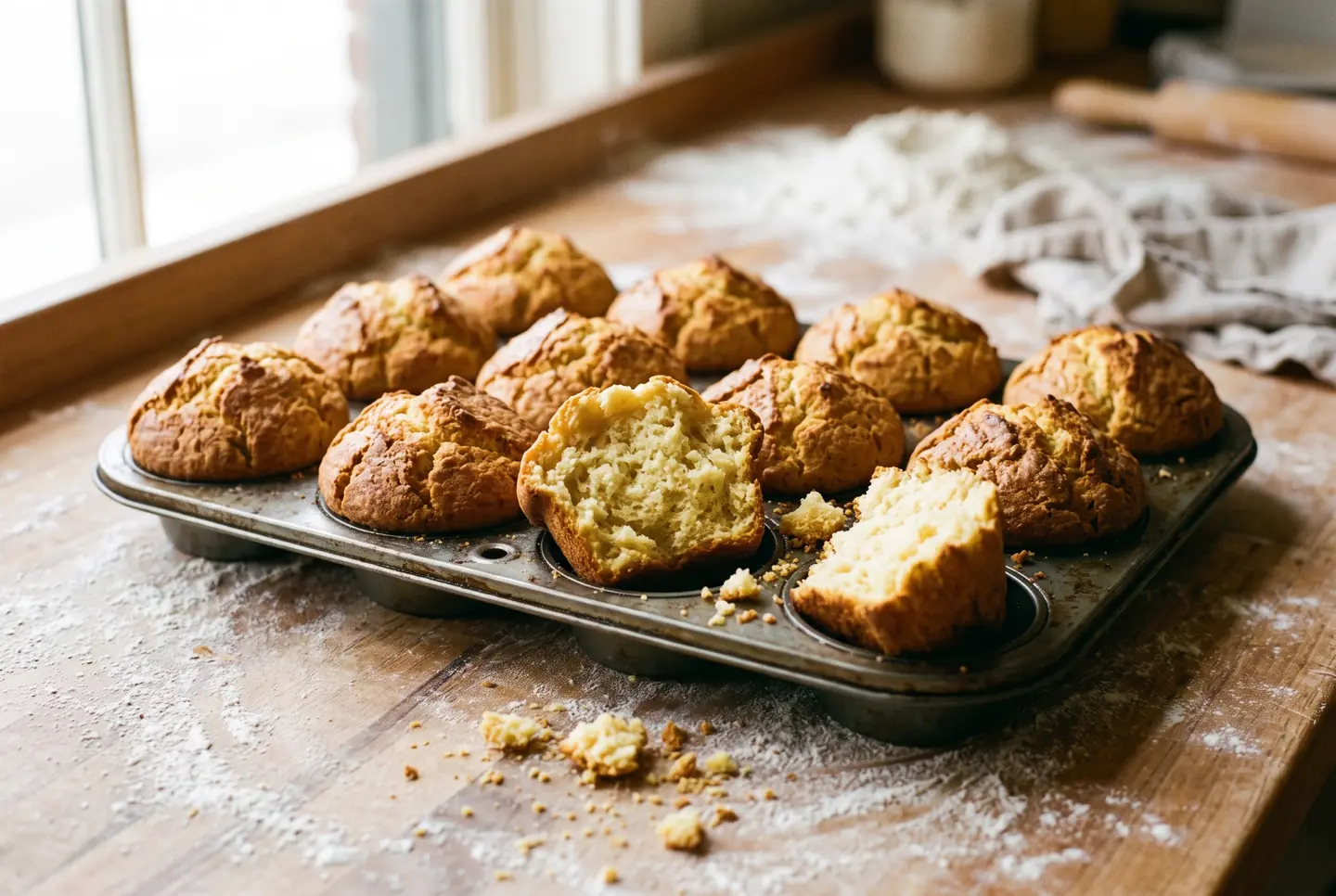
Cornbread muffins are cornbread with more crust per bite, and that is the whole appeal: every muffin is edges. You can use the exact same batter as a full pan, poured into a muffin tin instead of a skillet, but two small changes make the difference between a good muffin and a dry, flat one: a slightly thicker batter for a proper dome, and an early check because the small portions cook fast. This page is the deep version of the muffin note in the complete cornbread recipe guide.
The short answer: fill the cups about three quarters full, bake at 220 °C (425 °F), and start checking several minutes before a full pan would be done. Small portions dry out the moment they overbake.
Same batter, one small tweak
You do not need a separate recipe. Any cornbread batter that works in a pan works in a tin. The only adjustment worth making is consistency: a slightly thicker batter holds its dome, while a loose, pourable one spreads and bakes flatter. If your usual mix is on the wet side, hold back a splash of the liquid so the batter mounds softly in the cup rather than running level.
Everything else about ratios, sweetness and cornmeal grind carries straight over from the core recipe. Muffins change the shape and the timing, not the formula.
Why muffins are all crust
A loaf bakes as one mass with a small surface-to-inside ratio, so most of it is soft crumb. Split that same batter into a dozen cups and you multiply the browned surface many times over. Each muffin has a crisp top, crisp sides and a small tender center. That is why people who love the edges of a pan of cornbread often prefer muffins outright.
| Format | Crust-to-crumb | Best for |
|---|---|---|
| Full pan or skillet | Low, mostly crumb | Serving warm, cutting into squares |
| Muffin tin | High, edges everywhere | Grab and go, freezing, crust lovers |
| Mini muffins | Highest | Snacks, kids, party trays |
The tin matters: metal beats liners
A greased metal muffin tin gives crisper sides than paper liners. Paper traps steam against the muffin as it bakes, which softens the crust you came for, and it can stick to a lean cornbread more than to a cakey muffin. Grease the cups well instead, or use a nonstick tin, and you get browned, crisp edges all the way around.
You can borrow the skillet trick here too: preheat the empty greased tin in the oven for a few minutes, then spoon in the batter so it hits hot metal. That gives the bottoms the same jump-start a preheated cast iron pan gives a loaf. The full case for hot metal is in the guide to cast iron cornbread, and it works in miniature in a muffin tin.
| Cup lining | Sides | Notes |
|---|---|---|
| Greased metal | Crisp, browned | The choice for crust; grease well |
| Nonstick tin | Crisp | Reliable release, still crisp |
| Paper liners | Soft | Convenient, but steams the crust; peel them away and reheat to re-crisp |
Timing: check early or they dry out
This is where most cornbread muffins go wrong. The batter is the same, but the portions are small, so they cook faster and cross from moist to dry in a hurry. A full pan at 220 °C (425 °F) runs about 25 to 30 minutes (Damn Delicious); muffins are done several minutes sooner, so start checking early rather than trusting a loaf's clock.
- Fill three quarters full. Enough to dome, not so much that it floods the tin.
- Same oven, 220 °C (425 °F). The temperature does not change, only the time.
- Start checking early. A pick in the center should come out clean or with a few moist crumbs. The moment it does, they are done.
- Do not wait for deep brown all over. Cornbread muffins are ready before they look as dark as a slow-baked loaf.
Overbaking is the number one cause of dry muffins, followed by too little fat or sugar in the batter, both of which help a small portion hold moisture.
Sweet or savory, and add-ins
Muffins take mix-ins well because each cup is its own small loaf. A spoon of corn kernels, a little grated cheese, a few diced jalapeños or a touch of honey all work, and you can even split a single batch: plain in some cups, loaded in others. The one thing to watch is distribution. In a full pan the add-ins spread out on their own; in a muffin tin you have to stir them evenly through the batter, or one muffin gets all the cheese and the next gets none. Fold heavier add-ins in last, just before filling the cups, so they do not all sink to the bottom of the bowl. A loaded muffin also needs the same patience as a loaded loaf: the wet add-ins slow the center, so check a couple of minutes later than a plain muffin. The fully loaded version of this idea is Mexican cornbread, which bakes as muffins just as happily as in a pan.
They freeze and reheat better than a loaf
One quiet advantage of the muffin format: each one keeps its own crust, so they freeze and reheat far better than slices cut from a loaf, which lose their edges the moment you cut them. Cool completely, freeze in a bag, and reheat straight from frozen in a warm oven to bring the crust back. A quick toast or oven reheat re-crisps a paper-lined muffin that went soft, too.
For a hot, fresh loaf instead, the skillet route is in cast iron cornbread; for a loaded, cheesy version of this same batter, see Mexican cornbread, which also bakes beautifully as muffins if you extend the time for the wet add-ins.
Frequently asked questions
Can I make cornbread muffins from a regular cornbread recipe? Yes. Any cornbread batter works in a muffin tin. The only tweak worth making is a slightly thicker batter so the muffins dome instead of spreading flat, and an earlier check because the small portions bake faster than a full pan.
How long do cornbread muffins take to bake? Bake at the same 220 °C (425 °F) as a loaf, but check several minutes before a full pan would be done, since a pan runs about 25 to 30 minutes and muffins are ready sooner. Pull them the moment a pick comes out clean; small portions dry out fast once overbaked.
How full should I fill the muffin cups? About three quarters full. That is enough to rise into a good dome without overflowing the tin. Too full and they spill and flatten over the edges; too shallow and you lose the dome.
Why are my cornbread muffins dry? Almost always overbaking. The portions are small, so they go from moist to dry quickly. Check early and pull them at the first clean tester. A batter with a little fat or sugar also holds moisture better than a very lean one.
Should I use paper liners or grease the tin? Grease the tin for crisp sides. Paper liners trap steam and soften the crust, and can stick to lean cornbread. If you use liners for convenience, peel them off and reheat briefly to re-crisp the edges.
Can I make mini cornbread muffins? Yes, and they are almost all crust. Reduce the time further, since the smaller portions cook even faster, and start checking within the first several minutes. They are best served fresh and warm.
Can I freeze cornbread muffins? Yes, and they freeze better than a sliced loaf because each keeps its own crust. Cool completely, freeze in a bag, and reheat from frozen in a warm oven to bring the crust back.
Where I checked
Keep reading
 Guide
Guide
Bagel Dough: Why It Is So Firm, and How to Knead It
Bagel dough feels stiff and dry on purpose. Here is why it runs at 50 to 60% water and high protein flour, how to knead it, and the windowpane to aim for.
6 min read Guide
Guide
Bagel Recipe: New York Style, Step by Step
A weight-based New York bagel recipe, step by step: the firm 58% dough, an overnight cold retard, how long to boil, and the oven heat that sets a glossy crust.
6 min read Complete guide
Bagels: The Complete Guide
Make a real bagel at home: the firm 58% dough, why bagels are boiled before baking, New York vs Montreal, sourdough and gluten free, and how to fix flat ones.
18 min read