Guide
Mexican Cornbread: Chilies, Cheese and a Moist Middle
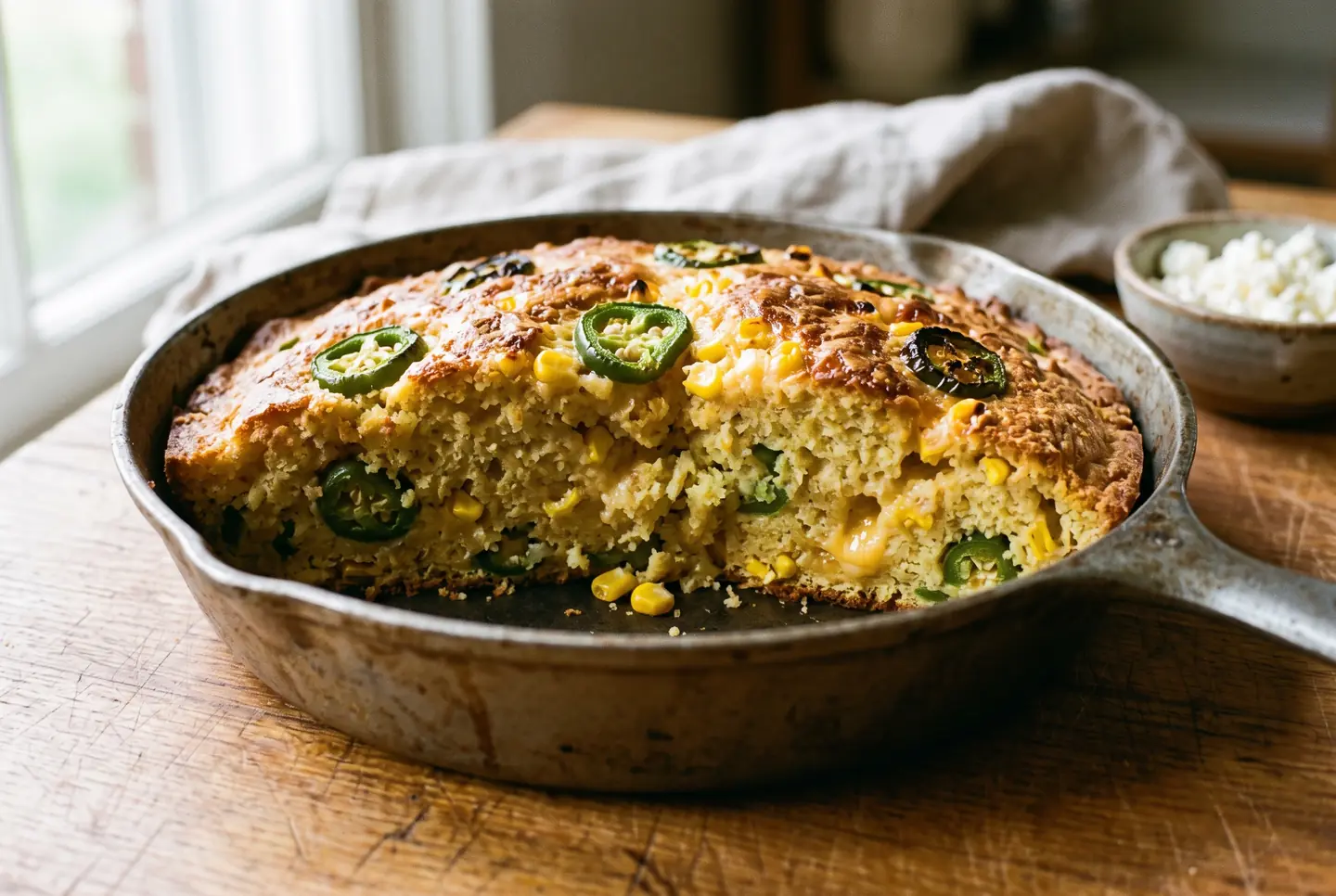
Mexican cornbread is the plain loaf turned into a meal: the classic batter loaded with diced chilies, sharp cheese and corn, sometimes enough to eat on its own. The one thing that separates a good one from a soggy one is timing, because every wet add-in you fold in makes the middle take longer to set. Add a few minutes, trust a tester over the clock, and you avoid the classic Mexican cornbread failure: browned edges around a raw center. This page is the loaded version of the add-ins section from the complete cornbread recipe guide.
If you take one thing from here: drain your add-ins and lean on the tester, not the timer. A loaded batter is wetter than plain, so it needs longer, not hotter.
What makes cornbread "Mexican"
There is no single recipe, but the family resemblance is a base cornbread batter loaded with savory, spicy, cheesy add-ins instead of eaten plain. The usual cast:
| Add-in | What it does | Watch for |
|---|---|---|
| Diced jalapeños or green chilies | The heat and the name | Fresh seeded jalapeños run hot; canned green chilies stay mild |
| Sharp cheese | Richness, browned pockets | Fold most of it in, not all on top, or it scorches |
| Corn kernels | Pockets of sweetness, texture | Drain well, they carry water |
| Creamed corn | Moisture and tender crumb | It is wet, so it slows the bake |
| Ground beef (optional) | Turns it into dinner | Cook and drain first |
Some cooks lean sweet, most lean savory, and the Tex-Mex versions go heaviest on cheese and chilies. The base stays close to a standard cornbread, which is why the core method still applies: the loading is what changes.
Heat is a dial, not a switch
The single most common complaint about Mexican cornbread is that it came out either bland or blistering. That is a choice you make at the cutting board, not a fixed property of the recipe.
- Mild: canned diced green chilies, no seeds, no fresh pepper. Warmth without bite.
- Medium: jalapeños with the seeds and ribs removed, where most of the heat lives.
- Hot: jalapeños with seeds in, or a hotter pepper like serrano.
Because the heat is adjustable and the seeds carry it, taste your peppers before they go in. Fresh jalapeños vary wildly from mild to fierce, so one pod is not a reliable dose. When in doubt, hold some back: you can serve hot sauce alongside, but you cannot un-spice a baked loaf.
The wet-batter problem, and how to beat it
Here is the technical heart of it. A plain cornbread batter is calibrated to set in a known time. Every spoon of cheese, drained corn, chilies or creamed corn you add brings water and fat that the batter has to drive off before the center firms. Load it up and keep the same bake time, and the edges brown on schedule while the middle stays wet.
Three moves fix it:
- Drain everything. Corn, canned chilies and any pickled add-ins should go in as dry as you can get them. Pouring their liquid into an already wet batter is what leaves a gummy center.
- Give it time, not heat. Keep the oven at the usual 220 °C (425 °F) (Damn Delicious) and simply bake a few minutes longer than a plain loaf. Turning the oven up browns the outside faster and makes the raw-middle problem worse, not better.
- Test the middle. A skewer or knife into the center should come out with moist crumbs, not wet batter. In a loaded loaf the tester matters more than any clock, because how wet your particular add-ins were is something no recipe can know.
| If the loaf is... | The cause is usually... | Next time |
|---|---|---|
| Raw in the middle, brown outside | Wet add-ins, bake too short | Drain harder, add 5 to 10 minutes |
| Greasy or dense | Too much cheese, undrained corn | Cut the cheese back, drain |
| Cheese burnt on top | All the cheese piled on the surface | Fold most of it into the batter |
| Bland | Peppers too mild, underseasoned | Leave seeds in, salt the batter |
Where the cheese goes
Cheese on top looks good and gives you a browned lid, but pile all of it there and it scorches before the inside is done, especially in a loaded loaf that needs extra oven time. Fold most of the cheese through the batter, where it melts into pockets and stays protected, and scatter just a little on top for color if you want it. A sharp cheddar or a melty Mexican blend both work; the sharper the cheese, the less you need for flavor.
A skillet still helps
Loaded or plain, the crust rule does not change: a preheated cast iron skillet gives the crisp, deep-brown bottom that a cold pan cannot. If you are making a hearty, cheesy loaf, that sturdy base holds up to the moist crumb above it. The full case for the pan, and how to preheat it, is in the guide to cast iron cornbread. For single-serving portions of a loaded batter, the same timing logic carries over to cornbread muffins, which bake faster and give you more edge per bite.
Serving it
Because it is essentially cornbread plus dinner, Mexican cornbread pairs with the things it borrows from: chili, a pot of beans, a bowl of soup, or barbecue. A loaf with ground beef folded in barely needs a side. Warm, with butter melting into the cheese pockets, is the whole idea.
Frequently asked questions
What makes cornbread "Mexican"? A base cornbread batter loaded with savory add-ins: diced jalapeños or green chilies, sharp cheese, corn kernels, often creamed corn, and sometimes ground beef. It is more a style of loading than a single recipe, leaning savory and spicy rather than sweet.
Why is my Mexican cornbread raw in the middle? The add-ins carry water. Cheese, corn and chilies all release moisture, so a loaded loaf takes longer to set than a plain one. Drain everything well, keep the oven at 220 °C (425 °F), and bake a few minutes longer, testing the center with a skewer rather than trusting the timer.
How do I control the heat? The seeds and ribs of the jalapeño carry most of the heat, so remove them for medium, leave them for hot, or use canned green chilies for mild. Taste your peppers first, since fresh jalapeños vary a lot, and hold some back if you are unsure.
Should the cheese go on top or inside? Mostly inside. Folded through the batter it melts into pockets and stays protected during the longer bake a loaded loaf needs. A little on top browns nicely, but all of it on top scorches before the middle cooks.
Can I make it less spicy? Yes. Use canned mild green chilies instead of fresh jalapeños, remove all seeds and ribs, or cut the amount. You can always serve hot sauce alongside for those who want more, which is safer than over-spicing the whole loaf.
Do I still need a cast iron skillet? It is not required, but a preheated skillet gives the crisp bottom crust that supports a heavy, moist crumb. A metal or glass pan works too; just expect a softer base and possibly a few extra minutes for a loaded batter.
Can I add ground beef? Yes, and it turns the loaf into a full meal. Brown and drain the beef first so you are not adding grease and liquid to an already wet batter, then fold it in with the cheese and chilies.
Where I checked
Keep reading
 Guide
Guide
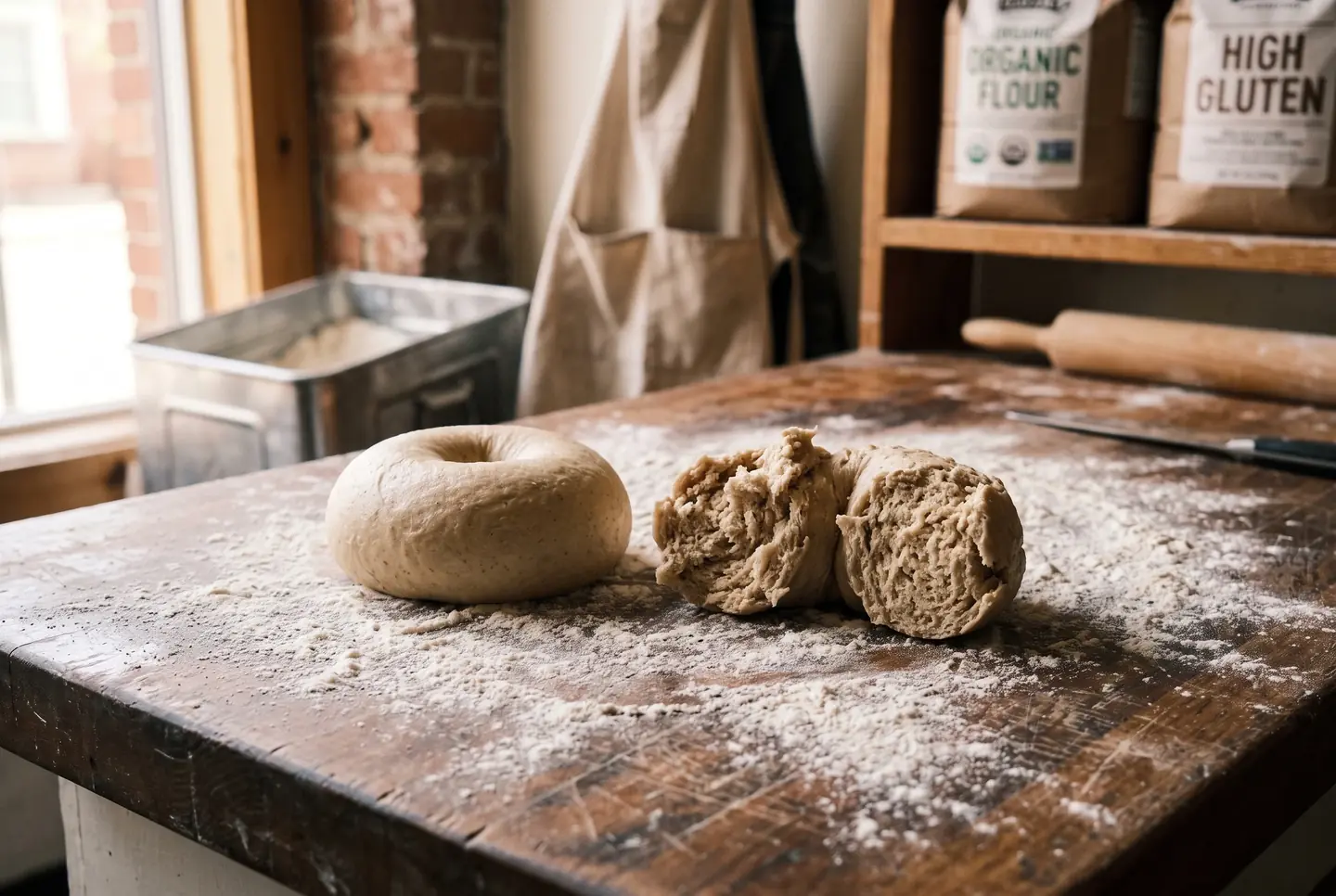
Bagel Dough: Why It Is So Firm, and How to Knead It
Bagel dough feels stiff and dry on purpose. Here is why it runs at 50 to 60% water and high protein flour, how to knead it, and the windowpane to aim for.
6 min read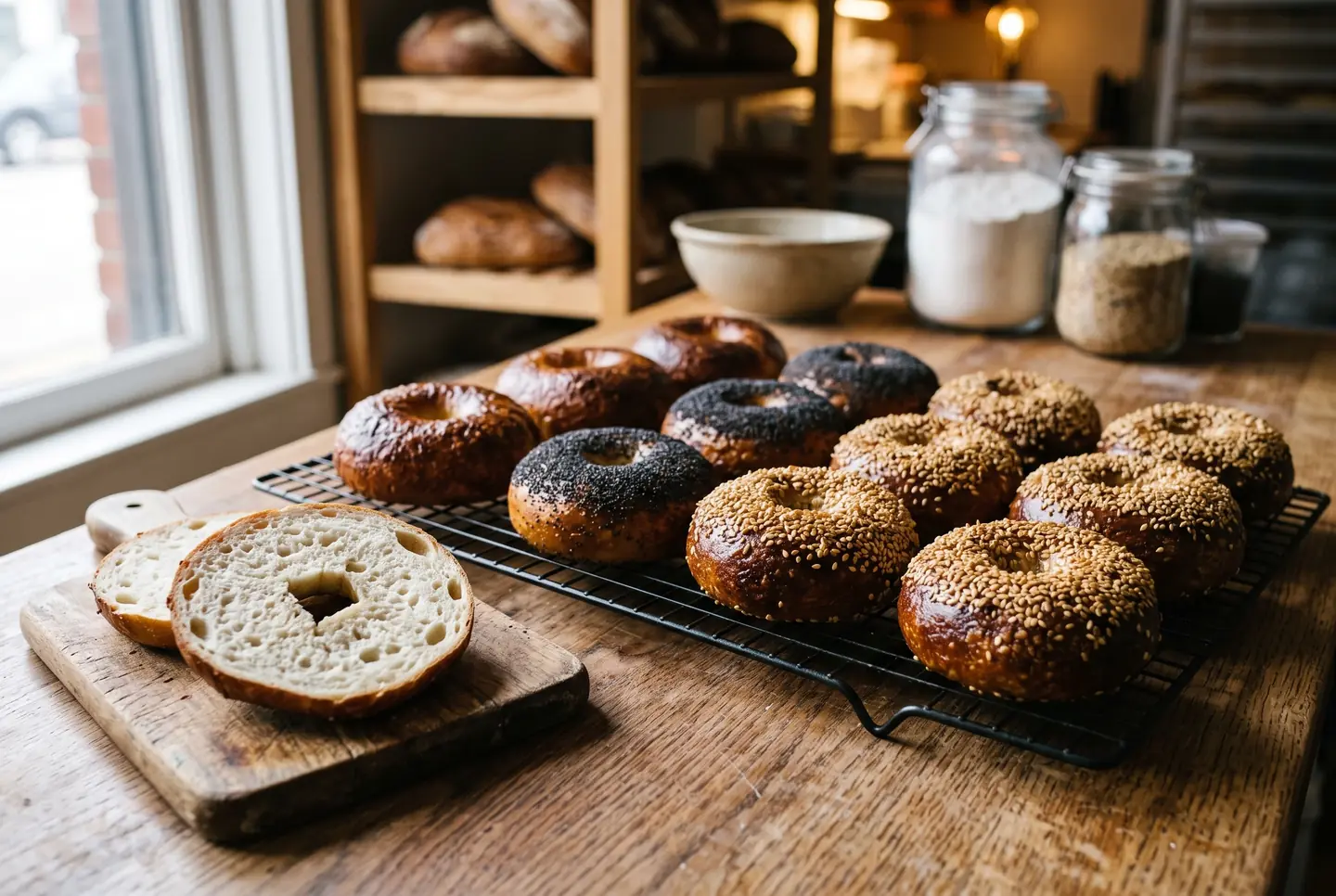 Guide
Guide
Bagel Recipe: New York Style, Step by Step
A weight-based New York bagel recipe, step by step: the firm 58% dough, an overnight cold retard, how long to boil, and the oven heat that sets a glossy crust.
6 min read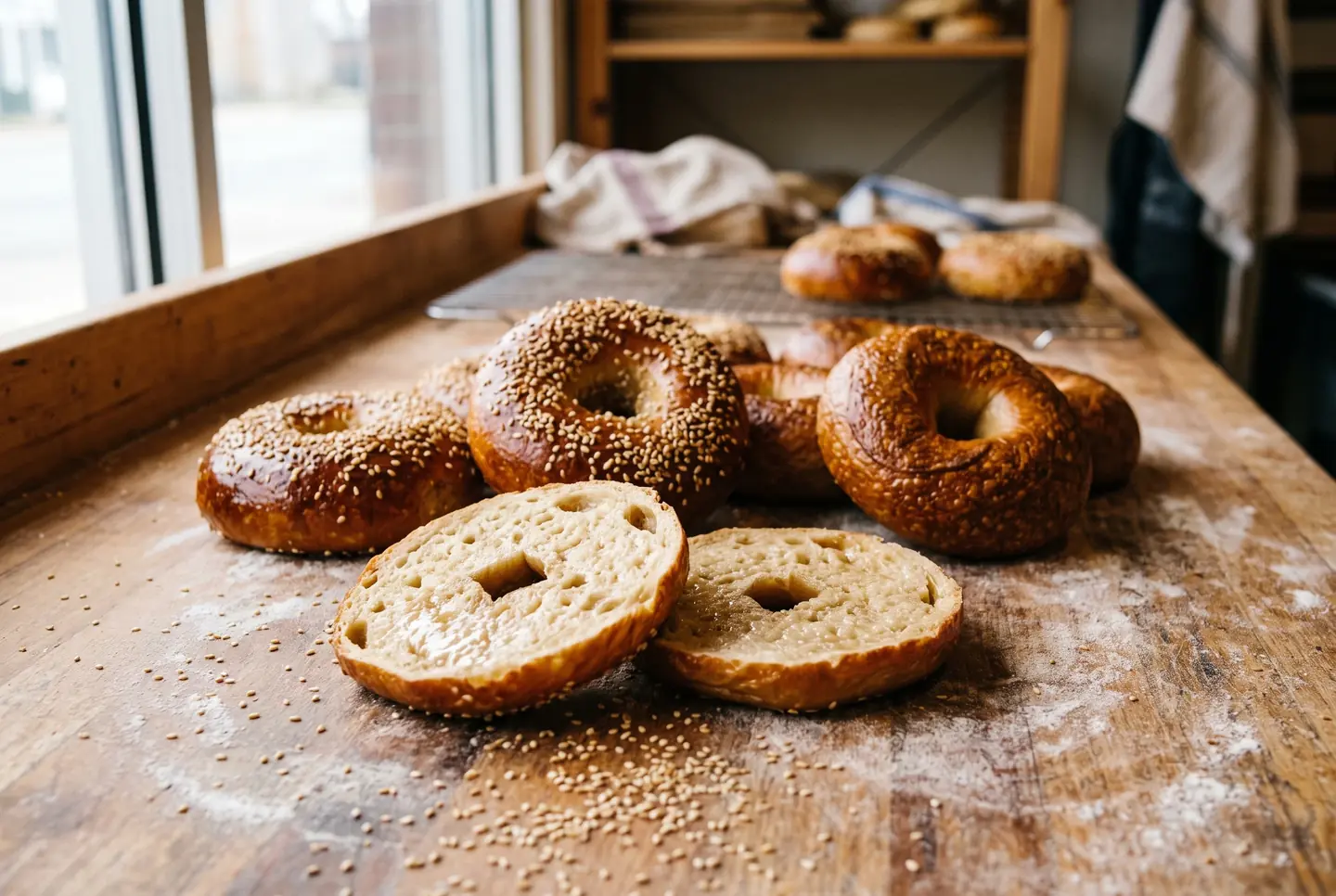 Complete guide
Bagels: The Complete Guide
Make a real bagel at home: the firm 58% dough, why bagels are boiled before baking, New York vs Montreal, sourdough and gluten free, and how to fix flat ones.
18 min read