Guide
Gluten-Free Cornbread That Actually Holds Together
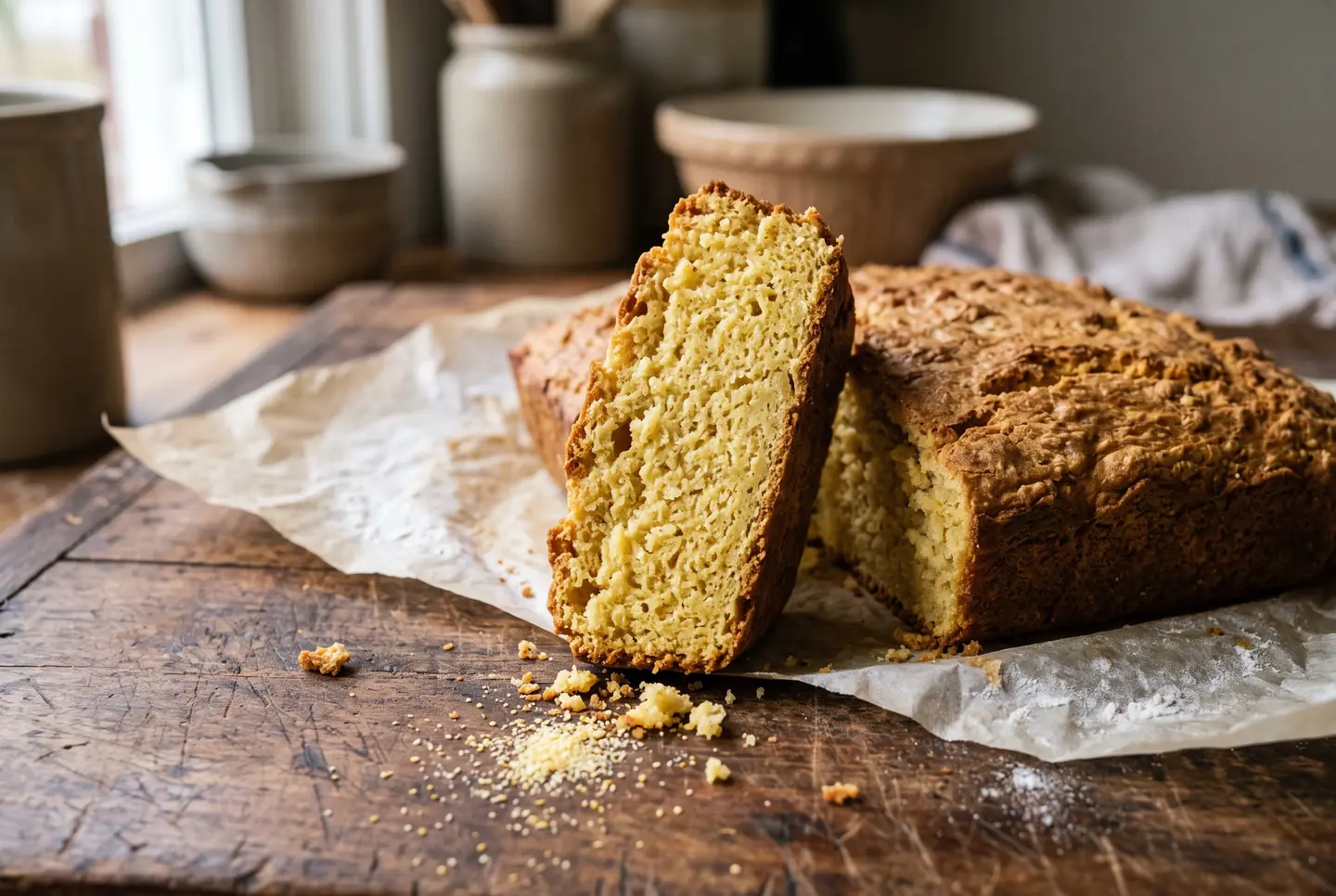
Gluten-free cornbread is one of the easiest breads to convert, because cornbread barely relied on gluten in the first place. Cornmeal has no gluten at all, and a Southern-style loaf with little or no wheat flour is most of the way there before you change a thing. So the job is small and specific: replace the one thing the wheat flour was doing, which is holding the crumb together, and make sure the cornmeal itself is safe. This page is the deep version of the gluten-free section from the complete cornbread recipe guide.
The short answer: swap the wheat flour for a good gluten-free all-purpose blend one for one, add a small binder so a slice does not crumble, and buy cornmeal labelled gluten free. That is the whole recipe. Below is why each step matters and where it goes wrong.
Why cornbread has a head start
Most breads lean on gluten for structure, so taking the wheat out means rebuilding the whole loaf. Cornbread never worked that way. It is a quick bread: the rise comes from baking powder or soda, not from a kneaded gluten network, and the texture is tender and cakey rather than chewy. The wheat flour in a standard recipe is there for one job, binding the crumb so it slices instead of falling apart. Remove it and you lose the binding, not the flavour or the rise.
That is why a naturally cornmeal-heavy, Southern-style cornbread is nearly gluten free as written. The less wheat flour a recipe started with, the smaller the change you have to make.
The one-for-one flour swap
The simplest route is a store-bought gluten-free all-purpose blend, used in place of the wheat flour at the same weight or volume. Because cornbread never needed stretch or chew, these blends work better here than in almost any other bread, where they often disappoint. You are not trying to mimic a gluten network, only to bind a soft crumb, and that is exactly what a good blend does.
| The wheat flour did | Gluten-free replacement |
|---|---|
| Bound the crumb so it slices | GF all-purpose blend, one for one, plus a binder |
| Added a little structure | The binder (xanthan, guar or psyllium) |
| Softened the corn texture | Same blend; grind of cornmeal still your choice |
Blends already containing xanthan or guar gum save you a step. If yours does not, add the binder yourself.
The binder, and how much
A slice of gluten-free cornbread that crumbles the moment you lift it usually just needs a binder. You have three common choices, and small amounts do the work.
| Binder | Typical amount | Notes |
|---|---|---|
| Xanthan gum | About 1 teaspoon per batch | The default; many GF blends already include it |
| Guar gum | Roughly the same as xanthan | A one-for-one stand-in if you avoid xanthan |
| Psyllium husk | About twice the xanthan amount | Gum-free option; can tint the crumb slightly beige |
Those ratios come from gluten-free baking guides such as Zest for Baking and Fearless Dining. An extra egg is another honest binder if you are not also making it vegan: it holds the crumb without changing the flavour. Do not overdo any of them, because too much binder turns the tender crumb gummy.
The catch nobody warns you about: the cornmeal
Here is the part that surprises people. Corn is naturally gluten free, but cornmeal is not automatically safe. Cheaper meal is often milled and packed on lines shared with wheat, so it can pick up gluten in transport, processing and packaging, the same cross-contamination problem that affects oats. If you are cooking for someone with celiac disease or a real intolerance, this matters more than anything else on the page.
The fix is simple: buy cornmeal that says gluten free on the label, which means it was handled on dedicated lines and tested. A recipe can be perfect and still make someone sick if the cornmeal was contaminated, a point celiac-focused bakers like A Couple of Celiacs make repeatedly. This is the one ingredient where the label, not the recipe, decides whether the bread is truly safe.
Method, in short
- Use certified gluten-free cornmeal. Check the label first, before anything else.
- Swap the wheat flour for a gluten-free all-purpose blend, one for one.
- Add the binder if your blend does not already include one: about a teaspoon of xanthan, the same of guar, or roughly double that of psyllium.
- Mix and bake as usual. The batter behaves like ordinary cornbread batter; the oven temperature and time do not change. As with any cornbread, pull it when a tester comes out clean rather than by the clock alone.
- Let it cool before cutting. Gluten-free crumb sets as it cools, so an early slice is what falls apart, not the recipe.
Everything else, the pan, the sugar-or-not question, the preheated skillet, carries straight over from the standard method in the complete guide.
Keeping it dairy free too
If you also need it dairy free, cornbread cooperates: the buttermilk becomes plant milk soured with a little vinegar, and the butter becomes oil. Those are the same swaps used to make it fully plant-based, covered in the guide to vegan cornbread. Gluten free and vegan stack together cleanly, because neither swap fights the other.
Frequently asked questions
Is cornbread gluten free? Not automatically. Cornmeal has no gluten, but most standard cornbread recipes include wheat flour, and some cornmeal is cross-contaminated with wheat. Swap the wheat flour for a gluten-free blend and use certified gluten-free cornmeal, and it is.
What flour replaces the wheat flour in cornbread? A gluten-free all-purpose blend, used one for one. Because cornbread does not need a gluten network, these blends work better here than in most breads. Add a binder if the blend does not already contain one.
Do I need xanthan gum in gluten-free cornbread? You need a binder, and xanthan is the common one, about a teaspoon per batch. Guar gum substitutes one for one, and psyllium husk works at roughly double the amount. An extra egg also binds well if the recipe is not vegan.
Is cornmeal always gluten free? No. Corn is naturally gluten free, but cornmeal is often milled and packaged on lines shared with wheat, so it can be cross-contaminated. For anyone with celiac disease, buy cornmeal labelled or certified gluten free.
Why does my gluten-free cornbread crumble? Usually too little binder, or slicing it too soon. Add about a teaspoon of xanthan or an extra egg, and let the loaf cool fully before cutting, since gluten-free crumb sets as it cools.
Can I make cornbread with only cornmeal and no flour at all? Yes, and it leans toward the rustic, crumbly Southern style. Without any flour you rely more on eggs and a binder to hold it together, and the texture is coarser, which many people prefer.
Does gluten-free cornbread taste different? Very little. Cornbread's flavour comes from the corn, the fat and the browning, none of which change. The main difference is texture, and a binder plus a proper cool keeps that close to the original.
Can I make it gluten free and vegan at the same time? Yes. Use a gluten-free blend with a binder and certified cornmeal for the gluten-free side, and plant milk soured with vinegar plus a flax egg for the vegan side. The two sets of swaps do not interfere.
Where I checked
Keep reading
 Guide
Guide
Bagel Dough: Why It Is So Firm, and How to Knead It
Bagel dough feels stiff and dry on purpose. Here is why it runs at 50 to 60% water and high protein flour, how to knead it, and the windowpane to aim for.
6 min read Guide
Guide
Bagel Recipe: New York Style, Step by Step
A weight-based New York bagel recipe, step by step: the firm 58% dough, an overnight cold retard, how long to boil, and the oven heat that sets a glossy crust.
6 min read Complete guide
Bagels: The Complete Guide
Make a real bagel at home: the firm 58% dough, why bagels are boiled before baking, New York vs Montreal, sourdough and gluten free, and how to fix flat ones.
18 min read