Guide
How to Store Cornbread So It Stays Moist
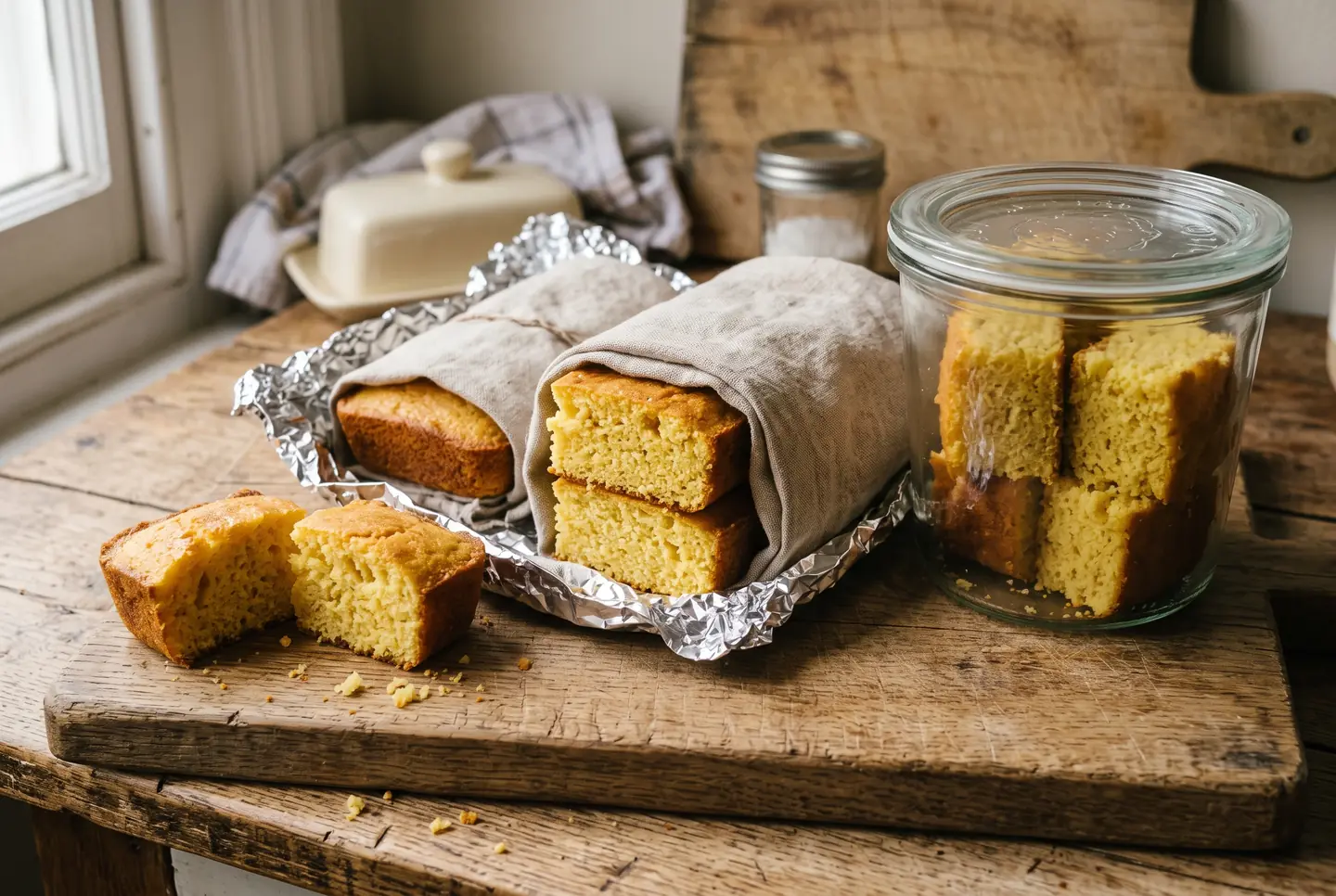
To store cornbread, let it cool completely, wrap it well, and keep it at room temperature for up to two days. Skip the fridge, which dries it out faster than the counter, and freeze it if you need longer than a couple of days. That is the whole answer, and the reasons behind each step are what keep a good loaf from turning to sand overnight. This page is the deep version of the storing section from the complete cornbread recipe guide.
Cornbread is best the day it is baked, more so than most breads. It has no gluten network to hold water, so it goes stale quickly, and the way you store it either slows that down or speeds it up. Getting it right is mostly about two things: how you wrap it, and resisting the urge to put it in the fridge.
How long cornbread keeps
Cool it to room temperature first, always. Wrapping a warm loaf traps steam, and that moisture speeds up spoilage and turns the crust soft.
| Where | How long | Notes |
|---|---|---|
| Room temperature, wrapped | Up to 2 days | The best texture; a cool, dark spot like a pantry |
| Refrigerator | 5 to 7 days safe, but drier | Lasts longer against mould, stales faster |
| Freezer | About 2 to 3 months | The real answer for keeping it beyond a couple of days |
Those windows line up across storage guides such as MasterClass and Food Republic. The room-temperature number is short on purpose, because after two days a counter-kept loaf is past its best even if it is still safe.
Why the fridge is the wrong default
This is the part that surprises people, because the fridge feels like the careful choice. It is not, at least not for texture. Cold, dry fridge air pulls moisture out of the crumb, and staling, the process that makes bread go firm and dry, actually runs fastest at refrigerator temperatures, not at room temperature. So a loaf in the fridge lasts longer before it moulds, but it gets dry and stale sooner along the way.
The honest rule: for a day or two, the counter beats the fridge every time. Use the fridge only if your kitchen is hot and humid enough that mould is the real risk, or if the cornbread is loaded with perishable add-ins like cheese, sour cream or fresh corn, where food safety outranks texture. Otherwise, wrap it and leave it out.
Wrapping is the part that decides everything
Whatever the location, air is the enemy, because it dries the cut faces. Wrap well and store in large pieces rather than slices, since less exposed surface means less drying. A single wedge left open on a plate is stale by morning; the same wedge wrapped tight is fine.
- Room temperature: wrap in plastic or foil, or seal in an airtight container or a zip-top bag. Keep the whole loaf together and cut as you go.
- Skip loose covering. A tea towel alone or a plate with foil draped over it lets the edges dry. Seal it properly.
- Cut side down. If you store a partly cut loaf, press the cut face against a plate or board to slow it drying.
Storing in one large piece and only cutting what you eat is the single habit that keeps cornbread moist longest, a point storage guides like Quick Easy Cook make repeatedly.
Freezing cornbread the right way
Freezing is the move for anything beyond two days, and it works well because deep cold halts staling instead of speeding it. Cool the cornbread fully, then wrap pieces tightly in plastic or foil and seal them in a freezer bag with the air pressed out. Freezing in individual wedges or squares means you thaw only what you want.
To thaw, leave it wrapped and bring it back at room temperature, or overnight in the fridge, before you reheat. Thawing wrapped keeps condensation on the outside of the wrap instead of soaking into the crumb.
Reheating so it tastes fresh again
How you reheat matters as much as how you store, and the microwave is the trap. It steams the bread soft, kills the crust and, left a few seconds too long, turns a slice rubbery. Use dry, gentle heat instead.
| Method | How | Result |
|---|---|---|
| Oven | Wrap in foil, 175 °C (350 °F) for about 15 minutes | Even, gentle; best for a whole loaf |
| Skillet | A little butter, medium heat, cut side down | Crisps the face; best for single slices |
| Microwave | Only if you must, in short bursts under a damp towel | Fast but soft, no crust |
A slice warmed in a buttered skillet comes back closest to fresh, with a crisp face and a warm crumb. Add a little butter or honey and even a day-old piece eats well.
A stale slice is not waste
Here is the quiet upside of cornbread that stales fast: a dry, day-old piece is exactly what several classic dishes want. Cornbread dressing is built on it, because fresh, moist cornbread turns to mush when you soak it, while a stale, sturdy crumb holds its shape and drinks up the stock. So if a loaf gets away from you, do not bin it. Dry it out further and turn it into cornbread dressing, or cube it for a savoury bread pudding. The same goes for a loaf that came out too dry to begin with, which the guide to why cornbread turns out dry covers from the baking side.
Frequently asked questions
How do you store cornbread? Cool it fully, wrap it well in plastic or foil or seal it in an airtight container, and keep it at room temperature for up to two days. Store it in large pieces rather than slices to keep it from drying, and freeze it for anything longer.
Should cornbread be refrigerated? Usually no. The fridge keeps it safe from mould longer but dries and stales it faster than the counter, so for a day or two room temperature is better. Refrigerate only in hot, humid kitchens or when the cornbread has perishable add-ins like cheese or fresh corn.
How long does cornbread last at room temperature? About two days, wrapped, in a cool, dark spot. It is safe a little longer but past its best, because cornbread has no gluten to hold moisture and goes stale quickly.
Can you freeze cornbread? Yes, and it is the best way to keep it beyond a couple of days. Cool it, wrap pieces tightly, seal them in a freezer bag, and it keeps for about two to three months. Thaw wrapped at room temperature before reheating.
How do you reheat cornbread without drying it out? Wrap it in foil and warm it in a 175 °C (350 °F) oven for about fifteen minutes, or crisp a single slice in a buttered skillet. Avoid the microwave, which steams it soft and loses the crust.
Why does my cornbread go stale so fast? Because it has no gluten network to trap water, so it dries faster than a yeasted loaf. Wrapping it tightly and keeping it whole slows that down, and freezing stops it entirely.
What can I do with stale cornbread? Quite a lot. Stale cornbread is the base for classic dressing and for savoury bread puddings, and it crumbles well over chilli or soup. Its firmness is an advantage there, since fresh cornbread would fall apart.
Where I checked
Keep reading
 Guide
Guide
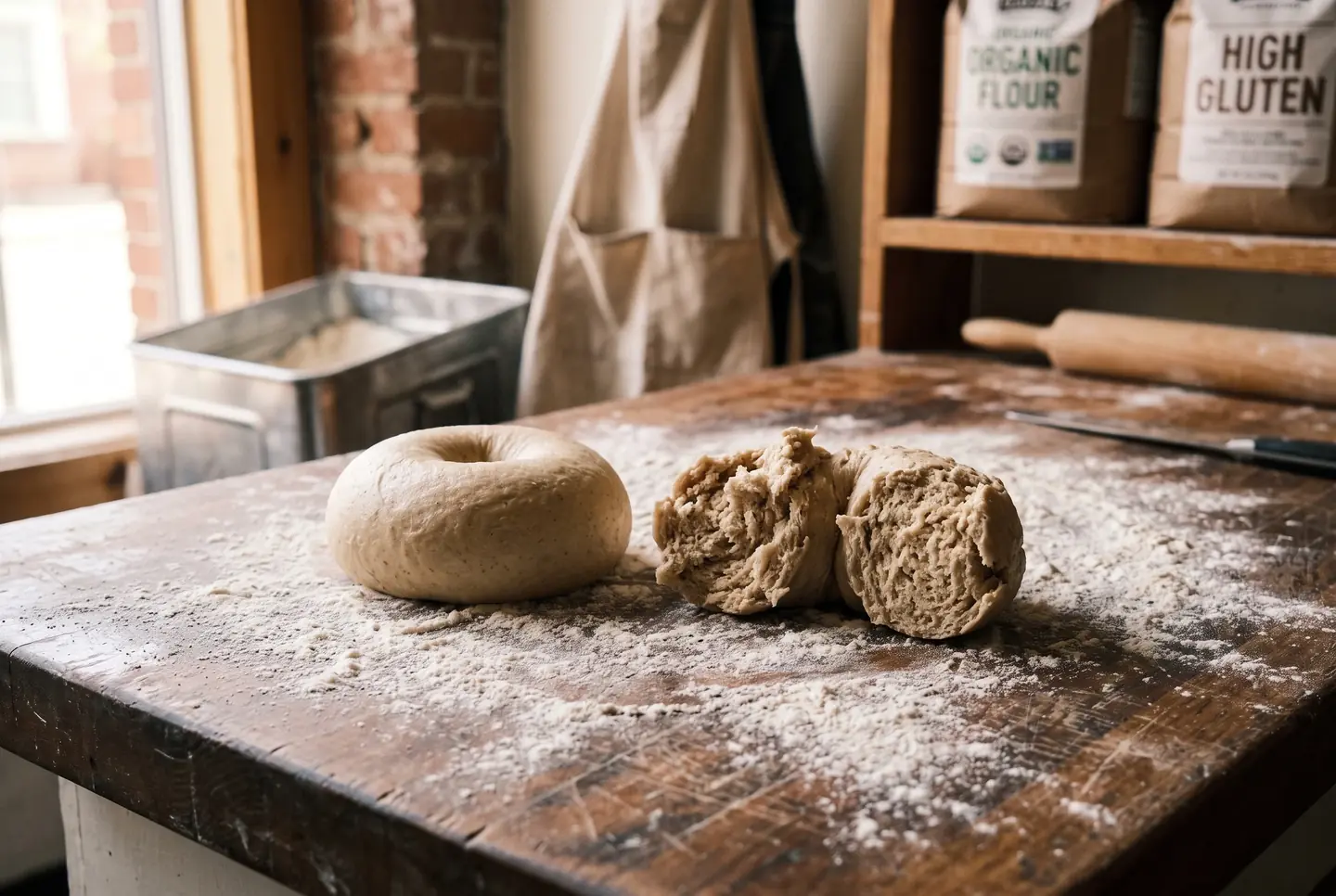
Bagel Dough: Why It Is So Firm, and How to Knead It
Bagel dough feels stiff and dry on purpose. Here is why it runs at 50 to 60% water and high protein flour, how to knead it, and the windowpane to aim for.
6 min read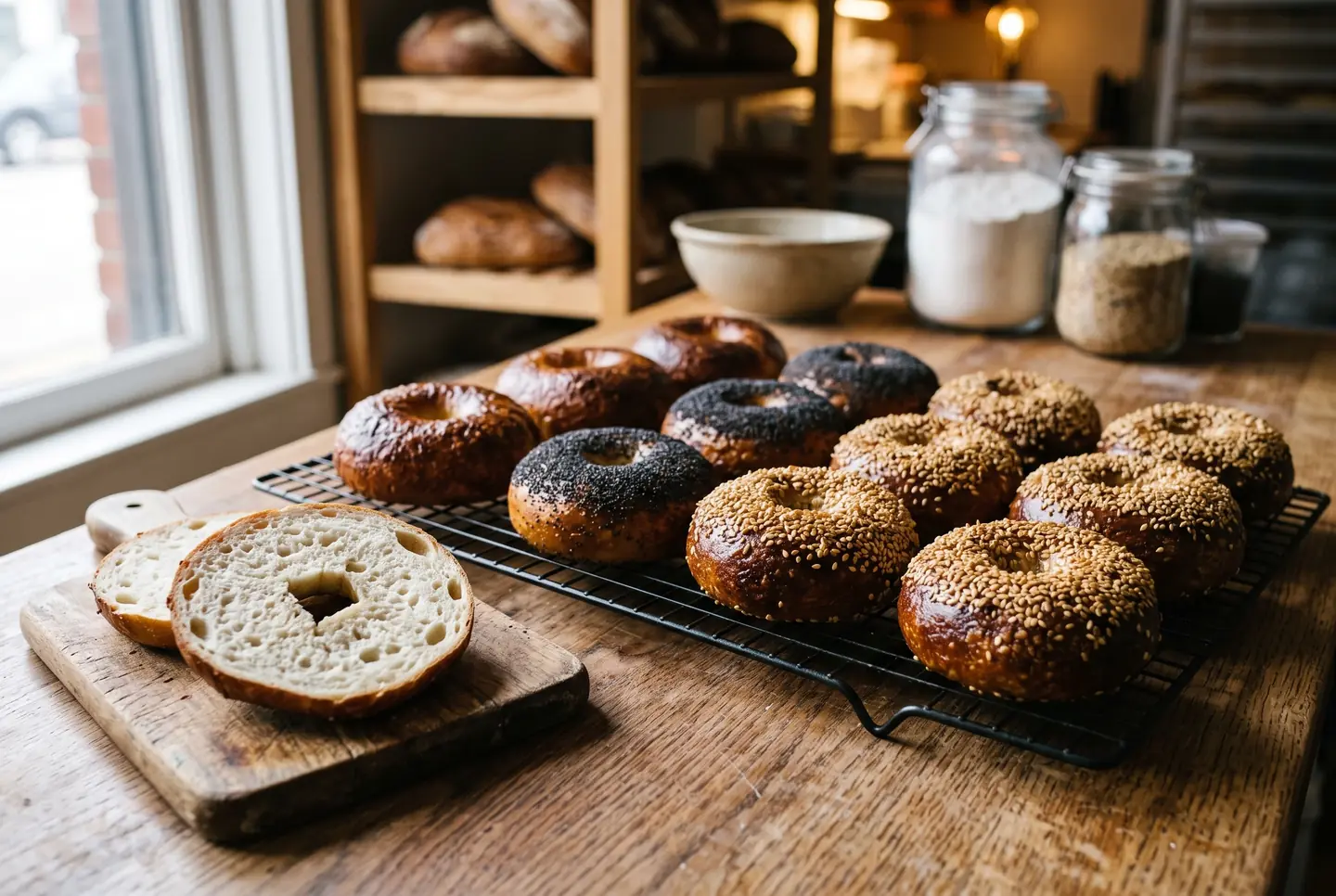 Guide
Guide
Bagel Recipe: New York Style, Step by Step
A weight-based New York bagel recipe, step by step: the firm 58% dough, an overnight cold retard, how long to boil, and the oven heat that sets a glossy crust.
6 min read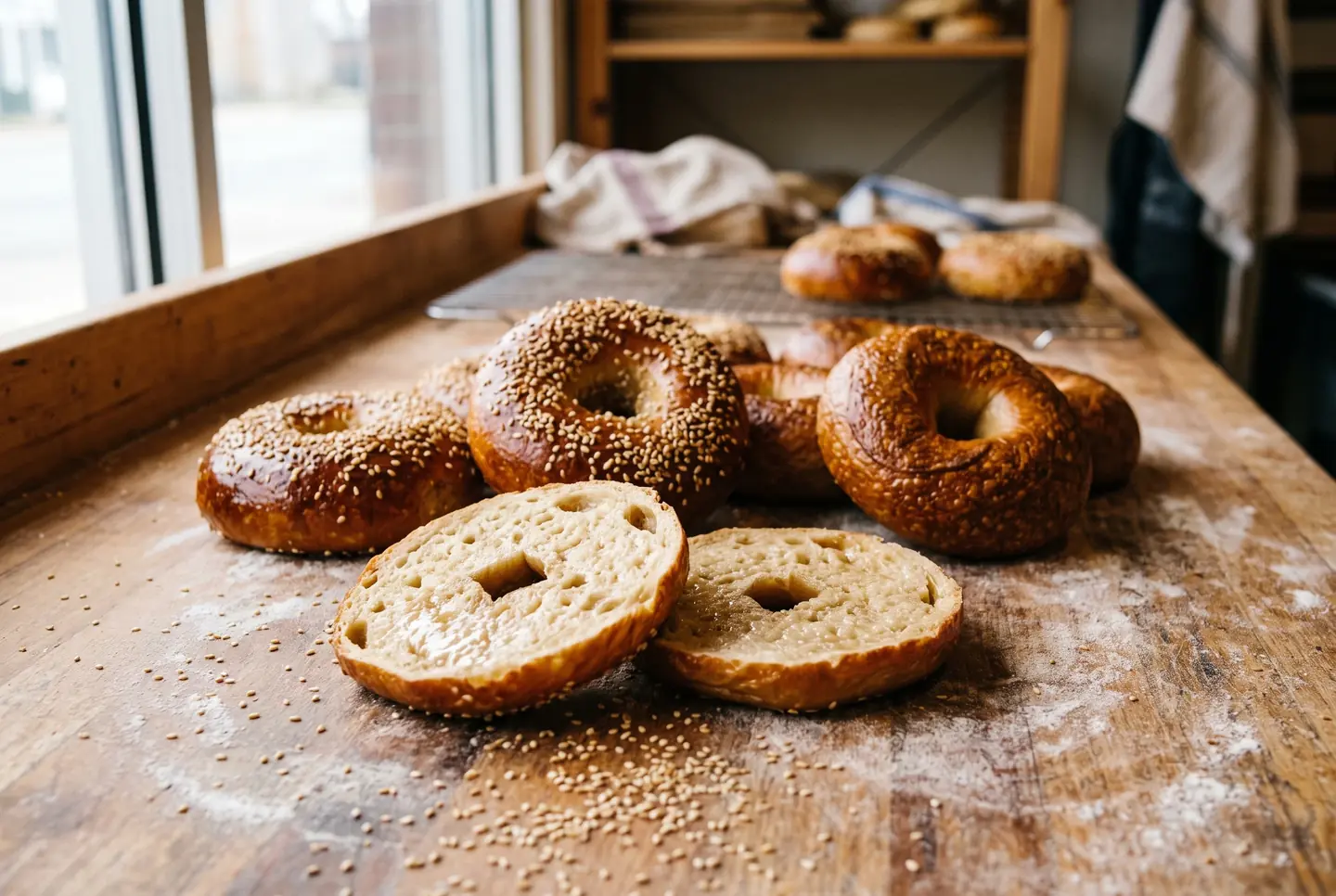 Complete guide
Bagels: The Complete Guide
Make a real bagel at home: the firm 58% dough, why bagels are boiled before baking, New York vs Montreal, sourdough and gluten free, and how to fix flat ones.
18 min read