Guide
Why Is My Cornbread Dry? The Fix for Every Failure
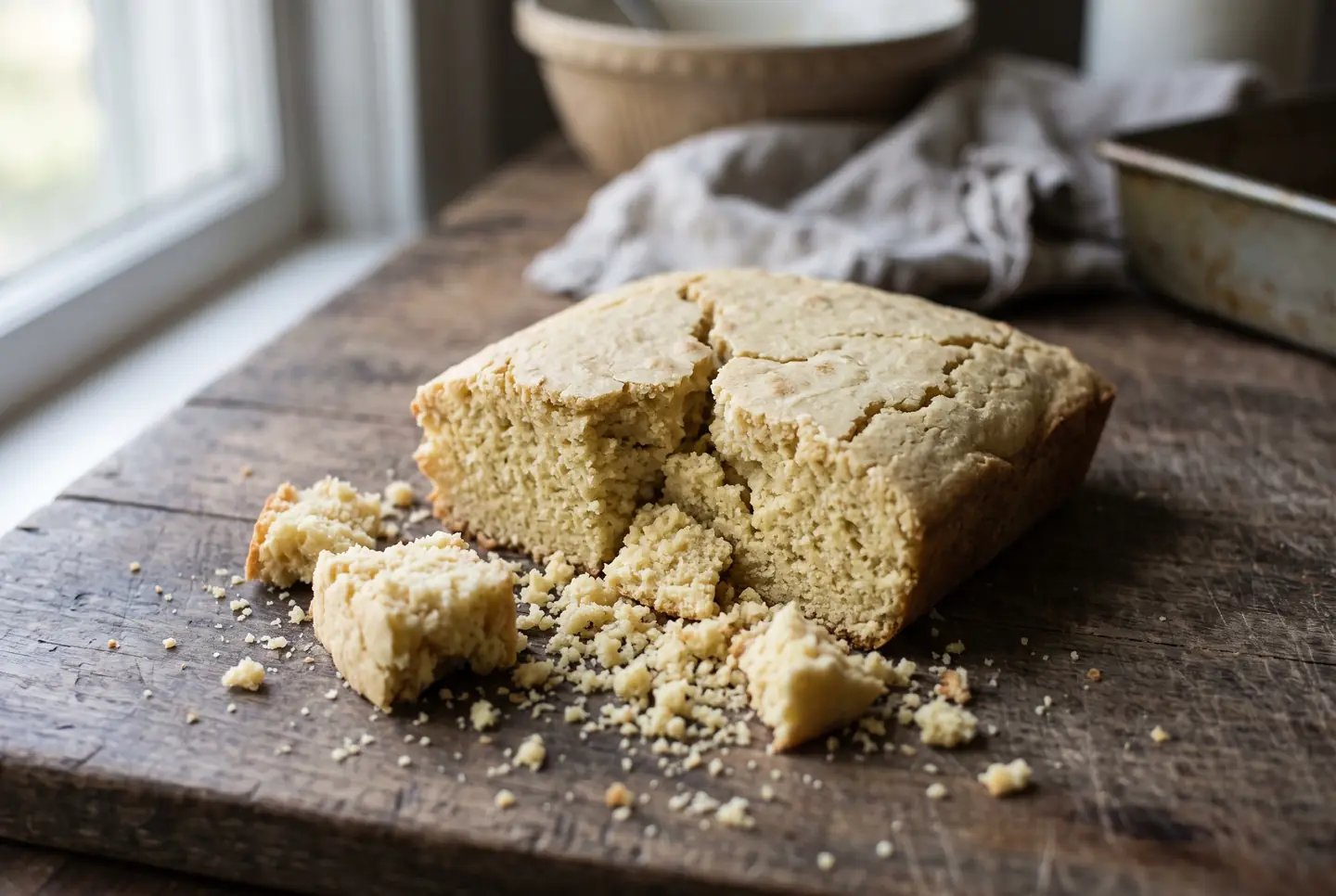
If your cornbread came out dry, the reason is almost always two small things stacking: a lean batter that is mostly cornmeal with little fat or flour to hold moisture, and then a few minutes too long in the oven. Fix either one and the crumb improves; fix both and it comes out tender. That is the short answer, and the rest of this page is how to tell which failure you actually have. This is the deep version of the troubleshooting section from the complete cornbread recipe guide.
The good news is that cornbread does not fail in mysterious ways. It has three classic failures, dry, crumbly and raw in the middle, and each points at one cause, not a fog of them. So do not change the whole recipe. Read the symptom, make the one small change, and bake again.
The three failures, by symptom
Almost every complaint about a homemade loaf is one of these five lines. Match yours, then read the section below it.
| Symptom | Main cause | The fix |
|---|---|---|
| Dry | Too much cornmeal, too little fat or sugar, or overbaked | Add wheat flour and fat, pull it the moment a tester is clean |
| Crumbly, falls apart | Not enough wheat flour or binder holding the crumb | Raise the flour, add an egg, let it cool before cutting |
| Raw in the middle, dark edges | Oven too hot, pan too deep, or heavy wet add-ins | Lower to 200 °C (400 °F), use a wider pan, bake by tester not clock |
| Tough, with tunnels | Batter overmixed | Fold just until the flour disappears, lumps are fine |
| Pale, soft bottom | Cold pan | Preheat the cast iron in the oven first |
The point of the table is that these do not overlap much. Dry and crumbly feel similar in the mouth but come from different places, and the fixes are different too, so getting the diagnosis right is most of the work.
Dryness, the most common complaint
Dry cornbread is usually a lean batter meeting a long bake. Cornmeal on its own holds very little moisture, so a recipe that is nearly all cornmeal, with a modest amount of butter or oil and little or no wheat flour, starts out with nothing to keep it moist. Cut the fat to save calories and you feel it immediately, because fat is what carries the sense of moistness on the tongue.
Two changes cover most of it. First, add wheat flour: it softens the corn texture and holds water in a way straight cornmeal cannot, which is why bakers who fight dryness reach for more flour, not less. Adding flour is one of the standard moves for a moister loaf, as troubleshooting guides like A Weekend Cook and Southern Food Junkie point out. Second, keep the fat generous, whether that is butter, oil or bacon drippings, and consider buttermilk or sour cream in place of some of the milk, since both add fat and a little acid that tenderises the crumb.
The other half of dryness is the oven, and it hides in plain sight.
Cornbread keeps cooking after it leaves the oven
Here is the part that turns a good recipe into a dry one even when the batter is right. Cornbread carries a lot of residual heat, so it keeps baking for a few minutes on the counter after you pull it. That means a tester that comes out just clean is the finish line, not almost done. Wait for zero crumbs and you have already overshot.
So test early and test by feel. The loaf is ready when the edges just start to pull away from the pan, the top is barely golden, and the centre springs back when you press it gently with a fingertip. A toothpick should come out with a crumb or two clinging, not bone dry. Pull it there, let the residual heat finish the job, and the crumb stays moist. Trusting the clock over the tester is the single most common way a careful baker still ends up with dry cornbread.
Crumbly, when a slice falls apart
Crumbly is a different problem from dry, even though a dry loaf is often crumbly too. Here the issue is structure: nothing is holding the crumb together. Cornmeal has no gluten, so in a normal recipe the wheat flour and the egg are what bind a slice. Too little of either and the loaf shatters when you cut it.
| If it crumbles because | Do this |
|---|---|
| Too little wheat flour | Raise the flour a little toward a more balanced cornmeal-to-flour ratio |
| Not enough egg | Add an egg; the protein sets and binds the crumb |
| Cut while hot | Let it cool in the pan; a hot cornbread is at its most fragile |
| All cornmeal, coarse grind | Use some flour, or a finer meal, for a tighter crumb |
The cooling step is the one people skip. A cornbread straight from the oven has not set yet, and slicing into it is what makes it fall apart, not the recipe. Give it fifteen to twenty minutes in the pan and it firms up. If you are baking gluten free, the same logic applies but the binder is a gum or an extra egg, which the gluten free cornbread guide covers in full.
Raw in the middle, dark on the edges
This one looks like an oven problem, and it usually is. When the outside is browning fast while the centre stays wet, the oven is too hot, the pan is too deep for the amount of batter, or you loaded the batter with heavy, wet add-ins like whole corn kernels or cheese that hold the middle back. The heat sets the outside before it can reach the core.
The fixes, in order of how often they work:
- Lower the temperature. Drop to 200 °C (400 °F) so the inside has time to cook before the crust sets. A wide, shallow pan cooks through far more evenly than a deep one.
- Rescue a loaf that is already browning too fast. Cover it loosely with foil to stop the top colouring and return it to a low oven, around 165 °C (325 °F), for another ten to fifteen minutes until the centre is set. This foil-and-low-heat rescue is the standard fix, as Baking Kneads describes.
- Use a wider pan next time. The same batter spread thinner bakes through without the edges scorching.
A hot cast iron skillet actually helps here, not hurts, because the even, retained heat cooks the base steadily rather than blasting it. The trap is a deep pan, not a hot one.
Tough with tunnels, or pale on the bottom
Two smaller failures round out the list. A tough cornbread full of holes is overmixed: stirring the batter hard develops what little structure the wheat flour has and knocks the air around, so fold just until the dry streaks disappear and leave the lumps. Overmixing is a real cause of a dense, dry result, as Chef In You notes. A pale, soft, greasy-feeling bottom means the pan went in cold: preheat the skillet in the oven first so the batter hits hot metal and sets a crust from the moment it lands.
Store it right, or the moisture you saved is lost anyway
None of this helps if a good loaf dries out on the counter overnight. Cornbread has no gluten network to hold water, so it stales faster than a yeasted loaf, and how you keep it matters. The guide to storing and reheating cornbread has the method, but the short version is to wrap it at room temperature, skip the fridge, and warm slices in a low oven rather than the microwave.
Frequently asked questions
Why is my cornbread dry? Usually a lean batter, too much cornmeal with too little fat or wheat flour, meeting a bake that ran a few minutes long. Add flour and fat for a moister crumb, and pull the loaf the moment a tester comes out with a crumb or two clinging, because it keeps cooking as it cools.
How do I make cornbread more moist? Raise the fat and add some wheat flour, and swap part of the milk for buttermilk or sour cream. Then stop baking sooner: cornbread finishes on residual heat, so a just-clean tester means it is done.
Why does my cornbread fall apart when I cut it? Not enough binding, or slicing it too hot. Cornmeal has no gluten, so the wheat flour and the egg hold a slice together. Raise the flour a little, add an egg, and let the loaf cool in the pan before cutting.
Why is my cornbread raw in the middle but brown on top? The oven is too hot or the pan is too deep, so the outside sets before the centre cooks. Lower the heat to 200 °C (400 °F) and use a wider, shallower pan. To rescue one that is already dark, cover it with foil and return it to a 165 °C (325 °F) oven for ten to fifteen minutes.
Can I fix cornbread that is already baked and dry? You cannot put moisture back into the crumb, but you can serve it well: warm it and add butter and honey, or use the dry pieces for cornbread dressing or a bread pudding, where extra liquid is the whole point. Next time, catch it at the tester stage.
Does more sugar make cornbread moister? A little, because sugar attracts and holds water, which is part of why sweeter Northern-style cornbread reads as moister than savoury Southern styles. Fat and flour do more of the work, though, and the sugar question is really about the style you want.
Why is my cornbread dense and heavy? Usually overmixing, or baking powder that has lost its lift. Fold the batter just until combined, leaving lumps, and check that your baking powder is fresh, since a flat rise gives a heavy, tight crumb.
Where I checked
Keep reading
 Guide
Guide
Bagel Dough: Why It Is So Firm, and How to Knead It
Bagel dough feels stiff and dry on purpose. Here is why it runs at 50 to 60% water and high protein flour, how to knead it, and the windowpane to aim for.
6 min read Guide
Guide
Bagel Recipe: New York Style, Step by Step
A weight-based New York bagel recipe, step by step: the firm 58% dough, an overnight cold retard, how long to boil, and the oven heat that sets a glossy crust.
6 min read Complete guide
Bagels: The Complete Guide
Make a real bagel at home: the firm 58% dough, why bagels are boiled before baking, New York vs Montreal, sourdough and gluten free, and how to fix flat ones.
18 min read