Guide
Hot Water Cornbread: The Fried, No-Oven Skillet Kind
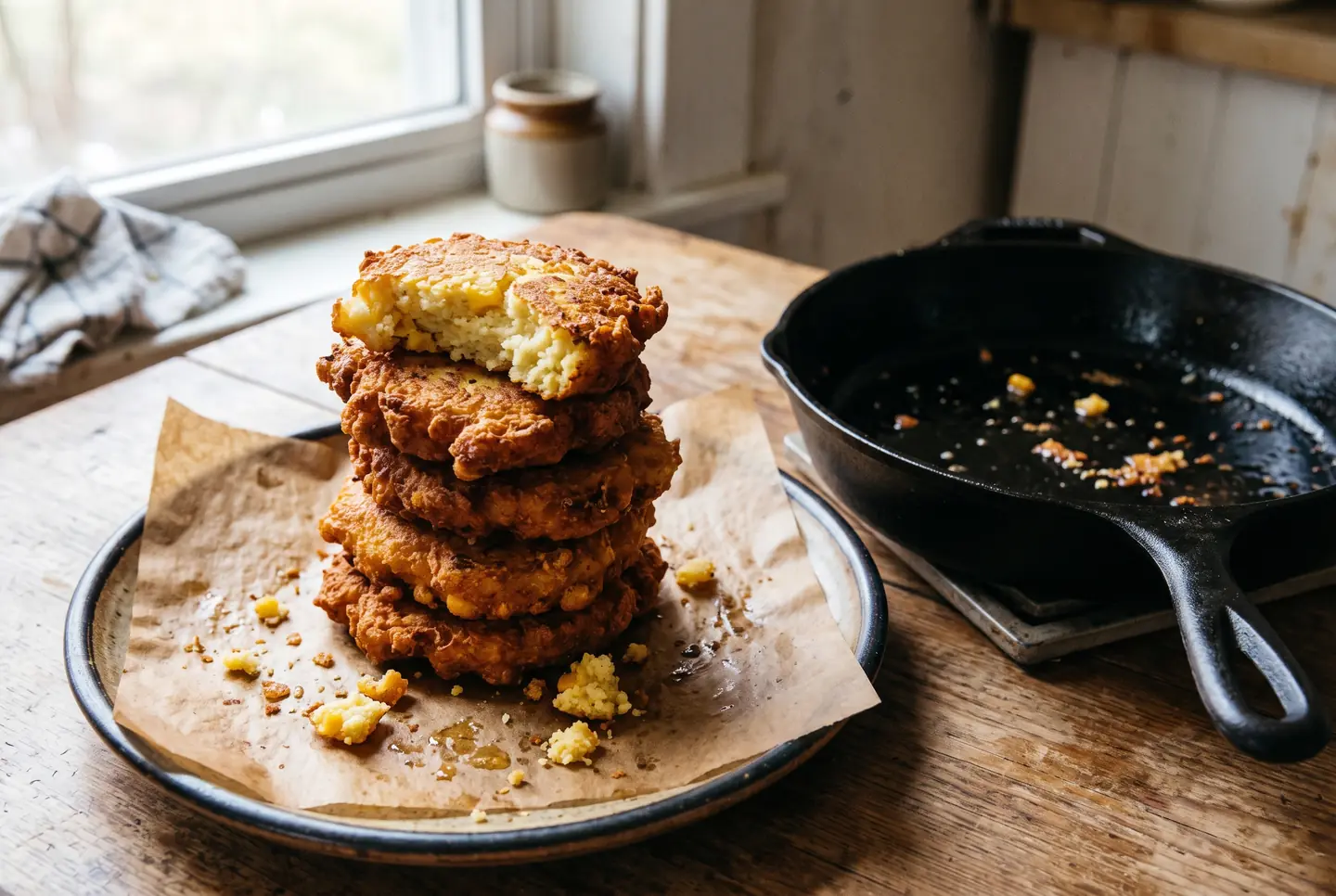
Hot water cornbread is the oldest and simplest cornbread there is, and it never sees an oven. You stir boiling water straight into cornmeal, which scalds the starch and makes a thick, shapeable batter, then fry spoonfuls in a hot greased skillet like little cakes: crisp outside, soft and steamy inside. It is the fastest cornbread you can make, done in the time the oven versions are still preheating. This page is the deep version of the hot water section from the complete cornbread recipe guide.
The two things that make or break it: the water has to be actually boiling, and the pan has to be genuinely hot. Miss either and you get a gritty or greasy cake instead of a crisp one.
What it is, and what "scalding" does
The classic version is almost nothing: cornmeal, salt, a little fat, and boiling water. There is no flour, no egg, no leavening and no oven. Pouring boiling water over the cornmeal scalds it, softening the starch so the meal drinks the water and firms into a batter you can shape with a spoon. That scald is the whole technique. It is why hot water cornbread holds together without any of the binders a baked cornbread relies on, and why it is naturally close to gluten free, since the traditional recipe is just corn, water, salt and fat.
| Element | Baked cornbread | Hot water cornbread |
|---|---|---|
| Cooking | Oven, in a pan | Fried, on the stovetop |
| Binding | Egg, flour, leavening | The scald alone |
| Time | Preheat plus 25 to 30 minutes | Minutes, no preheat |
| Texture | Cake-like crumb | Crisp shell, dense soft center |
The method, step by step
- Boil the water for real. It has to be at a full boil, 100 °C (212 °F), not just hot from the tap or the kettle's first murmur. Water that is merely warm will not scald the cornmeal, and you end up with a gritty, raw texture.
- Stir it into the cornmeal. Pour the boiling water over salted cornmeal and stir to a thick, spoonable batter. Add the water gradually; different cornmeals drink different amounts, so stop when it mounds rather than runs.
- Let it rest. Give the batter a couple of minutes. The cornmeal keeps absorbing water and firms up, so it shapes cleanly instead of slumping.
- Heat the skillet and the fat. Get a shallow layer of fat genuinely hot in the pan before the batter goes in. A pan that is not hot enough gives you a greasy cake instead of a crisp one.
- Shape and fry. Scoop the batter with a wet spoon or wet hands, so it does not stick, into small flat cakes. Fry in the hot fat and turn once, when the edges look set and lacy.
- Drain and eat warm. They are best straight from the pan, crisp side up.
The two things that go wrong
Almost every failed hot water cornbread traces back to one of two mistakes, and both are about heat.
| Problem | Cause | Fix |
|---|---|---|
| Gritty, raw, sandy inside | Water was not truly boiling | Use water at a full rolling boil |
| Greasy, pale, no crisp | Pan or fat not hot enough | Heat the fat properly before frying |
| Batter slumps and spreads | Too wet, or no rest | Add water gradually, let it rest to firm |
| Sticks to the spoon or hands | Dry tools | Wet the spoon or your hands before shaping |
Get the water boiling and the pan hot, and the rest is forgiving. This is a recipe that punishes lukewarm and rewards decisive heat, the same lesson that a preheated pan teaches a baked loaf in the guide to cast iron cornbread.
How thick to make the batter
Aim for a batter that mounds on the spoon and holds a shape, not one that pours. Too thin and the cakes spread into thin, greasy discs; too thick and the center stays dense and undercooked while the outside browns. Because cornmeals vary, add the boiling water a little at a time and judge by feel: it should be scoopable and hold its edges after the short rest. If it firms up too much while it sits, a splash more boiling water loosens it.
Serving it
Hot water cornbread is a side and a snack: alongside greens, beans, soup or fried fish, or on its own with butter while it is still hot. It does not keep or reheat like a baked loaf, since the appeal is the fresh crisp edge, so it is a make-and-eat dish rather than a make-ahead one. That is the opposite end of the cornbread spectrum from the oven-baked, herby cornbread dressing, which is deliberately dried and baked, and it shows how far the same bag of cornmeal can travel depending on the method.
Frequently asked questions
What is hot water cornbread? The oldest, simplest form of cornbread: cornmeal, salt and fat mixed with boiling water into a thick batter, then fried in a hot greased skillet into small cakes. No oven, no egg, no flour and no leavening. Crisp outside, soft and dense inside.
Why does the water have to be boiling? Boiling water scalds the cornmeal, softening the starch so it absorbs the water and firms into a shapeable batter that holds together without egg or flour. Water that is only warm does not scald it, and you get a gritty, raw texture.
Why is my hot water cornbread greasy? The fat or the pan was not hot enough. When the skillet is properly hot, the cakes crisp quickly and absorb less fat; a cool pan lets them sit and soak it up. Heat the fat before the batter goes in and fry in just a shallow layer.
Is hot water cornbread gluten free? The traditional recipe is naturally close to gluten free, since it is essentially cornmeal, water, salt and fat with no wheat flour. If you need it strictly gluten free, check that your cornmeal is certified and not cross-contaminated, since that is the only variable.
How do I keep the batter from sticking to my hands? Wet your hands or your spoon before shaping each cake. A thick scalded cornmeal batter sticks to dry tools but slides off wet ones, which is the traditional trick for forming the little cakes.
Do I need any special cornmeal? Plain cornmeal is all it takes, and the grind is a matter of taste: finer meal gives a smoother cake, coarser meal a more textured one. Because different cornmeals absorb differently, add the boiling water gradually rather than all at once.
Can I make it ahead? It is best fresh and hot, straight from the skillet, since the whole point is the crisp edge that softens as it sits. Unlike a baked loaf or muffins, hot water cornbread does not store or reheat well, so make it to eat right away.
Is it the same as hoecakes or johnnycakes? They are close cousins, all griddle or skillet cornmeal cakes, but not identical. The defining move of hot water cornbread is the scald: boiling water stirred into the cornmeal first. Some hoecake and johnnycake recipes scald the meal and some do not, and many add egg, milk or leavening, which hot water cornbread in its plainest form leaves out. Think of them as one family of fried cornmeal cakes with regional names and small differences.
Where I checked
Keep reading
 Guide
Guide
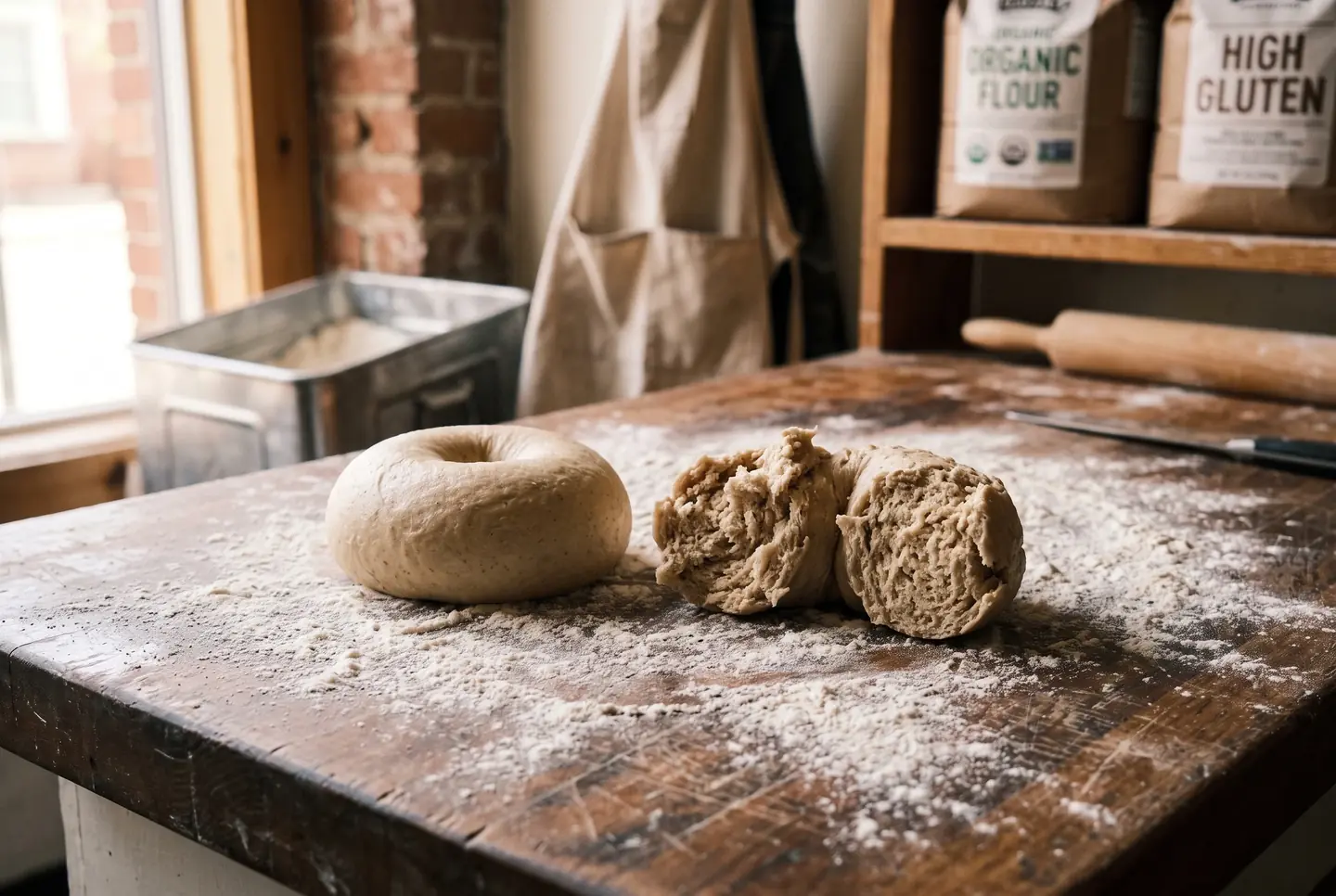
Bagel Dough: Why It Is So Firm, and How to Knead It
Bagel dough feels stiff and dry on purpose. Here is why it runs at 50 to 60% water and high protein flour, how to knead it, and the windowpane to aim for.
6 min read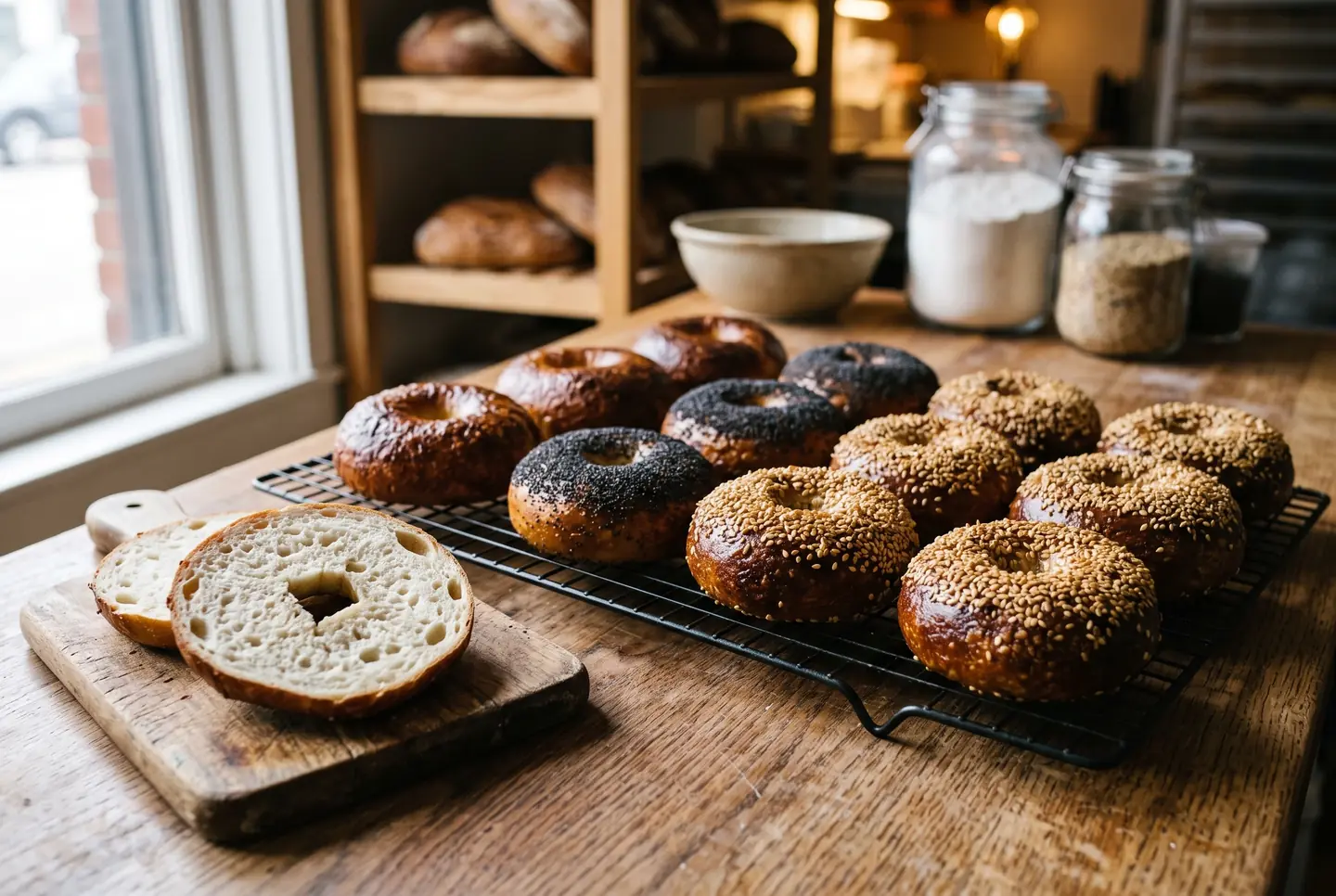 Guide
Guide
Bagel Recipe: New York Style, Step by Step
A weight-based New York bagel recipe, step by step: the firm 58% dough, an overnight cold retard, how long to boil, and the oven heat that sets a glossy crust.
6 min read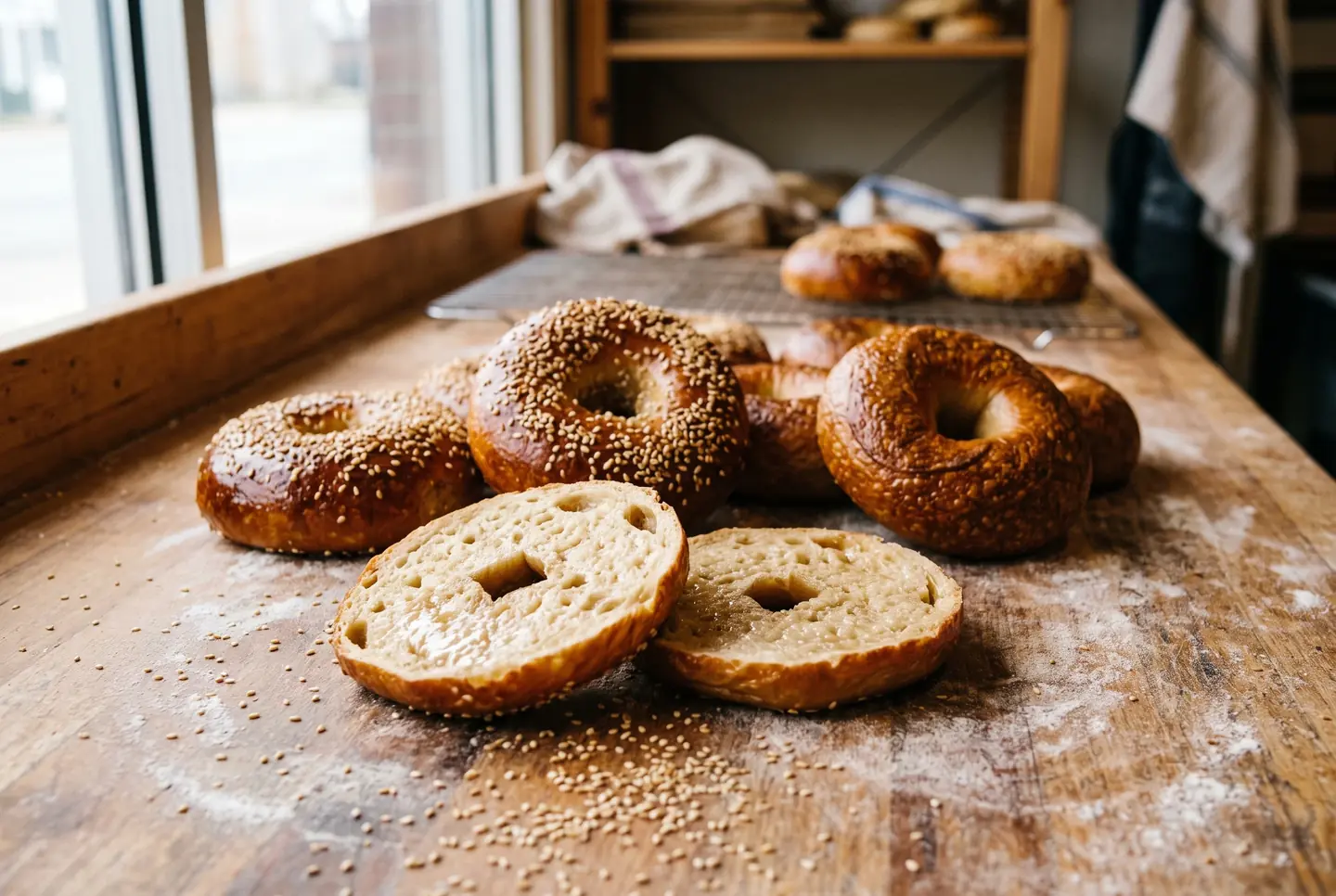 Complete guide
Bagels: The Complete Guide
Make a real bagel at home: the firm 58% dough, why bagels are boiled before baking, New York vs Montreal, sourdough and gluten free, and how to fix flat ones.
18 min read