Guide
Sourdough Discard Recipes: The Rule That Replaces the List
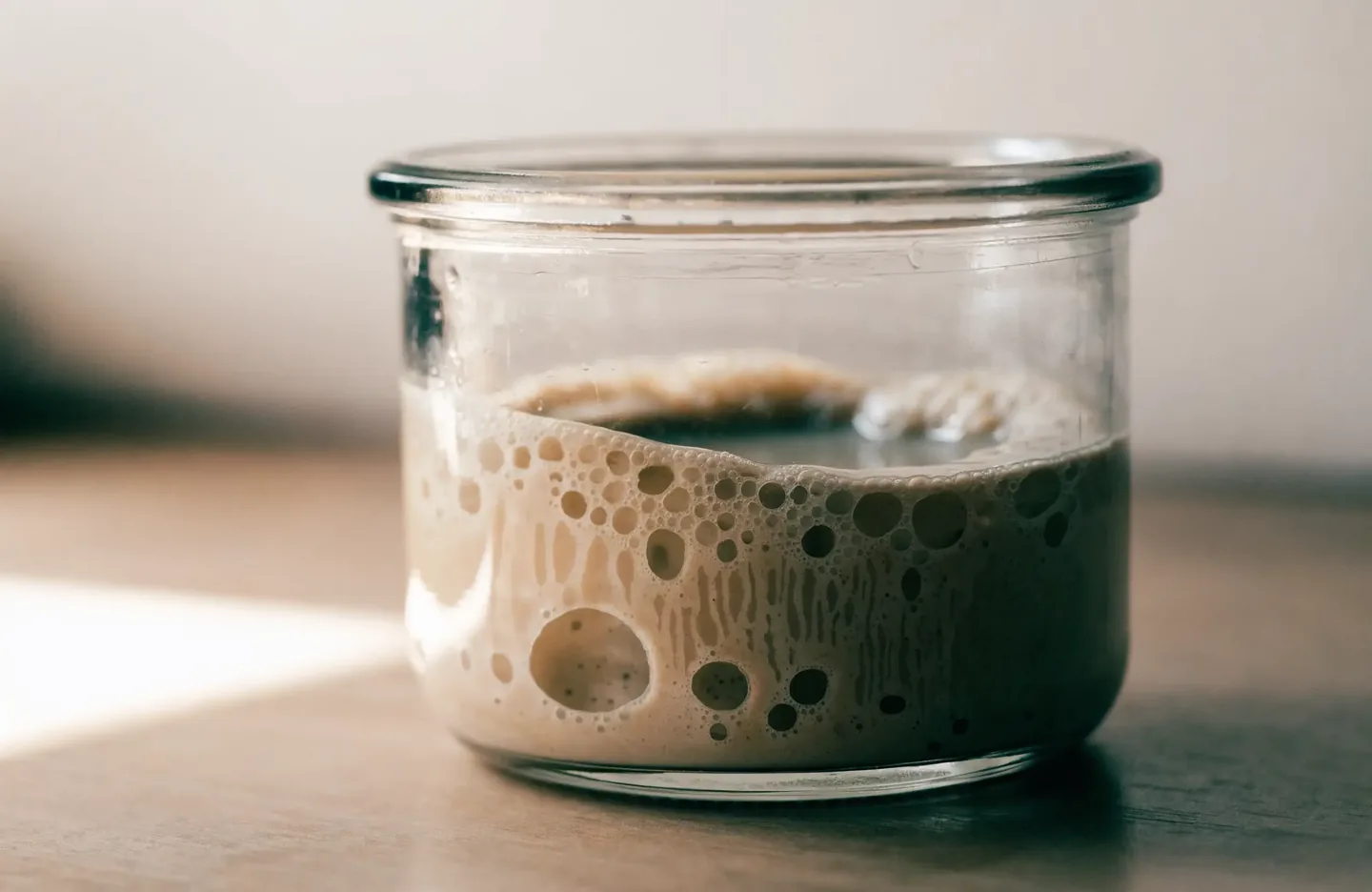
Every list of discard recipes is the same list. Here is the thing that makes the list unnecessary: discard is half flour and half water by weight, and it is acidic. Learn those two facts and you can put discard into almost any recipe you already own.
The maths is one line. To add 100 g of discard to a recipe, take out 50 g of flour and 50 g of water. That is it. Your pancake recipe, your cracker recipe, your banana bread: they all take discard now.
| You add | Remove from the recipe | Also consider |
|---|---|---|
| 50 g discard | 25 g flour, 25 g liquid | Nothing, too small to matter |
| 100 g discard | 50 g flour, 50 g liquid | A pinch of bicarbonate of soda |
| 200 g discard | 100 g flour, 100 g liquid | Bicarbonate, and expect a tangier result |
That substitution assumes a starter kept at 100% hydration, which is flour and water in equal weights. If yours is stiff, adjust the split accordingly.
This is one section of the complete guide to sourdough starters, which covers feeding, storage and reading the jar.
First, the part nobody puts at the top
Do not use discard from a starter you are still building. King Arthur's guidance is to wait until you have a healthy, active starter before keeping discard from routine feedings (King Arthur Baking).
That is not fussiness. In the first days a new jar is dominated by organisms that came in on the flour and do not survive what comes next, which is exactly why day 3 smells sharp and cheesy and day 4 goes quiet. That mixture is not what you want in a pancake. Wait until the jar is doubling on a predictable clock, then start collecting.
The other rule is simpler: do not eat raw starter. Discard goes into things that get cooked or baked. Raw flour is the reason, and it applies to any raw batter, sourdough or not: the FDA warns that raw flour can carry E. coli or Salmonella and has to be cooked before you eat it (FDA, Handling Flour Safely).
Why baking soda is in every discard recipe
Discard is acidic, because that is what a starter produces as it ferments: lactic and acetic acid. Bicarbonate of soda is an alkali. Put them together and you get carbon dioxide immediately, which is why a discard batter visibly puffs the moment you stir the bicarbonate in (Summit Sourdough).
This is the whole reason the classic discard recipes are what they are. Pancakes, waffles, crackers, quick breads and scones are all chemically leavened and all happy with a little acid. Discard is not an odd ingredient in them, it is a better version of the buttermilk they usually call for.
How much: roughly a quarter to half a teaspoon of bicarbonate per cup of discard is the usual guidance, and going over it costs you: too much bicarbonate tastes bitter, soapy or metallic. Old bicarbonate also loses potency, so a tub more than about six months open is worth replacing.
One practical note: mix the bicarbonate in at the last moment. The reaction starts immediately, so a batter left sitting has already spent most of its lift.
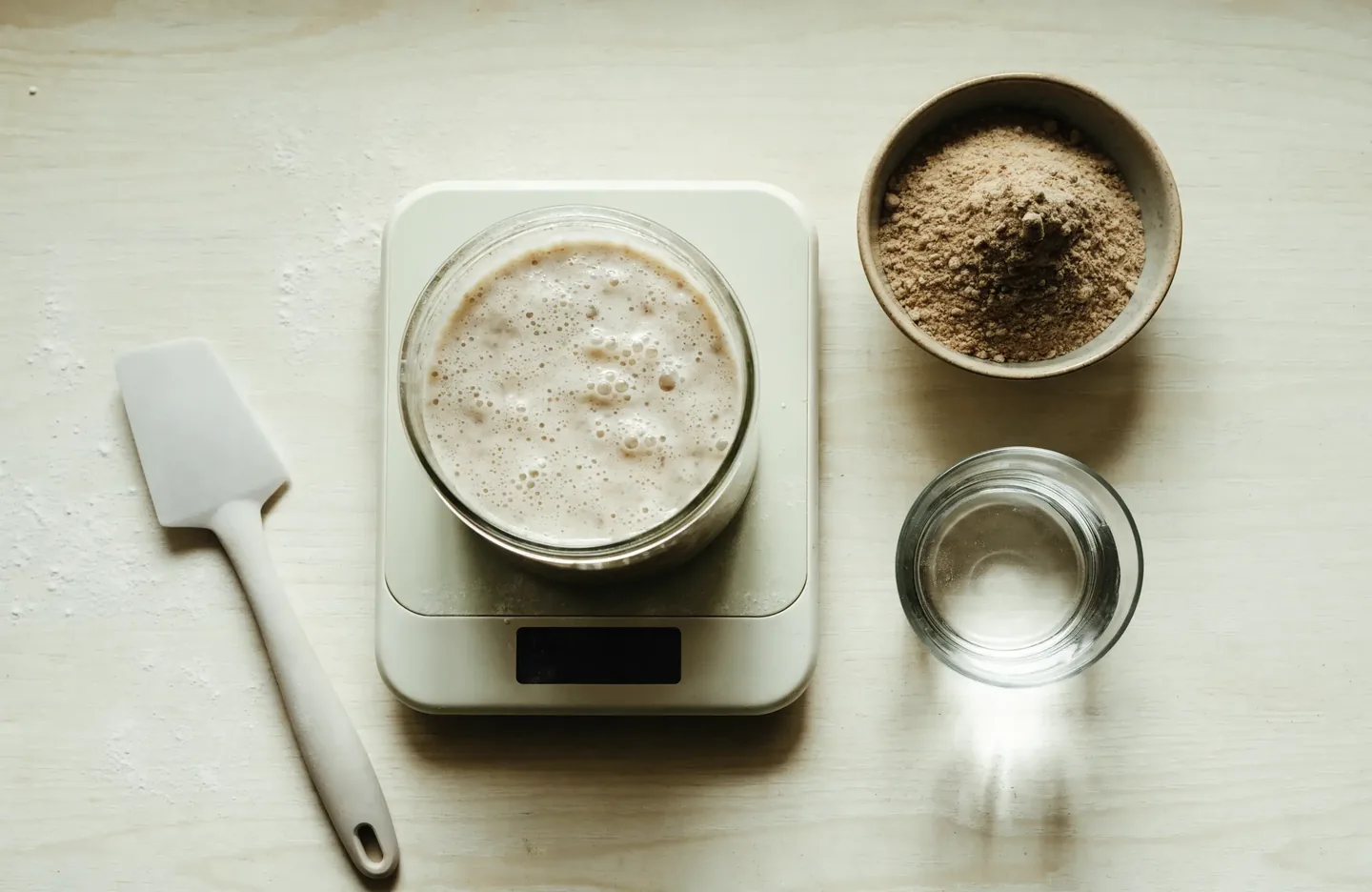
What discard will and will not do
The single most common disappointment: discard will not raise bread. It is a spent culture, hours or days past peak, with its sugars used up and acid built up. Left to leaven a loaf on its own it produces a dense, sour brick.
| Use | Works? | Why |
|---|---|---|
| Pancakes, waffles, crumpets | Yes | Chemically leavened, acid is an asset |
| Crackers, flatbreads | Yes | No rise needed at all |
| Quick breads, muffins, scones | Yes | Bicarbonate does the lifting |
| Pizza dough with added yeast | Yes | Flavour from discard, lift from yeast |
| Pasta, batters, coatings | Yes | Flour is flour |
| Sourdough bread | No | Use ripe starter or a levain instead |
| Anything raw | No | Cook or bake it |
If you want a loaf, you want the jar at peak, not the discard.
How to store it, and when to bin it
Collect discard in a jar in the fridge. It keeps for a couple of weeks there, getting more acidic and more assertive the longer it sits, which some people prefer and some do not.
| What you see | What it means | Do this |
|---|---|---|
| Dark liquid on top | Hooch. Normal, just hungry | Stir it in or pour it off |
| Grey or dull colour | Normal for stored discard | Use it |
| Smells sharp, like acetone | Very acidic. Still fine | Use it in something robust |
| Pink or orange streaks | Contamination | Throw it out, jar and all |
| Fuzzy growth of any colour | Mould | Throw it out, jar and all |
The last two rows are not judgement calls. Discolouration that is not the beige to grey range of normal starter, or anything fuzzy, means the jar goes in the bin, contents and all, and you start a fresh collecting jar.
The better answer: stop making so much of it
Worth saying plainly, because it is the thing that actually solves the problem. Discard recipes exist because people keep large starters out of habit.
An established starter can be small. Keep 20 to 30 g in the jar, feed it at a larger ratio when you plan to bake, and the discard almost disappears. Build the volume you need as a levain the night before a bake rather than maintaining that volume all week.
Discard recipes are then a nice thing to do occasionally, rather than a weekly obligation to use up flour you did not need to buy.
The exception is the first week, when building a starter from scratch genuinely does require throwing a lot away, and as covered above, that particular discard is not for eating.
Converting a recipe you already like
Take any pancake recipe. Say it calls for 200 g flour and 250 g milk.
- Decide how much discard you want to use. Say 150 g.
- Halve it: 75 g flour, 75 g water.
- Subtract: the recipe now needs 125 g flour and 175 g milk, plus your 150 g discard.
- Add a quarter teaspoon of bicarbonate if there is not already some in there.
- Mix, rest briefly if you like, cook.
The result is tangier and, in most people's opinion, better than the original. And you did not need anyone's list.
Frequently asked questions
Can I use discard straight from the fridge? Yes. Cold discard works fine in batters. If a recipe wants it at room temperature, an hour on the counter is plenty.
How long does sourdough discard keep? A couple of weeks in the fridge is the usual guidance. It gets more sour over that time rather than going bad, and the visual checks in the table above are what decide it.
Can I mix discard from different days? Yes. A collecting jar with several feeds' worth in it is exactly how most people do this.
Does discard need to be fed before I use it? No. If you feed it and wait, it is not discard any more, it is starter. The point of discard recipes is that they use it unfed.
Why does my discard smell like nail polish remover? Acetone smell means very hungry and very acidic. It is safe and it is strongly flavoured, so put it in something assertive like crackers with plenty of salt rather than in delicate pancakes.
Can I freeze sourdough discard? For baking purposes, yes. You are using it as an acidic flour and water mixture, not as a live culture, so whether the organisms survive does not matter here.
Is discard from a rye or wholemeal starter different? Yes, and usefully so. It is darker, more assertive and thirstier, which suits crackers and quick breads well. Adjust the liquid slightly if the batter looks tight.
How much discard can one recipe take? There is a practical ceiling, and it is about acid rather than volume. Past roughly a third of the total flour weight, the tang starts dominating and the bicarbonate you would need to balance it begins to taste of itself. For a first attempt, replace a quarter of the flour and see whether you want more next time.
I have far more discard than recipes. What now? Shrink the jar. That is the real fix, and everything else is managing a problem you can stop creating.
Once the discard question stops being a weekly chore, the thing worth getting right is the maintenance rhythm itself: how much flour, how often, and at what ratio.
Where I checked
Keep reading
 Guide
Guide
Bagel Dough: Why It Is So Firm, and How to Knead It
Bagel dough feels stiff and dry on purpose. Here is why it runs at 50 to 60% water and high protein flour, how to knead it, and the windowpane to aim for.
6 min read Guide
Guide
Bagel Recipe: New York Style, Step by Step
A weight-based New York bagel recipe, step by step: the firm 58% dough, an overnight cold retard, how long to boil, and the oven heat that sets a glossy crust.
6 min read Complete guide
Bagels: The Complete Guide
Make a real bagel at home: the firm 58% dough, why bagels are boiled before baking, New York vs Montreal, sourdough and gluten free, and how to fix flat ones.
18 min read