Guide
How to Make a Sourdough Starter From Scratch in 7 Days
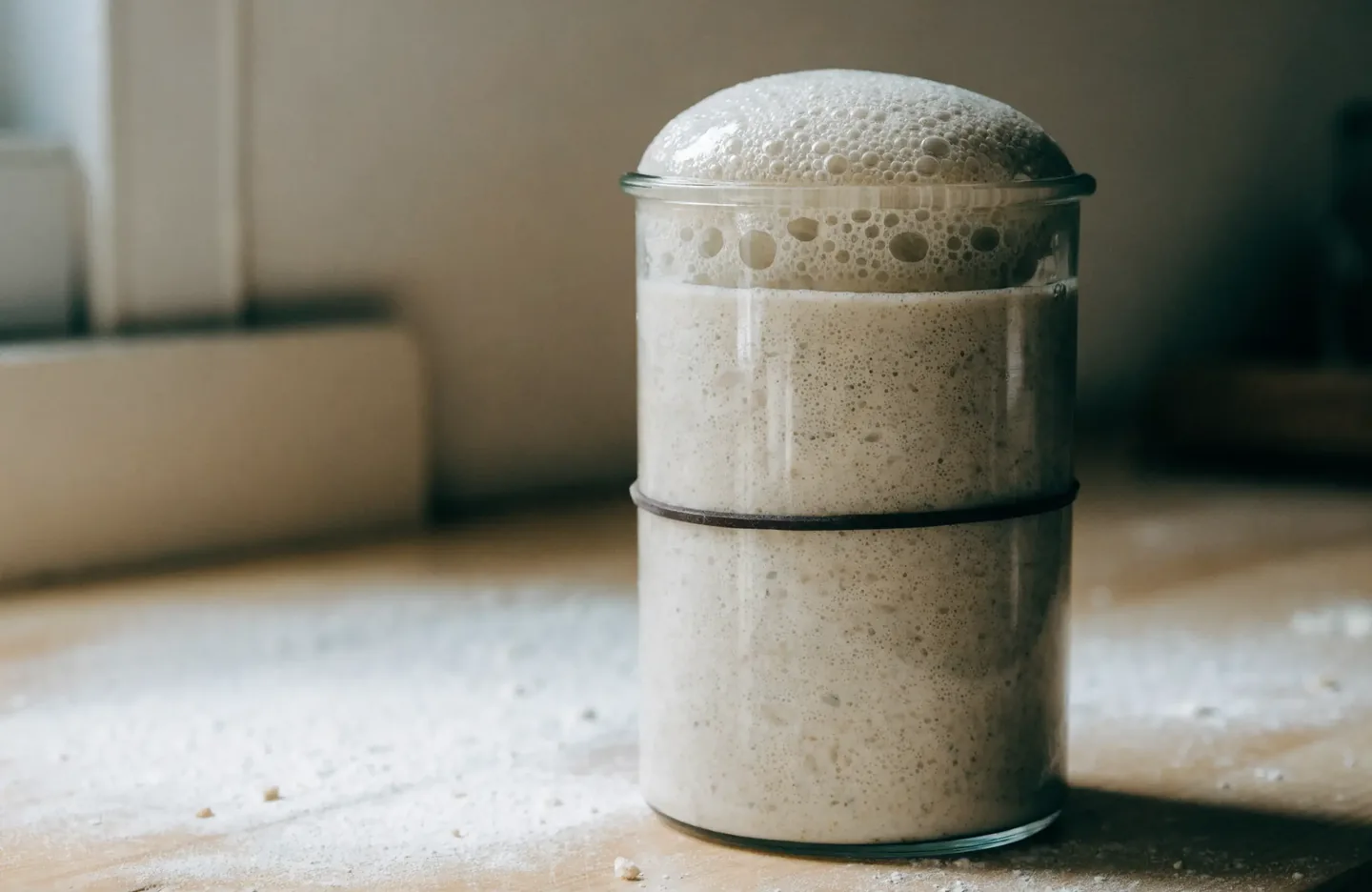
Flour, water, a jar and a scale. That is the whole ingredient list, and seven days is a realistic timeline for the culture to start rising on schedule.
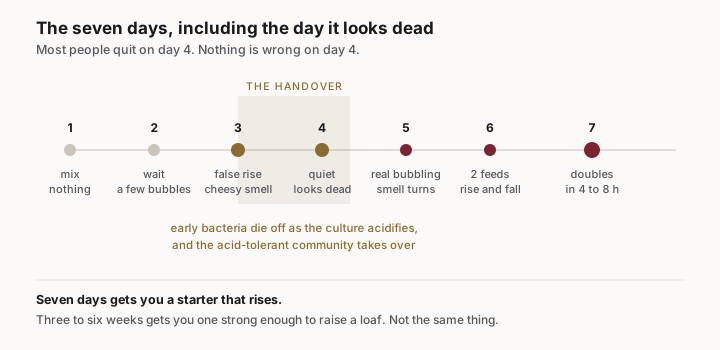
Here is the short version, and then the day-by-day with what each day should actually look like.
| Day | What you do | What you should see |
|---|---|---|
| 1 | 50 g wholemeal flour + 50 g water at 25 to 28 °C | Nothing at all |
| 2 | Leave it alone | A few bubbles, or none. Both fine |
| 3 | Keep 50 g, add 50 g flour + 50 g water | Often a big false rise, sharp cheesy smell |
| 4 | Same feed | Usually the quietest day. Activity drops |
| 5 | Same feed | Real bubbling, smell turns yoghurty |
| 6 | Feed twice, 12 hours apart | Rises and falls within the day |
| 7 | Feed 1:1:1 and watch the clock | Doubling in 4 to 8 hours means it works |
This is one section of the complete guide to sourdough starters, which covers feeding, storage and troubleshooting once yours is alive.
What you need before day 1
A straight-sided jar so you can read the rise. A curved jar lies to you: the same volume looks like a bigger climb at the narrow part. A rubber band around the glass to mark the level at feeding time is worth more than any app.
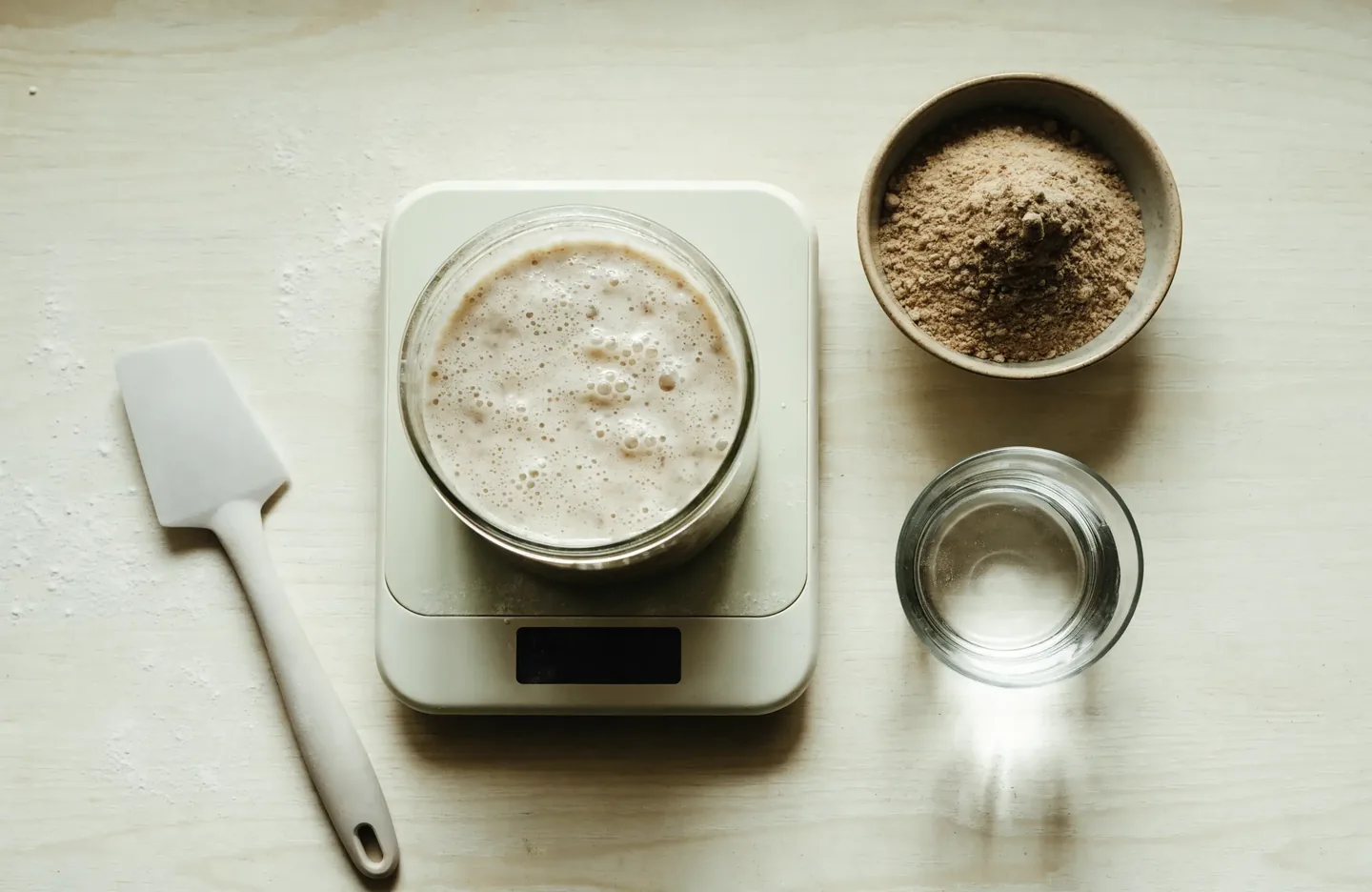
A scale. Cups are the single most common reason a starter behaves differently from the recipe, because the same cup of flour changes a lot depending on how you scooped it, and at this stage the flour-to-water ratio is the whole experiment.
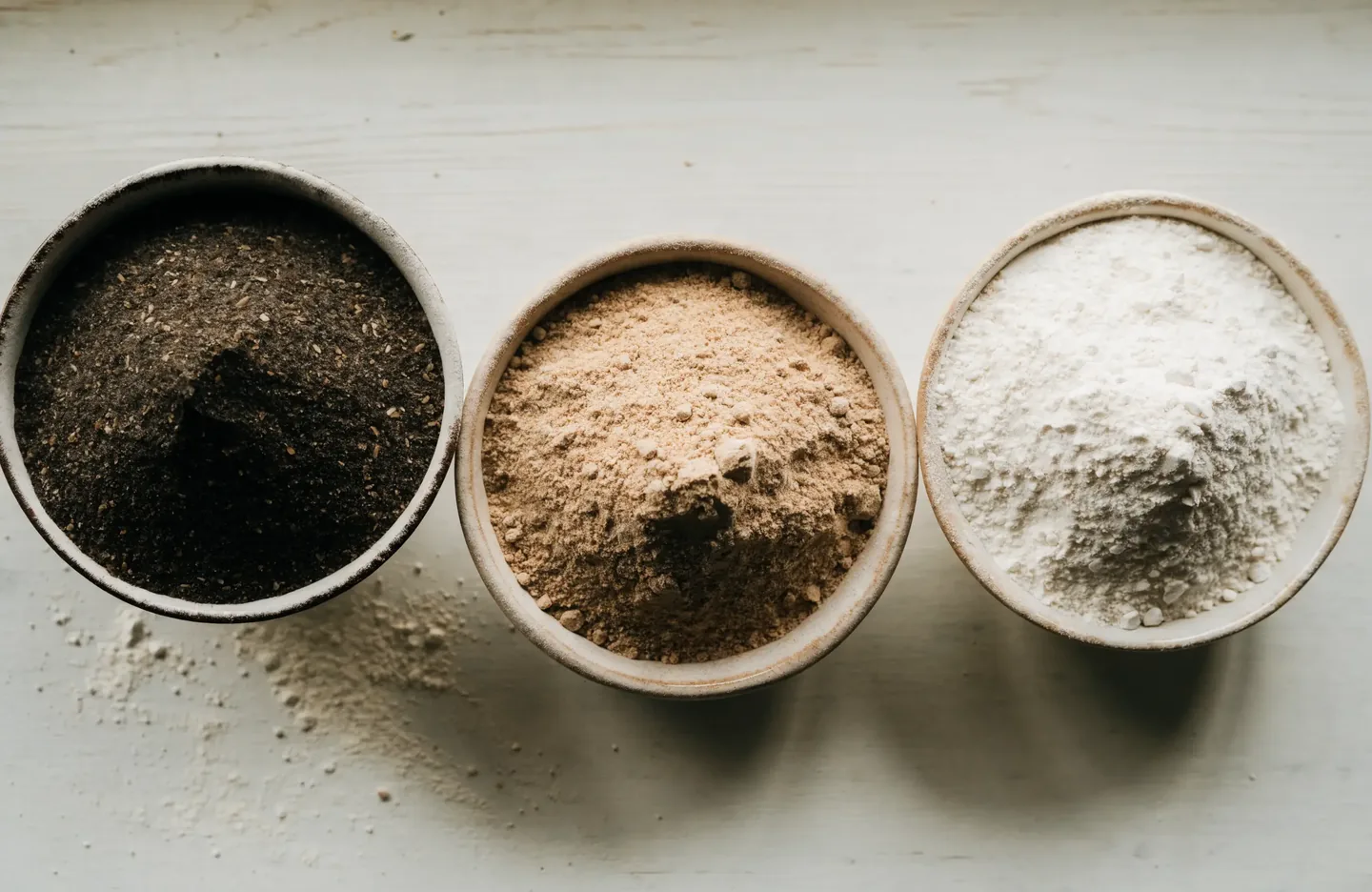
Wholemeal flour to start, rye if you can get it. The bran carries far more of the microbial population and the minerals that feed it, which is why a rye start usually gets moving a day or two earlier than a white one. You can switch to white flour later.
Water that has sat out. If your tap water is chlorinated, leave it in an open jug for a few hours. Chloramine, which many utilities use now, does not gas off the same way, so filtered or bottled water is the safer default if you know your supply uses it.
Day 1 and 2: nothing happens, and that is correct
Mix 50 g wholemeal flour with 50 g water. Stir until there is no dry flour left. Cover loosely, a lid resting on top or a cloth, never sealed tight.
Then leave it somewhere warm. Between 25 and 28 °C is the sweet spot. In a cold kitchen the oven with only the light on is usually about right; check it with a thermometer once, because some ovens run much warmer than that.
Day 2 you do nothing. Not feeding it is the instruction, not laziness.
Day 3: the false rise that fools everyone
This is the day a lot of people think they have won. The jar climbs, sometimes doubles, and it smells sharp, cheesy, a bit like old socks.
That is not your starter. Early jars are often dominated by bacteria that came in on the flour and do not survive what comes next, and the smell is the giveaway: a mature starter smells sour and lactic, not putrid.
Feed it anyway. Keep 50 g, throw the rest out, add 50 g flour and 50 g water.
Day 4: the quiet day, where most people quit
Then everything stops. No bubbles, no rise, and the jar looks dead.
It is not dead. Keep feeding it. As those first organisms acidify the jar, they make it uninhabitable for themselves. The acid-tolerant lactic acid bacteria and wild yeast that actually make sourdough work are slower to establish, and day 4 is usually the handover between the two. Quiet is what a handover looks like.
If you throw the jar out on day 4, you throw it out one day before it starts working. This is the single most common way a first starter dies.
Day 5 to 7: the culture takes hold
Day 5 you should see small, even bubbles through the sides of the jar, and the smell changes. Yoghurt, green apple, something you would not mind near food. That change in smell is a better signal than the bubbles.
Day 6, move to two feeds twelve hours apart. The starter is eating faster now and a single daily feed leaves it starving and acidic for half the day.
Day 7, feed 1:1:1 (50 g starter, 50 g flour, 50 g water), mark the level, and watch the clock. Doubling in 4 to 8 hours is the finish line.
Skip the float test
The classic advice is to drop a spoonful in water and see if it floats. It fails where it matters most: it says yes too early. King Arthur tested it and found starter fed only four hours before, with a few small bubbles and hours to go, floating happily. Trapped gas makes things float whether or not they are ready to bake.
Use the clock and the jar instead. Mark the level, note the time, and see how long doubling takes. That number is the only readiness test that holds up.
When it does not rise by day 7
Not a failure, usually just slower. Work through these in order.
| Symptom | Most likely cause | What to do |
|---|---|---|
| No activity at all, any day | Too cold | Move somewhere 25 to 28 °C. Cold doubles the timeline |
| Stalled after a strong day 3 | Normal handover | Keep feeding. Give it to day 7 before judging |
| Rises, then collapses fast | Feeding too little for the temperature | Go to 1:2:2 or feed twice a day |
| Liquid on top, greyish | Hungry, not dying | Stir it in or pour it off, then feed more often |
| Smells like acetone or nail polish | Very hungry | Feed twice a day at a bigger ratio |
| Pink or orange streaks | Contamination | Throw it out, jar and all contents. Start again |
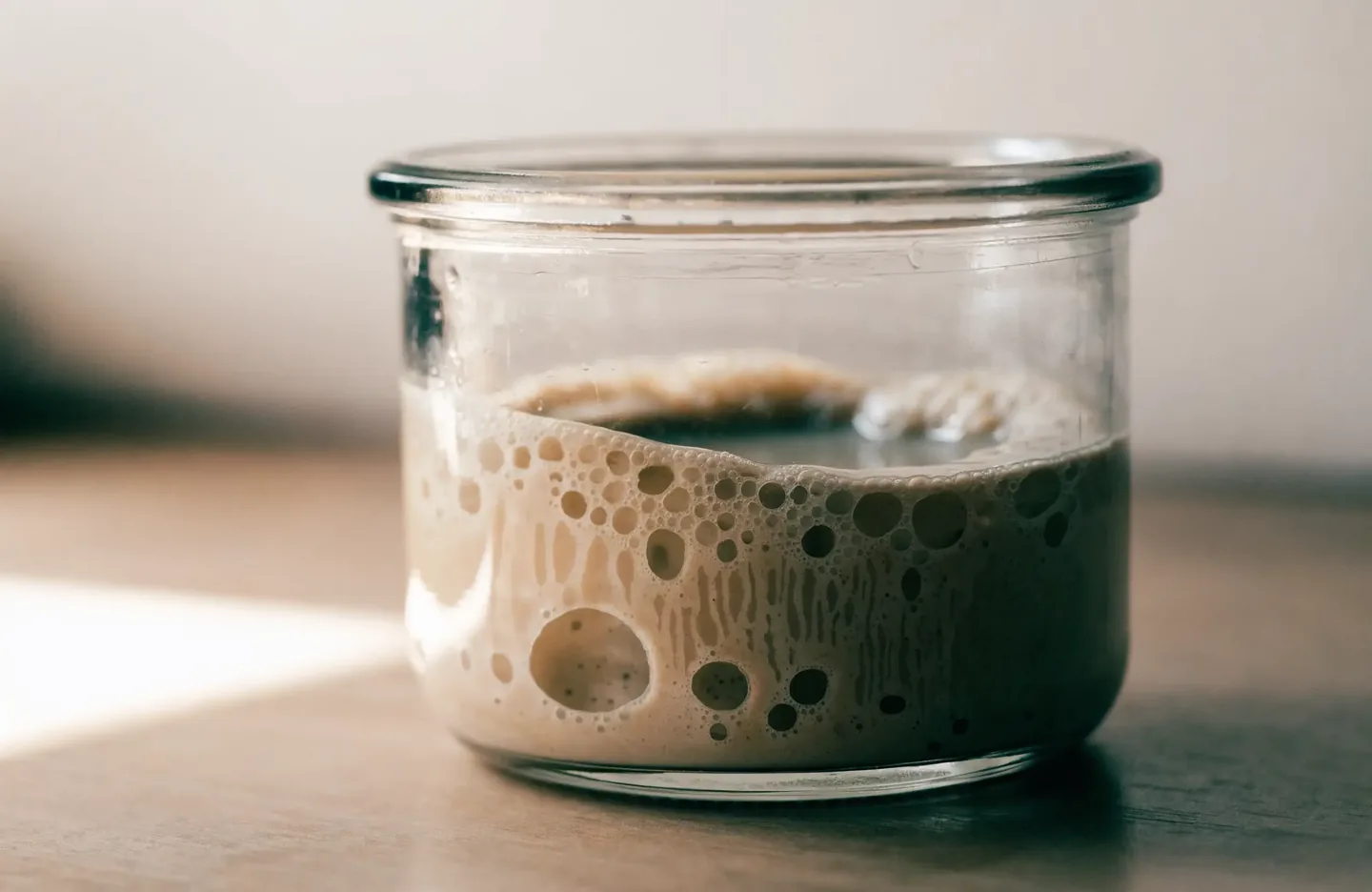
That last row is the only one where starting over is the right answer. Pink or orange discolouration is not the normal sourdough microbiome and is not something to smell-test your way past. Fuzzy growth of any colour on the surface, same rule.
Everything else is a question of temperature, ratio and patience.
Frequently asked questions
How long does it really take to make a sourdough starter? Seven days is realistic in a warm kitchen. In a cold one, ten to fourteen days is common and completely normal. The temperature of the jar matters more than anything else you control.
Can I use all-purpose flour instead of wholemeal? Yes, it just tends to be slower to start. Wholemeal or rye for the first few days, then switch, is the usual compromise.
Do I have to discard so much flour? Only while you are building it. Once it is established, keep a smaller starter: 30 g fed at 1:5:5 gives you plenty for a loaf and almost no discard. Until then, the discarding is what keeps acidity from stalling the culture. It also gets you something to bake with in the meantime.
Why did my starter rise on day 3 and then stop? That early rise is usually not the organisms you want, and the pause that follows is the transition to the ones you do. It is the most normal thing in the whole process.
What if I miss a feeding? Nothing dramatic. It will be hungrier and more acidic, and may smell of acetone. Feed it and carry on. A starter is much harder to kill than it looks.
Can I speed it up with pineapple juice, grapes or yeast? You do not need to. The acid in juice can help suppress the early bacteria that cause the day 3 detour, but it changes nothing about the finish line. Commercial yeast is a different organism entirely and will not become a starter.
Once yours is doubling on schedule, the next thing to get right is how you feed it, because ratio and temperature decide whether it stays strong or drifts sour.
Where I checked
Keep reading
 Guide
Guide
Bagel Dough: Why It Is So Firm, and How to Knead It
Bagel dough feels stiff and dry on purpose. Here is why it runs at 50 to 60% water and high protein flour, how to knead it, and the windowpane to aim for.
6 min read Guide
Guide
Bagel Recipe: New York Style, Step by Step
A weight-based New York bagel recipe, step by step: the firm 58% dough, an overnight cold retard, how long to boil, and the oven heat that sets a glossy crust.
6 min read Complete guide
Bagels: The Complete Guide
Make a real bagel at home: the firm 58% dough, why bagels are boiled before baking, New York vs Montreal, sourdough and gluten free, and how to fix flat ones.
18 min read