Guide
Sourdough Starter Not Rising: The Eight Real Causes
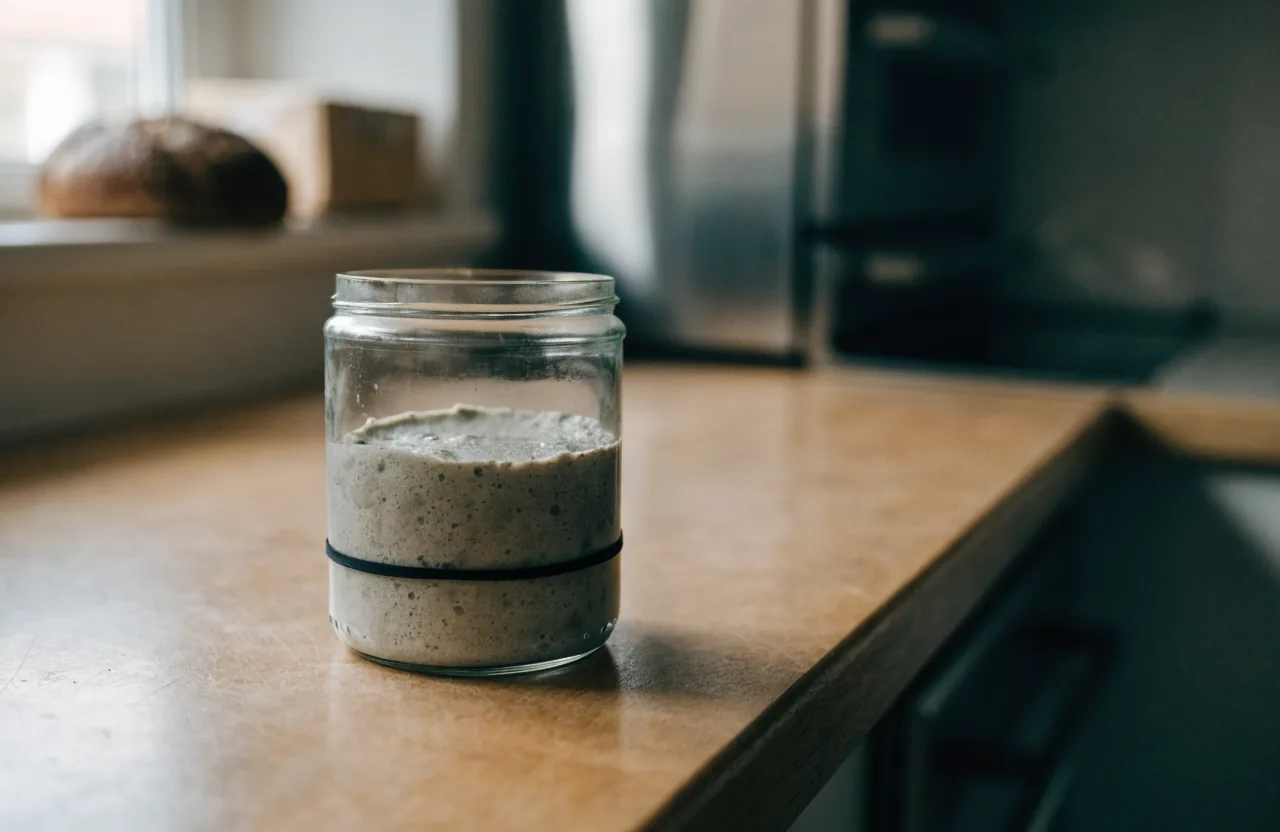
Before anything else: a starter that is not rising is almost never dead. In ten years of this question being asked online, the answer is nearly always temperature, timing, or the signal being read wrong. Actual death is rare and takes real effort.
Work through the eight in this order. They are ranked by how often they are the answer divided by how much trouble they are to test, so the early ones cost you nothing to rule out.
| # | Cause | Test it by | Fix |
|---|---|---|---|
| 1 | Too cold | Thermometer in the room | Move it somewhere 25 to 28 °C |
| 2 | It rose and fell while you were out | Feed and watch hourly | Note the peak time, use a bigger ratio |
| 3 | It is a new starter around day 4 | Check the calendar | Keep feeding, wait until day 7 |
| 4 | Reading the wrong signal | Look at the jar shape | Straight-sided jar, mark the level |
| 5 | Over-acidified from underfeeding | Smell: acetone or vinegar | Feed more often, or at a bigger ratio |
| 6 | White flour only | Check the bag | Add 10 to 20% wholegrain rye |
| 7 | Chlorinated water | Check your water supply | Filtered or bottled water |
| 8 | Something killed it | Everything above failed for a week | Start again, or revive a backup |
This is one section of the complete guide to sourdough starters, which covers feeding, storage and reading the jar in normal conditions.
1. It is too cold
This is the answer more often than the other seven put together, and it is almost always underestimated. Fermentation is a biological rate: a few degrees changes everything.
The clearest evidence is how professional bakers use temperature as a dial. King Arthur's bakers hold starters at around 72 °F (22 °C) for a starter that doubles or triples in about eight hours, go to 78 °F (26 °C) when they want it active within 8 to 12 hours, and one of them deliberately holds his at 65 °F (18 °C) so that once a day feeding is enough instead of twice (King Arthur Baking).
That last one is the whole point in a sentence: at 18 °C a starter needs half as many feeds, because it is going half as fast. Your winter kitchen has not weakened your starter. It has slowed it down, and slow looks identical to dead if you are checking at the same time you always did.
What to do: find somewhere warmer. The oven with only the light on is the classic answer, though check it with a thermometer once, because some run much hotter than you would expect. Then give it a full day at the new temperature before judging.
2. It rose and fell while you were not looking
The second most common answer, and the most annoying, because the starter is working perfectly and you keep missing it.
In a warm kitchen a 1:1:1 feed can peak and collapse in a few hours. If you feed in the morning and check after work, you see a flat, slack, liquid-topped jar and conclude nothing happened. Something happened. It finished.
How to tell: put a rubber band at the level right after feeding and check every hour for one evening. If it climbs and falls, the jar is fine and only the timing is wrong.
What to do: move to a bigger ratio. Feeding 1:5:5 instead of 1:1:1 stretches the climb substantially, because the culture is more diluted and has further to go. The full logic is in how to know your starter is at peak.
3. It is a new starter, and this is day 3 to 5
If your jar is less than a week old, this is probably not a problem at all.
New starters usually put on a strong show around day 3, then go completely quiet. That early activity mostly comes from organisms that arrived on the flour and do not survive the increasingly acidic jar, and the culture that actually makes sourdough work is slower to establish. The quiet is the handover between the two.
What to do: nothing except keep feeding. Judge it on day 7, not day 4. This is the single most common way a first starter gets thrown out, one day before it starts working, and it is covered in detail in the seven day guide.
4. You are reading the wrong signal
Three ways this happens, all of them common.
A curved or tapered jar. The same volume of gas reads as a much bigger climb at the narrow part and a much smaller one at the wide part. A straight-sided jar is worth more than any gadget.
The float test. It fails in both directions. King Arthur tested a starter hours away from being usable and it floated happily (King Arthur Baking), and rye or high hydration starters often sink at their strongest.
"It did not double." How far a starter climbs depends on the ratio you fed it. At 1:5:5 it has five times the flour to work through, so it takes far longer to get anywhere. Judging a 1:5:5 feed against a 1:1:1 expectation makes a healthy jar look broken.
5. It is over-acidified from underfeeding
A starter that is fed too little for its temperature runs out of food, and the acid it has already produced keeps accumulating. Past a point the environment turns against the yeast that provide the lift.
How to tell: smell. Acetone, nail polish remover, or a sharp vinegar note means hungry. Often accompanied by a thick layer of dark liquid.
What to do: feed at a bigger ratio, and more often, for two or three days. Counter-intuitively the answer to a weak starter is usually more fresh flour per feed, not less, because you are diluting the acid as well as feeding the culture.
6. You are feeding white flour only
Not fatal, but genuinely slower, especially for a new or struggling jar.
The usual explanation is that wholegrain flour carries more wild yeast, which is true and is the smaller half of the story. The bigger half is enzymes. Millers measure amylase activity by falling number, and where bread wheat sits between roughly 250 and 350 seconds, rye is segregated around 110 to 140 seconds (Calibre Control). Lower number, more enzyme, more fermentable sugar delivered sooner.
What to do: add 10 to 20% wholegrain rye or wholemeal to the feed. King Arthur suggests exactly that proportion for reviving a sluggish starter (King Arthur Baking). More on the trade-offs in which flour to use.
7. Your water is chlorinated
A real cause, though a less common one than the internet suggests, and worth ruling out only after the six above.
Chlorine gasses off if you leave water in an open jug for a few hours. Chloramine, which many water utilities now use instead, does not gas off the same way, so if your supply uses it, filtered or bottled water is the safer default.
What to do: if you are already on the six fixes above and nothing has changed in a week, switch water for a few feeds and see. If nothing changes, it was not the water.
8. Something actually killed it
Rare. Genuine causes are heat above roughly the temperature that kills yeast, which means the oven actually on rather than just the light; salt or a heavily salted flour; or contamination, which is a different problem with a different answer.
How to tell: you have given it a warm spot, a bigger ratio, wholegrain flour and a full week of consistent feeding, and there is no change at all. Not "not enough", literally nothing.
What to do: if you have a jar of dried flakes, this is what they are for and you are three days from working again. If you do not, start over, and dry a backup the moment the new one is healthy.
One thing that is not on this list: fuzzy growth or pink and orange streaks. That is not a starter that will not rise, it is a starter that goes in the bin, jar and all, and it is covered in mould on a starter.
Frequently asked questions
How do I know if my sourdough starter is dead? Almost certainly it is not. Give it a warm spot at 25 to 28 °C, feed it at 1:2:2 twice a day with 20% wholegrain flour, and watch for a week. Starters have come back from far worse than whatever yours looks like.
My starter bubbles but does not rise. What does that mean? Usually bacterial activity outpacing the yeast, which is common in a jar that has been kept too acidic. Bigger feeds, more often, and a slightly warmer spot.
Should I add commercial yeast to restart it? No. It is a different organism and it will not become part of your culture. You will get one good rise and the same problem afterwards.
Should I throw it out and start over? Rarely the right answer before a week of proper conditions. Starting over costs you seven days and puts you back in the day 4 quiet period with no more information than you have now.
Does adding sugar, honey or fruit juice help? It is a short term boost that feeds things you did not invite, and it introduces mould risk. If your starter is hungry, feed it flour.
My starter was fine and suddenly stopped. What changed? Something in the environment, almost always. The season turned, you moved the jar, you changed flour brands, or your feeding drifted later. Work through the list from the top.
How long should I give it before deciding? Seven days of consistent conditions. Changing one variable a day and judging after a few hours is how people conclude that nothing works, when what happened is that nothing was given time.
Once it is rising predictably again, the number worth writing down is your own jar's peak time at your ratio and your kitchen temperature. It is what turns this from a recurring mystery into a schedule.
Where I checked
Keep reading
 Guide
Guide
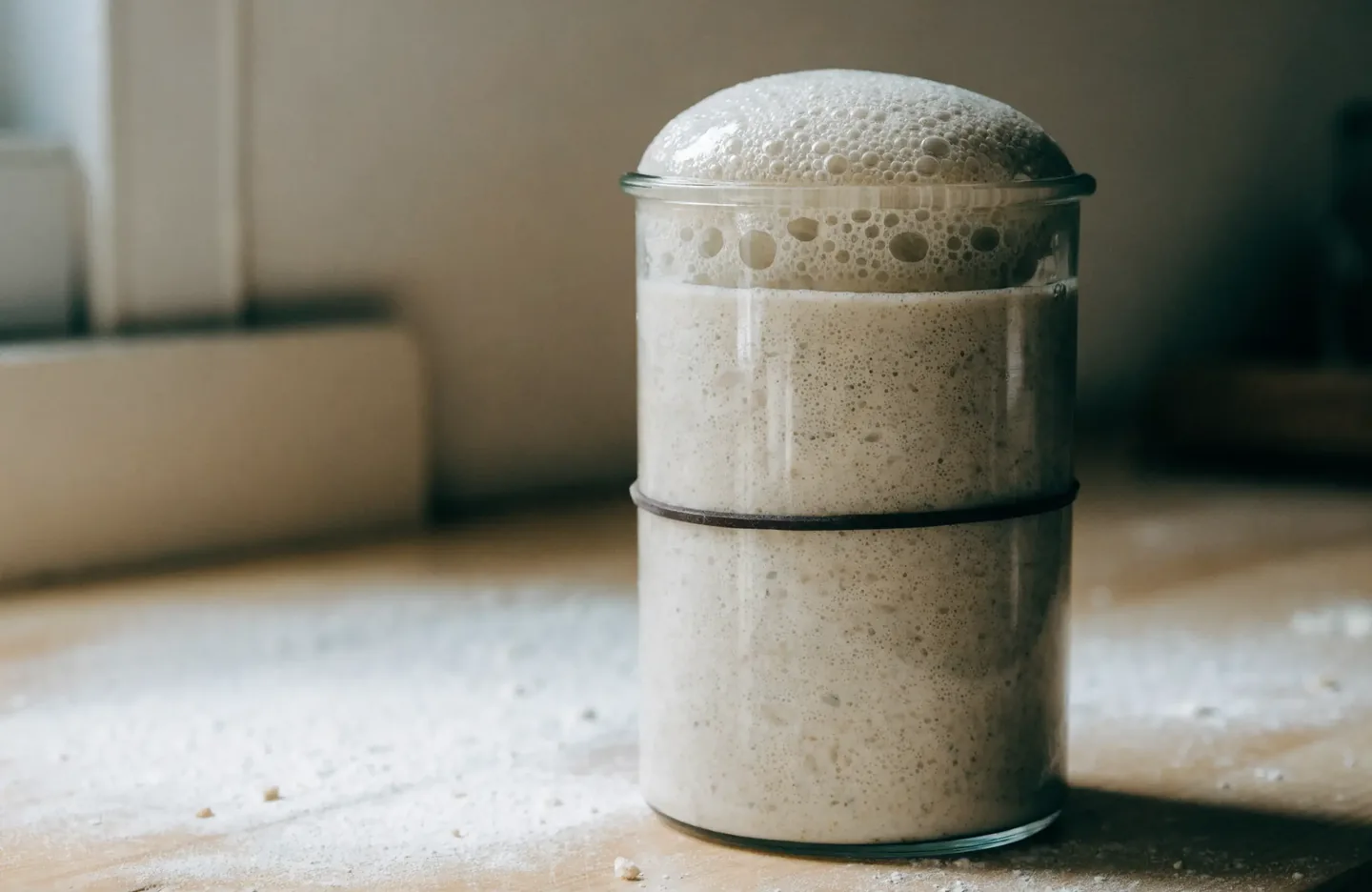
Active Sourdough Starter: How to Know It Is at Peak
Peak is the moment the rise stops and the dome flattens, not the moment it doubles. How to read the jar, and how to find your own starter's peak time.
8 min read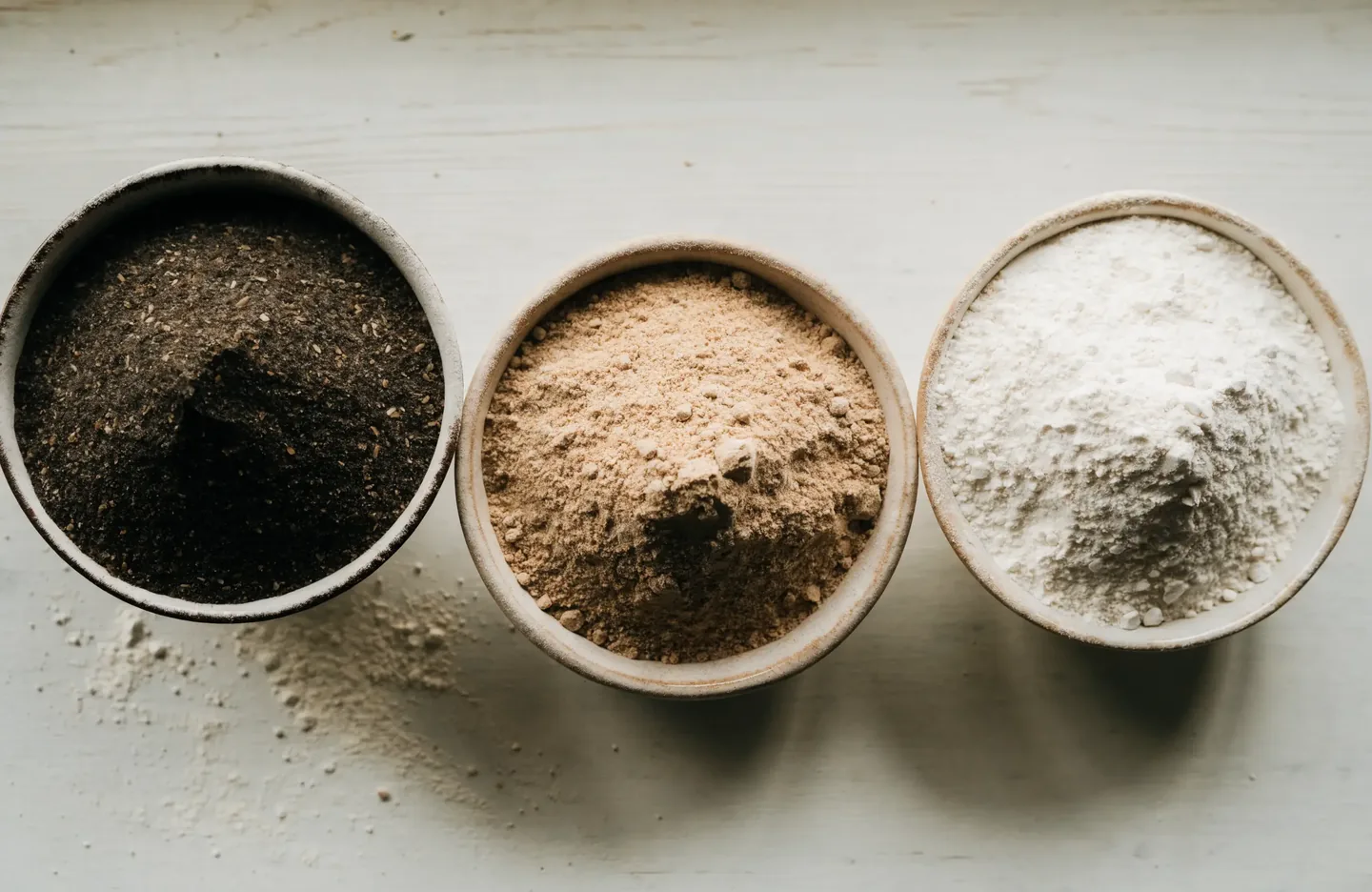 Guide
Guide
Best Flour for a Sourdough Starter: Rye, Wholemeal or White
Which flour to use to build a starter and which to feed it afterwards. Why rye gets a new jar moving faster, and how to read flour labels in any country.
8 min read Guide
Guide
Dehydrated Sourdough Starter: How to Dry It and Revive It
How to dry a starter into flakes that keep for years, the weight test that tells you it is actually dry, and the realistic timeline to bring one back.
7 min read