Guide
Dehydrated Sourdough Starter: How to Dry It and Revive It
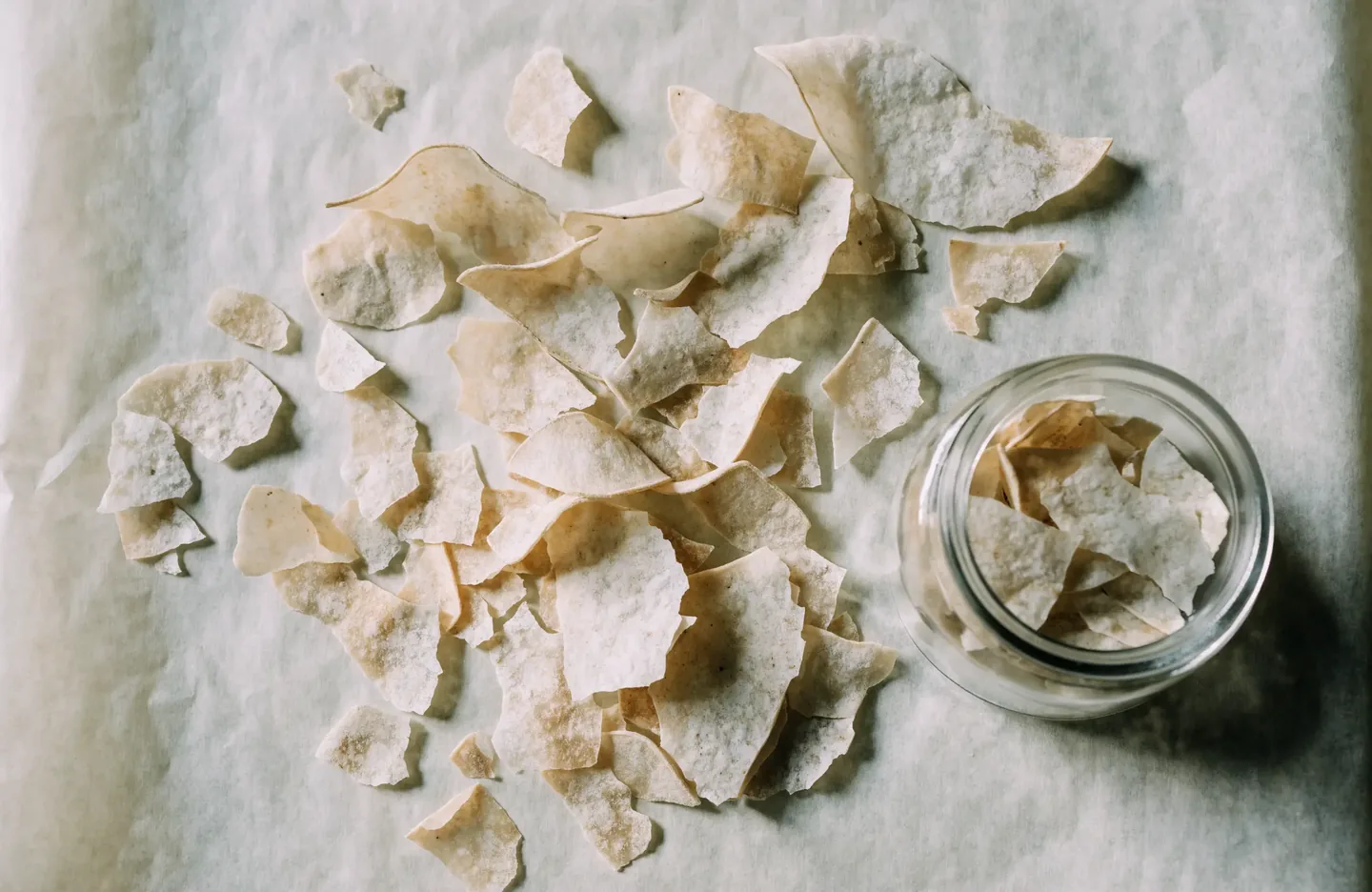
Drying a starter is the only backup that does not need you. A jar in the fridge needs feeding eventually; a bag of dried flakes sits in a cupboard and waits. King Arthur puts it plainly: thorough drying should preserve a starter indefinitely, and they have heard of dried starter still viable after more than a decade (King Arthur Baking).
The short version: spread a peak, healthy starter thinly on parchment, let it dry until it snaps, break it into flakes, seal it. To bring it back, dissolve it in warm water, start feeding, and give it three to five days.
| Storage method | Needs attention | Realistically lasts | Comes back in |
|---|---|---|---|
| Room temperature jar | Daily or twice daily | Days | Immediately |
| Fridge | Every week or two | Weeks to months | 2 to 3 feeds |
| Dried flakes | None | Years | 3 to 5 days |
This is one section of the complete guide to sourdough starters, which covers feeding, peak timing and troubleshooting.
Dry it when it is healthy, not when it is in trouble
This is the part that gets skipped, and it decides everything downstream.
Drying does not repair a starter. It freezes whatever state the culture is in and hands that same state back to you months later. Dry a jar that has been neglected for three weeks and you have carefully preserved a weak, over-acidified culture. Dry one at peak, two or three feeds into a good rhythm, and that is what wakes up.
So the sequence is: feed it, wait for peak, then dry. Not the other way round, and definitely not "I am going on holiday tomorrow and the jar looks rough."
How to dry it
1. Spread it thin. Take the starter at peak and spread it across parchment paper as thinly as you can manage, a smear rather than a layer. Thin is the whole trick: it is what turns days of drying into hours and what stops the middle from staying damp.
2. Leave it at room temperature. King Arthur's range is honest about how much this varies: a day in a hot dry house, or three, four, even five days in a humid one. If you want to help it along, use the oven with only the light on, which gives gentle even heat without cooking the culture.
3. If you use a dehydrator, keep it warm, not hot. Brod & Taylor dehydrate at 88 °F (31 °C) for four to six hours, warm enough to pull the water out quickly but nowhere near hot enough to cook the culture (Brod & Taylor). Drying already thins the microbe population on its own, which is the other reason to start from a healthy peak starter rather than push the heat. You are dehydrating a living culture, not baking a cracker.
4. Check it two ways. The flakes should peel off the parchment on their own and snap between your fingers rather than bend. And here is the check almost nobody mentions: weigh it. A starter is roughly half flour and half water by weight, so if you started with 4 ounces of starter, the dry flakes should weigh about 2 ounces (King Arthur Baking). If it still weighs more than that, there is water left in it, whatever it looks like.
That weight test is worth the extra minute. Residual moisture is the single reason a stored backup grows mould in the jar six months later, and moisture is exactly the thing you cannot judge by eye.
5. Break it up and seal it. Snap the sheets into flakes, or grind them to a coarse powder in a spice grinder if you want faster rehydration later. Into an airtight jar or bag, out of sunlight and away from heat.
Where to keep it, and where not to
Keep it somewhere dry and dark. That is genuinely the whole requirement.
Do not put it in the freezer. King Arthur's guidance on this is blunt: freezing will kill your starter, and their storage advice is dried or refrigerated, not frozen. Worth knowing that plenty of home bakers report frozen starters surviving, so treat this as the cautious line rather than a settled fact. The practical point stands either way: dried flakes are already stable at room temperature, so the freezer adds risk without adding anything.
Keep the backup somewhere other than your kitchen. A backup that lives next to the original is not a backup. Give a jar to a friend, or put one in a different room. Starters are lost to house moves, holidays and broken fridges far more often than to biology.
How to bring it back
Expect three to five days, and expect day one to look like nothing is happening. That is normal here for the same reason it is normal in the first week of building a starter from scratch: the culture is small and waking up.
| Step | What you do | What to expect |
|---|---|---|
| 1 | Weigh out about 10 g of flakes into a clean jar | |
| 2 | Add roughly 20 g of lukewarm water, stir, wait | About 3 hours for the chips to dissolve |
| 3 | Feed with about 10 g flour, stir smooth | |
| 4 | Wait 24 hours | Some bubbles, no real rise |
| 5 | Feed again, equal flour and water | Serious bubbling within hours |
| 6 | Feed again, watch the level | Doubling on a predictable clock |
Those proportions follow King Arthur's revival, scaled to grams. In their own run, the second feeding took eight hours to bubble seriously, and after the third, in an oven held at 85 °F (29 °C), the jar tripled in four hours.
Two things worth flagging about that. Warmth matters more here than at any other point in a starter's life, because you are asking a very small population to multiply, and cold makes that slow enough to look like failure. And the jar tripling in four hours is your finish line: at that point the backup is a working starter again and normal feeding takes over.
When revival is genuinely not working
| What you see | Likely cause | What to do |
|---|---|---|
| Nothing at all after 48 hours | Too cold | Move it somewhere 25 to 28 °C |
| Dissolves but never bubbles | Dried too hot, or dried a weak starter | Give it a full five days before judging |
| Bubbles then stalls on day 2 | Normal. Same pause as a new starter | Keep feeding, do not restart |
| Smells sharp or like acetone | Hungry, culture is alive | Feed more often |
| Fuzzy growth or pink streaks | Contamination | Throw it out, jar and all. Start from another batch of flakes |
The last row is the reason to dry more than you think you need. Flakes are the cheapest insurance in the whole practice: one afternoon of drying gives you a dozen restarts.
Frequently asked questions
How long does dehydrated sourdough starter really last? Longer than most people expect. King Arthur reports hearing of dried starter still viable after more than a decade and describes thorough drying as preserving it indefinitely. The variable that decides it is how completely you dried it, not how long it sat.
Can I dry my starter in the oven on low heat? Use the oven light only, with the oven itself off. Actual oven heat, even the lowest setting on most home ovens, is well past the range that keeps a culture alive.
How much dried starter do I need to revive? About 10 g is plenty. You are starting a population, not measuring an ingredient, and a small amount in a small jar comes back faster than a large amount in a large one.
Can I bake with dried starter directly? No. It has to be rehydrated and fed back to activity first. Dried flakes are a backup, not an ingredient.
Is dried starter the same as the sourdough starter powder sold in shops? Usually not the same thing. Commercial "sourdough flavour" powders are often inactive and sold for taste rather than leavening. Read the label: if it does not promise a live culture, it will not raise bread.
Should I dry my starter before a holiday? For a week or two, the fridge is simpler. Drying earns its keep for longer absences, house moves, or as the copy you give a friend to hold.
My flakes look dry but feel slightly bendy. Is that fine? No, and this is the one to be strict about. Bendy means moisture, and moisture in a sealed jar is how a backup spoils. Weigh it against the halving rule and give it another day.
Once your flakes are sealed and stored, the only thing left is the habit that makes them worth having: keeping the working jar on a rhythm you can actually sustain, which is a question of ratio and temperature more than of effort.
Where I checked
Keep reading
 Guide
Guide
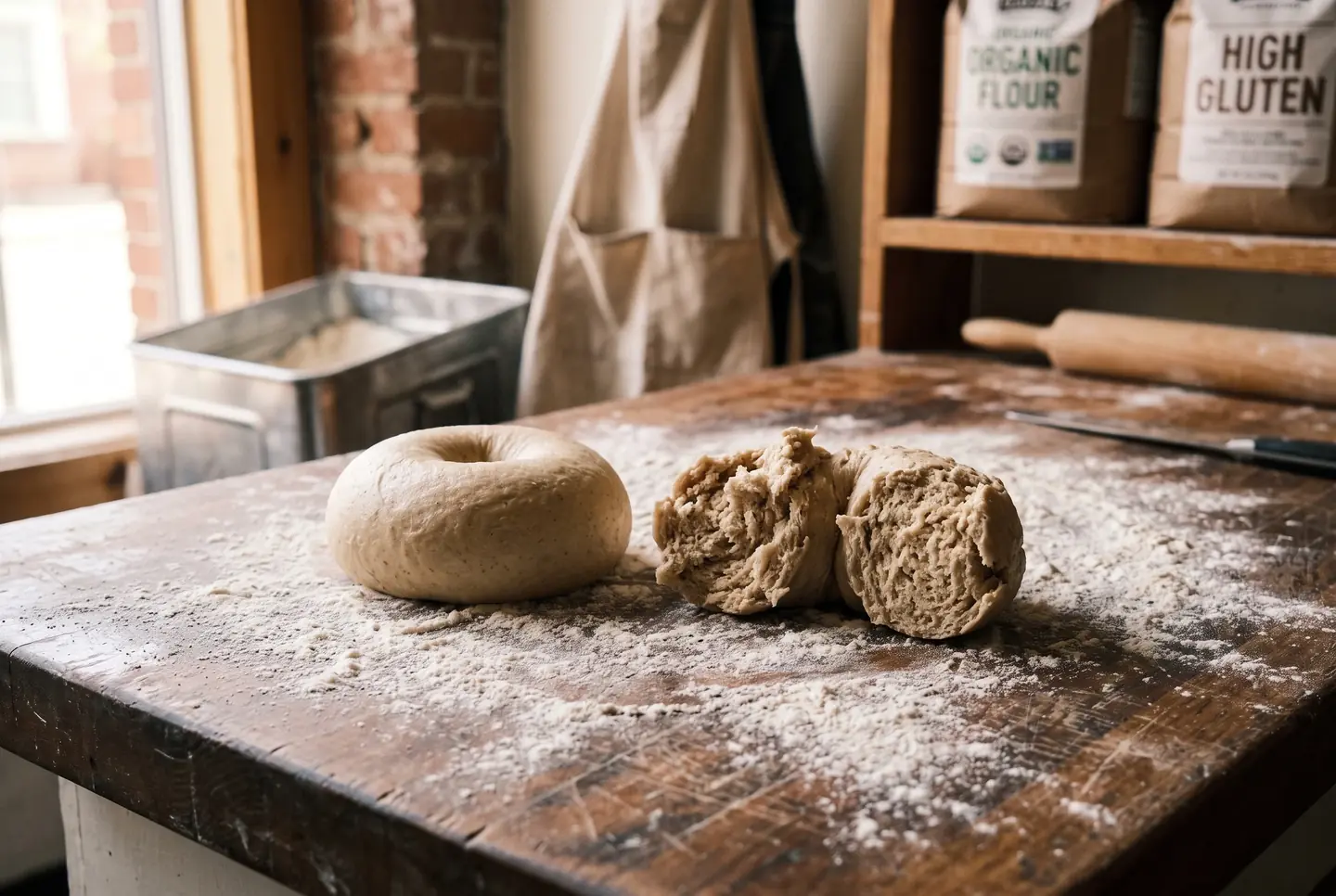
Bagel Dough: Why It Is So Firm, and How to Knead It
Bagel dough feels stiff and dry on purpose. Here is why it runs at 50 to 60% water and high protein flour, how to knead it, and the windowpane to aim for.
6 min read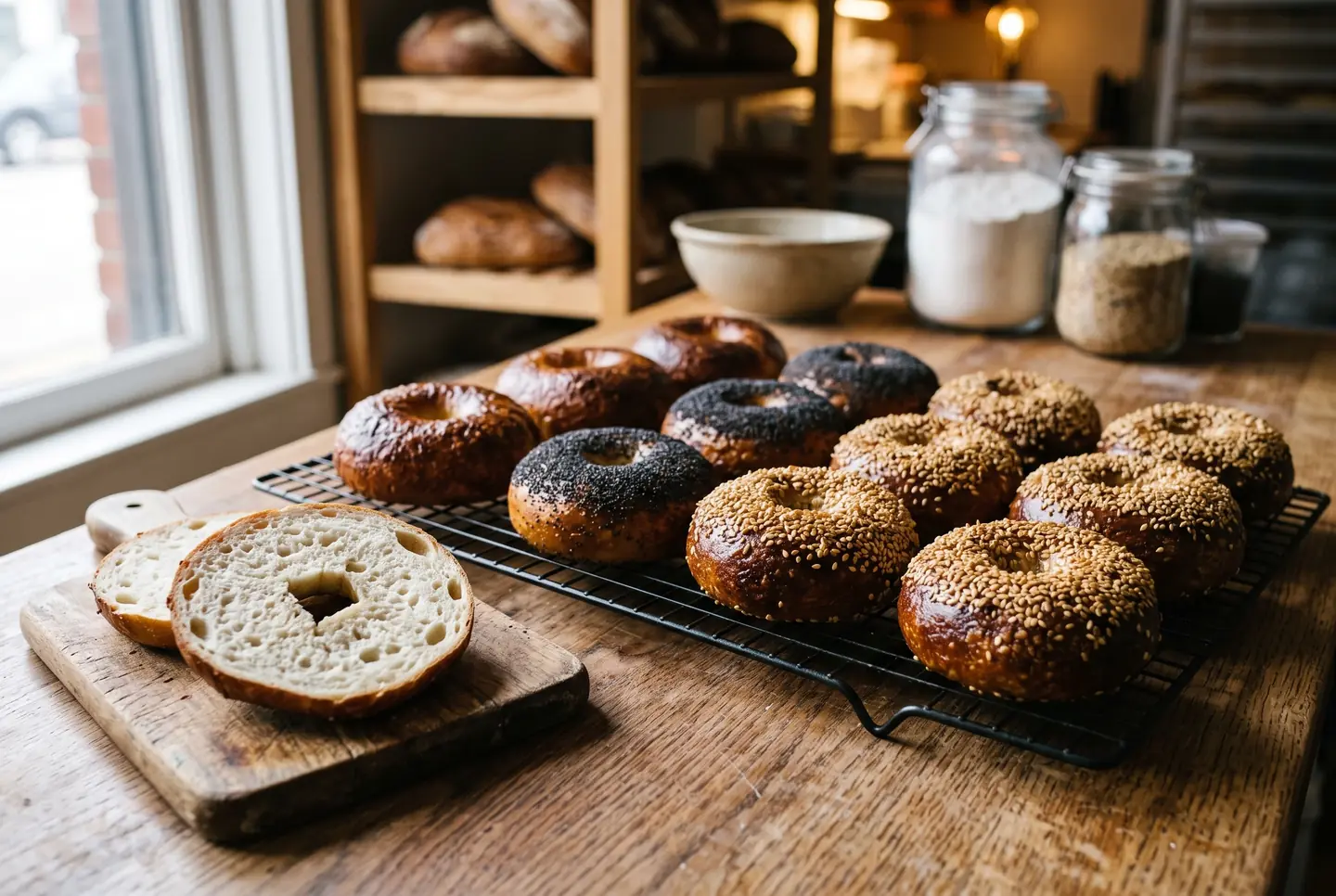 Guide
Guide
Bagel Recipe: New York Style, Step by Step
A weight-based New York bagel recipe, step by step: the firm 58% dough, an overnight cold retard, how long to boil, and the oven heat that sets a glossy crust.
6 min read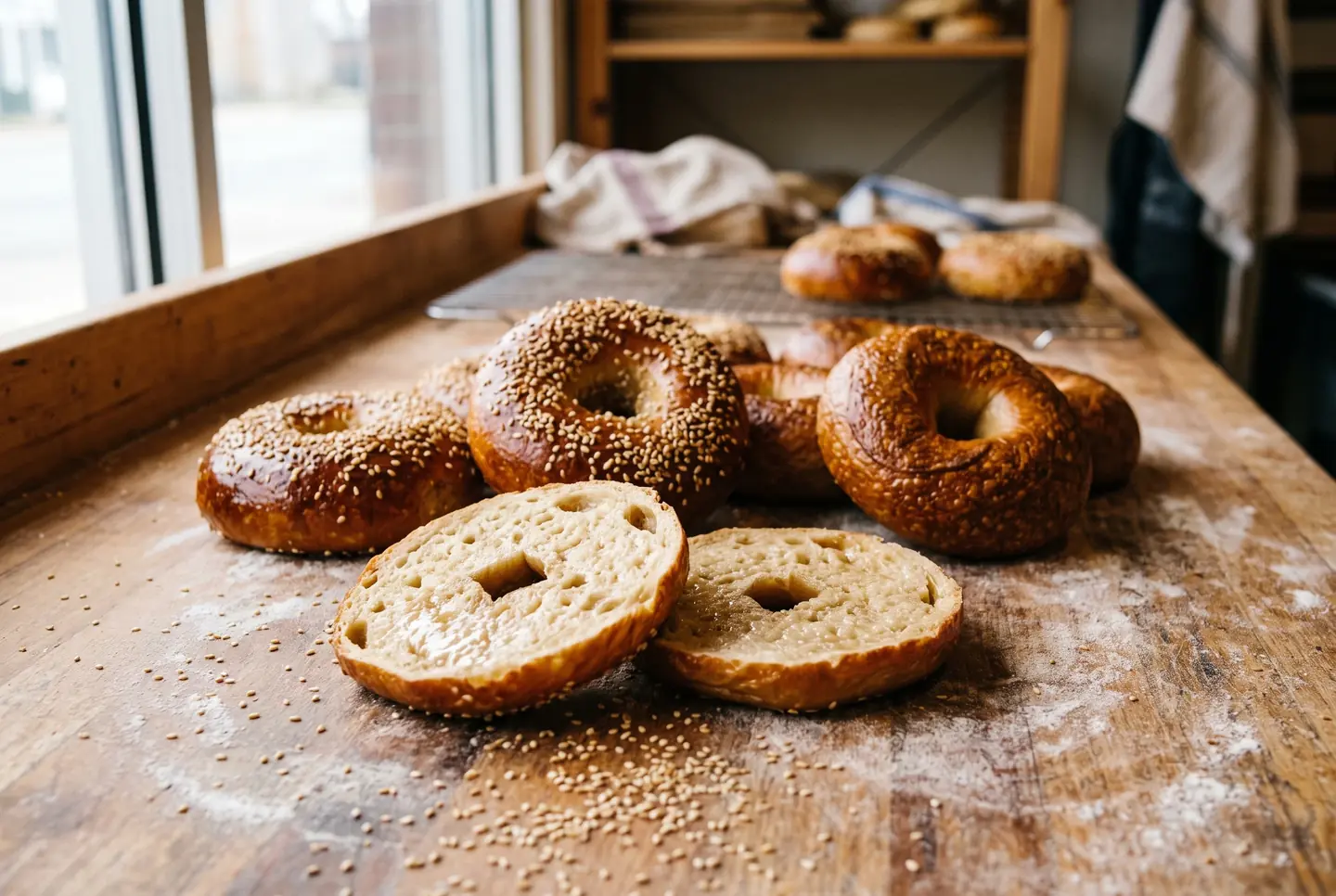 Complete guide
Bagels: The Complete Guide
Make a real bagel at home: the firm 58% dough, why bagels are boiled before baking, New York vs Montreal, sourdough and gluten free, and how to fix flat ones.
18 min read