Guide
Focaccia Barese: Potato in the Dough, Soft for Days
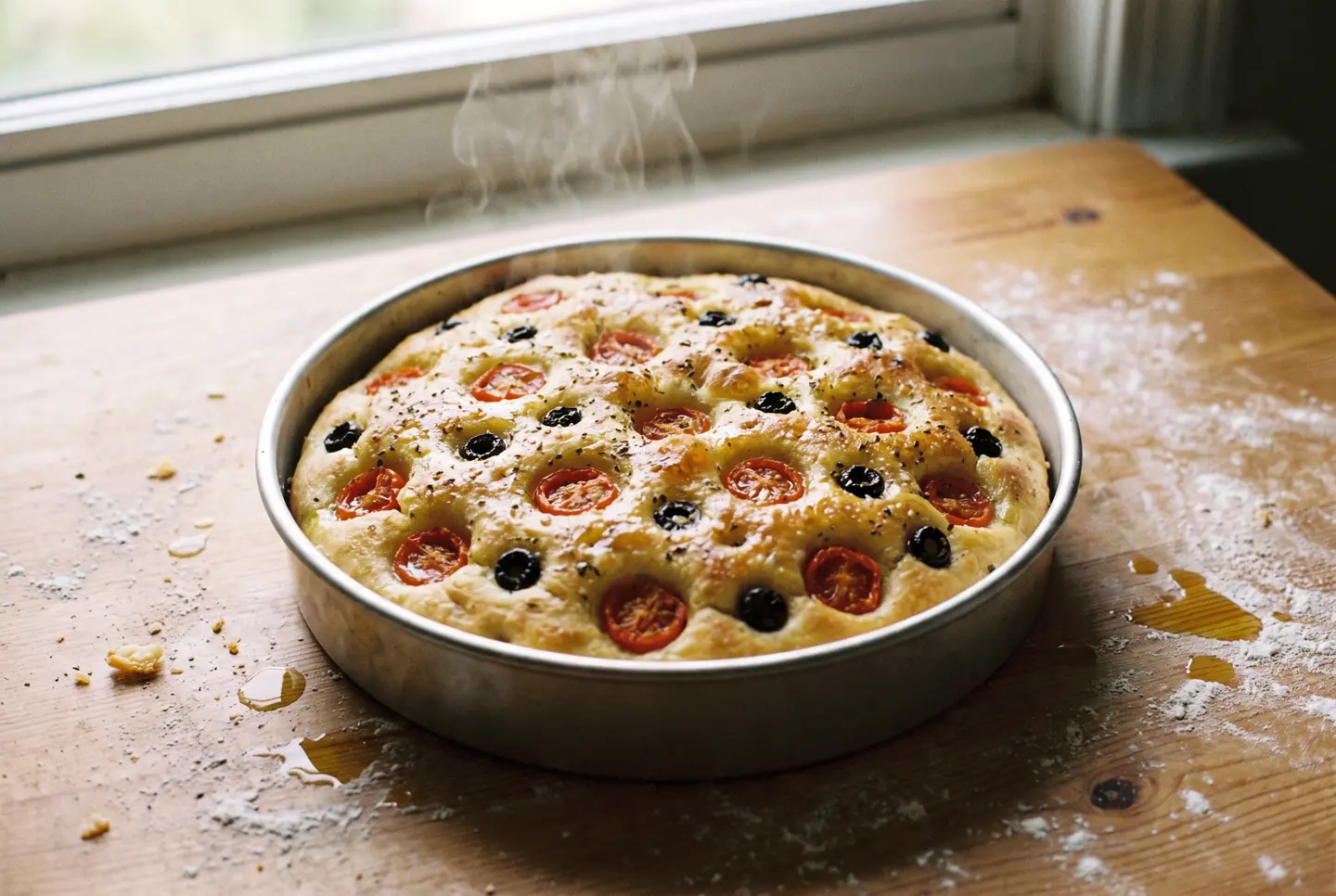
Focaccia barese is the thick, soft, pillowy focaccia from Puglia, and its secret is a single boiled potato worked into the dough along with a share of semola, the golden durum wheat flour. That potato is why a barese stays soft into the next day when most focaccia goes stale by the morning, and it is a small lesson in how much one ingredient can redefine a bread.
It is worth knowing precisely because it solves the most common complaint about home focaccia. The focaccia genovese and the barese share the same four base ingredients, flour, water, salt and oil, yet one comes out thin and brittle-crisp and the other thick and cloud-soft, because of the water, the semola and that one potato. This page covers the potato, the semola blend and the bake; for where it sits among the styles, start with the complete focaccia guide.
Why the potato
A boiled, mashed potato brings extra starch and moisture into the dough, and that starch holds water long after baking. The result is a crumb that stays moist and tender for a day or two rather than drying out overnight. It also makes the dough softer and easier to spread thick in the tin, which is the barese shape: a tall, round pan, not a low tray.
You do not need much. Most traditional recipes, like the Italian Recipe Book focaccia barese, use roughly one medium potato per half kilo of flour, boiled until soft and mashed smooth before it goes in. Too much and the dough turns gummy and heavy; the point is a support role, not a potato bread.
The semola blend
The other half of the barese character is semola rimacinata, finely milled durum wheat. It gives the crumb a faint golden colour, a subtle sweetness and a bit more chew than plain soft-wheat flour. A common approach is to blend it with regular bread flour rather than going all durum, which would make the dough tight and hard to work.
| Ingredient | Role | Rough share |
|---|---|---|
| Bread flour | Structure, rise | About half to two-thirds of the flour |
| Semola rimacinata | Colour, sweetness, chew | About one-third to half of the flour |
| Boiled potato | Softness, keeps fresh | ~1 medium per 500 g flour |
| Water | High hydration, soft crumb | Generous |
| Olive oil, salt | Flavour, seasoning | As for any focaccia |
The exact split is a matter of taste; more semola gives more colour and chew, more bread flour gives a lighter, airier crumb. Both are traditional.
Shaping and topping
Barese goes in a round tin and is left thick, not rolled low like a genovese. Dimple it the same way, pressing the wells that hold the oil, and finish with a salamoia of water and olive oil so the top bakes golden and glossy. On how the wells work, see how to dimple focaccia.
The classic barese topping is halved cherry tomatoes and small olives, pressed cut-side up into the dimples so they roast into the surface. The tomatoes release a little sweetness and colour as they bake; the olives, often the small local ones, are left whole. Oregano is common; heavier toppings are not, because the point is the soft, potato-rich crumb, not a loaded top.
Baking a thick focaccia
Because it is thick, a barese wants a hot oven and a little more time than a thin genovese, so the inside cooks through before the top over-browns. The traditional Pugliese bake is hot, around 230 to 250 C (450 to 480 F), on a preheated metal surface for the base, for roughly 20 to 25 minutes, and that gives a golden top and a set, airy crumb. Watch the tomatoes: if they start to scorch before the bread is done, a loose sheet of foil over the top for the last stretch protects them.
The finished barese should be tall and soft enough to press and spring back, with a moist crumb and a crisp, oily base. Cut into squares or wedges, it is a Pugliese street food, eaten warm or at room temperature, and thanks to the potato it is nearly as good the next day.
Frequently asked questions
Why is there potato in focaccia barese? The boiled potato adds starch and moisture that keep the crumb soft for a day or two, and it makes the dough easier to spread thick. It is the ingredient that keeps a barese from going stale overnight.
How much potato do I use? Roughly one medium potato per 500 grams of flour, boiled soft and mashed smooth. More than that and the dough turns gummy, so keep it a support ingredient.
What is semola in focaccia barese? Semola rimacinata is finely milled durum wheat. It gives the crumb a golden colour, a light sweetness and a bit of chew. It is usually blended with bread flour rather than used alone.
What is the difference between focaccia barese and genovese? Barese is thick, soft and made with potato and semola in a round tin; genovese is thin, crisp-edged and lean, rolled low in a tray. Same base ingredients, very different bread.
What toppings go on focaccia barese? The classic is halved cherry tomatoes and small olives pressed into the dimples, often with oregano. It is meant to stay a soft, simple bread rather than a heavily loaded one.
Where I checked
Keep reading
 Guide
Guide
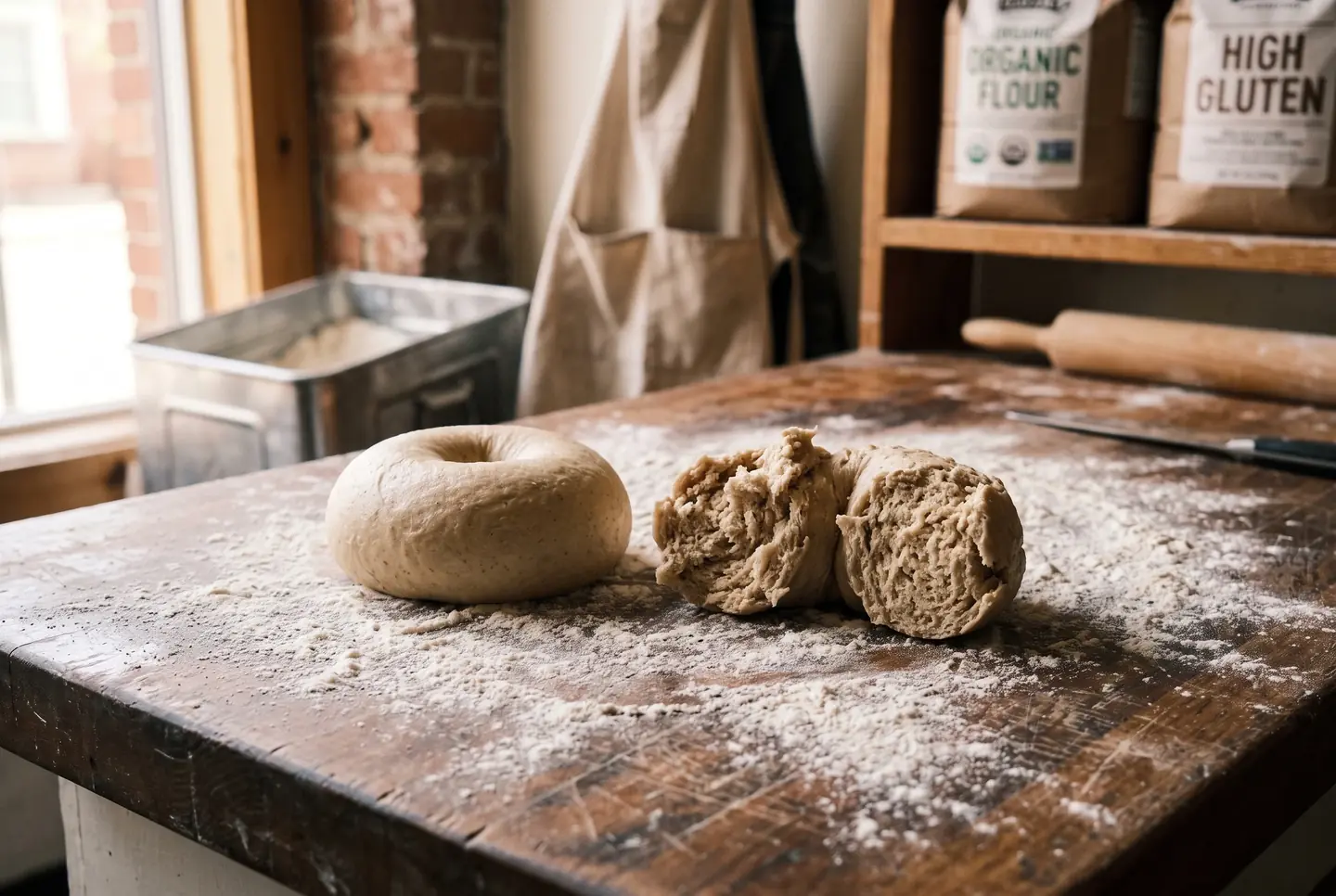
Bagel Dough: Why It Is So Firm, and How to Knead It
Bagel dough feels stiff and dry on purpose. Here is why it runs at 50 to 60% water and high protein flour, how to knead it, and the windowpane to aim for.
6 min read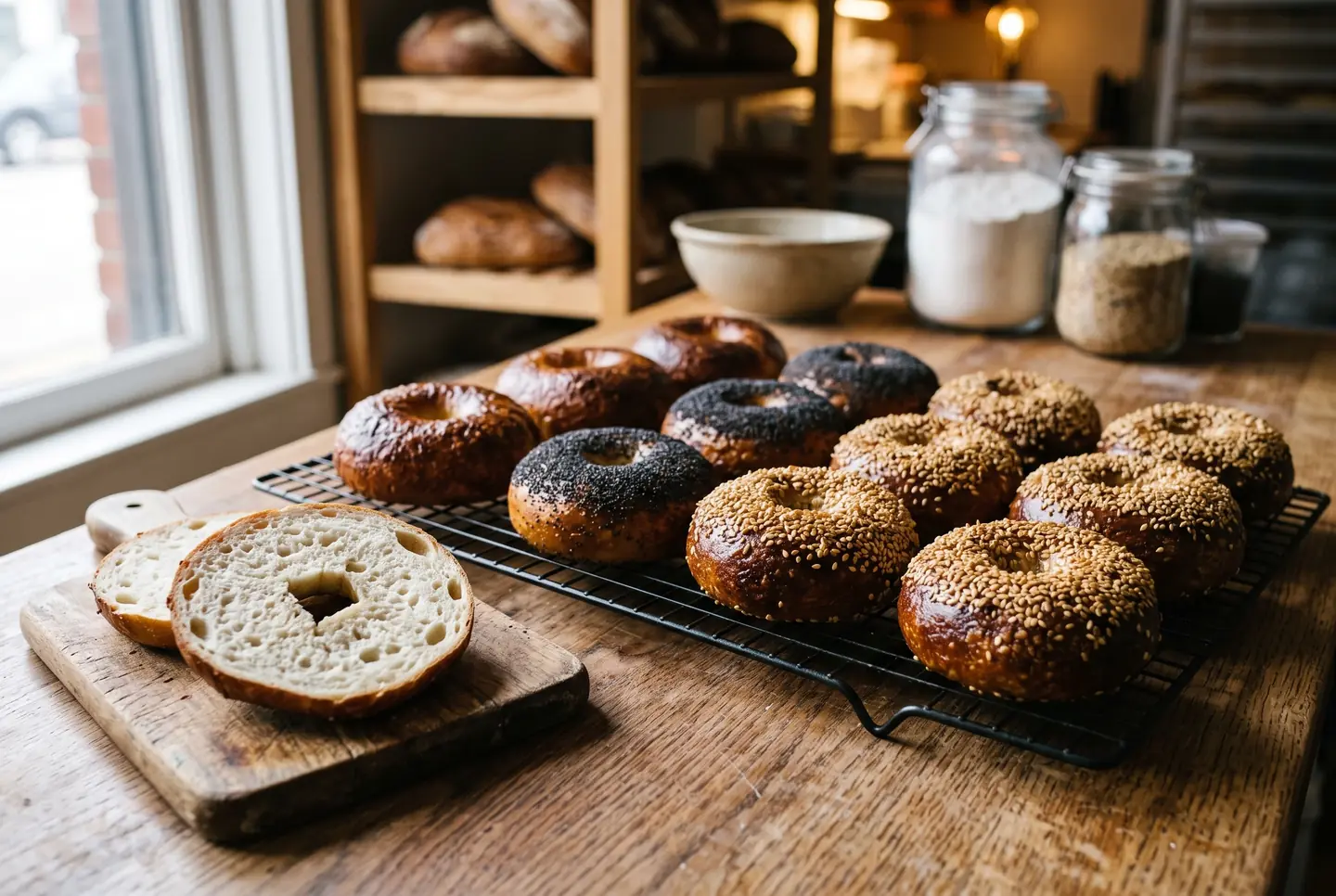 Guide
Guide
Bagel Recipe: New York Style, Step by Step
A weight-based New York bagel recipe, step by step: the firm 58% dough, an overnight cold retard, how long to boil, and the oven heat that sets a glossy crust.
6 min read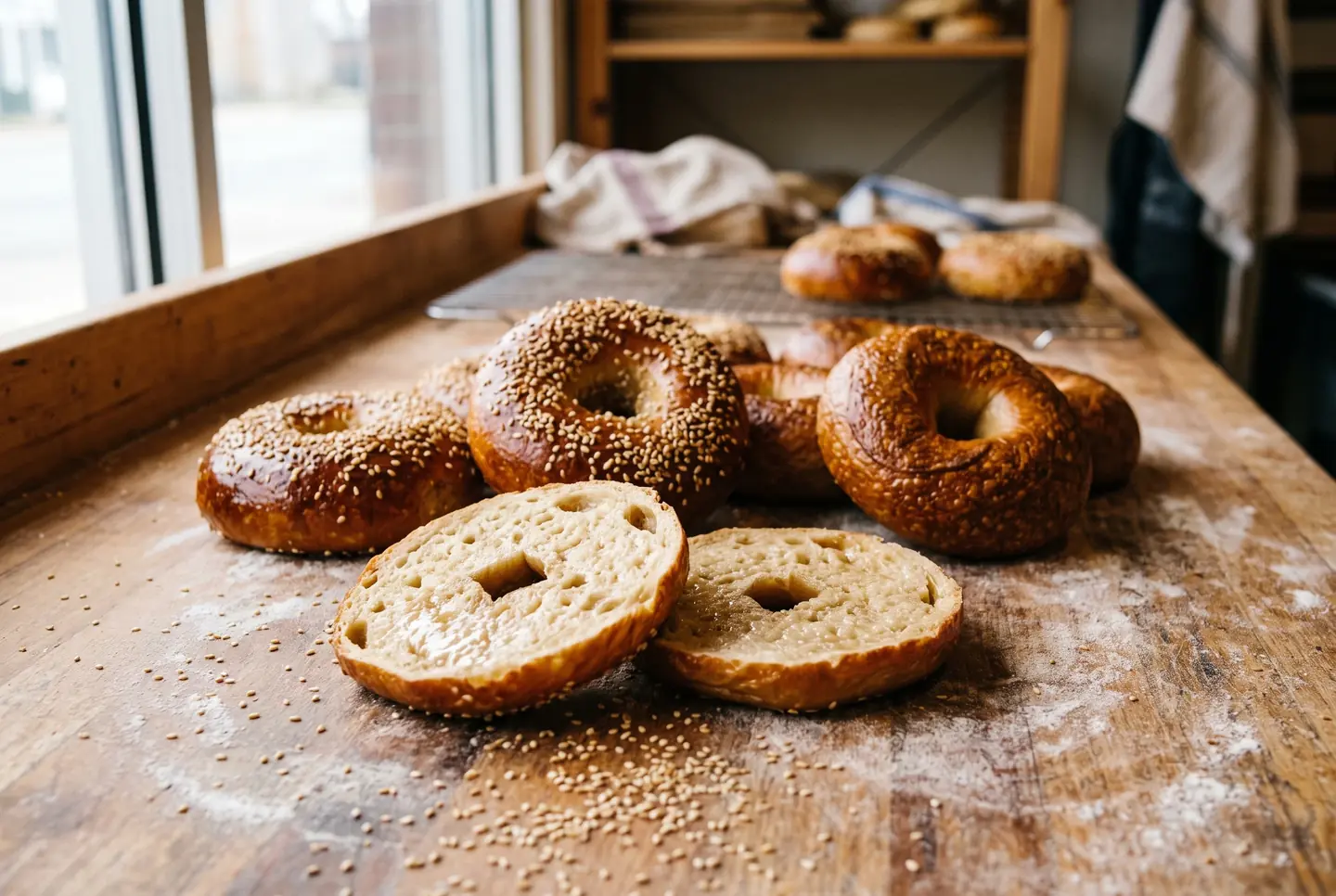 Complete guide
Bagels: The Complete Guide
Make a real bagel at home: the firm 58% dough, why bagels are boiled before baking, New York vs Montreal, sourdough and gluten free, and how to fix flat ones.
18 min read