Guide
Focaccia Genovese: The Thin, Salty, Oil-Soaked Classic
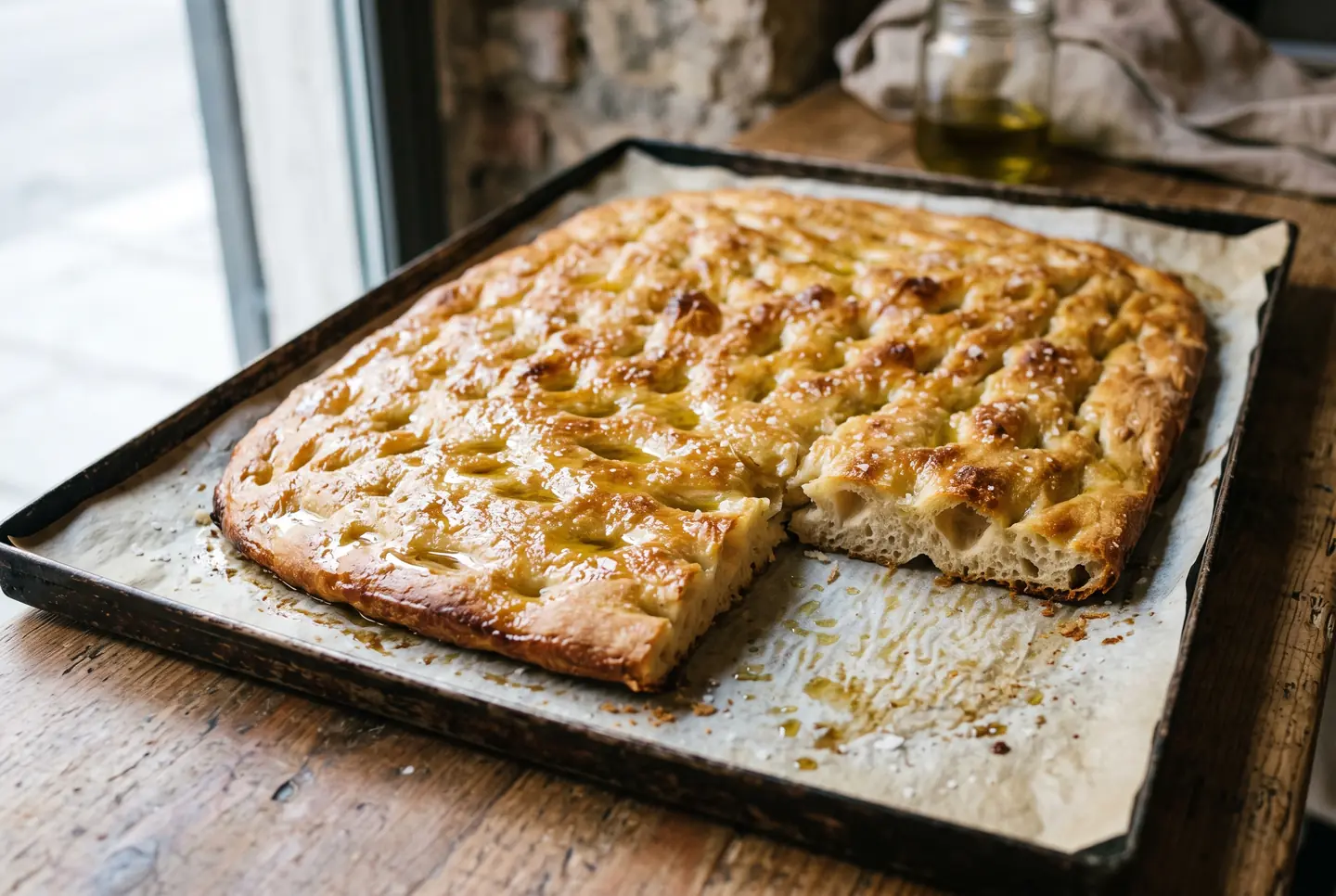
Focaccia genovese is the thin one: a lean dough rolled out low in the pan, flooded with a brine of water and olive oil, dimpled, and baked hot and fast until the top is golden and the surface stays glossy rather than dry. It is the version most people picture when they hear focaccia, and the one to make when you want something to tear and dip in oil at a table, not a tall sandwich base.
Two things define it, and both are easy to get wrong at home. The first is that it is thin, maybe a finger or two high after baking, not the pillowy slab of a pan focaccia. The second is that it is meant to be greasy in the best sense, soaked with oil through the salamoia brine, so if your homemade genovese comes out austere and dry, it is almost always too lean. This page walks through the ratio and the method; for how it sits against the other styles, start with the complete focaccia guide, and compare it directly with its opposite, the focaccia barese with potato in the dough.
What makes it genovese
The genovese and the barese share the same four base ingredients, flour, water, salt and oil, yet one comes out thin and crisp-edged and the other thick and soft. The difference is the hydration, the thickness in the pan, and above all the salamoia. Here is the genovese profile against a standard pan focaccia:
| Focaccia genovese | Standard pan focaccia | |
|---|---|---|
| Hydration | Moderate, around 55 to 65% | High, 75 to 80% |
| Thickness in pan | Thin, rolled low | Thick, dough left tall |
| Finish | Salamoia (water + oil), generous | Oil and brine, lighter |
| Bake | Hot and fast | Hot, a little longer |
| Result | Thin, salty, glossy | Tall, soft, open crumb |
The moderate hydration is what lets you roll it thin and even without it tearing; a very wet dough would be too slack to spread low. The Italian Recipe Book traditional focaccia is a good genovese-style reference for the brine and the proportions.
The salamoia is the whole point
The salamoia, sometimes written salamoia or just called the brine, is a mix of water and extra-virgin olive oil in roughly equal parts, poured over the dimpled dough before it bakes. It is what floods the wells so they fry the surface golden, and it is why a real genovese glistens. A common home mistake is to brush on a thin film of oil and skip the water; the water is what lets the brine pool in the dimples and steam-fry the top instead of just greasing it.
Pour it generously right after dimpling, so it sits in the wells. Flaky salt goes on after the brine, so it stays on top and crunches. If you want the technique on the wells themselves, how to dimple focaccia covers the timing and the depth.
Roll it thin and bake it hot
Genovese is baked hot and fast, around 230 C (450 F) for roughly 15 to 20 minutes, because it is thin and you want the top to crisp and colour before the whole thing dries out. A longer, cooler bake, which suits a tall pan focaccia, would turn a thin genovese into a cracker. The Baking Steel focaccia method bakes in that hot range, and a preheated metal surface under the pan helps the base colour, which matters more here because there is less dough to insulate it.
Roll or press the dough out low and even across the pan. It should nearly fill the tray in a thin layer before the final proof; it will puff a little in the oven but stays a low, tearable bread, not a sandwich loaf.
How it is eaten in Genoa
Worth knowing because it explains the texture you are aiming for: in Genoa focaccia is an all-day food, eaten for breakfast dunked in a cappuccino, sold by weight from bakeries all morning and torn to share. It is a snack and a street food, not a special-occasion bread, and it is meant to be oily and salty enough to stand on its own. If yours feels like it needs butter or a topping to be worth eating, add oil, in the dough and especially on top, and try again. That single adjustment fixes more disappointing genovese than any other.
Frequently asked questions
What is the difference between focaccia genovese and regular focaccia? Genovese is the thin Ligurian style: moderate hydration, rolled low, soaked with a water-and-oil salamoia and baked hot and fast. The tall, soft, high-hydration pan focaccia many people make at home is a different, thicker style.
Why is my focaccia genovese dry? It is too lean. Genovese is meant to be glossy with oil, so use more olive oil in the dough and, above all, a generous salamoia brine over the top before baking.
What is salamoia? A brine of water and extra-virgin olive oil in roughly equal parts, poured over the dimpled dough before the bake. It fills the wells and fries the surface golden, and it is what makes a genovese glisten.
What temperature do I bake focaccia genovese at? Hot and fast, around 230 C (450 F) for about 15 to 20 minutes, because it is thin and needs to colour before it dries out.
How thick should focaccia genovese be? Thin: rolled low in the pan so it bakes to a finger or two high, meant to be torn and dipped, not built into a sandwich.
Where I checked
Keep reading
 Guide
Guide
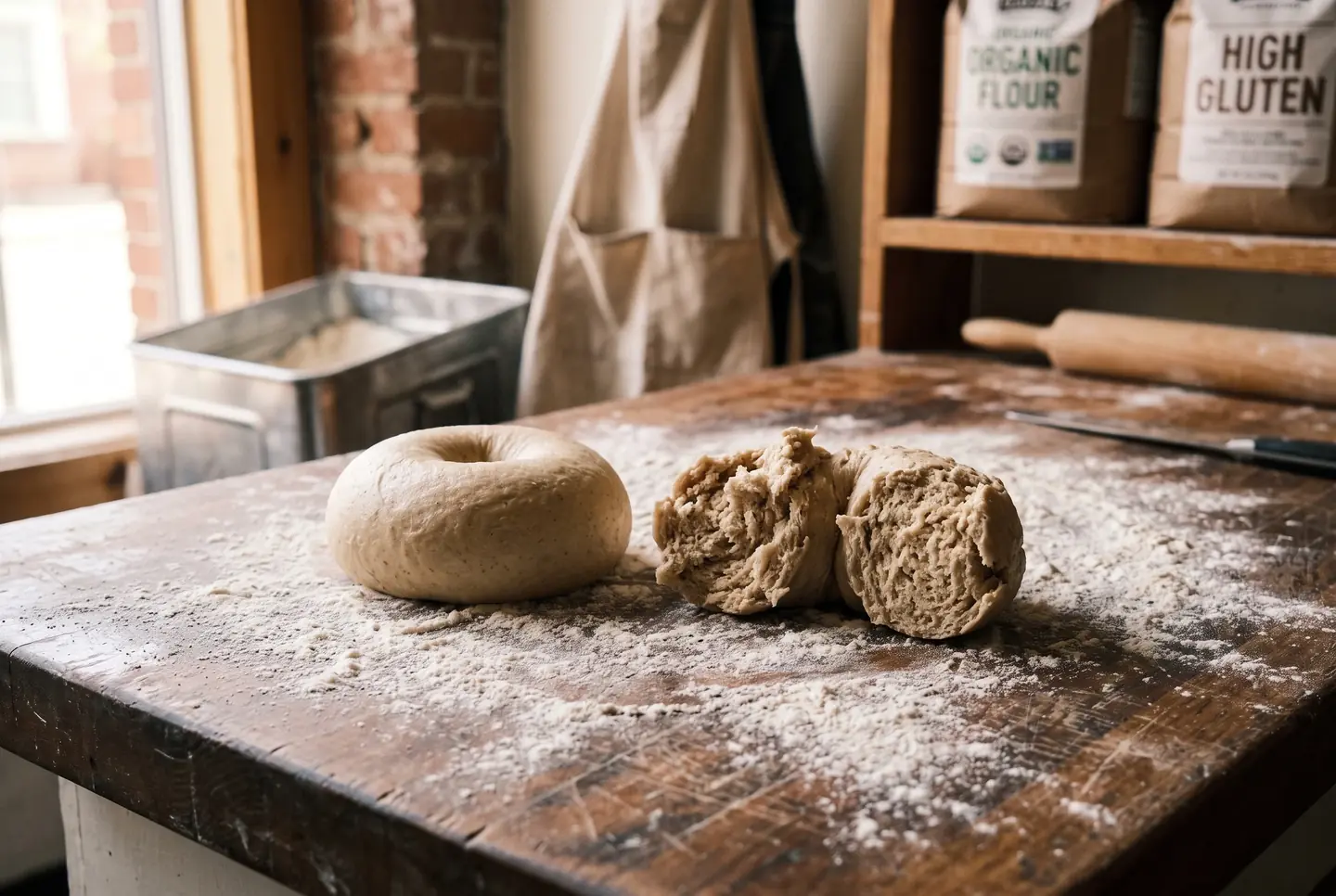
Bagel Dough: Why It Is So Firm, and How to Knead It
Bagel dough feels stiff and dry on purpose. Here is why it runs at 50 to 60% water and high protein flour, how to knead it, and the windowpane to aim for.
6 min read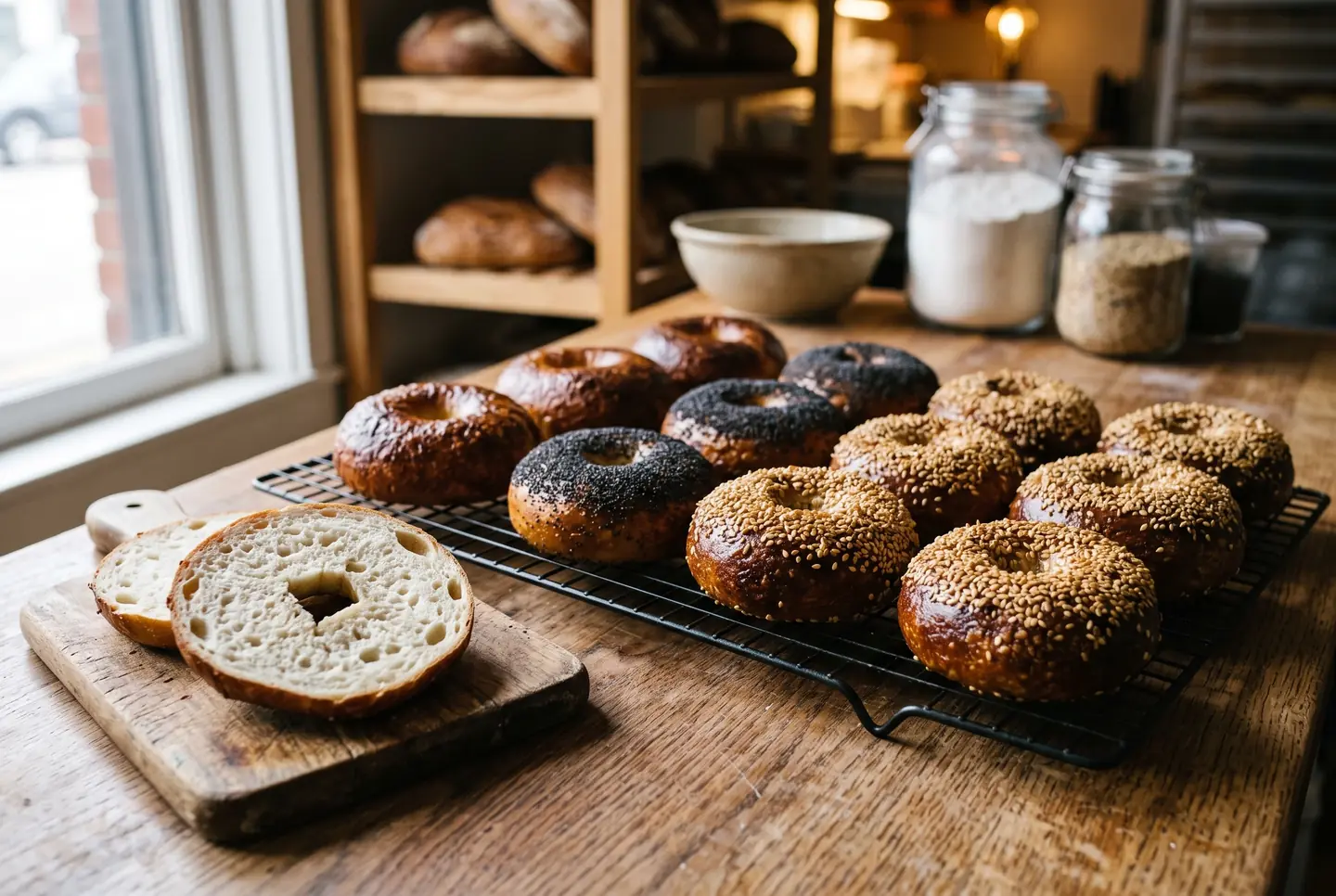 Guide
Guide
Bagel Recipe: New York Style, Step by Step
A weight-based New York bagel recipe, step by step: the firm 58% dough, an overnight cold retard, how long to boil, and the oven heat that sets a glossy crust.
6 min read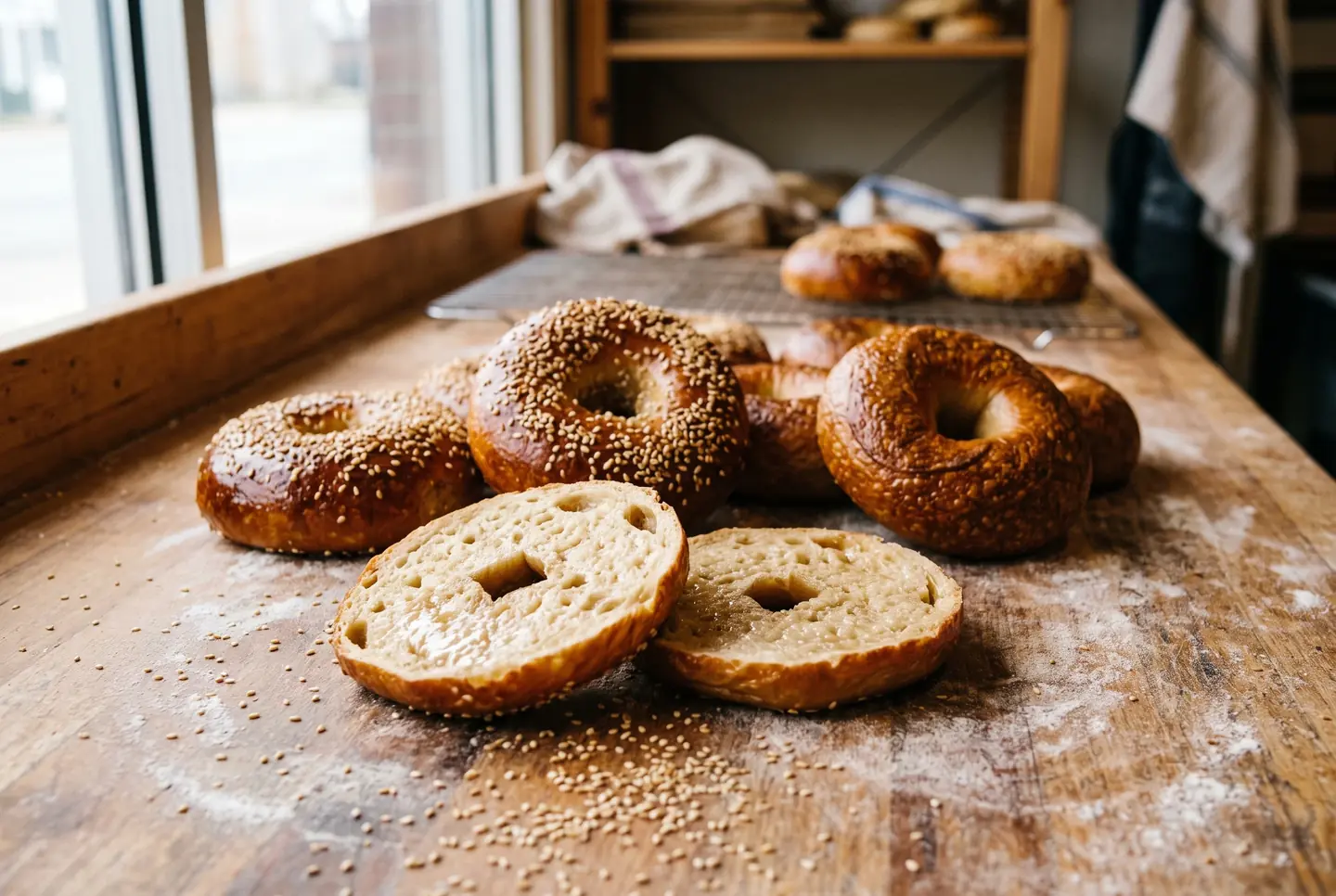 Complete guide
Bagels: The Complete Guide
Make a real bagel at home: the firm 58% dough, why bagels are boiled before baking, New York vs Montreal, sourdough and gluten free, and how to fix flat ones.
18 min read