Guide
How to Shape Bao Buns: Gua Bao and Baozi
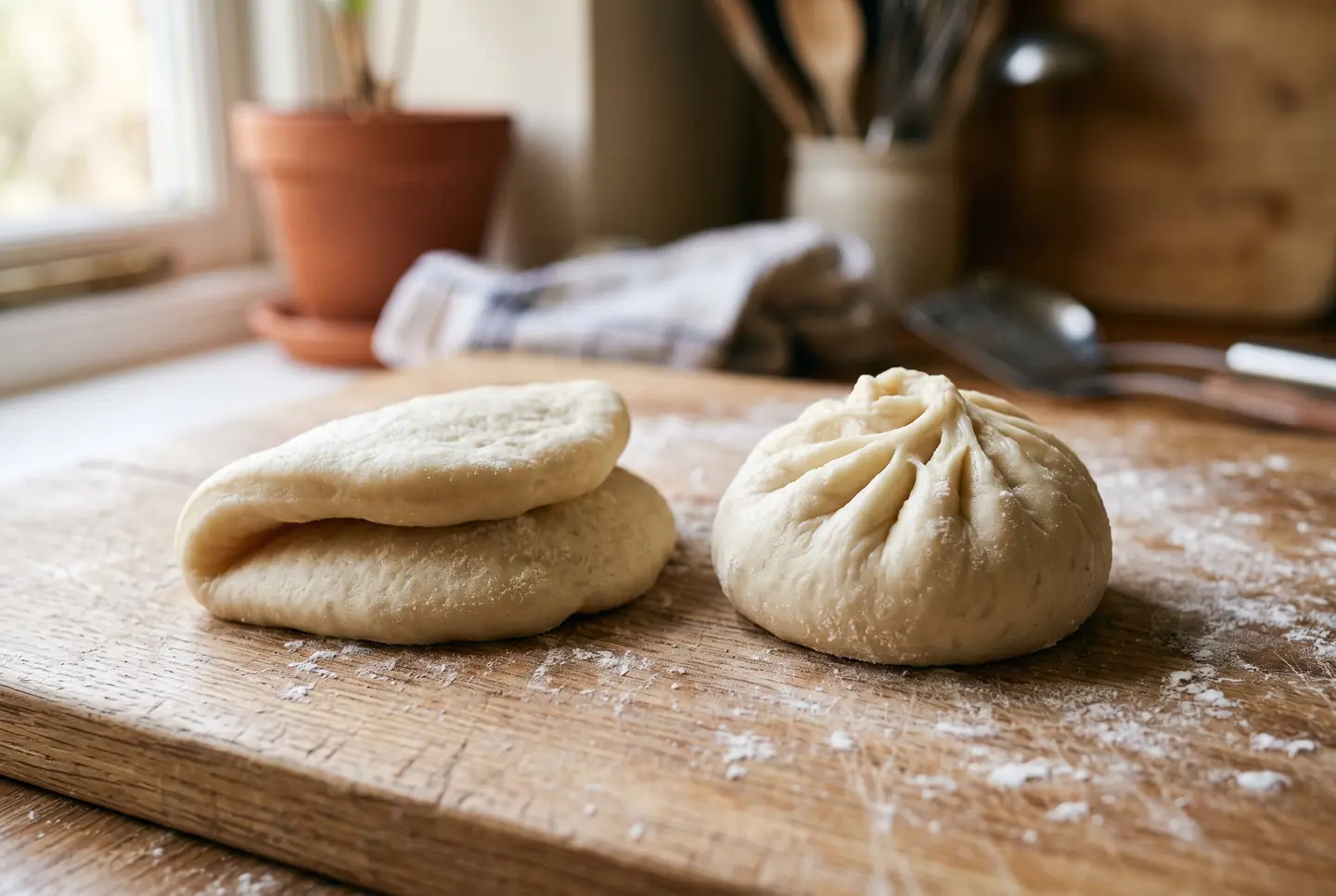
There are two ways to shape a bao, and they are not two names for one thing. The open gua bao is folded over a film of oil and steamed empty, then opened at the table like a little clam shell to hold pork belly or fried chicken. The pleated baozi, such as char siu bao, is sealed around its filling and steamed with the filling inside. The fold and the pleat are different jobs with different hand movements, and picking the wrong one for what you are making is the most common reason a homemade bao looks like it lost a fight.
Short answer before the detail: for a gua bao, roll an oval, brush the top with oil, and fold it over a chopstick. For a baozi, roll a round wrapper thick in the middle and thin at the rim, then pinch small pleats around the filling and twist the top shut. This page is the step by step for both. It is the shaping section of the complete bao buns guide opened all the way up; the dough it assumes is the stiff, low-protein one from the bao buns recipe.
First, divide and rest the dough
After the first rise, knock the dough back gently to press out the big bubbles, then divide it into even pieces. Weighing the pieces is worth the thirty seconds: buns of the same size steam in the same time, and a tray of matched buns looks handmade in the good way. A common portion is about 40 g for an open gua bao and 50 to 60 g for a filled baozi, which holds more.
Let the divided pieces sit under a cloth for a few minutes before you shape. A rested piece rolls out smoothly; a piece worked straight after dividing fights back and springs into a thick oval no matter how you press it.
Shaping an open gua bao
The gua bao is the simpler shape and the one to learn first.
- Flatten a piece with your palm, then roll it into an oval about twice as long as it is wide and a few millimetres thick, with a short edge facing you (Omnivore's Cookbook).
- Brush the top surface with a thin film of neutral oil. This single step is the whole trick.
- Lay a lightly oiled chopstick across the middle and fold the oval in half over it, then slide the chopstick out.
- Set the folded bun on its own square of parchment.
The oil is why a gua bao works. It keeps the two folded halves from fusing during steaming, so the bun puffs, sets, and then springs open cleanly when you want to fill it. Fold without the oil and the halves weld into a solid lump you have to tear apart. The chopstick gives the fold a crisp crease and a little pocket of air, so the bun opens at a defined line rather than wherever it happens to split.
Shaping a filled baozi
The pleated bun is more of a skill, and honestly one that rewards practice; some cooks spend months getting the pleats even. The mechanics, though, are learnable on the first try even if the looks take longer.
- Roll each piece into a round wrapper that is thicker in the center and thinner at the edge, about 9 to 10 cm across. The thick center carries the weight of the filling; the thin rim folds into pleats without turning into a doughy knot.
- Cup the wrapper in one hand and spoon the filling into the middle. Do not overfill: leave a clear margin of dough around the filling or it will push out as you close the bun.
- Pinch a starting point at the edge, then make small overlapping folds around the rim, rotating the bun as you go and pressing each pleat against the last.
- Gather the pleats at the top and twist to seal, then pinch off any thick nub of dough at the peak.
A well-made baozi has roughly 10 to 15 pleats (The Woks of Life). Fewer than that and the folds are coarse and the seal weak; many more and you are just adding dough to the top where it steams into a dense knot. If the pleats keep tearing, the rim is too thin or the dough too dry; if they will not hold a crease, the rim is too thick.
The two shapes side by side
| Open gua bao | Pleated baozi | |
|---|---|---|
| Wrapper | Oval, even thickness, oiled | Round, thick center, thin rim |
| Filling | Added after steaming | Sealed inside before steaming |
| Close | Folded over a chopstick | Pinched into 10 to 15 pleats, twisted |
| Steam | On high? No, gentle | Often high, to open the top crack |
| Classic use | Pork belly, fried chicken | Char siu pork, vegetables |
The steam column matters more than it looks. A filled char siu bao is often steamed on high on purpose, because the burst of heat splits the pleated top into the classic flowering crack (Red House Spice). An open gua bao wants the opposite, a gentle steam that keeps the folded surface smooth and pale. Which shape you made decides how you steam it, which is why the steaming guide is a separate step.
Resting the shaped buns
Shaped buns are not finished. Set each one on its own square of parchment, arrange them in the steamer with room to grow, and give a short second rise of 15 to 30 minutes, until they look puffy and about one and a half times their shaped size (Omnivore's Cookbook). The parchment stops them sticking and lets you lift each bun without deflating it.
If you are shaping more than one steamer load, slide the buns you are not cooking yet into the fridge. The cold slows their rise, so the last batch is not badly over-proofed by the time it reaches the steamer. An over-proofed bun collapses in the heat into a wide, wrinkled disc, and no amount of careful shaping survives that.
Where shaping goes wrong
| Problem | Likely cause | Fix |
|---|---|---|
| Gua bao fused shut, will not open | No oil between the folded halves | Brush the top with oil before folding |
| Baozi pleats tear as you fold | Rim rolled too thin, or dough too dry | Leave the rim a touch thicker; rest the dough |
| Doughy knot at the top of a baozi | Too many pleats, or filling too high | Aim for 10 to 15 pleats; twist and pinch off the nub |
| Buns uneven in size | Pieces not weighed | Divide by weight, around 40 to 60 g each |
| Shape slumps before steaming | Dough over-proofed while you worked | Chill extra pieces; shape in small batches |
Frequently asked questions
Do I need a chopstick to fold gua bao? No, but it helps. The chopstick gives a clean crease and a small air pocket so the bun opens along a defined line. Without it, you can still fold over a lightly oiled finger or the oiled handle of a spoon; the oil is the non-negotiable part, not the tool.
Why does my gua bao not open after steaming? Almost always because the fold was dry. The oil film between the two halves is what keeps them from fusing in the steam. Brush the top generously before you fold, and the bun springs apart cleanly once cooked.
How many pleats should a baozi have? Around 10 to 15 for a standard bun. That is enough to close the seam neatly and thin the dough as it gathers, without piling up a thick knot at the top that steams dense.
Can I shape bao buns ahead of time? Yes. Shape them, set them on parchment, and refrigerate to slow the second rise, or freeze them after the second rise and steam from frozen with a few extra minutes. Chilling is also how you stagger batches so nothing over-proofs.
What size should I divide the dough into? About 40 g per piece for open gua bao and 50 to 60 g for a filled baozi, which needs to hold filling. What matters most is that the pieces match each other, so the buns steam evenly.
My baozi filling leaks out while I pleat. What happened? Usually too much filling, or a wrapper that is thin in the center. Use a little less filling, leave a clear margin of dough around it, and roll the wrapper thicker in the middle so it supports the weight while you close the pleats.
Where I checked
Keep reading
 Guide
Guide
Bagel Dough: Why It Is So Firm, and How to Knead It
Bagel dough feels stiff and dry on purpose. Here is why it runs at 50 to 60% water and high protein flour, how to knead it, and the windowpane to aim for.
6 min read Guide
Guide
Bagel Recipe: New York Style, Step by Step
A weight-based New York bagel recipe, step by step: the firm 58% dough, an overnight cold retard, how long to boil, and the oven heat that sets a glossy crust.
6 min read Complete guide
Bagels: The Complete Guide
Make a real bagel at home: the firm 58% dough, why bagels are boiled before baking, New York vs Montreal, sourdough and gluten free, and how to fix flat ones.
18 min read