Guide
How to Steam Bao Buns Without Collapsing
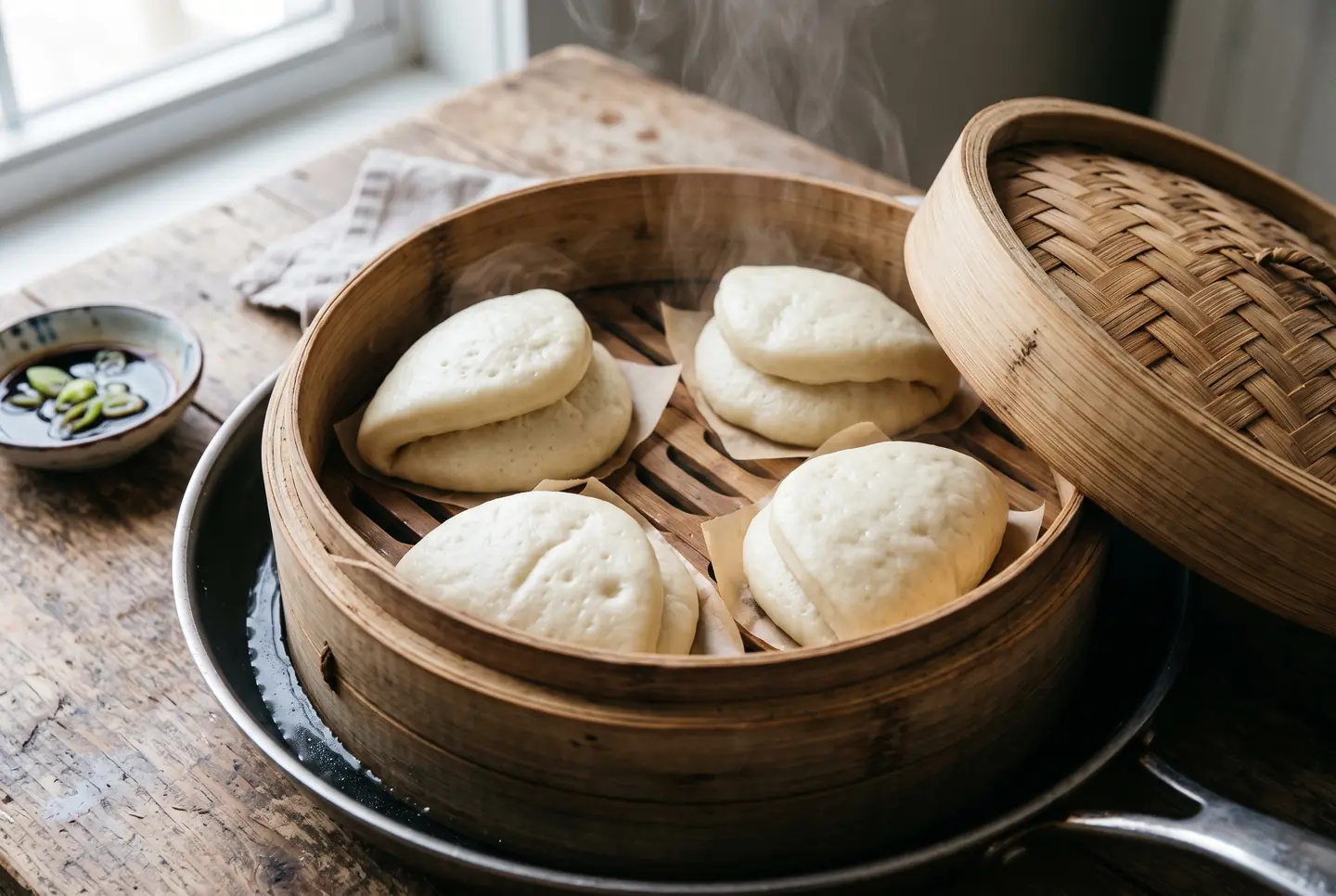
Steaming looks like the easy part and is where most homemade bao actually fail. The quick version: put about 2.5 cm of water under the basket so it never touches the buns, steam over medium or medium-low heat for about 10 minutes, and then leave the lid on for 5 minutes after the heat is off before you open it. Do those three things and a pale, smooth, puffed bun comes out every time.
Everything that wrecks a steamed bun, the wrinkled skin, the soggy bottom, the sudden shrivel, comes from one of three places: the water, the condensation, or the lid. This page works through each in order. It is the steaming section of the complete bao buns guide taken all the way down to the pot, and it assumes buns you have already shaped, whether that is an open gua bao or a pleated baozi.
Why steam keeps bao white
Steam is gentle heat with a ceiling. Water boils at 100 °C (212 °F), and steam never climbs past it, so nothing on the surface of the bun gets hot enough to brown. That is the entire reason a bao comes out snow-white instead of golden like a baked roll. It also means you cannot judge doneness by color, the way you would a loaf. You go by time and feel instead.
Setting up the steamer
Any steamer works, and you can rig one from a pot if you have none.
- Bamboo steamer. Sit it inside a wok or a wide pot over water. Add enough water that the pot will not boil dry in ten minutes but stays below the bottom of the basket, roughly 2.5 to 4 cm. The basket should sit above the water, never in it.
- Metal steamer. Same water rule. Metal has one catch, covered below.
- No steamer. Set a heatproof plate on an inverted bowl or a ring of foil inside a deep pot, add water below the plate, and use the pot lid (School of Wok).
Line each tier with perforated parchment, a silicone mat, or cabbage leaves so the buns do not stick, and leave at least a couple of centimetres between buns. They grow in the first minutes of steam, and buns crowded together fuse at the sides.
The bamboo versus metal trap
This is the lever almost no one explains, and it decides whether your buns come out smooth or pocked with wet spots. Bamboo absorbs the condensation that forms inside the steamer; a metal lid collects it and drips it back down onto the buns (Food Republic). A single cold drop on a soft, freshly steamed surface leaves a dented, soggy mark.
| Steamer | Condensation behaviour | What to do |
|---|---|---|
| Bamboo | Lid absorbs moisture | Use as is |
| Metal | Lid drips onto buns | Wrap the lid in a dry cloth |
| Pot and plate | Domed lid drips | Wrap the lid in a dry cloth |
If you are using anything other than bamboo, wrap the underside of the lid tightly with a clean, dry kitchen towel or a large piece of cheesecloth, tying the corners up over the handle. The cloth catches the condensation before it falls. It is the single change that turns a metal steamer from a bun-spoiler into a fine substitute for bamboo.
The heat: gentle for gua bao, high for char siu
For smooth, pale gua bao and plain mantou you want a gentle steam, medium or medium-low, not a violent rolling boil. Red House Spice is clear on why: aggressive boiling throws rough steam and big droplets at the buns and makes them cook unevenly, coming out wrinkled and shriveled (Red House Spice). A steady, moderate steam keeps the surface calm and even.
The pleated char siu bao is the deliberate exception. It is often steamed on high on purpose, because the burst of heat splits the pleated top into the classic flowering crack. For that bun the rough, fast steam is a feature; for a smooth gua bao it is a fault. Match the heat to the shape you made.
Timing and the lid
Small to medium buns need only about 10 minutes of steam over medium heat (Omnivore's Cookbook). They cook through long before they dry out, so the clock is about not underdoing the center rather than avoiding overcooking. Bring the water to a boil first, load the steamer, let the steam flow steadily, then hold it at medium or medium-low for the ten minutes.
Then comes the most important minute in the whole process, and it happens after the heat is off. Turn off the burner and leave the lid on for about 5 minutes before you open it. A bao pulled straight into cold air the instant it stops cooking deflates from the temperature shock, and that is what makes an otherwise perfect bun suddenly pucker and shrink. The five-minute rest lets the surface set gradually. When you do open up, crack the lid slowly rather than whipping it off.
Steaming from frozen
Frozen buns go straight into the steamer, no thawing. Arrange them in a single layer with space between, and add a few minutes to the time, around 12 to 13 minutes total for standard buns, until they are puffed and hot through. Thawing first tends to make them soggy; steaming from frozen keeps the skin smooth.
Where steaming goes wrong
| Problem | Likely cause | Fix |
|---|---|---|
| Wrinkled, shriveled skin | Boil too violent, or lid opened fast | Medium-low heat; rest 5 min, open slowly |
| Wet, dented spots on top | Condensation dripping from a metal lid | Wrap the lid in a dry cloth |
| Soggy bottom | Bun sitting in water, or liner soaked | Water below the basket; fresh parchment |
| Gummy center | Steamed too hot, or opened too soon | Gentle steam; the 5-minute lid rest |
| Buns fused together | Crowded in the basket | Leave space; they grow as they cook |
| Collapsed, flat buns | Over-proofed before steaming, not a steam fault | Stop the proof at puffy, chill extra buns |
The last row is worth a flag: a bun that comes out flat and wide usually failed before it reached the steamer, from over-proofing, not from anything you did with the heat. If your shaping and proofing were right, the steam is mostly about keeping the surface smooth.
Frequently asked questions
How long do you steam bao buns? About 10 minutes over medium heat for small to medium buns, counting from when the steam is flowing steadily. From frozen, add a few minutes. Then leave the lid on, heat off, for 5 minutes before opening.
How much water goes in the steamer? Enough that it will not boil dry in ten minutes but stays below the bottom of the basket, roughly 2.5 to 4 cm. The basket and the buns must sit above the water, never touching it.
Can I steam bao without a bamboo steamer? Yes. Use a metal steamer with its lid wrapped in a dry cloth, or rig one by standing a heatproof plate on an inverted bowl inside a deep pot with water below it and the pot lid on top.
Why did my bao buns come out wrinkled? Two usual suspects: the steam was too violent, or you opened the lid too fast at the end. Keep the heat at medium or medium-low, and let the buns rest in the closed, cooling steamer for five minutes before lifting the lid slowly.
Why is the top of my bun wet and dented? Condensation from the lid dripping onto it, which happens with metal and domed lids. Wrap the underside of the lid in a clean, dry towel so the cloth catches the drops before they fall.
Do I steam filled baozi the same way as gua bao? Mostly, but the heat can differ. Gua bao and plain buns want gentle steam for a smooth skin; pleated char siu bao is often steamed on high so the top cracks open. The water, spacing and lid rest are the same for both.
Where I checked
Keep reading
 Guide
Guide
Bagel Dough: Why It Is So Firm, and How to Knead It
Bagel dough feels stiff and dry on purpose. Here is why it runs at 50 to 60% water and high protein flour, how to knead it, and the windowpane to aim for.
6 min read Guide
Guide
Bagel Recipe: New York Style, Step by Step
A weight-based New York bagel recipe, step by step: the firm 58% dough, an overnight cold retard, how long to boil, and the oven heat that sets a glossy crust.
6 min read Complete guide
Bagels: The Complete Guide
Make a real bagel at home: the firm 58% dough, why bagels are boiled before baking, New York vs Montreal, sourdough and gluten free, and how to fix flat ones.
18 min read