Guide
Bao Buns Recipe: The Steamed Dough, Step by Step
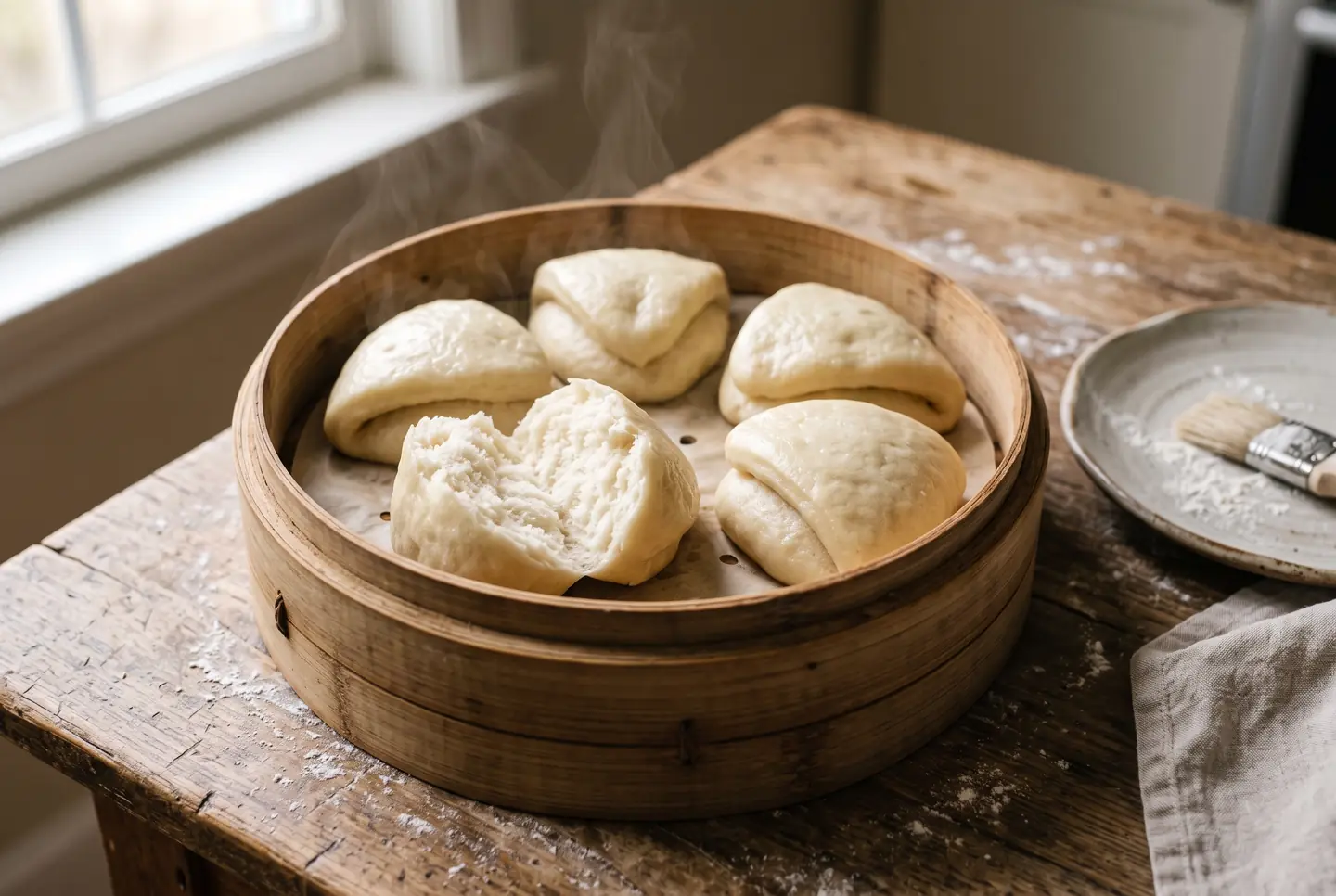
A plain bao dough takes about ten minutes of work and one rise, and the whole thing comes together in a bowl with a pot and a lid to finish. Mix a stiff, low-protein dough, let it double, shape it, give it a short second rise, and steam it gently. That is the entire recipe. Everything that goes wrong with homemade bao, the dense bun, the wrinkled skin, the gummy center, traces back to one of those steps, not to bad luck.
This page is the make-it version of the dough from the complete bao buns guide, where the bun is one of three levers: the flour, the steam and the fold. Here we stay on the dough itself: exact amounts, how long to knead, and the one question that decides everything, how to know it has proofed enough.
The dough, in weights
Weigh if you can. Bao is a stiff dough, and a stray tablespoon of water changes how it handles far more than it would in a wet bread. This base makes about ten open buns.
| Ingredient | Weight | Volume | What it does |
|---|---|---|---|
| Low protein flour | 300 g | about 2.5 cups | The body of the bun, kept pale and tender |
| Sugar | 30 g | about 2.5 tbsp | Feeds the yeast and softens the crumb |
| Instant yeast | 5 g | about 1.5 tsp | The main, slow rise |
| Baking powder | 3 g | about 0.75 tsp | A second burst of lift in the steamer |
| Warm water or milk | 150 g | about 150 ml | Milk gives a softer, slightly richer crumb |
| Neutral oil | 15 g | about 1 tbsp | Tenderness and a smoother surface |
Two things surprise people here. The first is the pairing of yeast and baking powder. Traditionally bao rose on yeast alone, which meant a long double proof; adding baking powder gives a fast final lift in the first minutes of steam, so the bun puffs without waiting hours (Omnivore's Cookbook). The second is how little liquid there is. Bao dough is stiffer than most bread dough, closer to a firm playdough than a slack loaf, and that firmness is exactly what lets a folded bun hold its shape in the steamer instead of slumping. The flour choice behind the color has its own guide to bao flour; for the recipe, any low-protein flour under about 11 percent protein will do.
Mixing and kneading
Combine the flour, sugar, yeast and baking powder in a bowl, then pour in the liquid and the oil. Stir to a shaggy mass, then turn it out and knead. By hand this takes roughly eight to ten minutes; in a stand mixer with a dough hook, about five (Omnivore's Cookbook). You are not chasing the stretchy windowpane of a bread dough. A bao is done kneading when it is smooth and no longer sticky, a firm, even ball. Because there is so little water and so little gluten, it will feel tight and slightly dense in the hand, and that is right.
One quiet tip that saves a lot of grief: start with cold or room-temperature liquid rather than hot. Warm liquid wakes the yeast immediately, so the dough is already gassing while you are still shaping, which leaves big irregular bubbles in the skin (What To Cook Today). A cooler start keeps the dough calm and the surface smooth until you actually want it to rise.
The first rise, and how to read it
Cover the bowl and let the dough rise in a warm spot until it doubles, roughly one to two hours depending on how warm the kitchen is. Warmth is the dial: a dough at 24 to 30 °C (75 to 86 °F) will double comfortably in that window, while a cold kitchen can stretch it well past two hours.
Doubled is the target, not a clock. The reliable test is the poke: flour a finger and press gently into the dough. If the dent springs back slowly and only partway, it is ready. If it springs back fast and fully, give it more time. If it does not spring back at all and the dough sighs down, it has gone too far, which matters more than you would think, as the next section explains.
Shaping and the short second rise
Knock the dough back gently and divide it. For open gua bao, roll each piece into an oval, brush the surface with a little oil so the two halves do not fuse, and fold it over a chopstick or the handle of a spoon into a half-moon. The oil brushed inside the fold is what lets the bun spring open cleanly after steaming instead of gluing itself shut. The full shaping detail, including the pleated filled bun, lives in the pillar guide.
Set each shaped bun on its own square of parchment, arrange them in the steamer with room to grow, and give a short second rise of 15 to 30 minutes, until they look puffy and about one and a half times their shaped size (Omnivore's Cookbook). This second proof is short on purpose: most of the lift already happened, and you want a little left in reserve for the steam.
Steaming without collapse
Steam is gentle heat. Water boils at 100 °C (212 °F) and steam never climbs past it, which is the whole reason a bao stays white: nothing on the surface gets hot enough to brown. Bring the water to a boil, load the steamer, and cook over medium heat until steam is flowing steadily, then drop to medium-low for about 10 minutes (Omnivore's Cookbook). A violent, rolling boil throws big drops and rough steam at the buns and wrinkles the skin; a steady medium-low keeps it smooth.
The most important minute is after the heat goes off. Leave the lid on and let the buns rest in the cooling steamer for about 5 minutes before you open it. A sudden rush of cool air onto a hot, freshly steamed bun is what makes it pucker and shrink. Crack the lid slowly, and they hold their shape.
Where the dough goes wrong
Almost every failed bao is one of these, and each has a fix.
| Problem | Likely cause | Fix |
|---|---|---|
| Dense, heavy bun | Under-proofed, or flour too strong | Let it fully double; use flour under 11% protein |
| Gummy, wet crumb | Steamed too hot, or opened too soon | Medium-low steam; rest 5 min with the lid on |
| Wrinkled, shriveled skin | Over-proofed, or lid opened fast | Stop at doubled; open the lid slowly |
| Yellowish, tan bun | Higher-protein or unbleached flour | See the bao flour guide for the color levers |
| Buns spread wide and flat | Badly over-proofed dough | Watch the poke test; refrigerate extra shaped buns |
The one to watch hardest is over-proofing. A dough pushed too far weakens, and in the steam it collapses rather than rises, leaving wrinkled, wide, flat buns (What To Cook Today). If you are steaming in batches, slide the shaped buns you are not cooking yet into the fridge; the cold slows their rise so the last tray is not overproofed by the time it goes in.
Frequently asked questions
Can I make bao without yeast? Yes, with baking powder alone, but the crumb is different: quicker and denser, closer to a soda-raised bun than the light, springy yeasted bao. For the classic pillowy texture, keep the yeast and use the baking powder as the booster, not the sole riser.
Water or milk in the dough? Both work. Water gives a clean, slightly firmer bun; whole milk gives a softer, faintly richer crumb and a touch more color. If you want the whitest possible bun, use water.
How do I know the buns are cooked through? At about 10 minutes of medium-low steam for standard-sized buns, they are done: puffed, dry to a light touch, and springy. Because there is no browning to judge by, go on time and feel, not color.
Why did my buns turn out dense? The two usual reasons are an under-proofed dough or a flour that is too strong. Make sure the dough fully doubles, and use a low-protein flour; a strong bread flour builds too much gluten for bao.
Can I make the dough ahead? Shape the buns, then refrigerate them to slow the second rise, or freeze them after the second rise and steam from frozen with a few extra minutes. A cold rest is also the trick for staggering batches so nothing over-proofs.
My skin came out wrinkled. What happened? Two suspects: the dough over-proofed before steaming, or you opened the lid too fast at the end. Stop the proof at doubled, and let the buns sit in the closed, cooling steamer for 5 minutes before lifting the lid.
Where I checked
Keep reading
 Guide
Guide
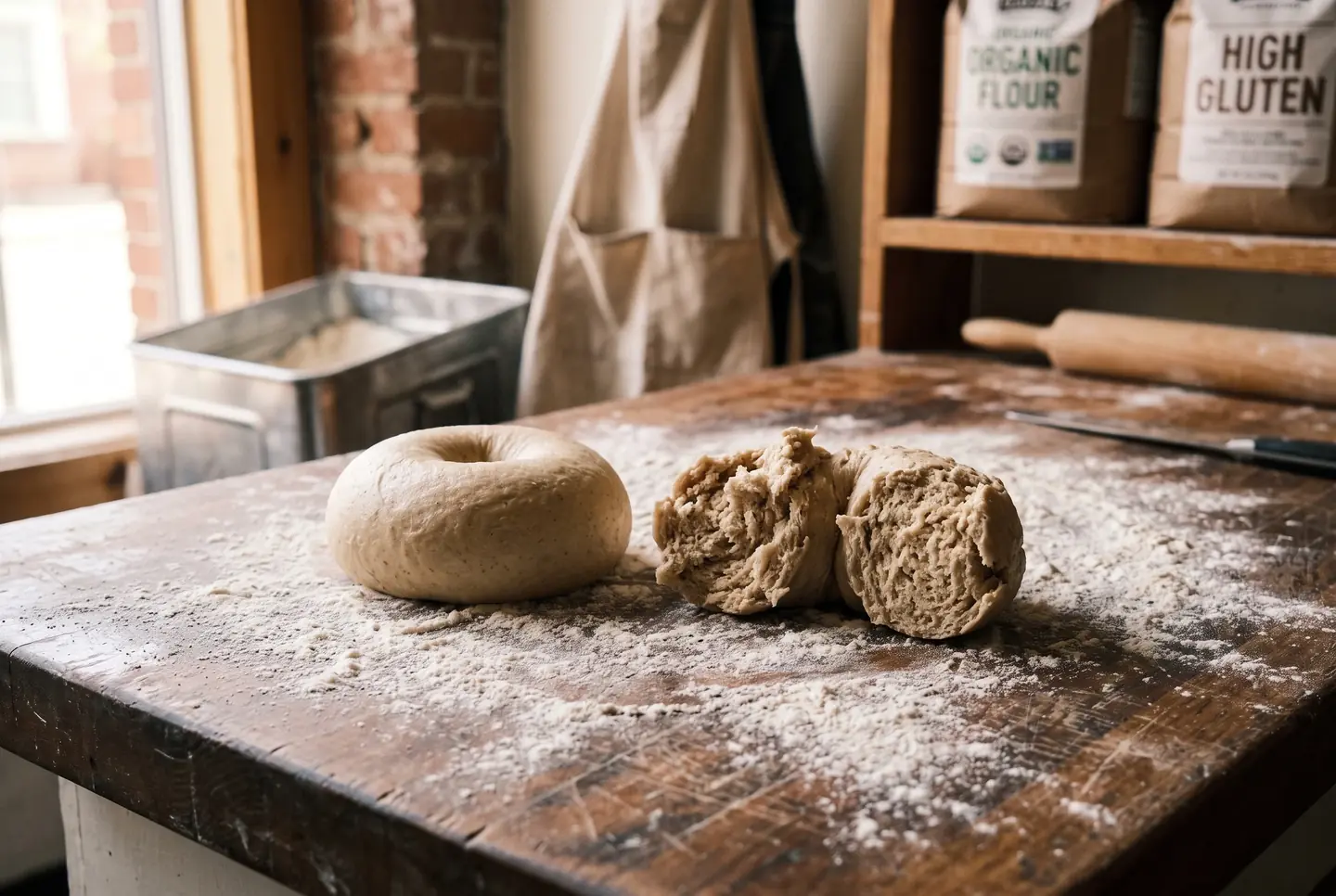
Bagel Dough: Why It Is So Firm, and How to Knead It
Bagel dough feels stiff and dry on purpose. Here is why it runs at 50 to 60% water and high protein flour, how to knead it, and the windowpane to aim for.
6 min read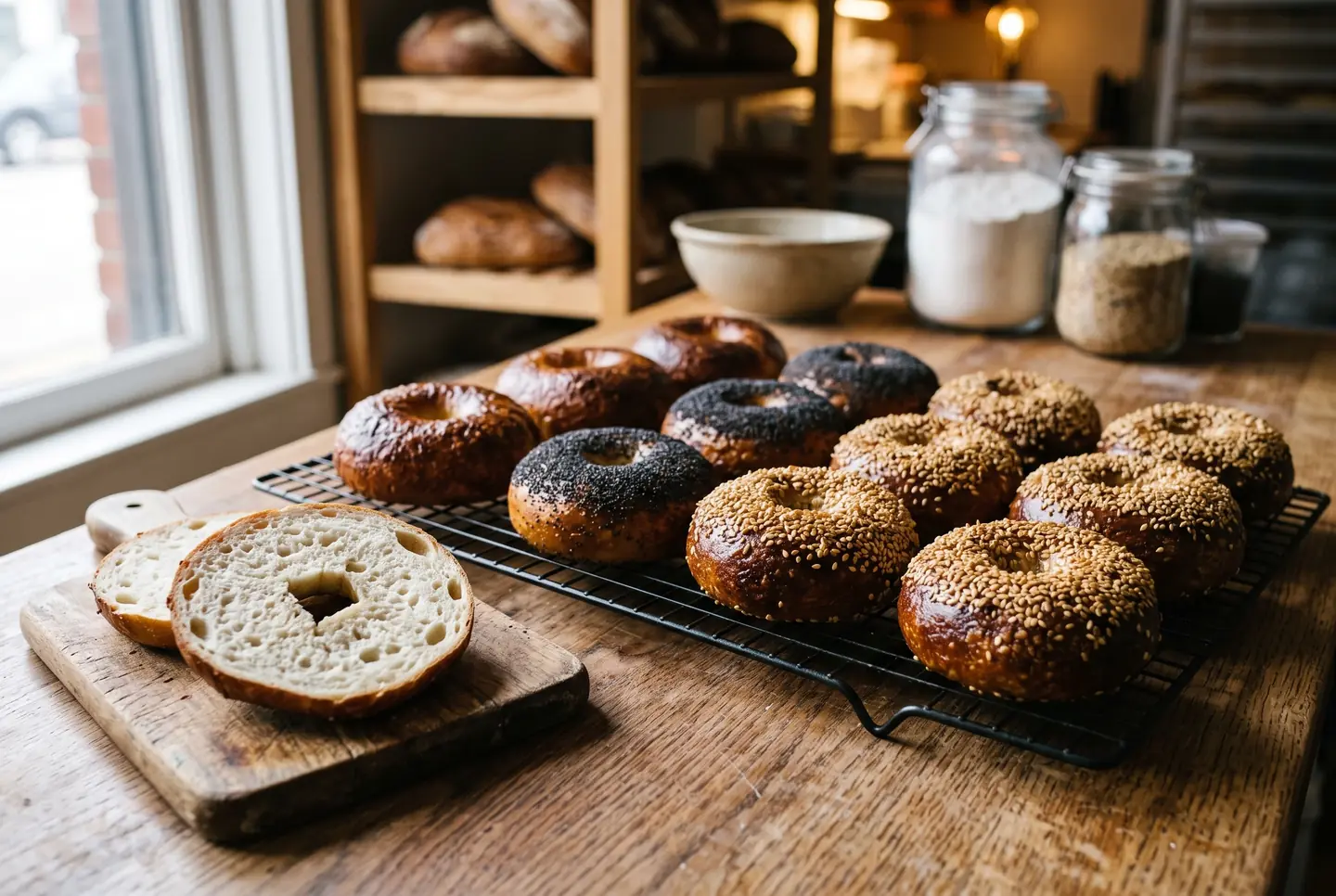 Guide
Guide
Bagel Recipe: New York Style, Step by Step
A weight-based New York bagel recipe, step by step: the firm 58% dough, an overnight cold retard, how long to boil, and the oven heat that sets a glossy crust.
6 min read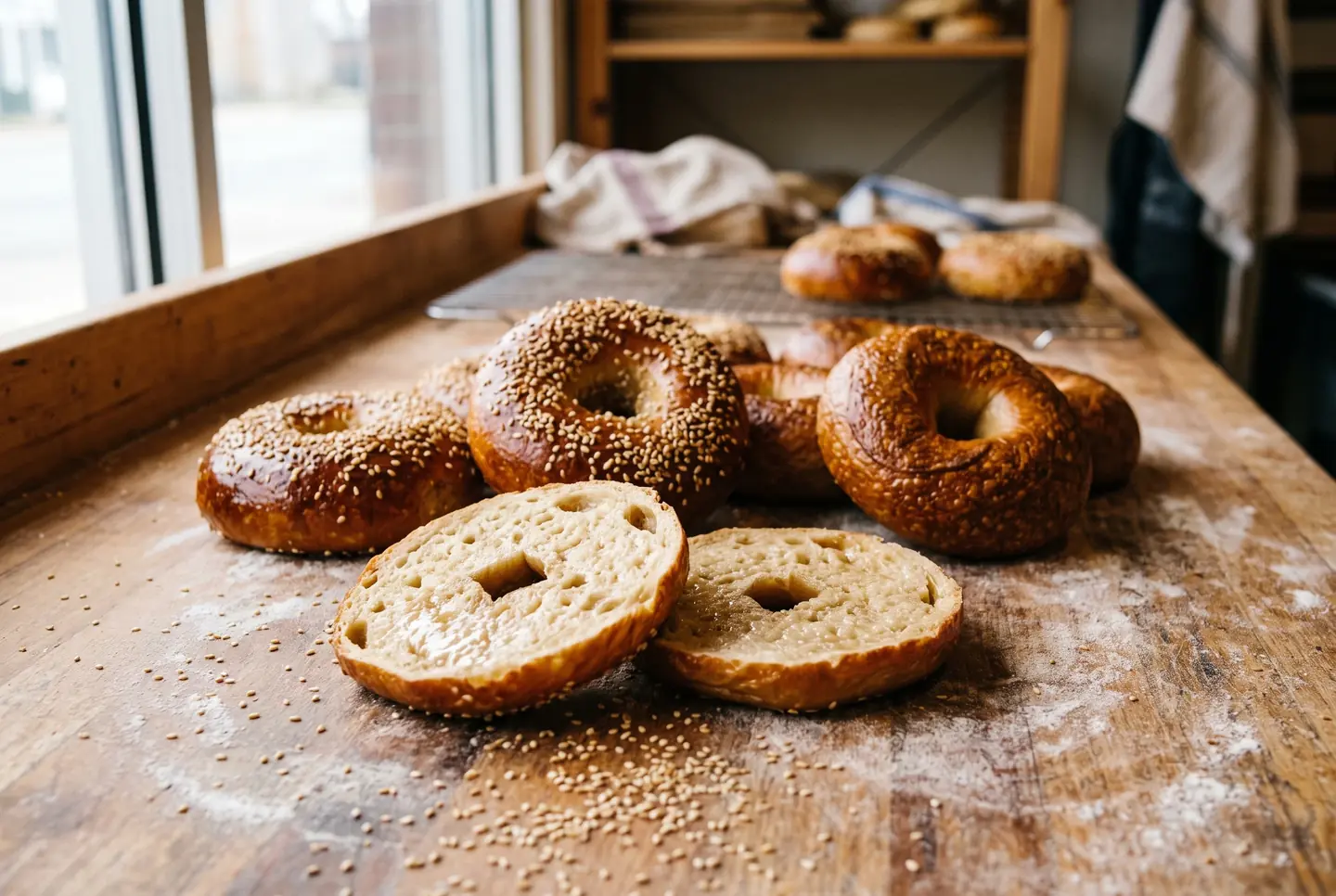 Complete guide
Bagels: The Complete Guide
Make a real bagel at home: the firm 58% dough, why bagels are boiled before baking, New York vs Montreal, sourdough and gluten free, and how to fix flat ones.
18 min read