Guide
Bao Buns Troubleshooting: Dense, Gummy or Yellow
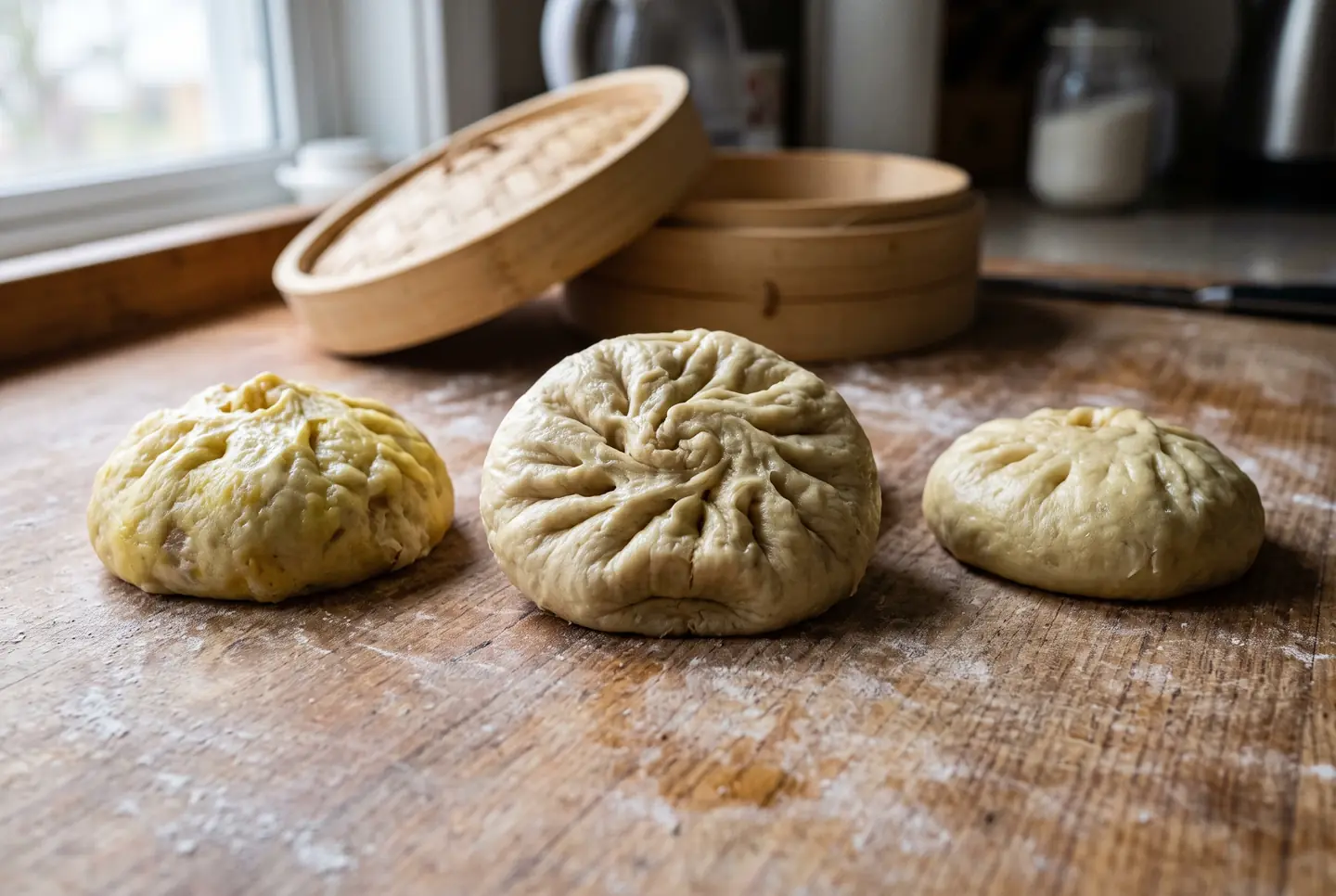
Almost every failed bao is one of a handful of problems, and the good news is that each has a single clear main cause. A bun that came out heavy is not a mystery of the universe; it is underproofed or made with dead yeast. A skin that shriveled the moment you lifted the lid is not bad luck; it is thermal shock. Once you can read the symptom, the fix is usually one change.
This is the troubleshooting branch of the complete bao buns guide, which has the full dough, shaping and steaming method. If your buns keep failing the same way, use the table below to name the symptom, then read the section for the cause. The most common single complaint, by a wide margin, is the bun that steamed up beautifully and then wrinkled and collapsed the instant the steamer opened, so we start there.
The quick diagnosis
| Symptom | Main cause | The fix |
|---|---|---|
| Dense, heavy, no lift | Underproofed dough, or dead yeast | Prove to fully doubled; check the yeast is alive |
| Wrinkled or collapsed skin | Thermal shock, or lid condensation | Rest five minutes off heat; crack the lid slowly |
| Gummy or wet inside | Undercooked, or condensation drips | Steam the full time; wrap the lid; keep drips off |
| Yellowish, tan color | Flour too high in protein | Switch to low protein or cake flour, or add cornstarch |
| Dough will not hold shape | Too wet, or overproofed | Stiffen the dough; press out big gas bubbles |
| Halves fused shut (gua bao) | No oil in the fold | Brush a thin film of oil before folding |
The wrinkled, shriveled bun: it is thermal shock
This is the failure that breaks the most hearts. The buns puff up plump and smooth in the steamer, and then, the second you lift the lid, they pucker and sink like a deflating balloon. The cause is a sudden rush of cool air hitting a hot, moist, delicate skin. The steam inside condenses, the surface contracts, and the bun wrinkles.
The fix is patience at the very end. When the time is up, turn off the heat and leave the lid on for about five minutes so the buns cool gradually inside the steamer. Then crack the lid open slowly, over roughly 30 seconds, rather than whipping it off (recipes4less). Two other things feed the same problem: steam that is too aggressive, which over-inflates a fragile skin, and condensation dripping from a metal lid, which pocks and waterlogs the surface. Steam on a steady medium, and wrap a metal lid in a thin cloth to catch the drips. Bamboo lids breathe and rarely need this. The full method for gentle, even steam is in the steaming without collapsing guide.
The dense, heavy bun: proof and yeast
A bao should feel like a cloud. When it comes out tight and bready instead, the cause is almost always the rise, not the recipe. Either the yeast was inactive and never produced enough gas, or the dough was pulled from its proof too early (recipes4less). A third, quieter culprit is too much flour worked in during shaping, which stiffens the dough past the point where it can rise well.
Work through it in order. Check the yeast is alive by proofing it in warm, not hot, liquid until it foams. Give the dough a full first rise until it is properly doubled, judged by how it looks and springs back rather than by the clock, since a cold kitchen slows everything down. And measure flour by weight so you are not quietly adding an extra fistful every batch. The second, shorter rise of the shaped buns matters too: if you steam them straight after shaping, they stay dense.
The gummy or wet center: undercooked, or drowned
A gummy bun is either undercooked or waterlogged. The undercooked version simply needs more time: medium filled buns want roughly 12 to 15 minutes of steady steam, and you can always add a minute, but you cannot un-steam an overcooked bun (recipes4less). The waterlogged version comes from condensation dripping onto the buns, or from a bun sitting in water, which the porous dough soaks up like a sponge.
Keep water off the dough. Wrap a metal lid, keep the water level below the basket rather than lapping at it, and always steam on a liner such as parchment so the base is never sitting in a puddle (Eat Healthy 365). If the outside looks done but the inside is still gummy, it is time, not temperature: give it another two or three minutes.
The yellow bun: it is the flour, mostly
A tan or yellowish bun usually points at the flour. Higher protein flours brown more, and any alkaline ingredient such as baking soda pushes the color yellow. Bright white buns come from a low protein, finely milled white flour, and it is worth saying plainly that white is cosmetic and not a measure of quality (recipes4less).
If you genuinely want a paler bun, that is a flour question, not a steaming one. Switch to a low protein or cake flour, or cut a small amount of cornstarch into your flour to lower the effective protein. Our bao flour guide covers the whole snow-white question, including which flours hit the color and why the vinegar-in-the-water trick does not do what people claim. And if your bun is tan because you reached for whole wheat, that is expected and not a fault: see the whole wheat bao guide.
Two shaping failures worth naming
Not every problem is the steamer. Two come from the shaping table. A dough that will not hold its shape and spreads into a puddle is too wet or overproofed: bao dough is meant to be stiff, so add flour until it firms up, and press the big gas bubbles out before dividing so the bun does not deflate unevenly. And a gua bao whose halves fuse shut instead of opening into a folded pocket was folded dry: brush a thin film of oil across the fold before you close it, so the two faces release cleanly after steaming. The full folding and shaping method is in the shaping guide.
Frequently asked questions
Why did my bao buns wrinkle and collapse when I opened the lid? That is thermal shock. Cool air hits the hot, moist skin, the steam inside condenses and the surface contracts. Fix it by turning off the heat and leaving the lid on for about five minutes, then cracking it open slowly rather than pulling it off. Steaming on a gentler medium heat and wrapping a metal lid to catch drips both help.
Why are my bao buns dense and heavy? Almost always the rise. The yeast may be dead, or the dough was underproofed and pulled too early. Check the yeast foams in warm liquid, give the dough a full rise to properly doubled judged by feel rather than the clock, and do not steam the shaped buns without their second short rise. Weighing your flour stops you adding too much.
Why are my bao buns gummy inside? They are undercooked or waterlogged. Steam medium filled buns for a full 12 to 15 minutes and add a couple of minutes if the inside is still wet, since you cannot fix an overcooked bun. Keep water off the dough: wrap a metal lid, keep the water level below the basket and steam on parchment so the base is not sitting in a puddle.
Why are my bao buns yellow instead of white? Usually the flour. Higher protein flours and alkaline ingredients like baking soda push the color toward yellow, while bright white comes from a low protein, finely milled flour. White is cosmetic, not a mark of quality. For a paler bun, switch to a low protein or cake flour, or add a little cornstarch to lower the effective protein.
Why won't my bao dough hold its shape? It is too wet or overproofed. Bao dough should be stiff, much firmer than a bread dough, so add flour until it holds a clean shape. Press the large gas bubbles out after the first rise before you divide and shape, and do not let the shaped buns overproof, or they slump and lose their pleats.
Why did my gua bao halves stick together? There was no oil in the fold. A gua bao is folded over a light film of oil so the two inner faces do not fuse during steaming and can open into a pocket afterward. Brush a thin layer of neutral oil across the fold line before closing the bun, and it will release cleanly once steamed.
Where I checked
Keep reading
 Guide
Guide
Bagel Dough: Why It Is So Firm, and How to Knead It
Bagel dough feels stiff and dry on purpose. Here is why it runs at 50 to 60% water and high protein flour, how to knead it, and the windowpane to aim for.
6 min read Guide
Guide
Bagel Recipe: New York Style, Step by Step
A weight-based New York bagel recipe, step by step: the firm 58% dough, an overnight cold retard, how long to boil, and the oven heat that sets a glossy crust.
6 min read Complete guide
Bagels: The Complete Guide
Make a real bagel at home: the firm 58% dough, why bagels are boiled before baking, New York vs Montreal, sourdough and gluten free, and how to fix flat ones.
18 min read