Guide
Whole Wheat Bao: The Blend That Stays Fluffy
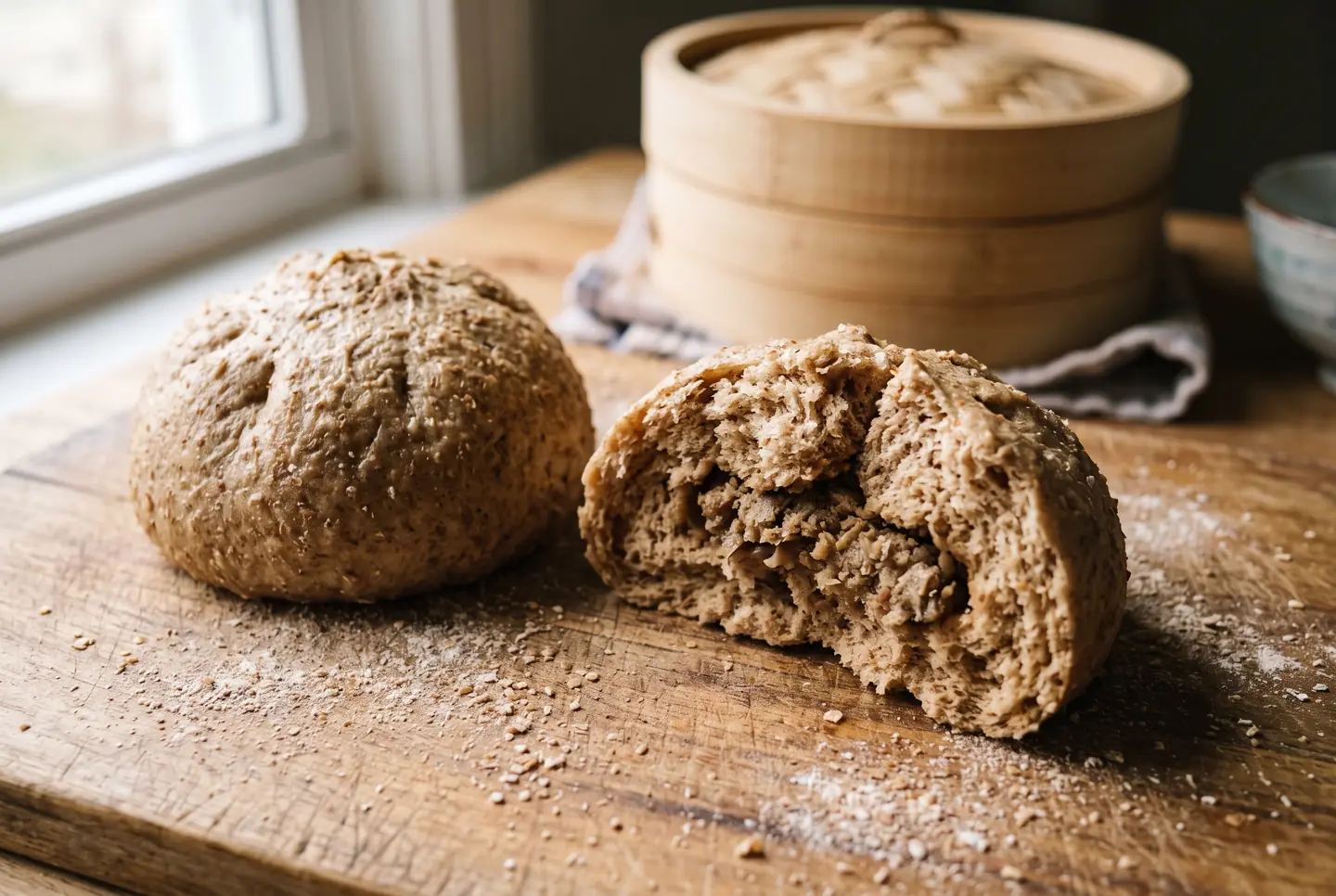
You can absolutely make a bao with whole wheat flour, and the honest way to start is to be clear about the trade. Whole wheat brings the bran and germ back into the flour, so you get more fiber, a nuttier flavor and a browner, speckled crumb. In exchange, the bun will never be snow-white, and it will be a touch denser, because the sharp bits of bran cut through the gluten and the extra fiber drinks up water. That is not a recipe going wrong. It is the character of the flour, and the goal is to lean into it rather than fight it.
This is the wholemeal branch of the complete bao buns guide, and it changes only two things about the standard method: the flour, and how much water you give it. If you want the full dough, shaping and steaming method, start with the main guide; this page is about keeping a whole wheat bao light instead of turning it into a hockey puck. The short version: do not go all the way to 100 percent, and add a little more liquid than a white dough asks for.
Do not go all the way: the blend that keeps it light
The single most useful move is a blend. A dough that is half whole wheat and half a low protein white flour keeps most of the fluff while picking up the wholemeal flavor and color. A well known wholemeal steamed bun recipe offers exactly this choice: a 50-50 build of 150 g cake flour plus 150 g whole wheat flour comes out "lighter and fluffier", while a 100 percent whole wheat dough is "a bit denser, which is expected" (What To Cook Today).
You can push all the way to 100 percent, and it works, but it asks more of your technique and rewards you with a heavier, more rustic bun. If this is your first whole wheat attempt, start at the blend and move up only if you want more of the wholemeal character.
| Build | Flour | What you get |
|---|---|---|
| Gentle blend | Half whole wheat, half low protein white | Most of the fluff, light wholemeal flavor and color |
| Even blend | 150 g whole wheat + 150 g cake flour | Lighter, still clearly wholemeal |
| Full wholemeal | 300 g whole wheat | Densest, nuttiest, most rustic |
Bump the water: whole wheat is a thirsty flour
Bran and germ absorb more water than the starchy white core does, so a whole wheat dough made to a white flour hydration will feel dry and tight. The fix is to add a little more liquid, and to add it slowly. The same recipe calls whole wheat "a very thirsty flour" that "needs more hydration", and directs you to add liquid a teaspoon at a time after a rest, feeling the dough as you go, because "every brand of whole wheat flour is different" (What To Cook Today).
That last point is the reason you should trust the dough over any single number. Two bags of whole wheat flour, even at the same protein, can drink noticeably different amounts of water depending on how finely they are milled and how much bran they carry. Add water until the dough is soft and smooth but still firm enough to hold a shape, then stop.
Tangzhong: the soak that softens the bran
The trick that makes a whole wheat bao genuinely soft is a tangzhong, a small paste of flour and liquid cooked to a gel before it joins the rest of the dough. It pre-hydrates the flour, holds water into the finished bun and softens the bran so it stops feeling gritty. Cook the paste gently to about 65 °C (149 °F), stirring, until it thickens, then let it cool before mixing it in (What To Cook Today).
For a 100 percent whole wheat bun, a workable ratio is 25 g whole wheat flour to 150 g milk for the tangzhong, with the whole wheat flour in the main dough reduced to account for what went into the paste. A 100 percent whole wheat baozi built this way is a real thing, not a compromise (All Purpose Veggies). Give the flour its full rest so the bran can drink, and do not add extra flour to a dough that looks a little wet at first: that wetness is often the hydration you want, settling in.
Flavor, color and the honest trade
A whole wheat bao is a different bun on purpose. It is nuttier and earthier than the plain version, with a speckled, tan crumb instead of a pale cloud. That color is not a fault. Bright white is a cosmetic result of low protein, finely milled white flour, and it is not a measure of quality. A rustic, honest bun that tastes of the grain is the whole point of reaching for whole wheat in the first place.
Where it pairs well shifts too. The extra flavor stands up to bolder, richer fillings, so a wholemeal bun is a natural home for a slow braise or a mushroom filling with real depth. Treat it as its own good thing, the way you would treat a wholemeal loaf next to a white one, rather than as a paler bun that failed to turn white.
Which whole wheat flour to use
Not all whole wheat flour behaves the same. A finely milled wholemeal flour gives a smoother crumb and a softer bun than a coarse, flaky one, because big flakes of bran cut the gluten harder. For the softest result, reach for a finely milled whole wheat flour, or sift out the coarsest bran if all you have is a rough grind. The details of what wholemeal flour is, how it is milled and how to store it live in our whole wheat flour reference.
If you want to nudge a full wholemeal dough back toward fluffy without cutting in white flour, a small amount of vital wheat gluten raises the effective protein and helps the crumb hold more gas. Use it sparingly: too much turns the bun tough rather than light.
Where whole wheat bao goes wrong
| Symptom | Likely cause | The fix |
|---|---|---|
| Brick-dense bun | Went straight to 100 percent whole wheat, or dough too dry | Start with a blend, and add more water; whole wheat is thirsty |
| Gritty, coarse crumb | Coarse wholemeal flour, bran not hydrated | Use finely milled flour, or a tangzhong, and give a full rest |
| Dry, tight dough | Hydrated like a white dough | Add liquid a teaspoon at a time until soft but shapeable |
| Disappointingly pale expectation | Expecting snow-white from wholemeal | Whole wheat is tan by nature; that is the flavor showing |
| Tough, chewy bun | Too much added gluten, or over-kneaded | Ease off the vital wheat gluten; mix to smooth, not to elastic-tough |
The pattern is simple. Almost every heavy whole wheat bao is either too much wholemeal too soon, or not enough water. Blend the flour, feed the dough the liquid it asks for, and the rustic bun that comes out is exactly what you were after. For every other failure that is not about the flour, the full symptom by symptom diagnosis covers dense, gummy and wrinkled buns in one place.
Frequently asked questions
Can you make bao buns with whole wheat flour? Yes. The easiest route is a blend of half whole wheat and half low protein white flour, which keeps most of the fluff while adding wholemeal flavor and a browner crumb. You can go all the way to 100 percent whole wheat, but it is denser and asks more of your technique.
Why is my whole wheat bao so dense? Usually one of two things: you used all whole wheat instead of a blend, or the dough was too dry. Whole wheat absorbs more water than white flour, so a dough hydrated like a white one will bake up tight. Start with a blend and add liquid a teaspoon at a time until the dough is soft but still holds its shape.
How much water does whole wheat bao dough need? More than a white dough, because the bran and germ are thirsty, but the exact amount varies by brand and grind. Rather than chase a number, add liquid slowly and feel the dough: it should be soft and smooth without being sticky. A tangzhong, a cooked flour and liquid paste, helps hold that extra water into the bun.
Why is my whole wheat bao brown and not white? That is normal and not a fault. Whole wheat flour carries the bran and germ, which give a tan, speckled crumb. Bright white buns come from low protein, finely milled white flour, and white is a cosmetic result, not a sign of quality. A wholemeal bun is meant to look and taste rustic.
Can I make 100 percent whole wheat bao? Yes, and it can be genuinely good, just denser and nuttier than a blend. A tangzhong is close to essential here: pre-cooking some of the flour with liquid softens the bran and holds moisture. Use finely milled flour, hydrate generously and give the dough a full rest so the bran can absorb the water.
What flour makes the softest whole wheat bao? A finely milled whole wheat flour blended with a low protein white flour such as cake flour. Fine milling keeps the bran from cutting the gluten, and the white flour keeps the crumb light. For extra structure in a full wholemeal dough, a little vital wheat gluten helps, but use it sparingly or the bun turns tough.
Where I checked
Keep reading
 Guide
Guide
Bagel Dough: Why It Is So Firm, and How to Knead It
Bagel dough feels stiff and dry on purpose. Here is why it runs at 50 to 60% water and high protein flour, how to knead it, and the windowpane to aim for.
6 min read Guide
Guide
Bagel Recipe: New York Style, Step by Step
A weight-based New York bagel recipe, step by step: the firm 58% dough, an overnight cold retard, how long to boil, and the oven heat that sets a glossy crust.
6 min read Complete guide
Bagels: The Complete Guide
Make a real bagel at home: the firm 58% dough, why bagels are boiled before baking, New York vs Montreal, sourdough and gluten free, and how to fix flat ones.
18 min read