Flour
Whole wheat flour: what it is, why it rises less, and the loaf it makes
It has more protein on the label and less gluten in the dough, at the same time. That is not a contradiction: they are two different things that the label keeps confusing.
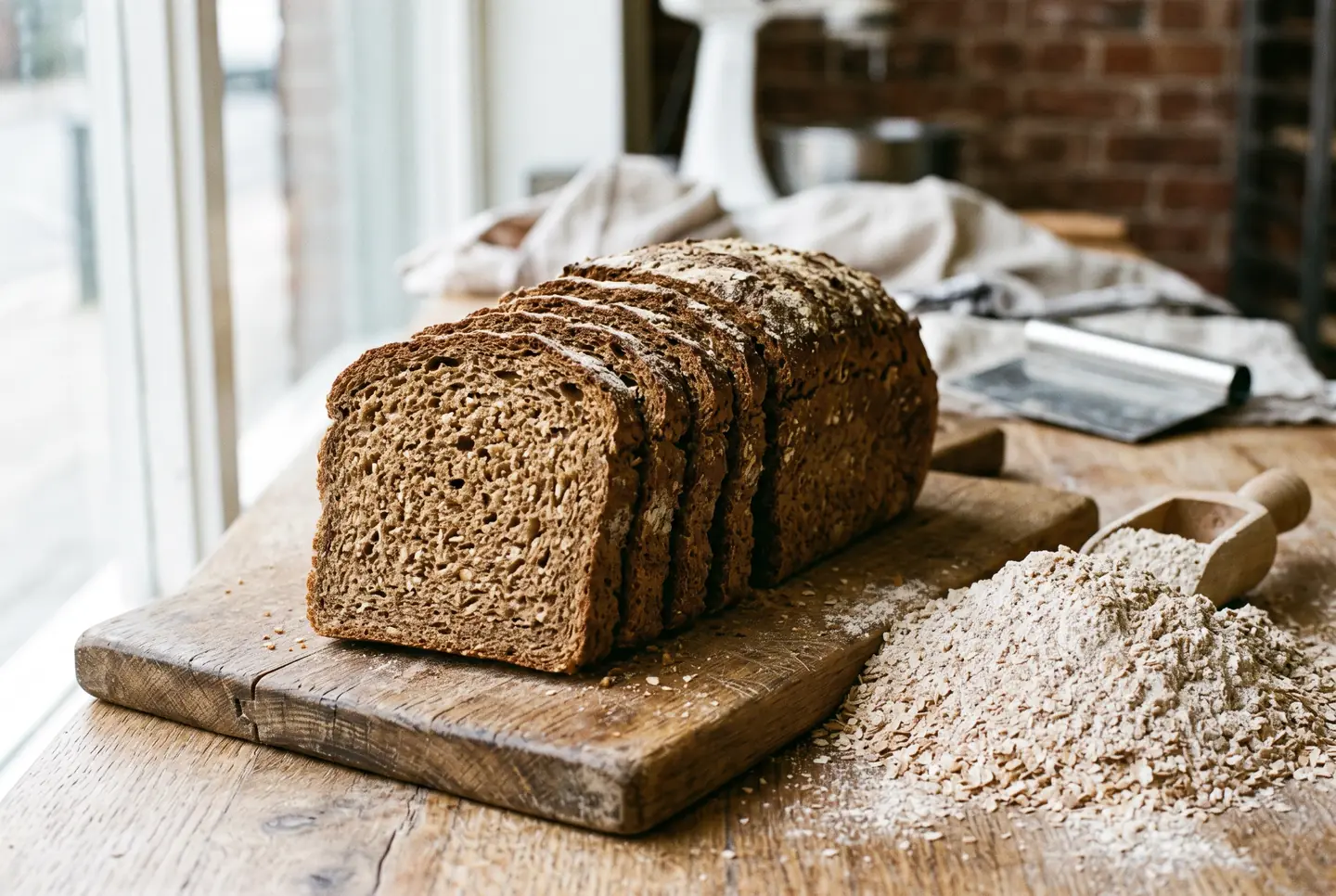
At a glance
- Strength (W)
- 170 to 390
- Protein
- 12% to 15.3% *
- Water absorption
- 60% to 63%
- Stability
- 2 min to 14 min
- Ash
- 1.3% to 1.7%
- Origin
- Não é uma origem: é um grau de extração do mesmo trigo
- Grain
- trigo comum (Triticum aestivum), grão inteiro
Sources disagree. The 14% or 15% protein printed on a wholemeal bag is not comparable to 14% on a white one. Part of that protein sits in the bran and germ and forms no gluten at all. Caputo's sheet shows the effect plainly: high protein, but dry gluten of only 11.0% to 11.5% and a stability of 2 to 4 minutes. Compare gluten figures, not protein figures.
What it is called in each country
| Country | Called |
|---|---|
| English | whole wheat flour (US) / wholemeal flour (UK); white whole wheat = trigo branco duro |
| Português | farinha de trigo integral (cinzas até 2,5% b.s., IN MAPA 8/2005) |
| Italiano | farina integrale di grano tenero (ceneri 1,30 a 1,70% s.s., DPR 187/2001) |
| Français | T150 (intégrale); a T110 é semi-complète, não integral |
| Español | harina integral de trigo (pan 100% integral exige 100% dela, RD 308/2019) |
What it is for
Everyday tin bread, rustic loaves with 20% to 40% wholemeal in the blend, rye and wheat mixes, rustic biscuits and savoury tart pastry.
It is also excellent as a seasoning. Ten to twenty per cent inside a white dough changes the flavour completely and helps the ferment along, because the bran brings minerals and enzymes that white flour lost.
And for feeding a sourdough starter it works very well, for the same reason: more available food for the bacteria.
How to substitute it
Swapping white for whole wheat, and the reverse, are two different problems. Putting whole wheat where the recipe asked for white costs volume: the bran cuts the gluten and the fibre steals water, so the loaf comes out shorter and tighter. To swap without a surprise, add 5 to 10 points of hydration, shorten the ferment, which runs faster on wholemeal, and accept a denser crumb. If you want to keep the white loaf's volume, stay at 30% whole wheat and make up the rest with white: past that the bread changes category. The other way round, dropping whole wheat for white, is easy and always works, just put back the water you had removed and expect a milder flavour and a paler crust. And if all you want is the wholemeal taste in a white loaf, 10% to 20% delivers it without charging the volume.
When not to use it
Bread with a big open crumb. Milled bran has sharp edges and cuts the gluten sheets as the dough expands; at the same time the fibre competes with the proteins for water. You lose structure by two routes at once, and no kneading trick recovers it.
Puff pastry and croissants, no. Every bran particle is a hole in the butter layer.
How to use it
Two techniques solve nearly everything.
The first is a long rest before kneading. Mix flour and water only and wait 40 to 60 minutes. The bran absorbs, softens and cuts far less afterwards. Skipping this is the number one cause of heavy wholemeal bread.
The second is to read the rise, not the clock. Wholemeal dough ferments faster, because it has more food and more enzymes, but it gains less volume. If you wait for a double, it is already past. Aim for a 60% to 70% increase.
On water: laboratory absorption sits between 60% and 63%, but in a recipe wholemeal works between 75% and 80%. The bran keeps drinking after mixing, so a dough that felt right at 5 minutes will feel too firm at 40.
And buy it in small amounts. Real wholemeal has germ in it, and germ goes rancid.
How to choose one when buying
Read the ingredients list before you read the W. Real wholemeal has exactly one ingredient: whole wheat. If the label says wheat flour and then bran, it is white flour with the bran returned, no germ: more volume, but less flavour and less nutrition. Stone-ground flour usually keeps the live germ and therefore goes rancid; smell it before you use it and buy small amounts. If you want the fibre of wholemeal with less bitterness, look for white whole wheat, whole grain milled from a pale hard wheat. And distrust the number on the front: wholemeal's high protein includes the bran's, which forms no gluten; if the brand publishes dry gluten or stability, that is where the useful figure is.
The story
Wholemeal is not a wheat: it is an extraction rate. The same ear becomes white flour if you take out the bran and germ, or whole wheat if you mill the lot. The difference happens in the mill, not in the field.
And here is what almost nobody mentions: a good share of the flour sold as wholemeal is not whole grain at all. It is white flour with the bran added back afterwards. Molino Pordenone's datasheet for its integrale lists, on the ingredients line, gluten and toasted wheat bran. That is not fraud, it is an industrial choice: the germ carries fat that goes rancid in weeks, so removing it and returning only the bran solves the shelf-life problem.
The price shows up in flavour and in the nutrients that were supposed to be the point. Stone-ground wholemeal with live germ keeps about six months sealed and considerably less once open. If your whole wheat flour never goes rancid, it probably has no germ in it.
The number ranges in the table above look like typos, but they are an honest picture of the market: a traditional-mill wholemeal runs W 170 to 190 with 2 to 4 minutes of stability; a wholemeal fortified with added gluten reaches W 390 and 14 minutes. Two flours with the same word on the bag and opposite behaviour in the bowl.
Frequently asked
- Can I swap white flour for whole wheat in the same recipe?
- You can, adjusting two things: another 5 to 10 points of water and less fermentation time. Expect a shorter, denser loaf. If you want the same volume, stay at 30% whole wheat and make up the rest with white.
- Why is my whole wheat bread heavy?
- Most often it is no rest before kneading, or over-fermentation because you waited for the dough to double. Do the 40 to 60 minute soak and bake at a 60% to 70% rise.
- Is whole wheat flour always healthier?
- More fibre and more minerals, yes. But if the wholemeal you bought is white flour with bran returned and no germ, you lost a good share of the vitamins and the good fats. Check the ingredients list: real wholemeal has exactly one ingredient.
- What is white whole wheat flour?
- It is 100% whole grain, milled from hard white wheat instead of hard red. Same bran, same germ, same nutrition, but a milder flavour and a paler crumb, because the red wheat's tannins are what taste bitter to most people.