Guide
Gluten-Free Sourdough Bread That Actually Rises
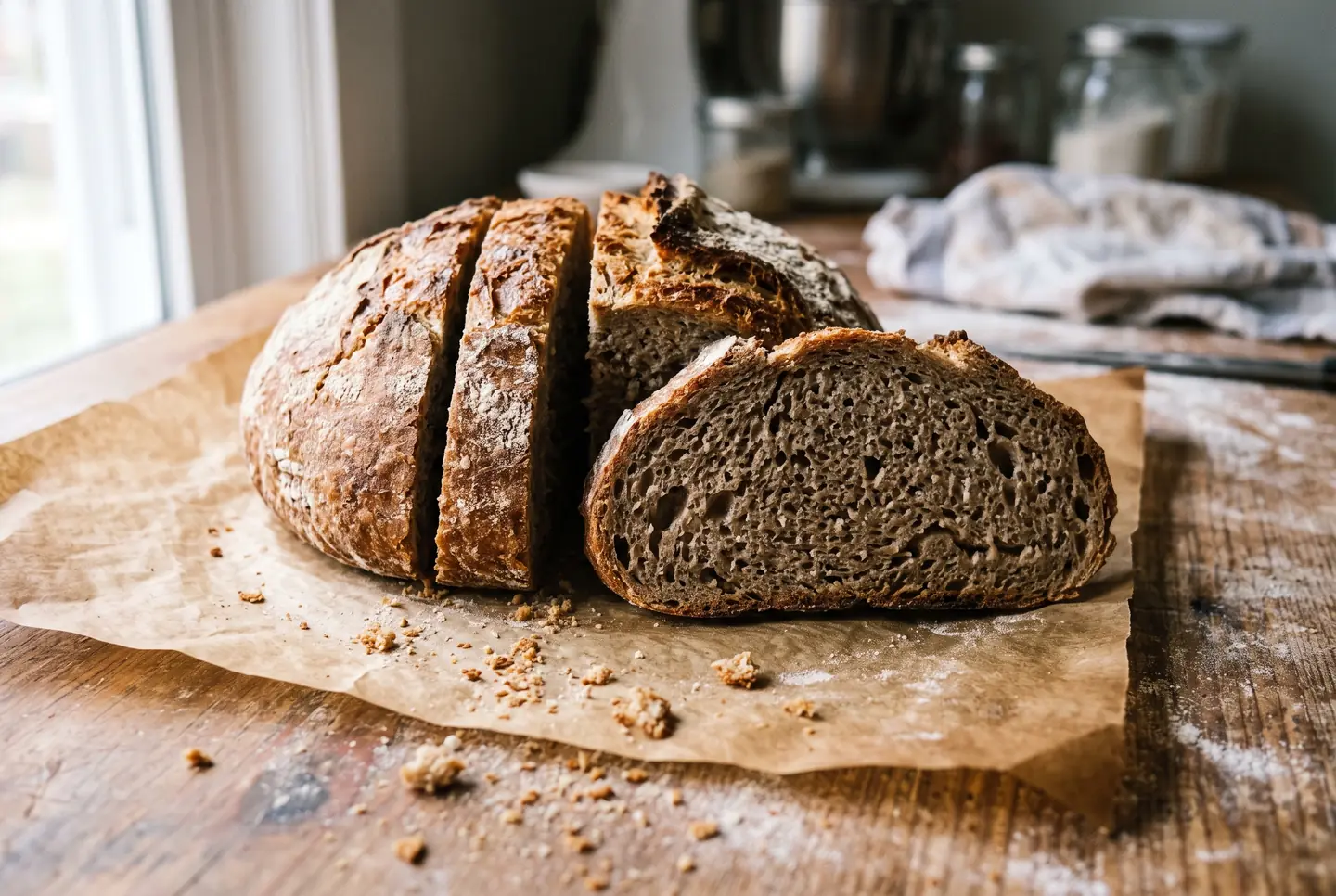
Gluten-free sourdough is real, and it brings the same tang and keeping quality that make sourdough worth the trouble. But it is a genuinely different craft, not the same recipe with one flour swapped. Gluten is the elastic network that traps the gas fermentation makes and gives wheat bread its structure, and no gluten-free flour has it. So a gluten-free loaf rebuilds that structure from other parts: a blend of flours and starches for body, a binder to hold the bubbles, and a starter of its own.
The binder is the piece that makes or breaks the loaf, and for most bakers it is psyllium husk, which forms a gel that stands in for the gluten web. Get the blend and the psyllium right and you get a real risen loaf; treat a gluten-free dough like a wheat one and you get a dense, damp brick. This guide is the gluten-free branch of the complete sourdough bread method: the fermentation logic is shared, but the flour, the hydration and the handling are their own set of rules.
Why it is a different craft, not a swapped flour
In a wheat dough, kneading and folding line up long gluten proteins into a stretchy net, and that net catches the carbon dioxide the yeast and bacteria release. No single gluten-free flour builds that net, so you cannot fix a gluten-free dough by working it harder. Instead the structure comes from three separate jobs done by three separate ingredients: flours for flavour and body, starches for lightness, and a hydrocolloid binder, usually psyllium, to trap the gas. That is why a gluten-free formula is a blend and not a bag, and why the method that follows looks so different from the wheat one.
The flour and starch blend
A good gluten-free loaf balances whole-grain flours, which bring flavour, with starches, which bring lift. Lean too far toward heavy flours and the loaf is dense; lean too far toward starch and it is fragile and gummy. A representative blend from Breadtopia totals 450 g of dry mix built on a brown-rice-and-buckwheat base with a little oat flour and flaxmeal.
| Component | Role | Rough share |
|---|---|---|
| Brown rice flour | Neutral base, structure | Largest single part |
| Buckwheat or sorghum flour | Flavour, whole-grain body | Secondary |
| Potato or tapioca starch | Lightness, softer crumb | A supporting third |
| Psyllium husk | Binder, gas trapping | Small, but essential |
The rice flour reference and the buckwheat flour reference cover how each behaves on its own; here they are two parts of a team. If you would rather not measure four bags, a good all-purpose gluten-free bread flour already blends flours, starch and binder, and you add only water and starter.
Psyllium husk: the binder that does gluten's job
Psyllium is the one ingredient you should not skip. Mixed with water it swells into a gel that traps gas the way gluten would, and it is what turns a gluten-free batter from a flat paste into something that rises and holds. The Breadtopia loaf uses 20 g of psyllium against 450 g of flour, about 4 to 5 percent of the flour weight (Breadtopia), which is a good starting ratio.
Two practical notes. Use psyllium husk, not psyllium powder: the powder is more concentrated and behaves differently, and swapping them gram for gram gives a gluey loaf. And give it five minutes to hydrate into a proper gel before you judge the dough, because it keeps thickening after mixing.
The gluten-free starter
Sourdough fermentation itself does not need gluten, so a gluten-free starter works exactly like a wheat one: wild yeast and bacteria feeding on flour and water. The only rule is that it must be fed a gluten-free flour, and brown rice or buckwheat are the usual choices because they ferment reliably and taste clean. If you are building one from scratch, the complete guide to making and keeping a starter applies directly, just with a gluten-free flour throughout. One trap: a gluten-free dough often will not visibly double the way wheat does, so trust the starter. If it is doubling on its own feed, fermentation is happening in the dough even when the loaf looks lazy.
It handles like a batter, not a dough
This is the mental switch that fixes most failures. A gluten-free dough is far wetter than wheat, often past 100 percent hydration; the Breadtopia formula lands near 104 percent (Breadtopia). It behaves like a thick, spoonable batter or a damp sponge, not a mass you knead and shape. So there is no stretch and fold and no tension-building shaping. You mix until even, ferment, then scrape it into a tin or a lined pot and smooth the top with a wet spoon. Do not add flour to make it feel like wheat dough: that dryness is exactly what turns the crumb dense.
Baking it
Because there is no gluten net to set, a gluten-free loaf benefits from steady, enclosed heat, which is why a preheated Dutch oven or a covered tin works so well: the trapped steam lets it rise before the crust locks. Bake hot, around 246 °C (475 °F) (Breadtopia), and take it to a firm, deep crust. Gluten-free crumb sets slowly and stays tacky if you cut it warm, so let the loaf cool completely, ideally for a few hours, before the first slice. For the difference between whole grain and gluten free, both branches of the same pillar, see whole grain sourdough bread.
Frequently asked questions
Can you make real sourdough bread without gluten? Yes. Fermentation does not need gluten, so a gluten-free starter raises the loaf just like a wheat one. What changes is the structure: with no gluten to trap the gas, the recipe uses a blend of gluten-free flours and starches plus a binder, usually psyllium husk, to hold the bubbles.
What binder is best for gluten-free sourdough? Psyllium husk is the usual choice, and many bakers prefer it to xanthan gum because it gives a more bread-like, less gummy crumb. Use the husk rather than the powder, at roughly 4 to 5 percent of the flour weight, and let it form a gel for a few minutes before judging the dough.
Why is my gluten-free sourdough dense and gummy? Most often the dough was too dry, or it was under-fermented, or the psyllium was skipped or under-hydrated. Gluten-free dough should be a wet, batter-like mass near 100 percent hydration, not a kneadable ball, and it needs the full ferment and a complete cooling before slicing.
What flour do you use for gluten-free sourdough? A blend, not one flour. A brown-rice base for structure, a flavour flour like buckwheat or sorghum, and a starch like potato or tapioca for lightness. An all-purpose gluten-free bread flour bundles all of that, so you only add water and starter.
Do I knead gluten-free sourdough? No. There is no gluten to develop, so kneading does nothing. You mix until even, ferment, and scoop the batter-like dough into a tin. Skip the stretch and fold and the shaping entirely.
Why won't my gluten-free dough rise in the bowl? Gluten-free dough often does not visibly double the way wheat does, which does not mean it failed. If your starter is doubling on its own feed, fermentation is working. Bake it into a covered pot for trapped steam and judge the finished loaf, not the bowl.
Where I checked
Keep reading
 Guide
Guide
Bagel Dough: Why It Is So Firm, and How to Knead It
Bagel dough feels stiff and dry on purpose. Here is why it runs at 50 to 60% water and high protein flour, how to knead it, and the windowpane to aim for.
6 min read Guide
Guide
Bagel Recipe: New York Style, Step by Step
A weight-based New York bagel recipe, step by step: the firm 58% dough, an overnight cold retard, how long to boil, and the oven heat that sets a glossy crust.
6 min read Complete guide
Bagels: The Complete Guide
Make a real bagel at home: the firm 58% dough, why bagels are boiled before baking, New York vs Montreal, sourdough and gluten free, and how to fix flat ones.
18 min read