Guide
Whole Grain Sourdough Bread: Hydration and Fermentation
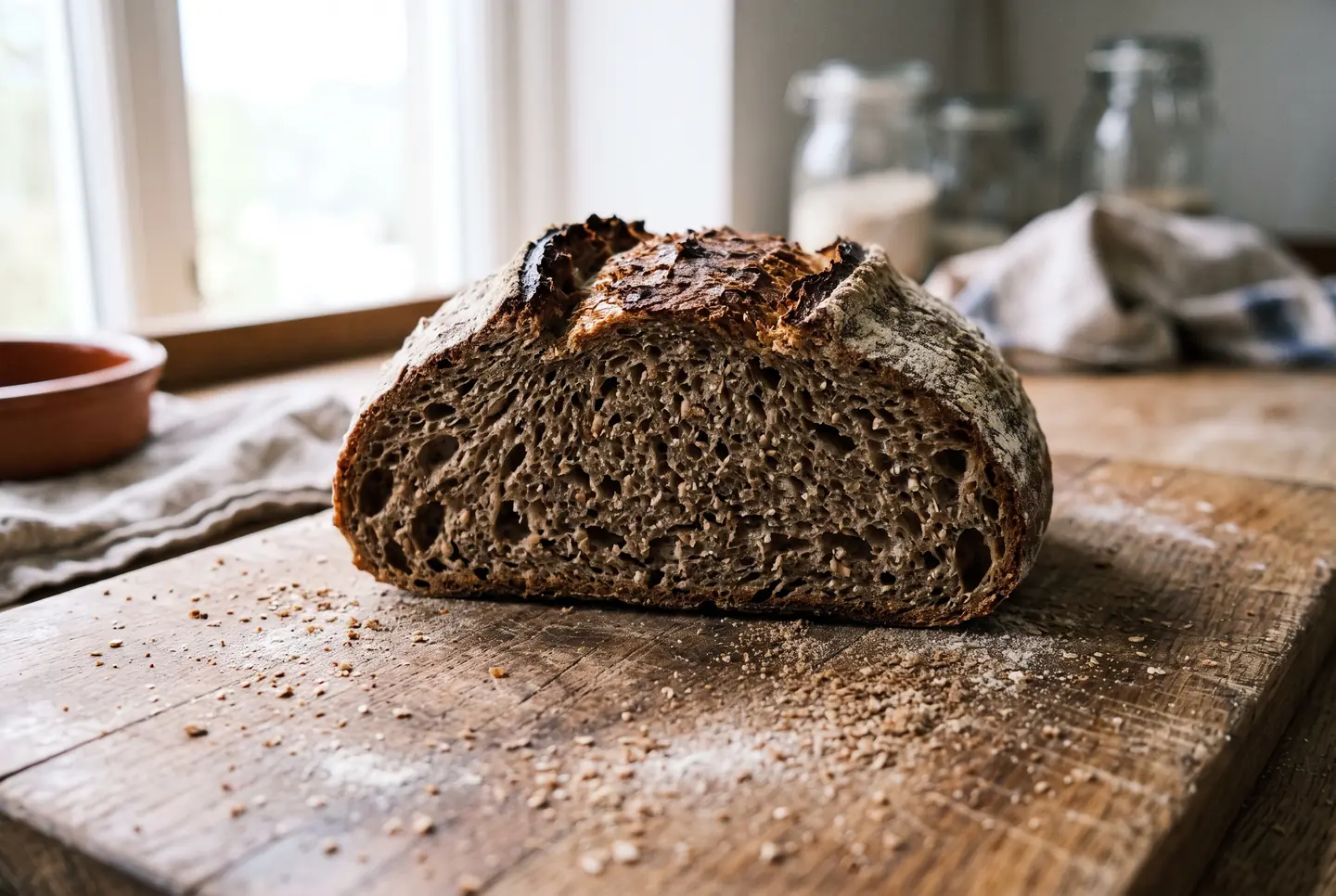
Whole grain flour changes two things about your dough, and once you plan for both, a whole grain loaf is no harder than a white one. It drinks far more water, because the bran and germ soak up moisture a white flour has had stripped out, so the dough runs wetter at the same number on the scale. And it ferments faster, because that same bran and germ carry the enzymes and wild yeast food that a refined flour has lost. So the short answer is: add water and watch the clock more closely than usual.
The one decision that shapes everything else is how much whole grain to use. A loaf that is 100 percent whole wheat is a real and wonderful thing, but it is denser and more demanding by nature. For most home bakers the sweet spot is a blend, somewhere between 30 and 50 percent whole grain, which keeps almost all of the nutty flavour and colour while holding a taller, more open crumb. This guide sits inside the complete sourdough bread method; everything about mixing, folding and baking there still applies, and what follows is only the adjustments whole grain asks for.
Why whole grain dough behaves differently
A white flour is the starch-and-protein endosperm with the bran and germ sieved out. Whole grain puts them back, and those two fractions are what change the handling. The bran is thirsty, so it pulls water out of the dough over the first hour, which is why a whole grain dough that felt right at mixing can feel dry twenty minutes later. The germ and bran also carry more enzyme activity and more of the minerals the yeast and bacteria feed on, so fermentation runs quicker and can outpace a timetable you learned on white bread.
There is a structural cost too. Sharp flecks of bran act like tiny blades on the forming gluten network, cutting some of the strands that would otherwise trap gas. That is the real reason a fully whole grain loaf rises less and eats denser: not weak flour, but bran physically interrupting the web. Every adjustment below is aimed at working with those facts instead of fighting them.
How much whole grain: the 30 to 50 percent sweet spot
You do not have to choose between a pale white loaf and a dense brick. Whole grain scales, and the percentage is yours to set.
| Whole grain share | Character | Difficulty |
|---|---|---|
| 10 to 20% | White loaf with a hint of nuttiness, near-identical rise | Easy |
| 30 to 50% | Clear whole grain flavour and colour, still an open crumb | Moderate |
| 70 to 100% | Deep flavour, dense and tight crumb, needs the most care | Hard |
For a first whole grain bake, start at around a third and move up as you learn how your particular flour drinks and ferments. If you want the background on the flour itself, how the bran and germ change absorption and shelf life, the whole wheat flour reference covers it; here we are only concerned with what it does to the loaf.
Raise the hydration, then hold some back
Because the bran drinks so much, whole grain doughs are baked far wetter than white ones, and the higher the whole grain share, the higher the water. Concrete numbers help: The Perfect Loaf's fifty-fifty whole wheat sourdough runs at 82 percent hydration, while its nearly all-whole-grain loaf climbs to 95 percent (The Perfect Loaf, 95% whole grain).
The safe way to hit that is to hold back some of the water rather than pour it all in at once. Reserve roughly the last 50 to 100 grams, mix the dough, let it rest twenty minutes so the bran can drink, and only then decide whether it can take the rest. A whole grain dough should feel tacky and soft, not soupy. This rest, a long autolyse, does double duty: it hydrates the bran fully and gives the flour a head start on gluten so you mix less and cut less of the network.
Shorten and watch the bulk
This is where most white-bread instincts go wrong. Whole grain ferments faster, so a bulk that would take four hours with white flour may be done well before that. Read the bulk fermentation by feel, not by the clock: look for a 30 to 50 percent rise, a domed and jiggly surface, and a few bubbles at the edges of the container. For reference, the fifty-fifty loaf bulks about 3 hours 30 minutes at 25 to 26 °C (78 to 80 °F) (The Perfect Loaf), but treat any time as a guide and the dough as the truth. Pushing a whole grain bulk too far is easy, and an over-fermented whole grain dough turns slack and gummy with almost no way back.
A gentler hand at shaping
A wetter, more fragile dough wants less force. When you shape the loaf, build tension with light, confident moves rather than hard tightening, which on a bran-cut dough just tears the surface. A little rice flour in the banneton is cheap insurance against sticking, since these doughs are tackier than white ones. And a whole grain loaf holds its shape better after a cold retard, so an overnight rest in the fridge makes the wet dough far easier to score and load.
Gluten free is a different craft
One thing whole grain is not: a route to gluten free. Whole wheat is still wheat, still full of gluten, just with the bran and germ left in. If you are baking for a gluten intolerance, whole grain does nothing for you, and the method is genuinely different rather than a swap of flour. That is its own guide: gluten-free sourdough bread that actually rises.
Frequently asked questions
How much whole wheat should I use in sourdough bread? For a first bake, start around 30 percent whole wheat and the rest bread flour, which gives clear whole grain flavour while keeping an open crumb. As you learn how your flour drinks and ferments you can push to 50 percent or beyond, but a fully whole grain loaf is denser by nature.
Why is my whole grain sourdough so dense? Two usual causes. The bran physically cuts the gluten network, so a high whole grain loaf rises less than a white one no matter what, and second, whole grain ferments fast and is easy to over-proof, which leaves a slack, gummy crumb. Lower the whole grain share and end the bulk a little earlier.
Do I need more water for whole grain sourdough? Yes. The bran and germ absorb far more water than white flour, so hydration goes up with the whole grain share, from around 82 percent at fifty-fifty to about 95 percent at nearly all whole grain. Hold back the last 50 to 100 grams and add it after a twenty-minute rest.
Does whole grain sourdough ferment faster? It does. The bran and germ carry more enzymes and more food for the yeast and bacteria, so the bulk moves quicker than the same recipe in white flour. Watch the dough for a 30 to 50 percent rise rather than trusting a fixed time.
Is whole grain sourdough healthier than white sourdough? Whole grain keeps the bran and germ, so it brings more fibre, minerals and flavour than a refined white loaf. It is not gluten free, though, since whole wheat is still wheat.
What is the easiest way to start baking whole grain sourdough? Take a recipe you already trust, swap 30 percent of the white flour for whole wheat, add a little more water, and end the bulk slightly earlier than usual. Once that loaf is reliable, raise the whole grain share step by step.
Where I checked
Keep reading
 Guide
Guide
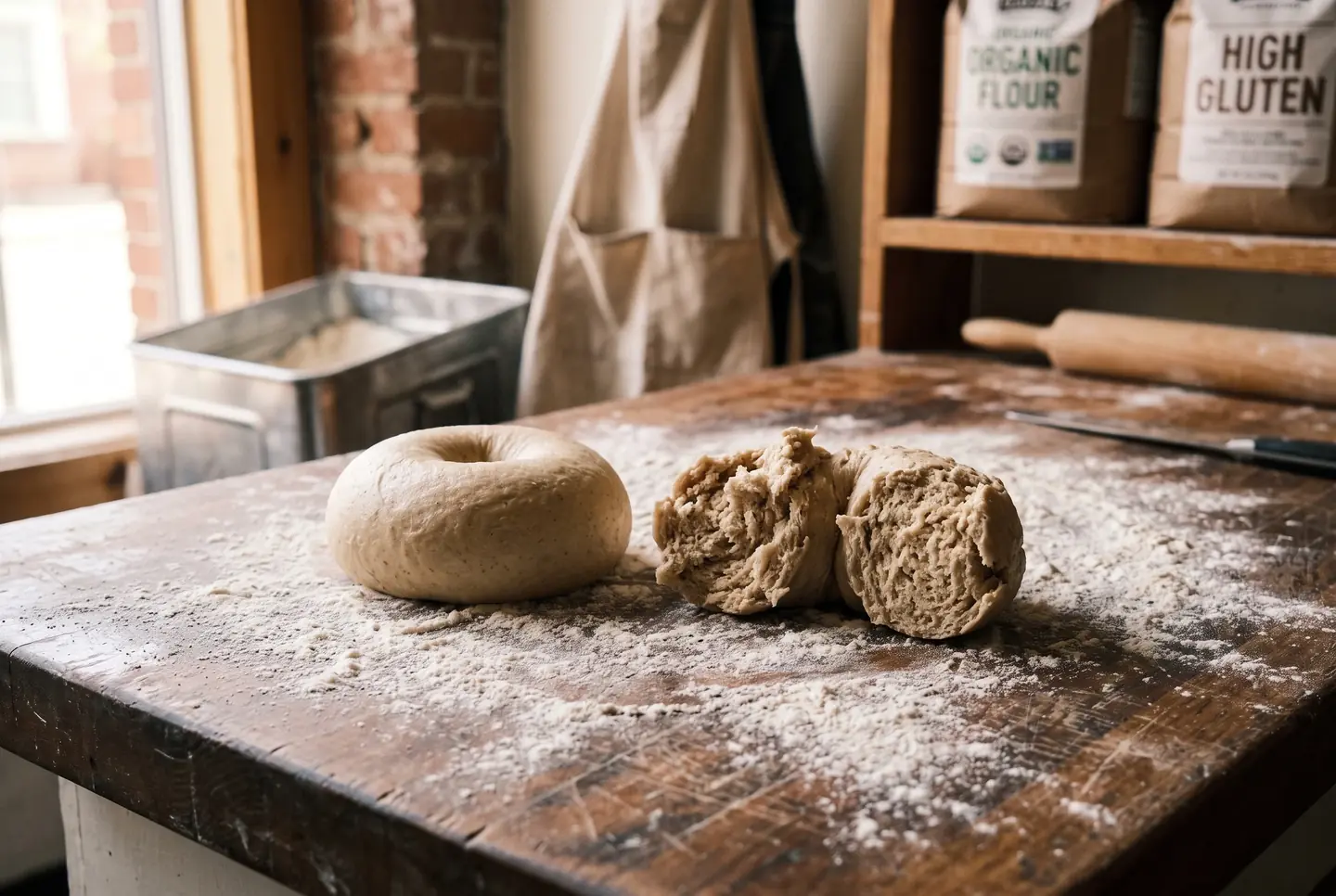
Bagel Dough: Why It Is So Firm, and How to Knead It
Bagel dough feels stiff and dry on purpose. Here is why it runs at 50 to 60% water and high protein flour, how to knead it, and the windowpane to aim for.
6 min read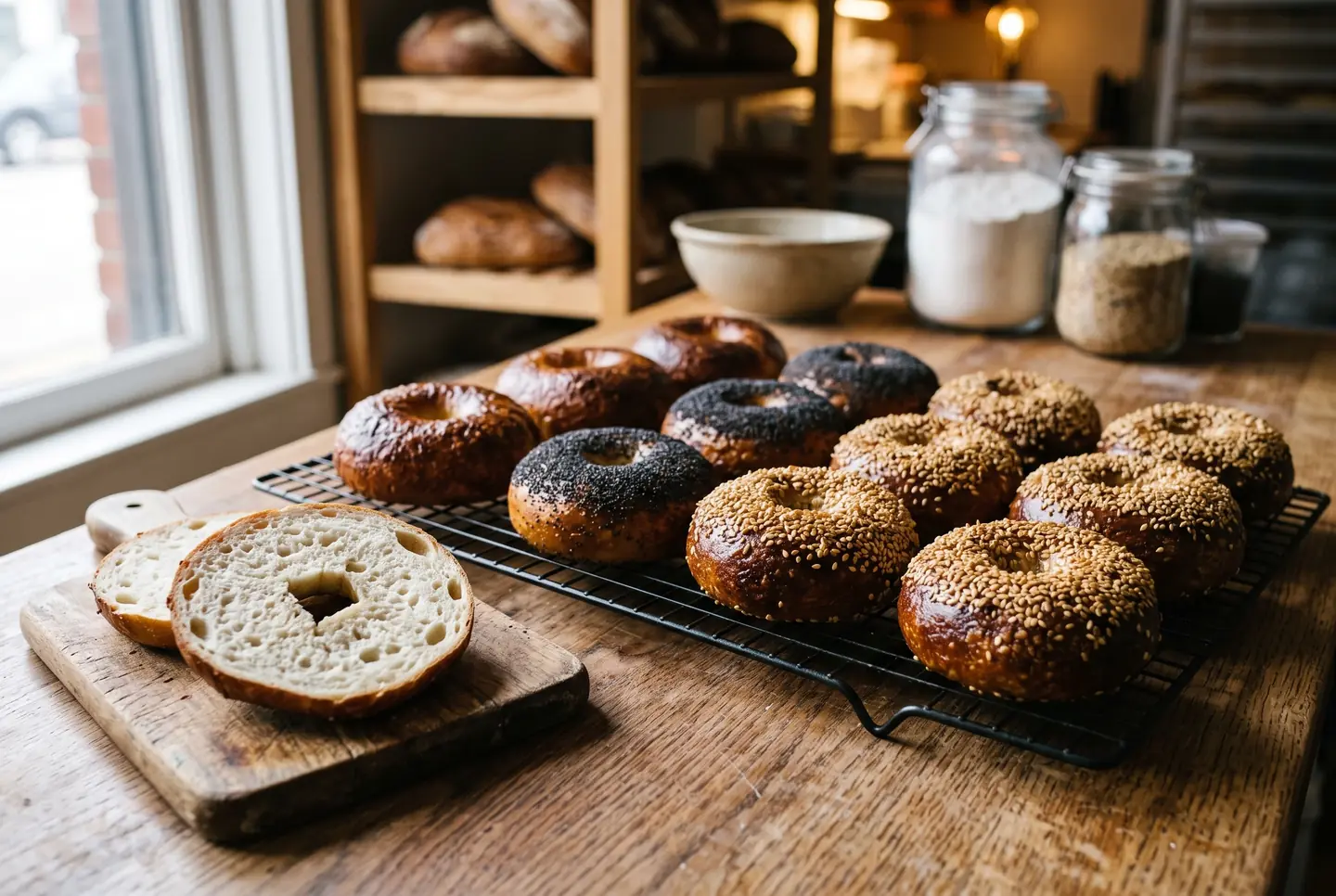 Guide
Guide
Bagel Recipe: New York Style, Step by Step
A weight-based New York bagel recipe, step by step: the firm 58% dough, an overnight cold retard, how long to boil, and the oven heat that sets a glossy crust.
6 min read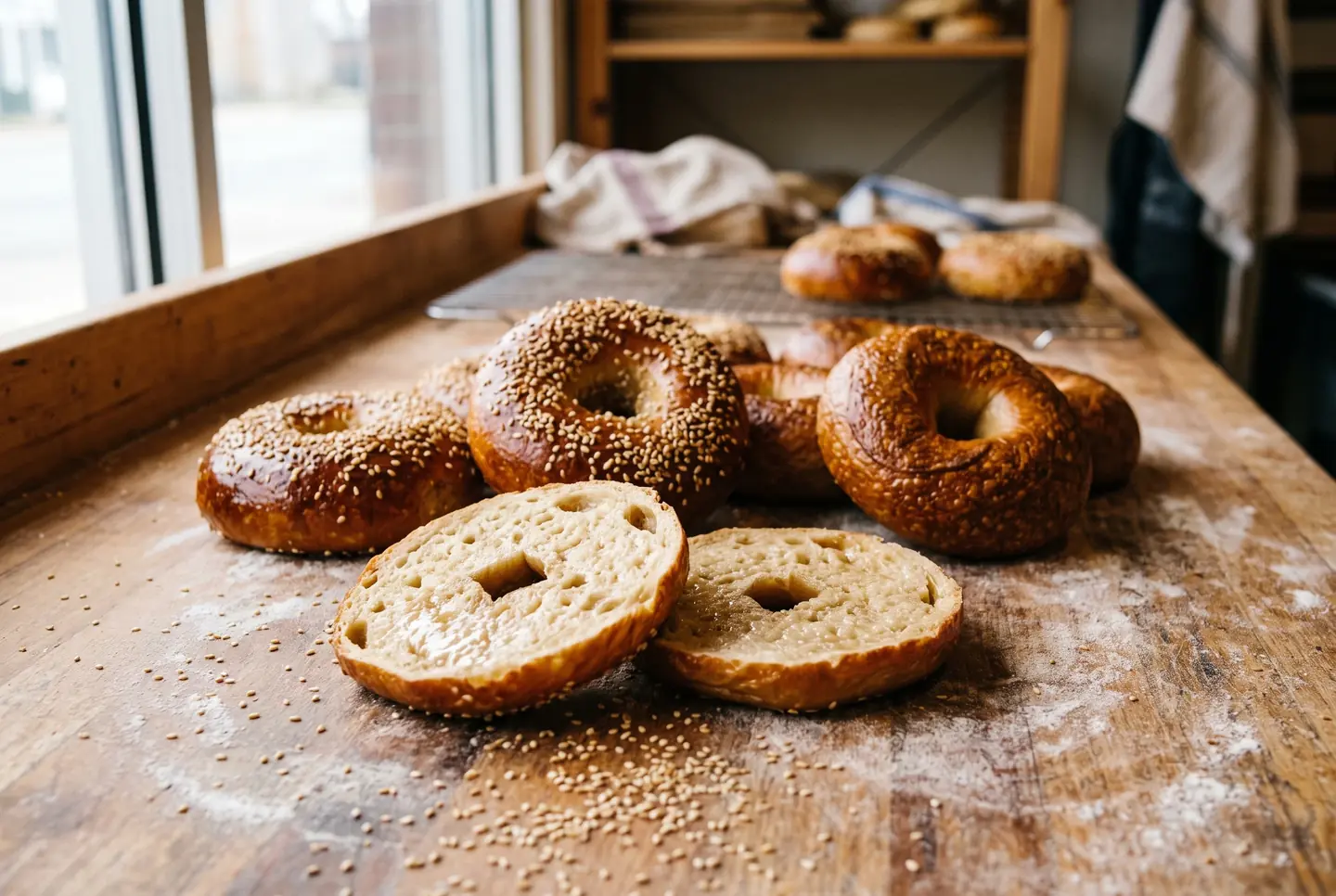 Complete guide
Bagels: The Complete Guide
Make a real bagel at home: the firm 58% dough, why bagels are boiled before baking, New York vs Montreal, sourdough and gluten free, and how to fix flat ones.
18 min read