Guide
Bulk Fermentation: How to Know When It's Done
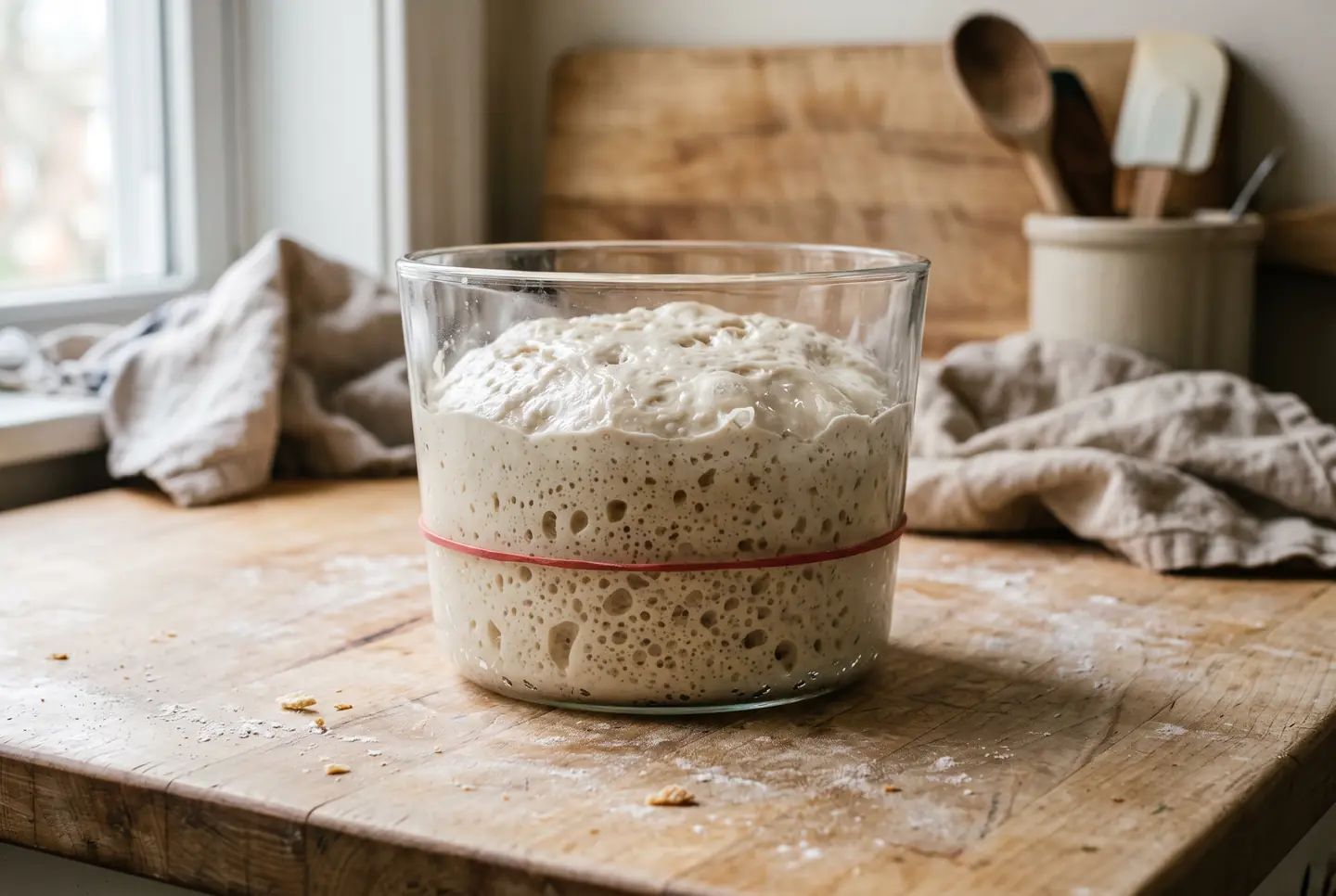
Bulk fermentation is done when the dough has risen by an amount that depends on how warm it is, roughly 30 percent at 27 C (80 F), about 50 percent at 24 C (75 F), and 75 percent or more at 21 C (70 F), while looking domed, showing bubbles at the sides of the container, and feeling alive and jiggly rather than dense (The Sourdough Journey). That is the whole answer, and the reason it comes with three numbers instead of one is the single most useful thing to understand about this step: a percentage rise means nothing on its own until you also know the dough's temperature.
This step, the long first rise from mixing until you divide and shape, is where a sourdough loaf is won or lost, and it sits at the heart of the complete sourdough bread guide. It is also the step people most want to reduce to a time, because a time is easy to set an alarm for. The trouble is that a published time is only true for the kitchen it was written in. Read the dough instead, and the loaf becomes repeatable.
Why the clock lies and temperature rules
Fermentation is a chemical process, and like most of them it speeds up as things warm and slows as they cool. Warm the dough and the wild yeast works faster; cool it and everything stretches out. So the same recipe that takes about 4 hours of bulk at 23 to 24 C (74 to 76 F), the pace The Perfect Loaf uses for its beginner loaf, might need six or seven hours in a cold kitchen and be finished in three in a hot one.
This is why the useful measurement is not your room temperature but your dough temperature, and why the rise you are aiming for changes with it. A dough fermented cool needs to rise more before it is ready, because the slow pace means the flavour and structure are still developing as it climbs. A dough fermented warm is ready at a much smaller rise, because everything, including the risk of over-fermenting, is happening quickly. As The Sourdough Journey puts it, a 100 percent rise at 21 C is a completely different loaf from a 100 percent rise at 27 C.
Target rise by dough temperature
| Dough temperature | Target rise | What it means for you |
|---|---|---|
| 21 C (70 F) | 75 to 100% | Slow and forgiving, the widest margin for error |
| 24 C (75 F) | about 50% | The reliable middle, a good default |
| 27 C (80 F) | about 30% | Fast, watch it closely, small window |
Around 50 percent rise at a middling temperature is the most forgiving place to start, and it is why so many beginner recipes settle near 24 C. If your kitchen runs hot, do not chase a big rise: at 27 C a dough that doubles has almost certainly gone too far. In a hot climate, bulk can reach its point in a couple of hours, which inverts the leisurely European schedule most guides are written around.
How to actually measure the rise
Guessing "about half again" by eye is hard, and it is the reason so much advice sounds vague. The fix is to give yourself something to measure against. Use a straight-sided, clear container and note the level of the dough right after mixing, either with a rubber band or a mark on the glass. Then you can read the rise directly.
If you prefer numbers, a container with millilitre markings makes it exact. A 500 g flour-weight recipe mixes up to roughly 750 millilitres of dough, so a 50 percent target is 750 times 1.5, which is about 1,125 millilitres (The Sourdough Journey). Whatever your starting volume, multiply it by one plus your target: 1.3 for 30 percent, 1.5 for 50 percent, 1.75 for 75 percent. A small jar of the same dough set beside the main batch works the same way and is easier to read.
The signs, beyond the number
The rise is the headline, but a well-fermented dough tells you in several ways at once, and it is worth learning all of them so you are not a slave to a marked jar.
| Sign | Under-fermented | Ready | Over-fermented |
|---|---|---|---|
| Rise | Little change | Risen to the target for its temperature | Ballooned, near or past double |
| Surface | Flat, tight | Domed, a few bubbles | Bubbly, then flat and collapsing |
| Edges | No bubbles | Bubbles against the container | Large, slack bubbles |
| Feel | Dense, stiff | Alive, jiggly, a little airy | Slack, loose, tearing |
Under-ferment and the loaf bakes tight and heavy, because it never built enough gas. Over-ferment and it slackens, loses the strength it spent all that time building, and bakes flat and gummy. When a loaf comes out dense, the cause is far more often fermentation than the recipe, and a weak or under-ripe starter is often behind it. Which is the other half of the job: none of this works without a starter at its peak, so build and keep one with the sourdough starter guide before you worry about bulk.
Folding is part of bulk, not separate from it
The first stretch of bulk fermentation is also when you build the dough's strength, with a series of gentle folds rather than kneading. Those two things share a clock: you fold in the first hours while the dough is still slack, and you let it rest and rise for the remainder. Getting the timing of the folds right is its own small craft, covered in the guide to stretch and fold and the other folds, but the point here is that they happen inside bulk, not before or after it.
Frequently asked questions
How long should bulk fermentation take? There is no fixed time, because it depends on temperature and the strength of your starter. A common beginner bulk runs about 4 hours at 23 to 24 C (74 to 76 F), but a colder kitchen can take six or seven hours and a warm one three. Judge the dough by its rise and feel, not the clock.
How much should the dough rise during bulk? It depends on the dough temperature: roughly 75 to 100 percent at 21 C, about 50 percent at 24 C, and about 30 percent at 27 C. A rise number without a temperature to go with it does not tell you anything.
Should sourdough double during bulk fermentation? Usually not. Doubling is a sign of over-fermentation at most home temperatures. Aim for a rise matched to your dough's warmth, which for a typical kitchen is closer to a half than a full double.
What happens if I over-ferment the dough? It slackens and weakens, tears when you handle it, and bakes flat, dense and gummy because the gluten can no longer hold the gas. There is no fixing an over-fermented dough, so when in doubt, stop bulk a little early.
Does bulk fermentation happen in the fridge? No. Bulk is the warm first rise. The cold time in the fridge is a separate step, the retard, which comes after shaping and develops flavour rather than driving the main rise.
How do I measure the percentage rise? Use a straight-sided container and mark the dough's level right after mixing, or read the volume in millilitres. Multiply your starting point by one plus the target, so a 50 percent goal on 750 millilitres of dough is about 1,125 millilitres.
Where I checked
Keep reading
 Guide
Guide
Bagel Dough: Why It Is So Firm, and How to Knead It
Bagel dough feels stiff and dry on purpose. Here is why it runs at 50 to 60% water and high protein flour, how to knead it, and the windowpane to aim for.
6 min read Guide
Guide
Bagel Recipe: New York Style, Step by Step
A weight-based New York bagel recipe, step by step: the firm 58% dough, an overnight cold retard, how long to boil, and the oven heat that sets a glossy crust.
6 min read Complete guide
Bagels: The Complete Guide
Make a real bagel at home: the firm 58% dough, why bagels are boiled before baking, New York vs Montreal, sourdough and gluten free, and how to fix flat ones.
18 min read