Guide
Stretch and Fold Sourdough: The Folds and When to Use Each
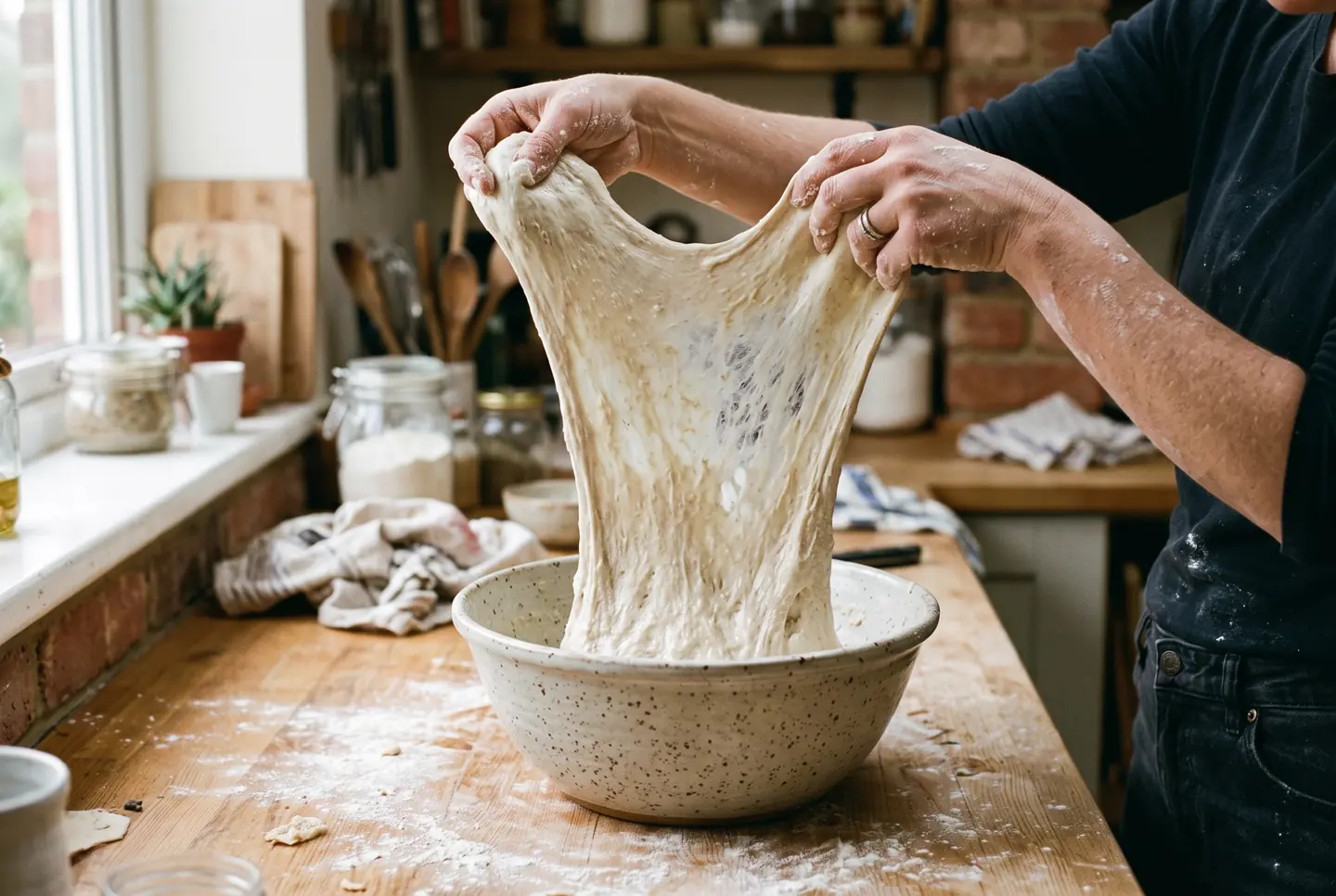
You do not knead a sourdough loaf. Instead you build its strength with a handful of gentle folds spread through the first part of the rise, and for most doughs that means three sets of stretch and folds, spaced about 30 minutes apart, done in the first couple of hours (The Perfect Loaf). Each set takes under a minute, the dough rests between them, and by the end a shaggy, formless mass has turned into something smooth, elastic and able to hold a shape.
The reason there is more than one kind of fold is that a wet dough and a firm one do not want the same handling, and a slack dough at the start of the rise does not want the same handling it will want an hour later. This guide covers the three folds and, more usefully, when to reach for each. It sits inside the complete sourdough bread guide, where the folds are one part of the larger first rise.
Why fold instead of knead
Kneading and folding do the same job, developing the gluten network that traps gas and gives bread its structure, but they get there differently. Kneading works all the strength in at once on the counter, which is punishing with a wet dough that sticks to everything. Folding does it in instalments: a little strength each set, with a long rest in between where the flour keeps hydrating and the gluten relaxes and reorganises on its own. For the high hydration doughs that give sourdough its open crumb, folding is simply the gentler and more practical route.
The folds live inside bulk fermentation, the warm first rise. You do them early, while the dough is slack and has the most to gain, then leave it alone to ferment and rise for the rest of the time. This also assumes the dough was mixed from a lively starter; if yours is sluggish, no amount of folding will save the loaf, so keep it in shape with the sourdough starter guide first.
The three folds
| Fold | How it works | Strength added | Best for |
|---|---|---|---|
| Stretch and fold | Lift one side high, stretch it up, fold it over the top; turn the bowl and repeat on all four sides | Moderate | Most doughs, and the early sets of almost any dough |
| Coil fold | Lift the dough from the middle so the ends tuck under themselves, like a coil, then turn and repeat | Gentle | Very high hydration dough, and the later sets once the dough is already strong |
| Slap and fold | Lift the dough off the counter, slap the far end down, fold the near end over, repeat in a rhythm | Vigorous, fast | Slack, wet dough that needs strength built quickly, early on |
Stretch and fold is the workhorse and the one to learn first. Wet your hand, reach under one side of the dough, lift it up until it stretches without tearing, and fold it over to the far side. Give the bowl a quarter turn and do the same, four times in all, and the dough tightens into a rough ball. It is done in the bowl, needs no flour on the counter, and suits nearly everything.
Coil folds are gentler and are what you graduate to as the dough gains strength or when the hydration is very high. Lift the dough from underneath the middle, let both ends fold under as you raise it, set it down, turn ninety degrees and repeat. Because you are not pulling hard, coil folds keep the gas you have already built while still adding a little tension, which is why they suit the end of bulk and the wettest doughs.
Slap and fold is the loud one, borrowed from working slack dough on a counter. You pick the dough up, slap its lower half onto the surface, fold the part in your hands over the top, and repeat in a steady rhythm. It builds strength fast, which makes it useful for a very wet dough at the start, but it throws the dough around and knocks out gas, so it belongs early, not late.
How many sets, and when
Start with a baseline of three sets, and add a fourth if the dough came out of mixing on the weak, slack side (The Perfect Loaf). Wait about 30 minutes between sets so the dough can rest and relax. A weak dough can take a few early sets spaced closer, around 15 minutes apart, tightening up before you lengthen the gaps as it strengthens.
- Mix, then rest 30 minutes.
- Set one, the most vigorous, while the dough is slackest.
- Rest 30 minutes, then set two, a touch gentler.
- Rest 30 minutes, then set three, gentler still.
- Add a fourth set only if the dough still feels weak, then leave it to finish rising.
The pattern to notice is that the folds get gentler as you go. Early on the dough is loose and can take a firm stretch; later it has structure you do not want to tear, so you ease off, or switch to coil folds. After the last set, the dough should be smooth and hold together, and the rest of the rise is judged the same way you judge all of bulk fermentation, by the dough rather than the clock.
How to tell the folds are working
You are watching for the dough to change from set to set. At the first fold it will feel loose and may tear if you pull too hard; by the second it holds the stretch better; by the third it comes together into a taut, cohesive mass that domes rather than spreading when you set it down. If nothing is changing across the sets, the usual causes are a dough that is too warm and over-relaxing between folds, or a weak starter that never gave it much to work with in the first place.
Frequently asked questions
How many stretch and folds does sourdough need? Three sets is a good baseline, with a fourth added if the dough is weak or very slack. More than that rarely helps and can degas the dough.
How long between stretch and folds? About 30 minutes, so the dough rests and relaxes between sets. A weak dough can take early sets 15 minutes apart, then longer gaps as it strengthens.
Stretch and fold or coil fold, which is better? Neither is better; they suit different moments. Stretch and fold builds strength and suits early sets and most doughs, while coil folds are gentler and suit very high hydration dough and the later sets once the dough is already strong.
When should I do the folds during bulk fermentation? In the first part of the rise, usually the first two hours, while the dough is still slack. After the last set you leave the dough alone to finish fermenting.
Do I need to knead sourdough at all? No. The folds replace kneading entirely, developing the same gluten strength in gentler instalments that suit wet dough far better than working it on a counter.
Why is my dough still slack after folding? Most often the dough is too warm and relaxing too fast between sets, or the starter was weak. Try folding a little more often early on, and make sure the starter is at its peak before mixing.
Where I checked
Keep reading
 Guide
Guide
Bagel Dough: Why It Is So Firm, and How to Knead It
Bagel dough feels stiff and dry on purpose. Here is why it runs at 50 to 60% water and high protein flour, how to knead it, and the windowpane to aim for.
6 min read Guide
Guide
Bagel Recipe: New York Style, Step by Step
A weight-based New York bagel recipe, step by step: the firm 58% dough, an overnight cold retard, how long to boil, and the oven heat that sets a glossy crust.
6 min read Complete guide
Bagels: The Complete Guide
Make a real bagel at home: the firm 58% dough, why bagels are boiled before baking, New York vs Montreal, sourdough and gluten free, and how to fix flat ones.
18 min read