Guide
Dutch Oven Sourdough Bread: Steam, Preheat and Timing
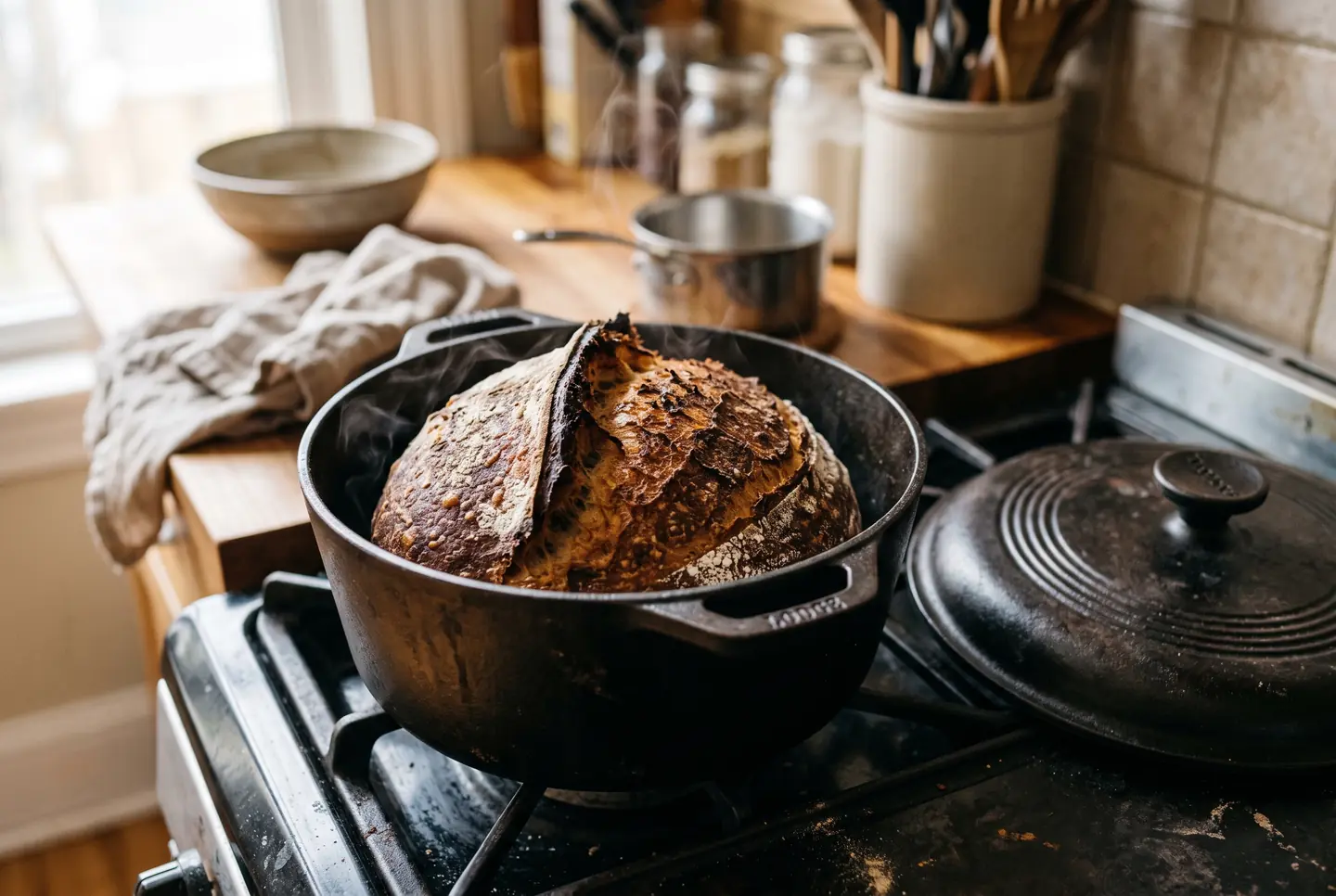
A dutch oven is the single easiest way to bake a great loaf at home, and it is worth understanding why, because once you do, the method stops being a ritual and becomes obvious. The pot is not baking the bread. Your oven is. What the pot does is trap the steam the loaf gives off in its first minutes, and that trapped steam is what gives you a high spring and a thin, crackly, deeply coloured crust. A loaf baked on a bare tray in a dry home oven sets its crust too early and stays pale and tight; the same loaf in a covered pot springs open and browns.
This is the last step of the complete sourdough bread guide, the one that turns a shaped, proofed, scored loaf into bread. Everything below is about steam and heat: how to get both into the pot, and when to take the lid off.
Why a covered pot beats a home oven
A professional bread oven injects steam for the first part of the bake. Steam keeps the crust soft and elastic while the loaf is still expanding, so it can spring up fully before the surface sets, and it gelatinises the starch on the outside into that glassy, crackling finish. A home oven has no steam and vents what little there is, so the crust sets in the first few minutes and clamps down on a loaf that has not finished rising.
A dutch oven solves this with no gadgetry. Sealed under the lid, the loaf's own moisture becomes a pocket of steam around it, matching what a steam-injected oven does for the crucial early phase. That is the whole trick, and it is why the lid timing below is the part that actually matters.
Preheat the pot until it is genuinely hot
This is the biggest lever, and the one beginners skip. The loaf needs to hit a screaming-hot surface so it starts springing immediately, so the pot goes into the oven empty and preheats along with it. Set it to around 230 to 260 °C (450 to 500 °F) and give the pot a real head start: heavy cast iron takes far longer to reach temperature than the oven air does, so 45 to 60 minutes at temperature is not too much (The Sourdough Journey preheats to 500 °F/260 °C, then bakes at 450 °F/230 °C).
A cold or under-heated pot is the usual reason a dutch-oven loaf comes out pale and flat: the dough sits and slackens instead of springing. If you take one thing from this guide, take this: preheat the empty pot, hard, before the loaf ever goes in.
Lid on, then lid off: the two-phase bake
The bake splits cleanly in two, and the split is the lid.
| Phase | Lid | Time | Temperature | What is happening |
|---|---|---|---|---|
| Steam | On | ~20 min | ~230 °C (450 °F) | Trapped steam keeps the crust soft; the loaf springs to full height |
| Browning | Off | ~20 to 25 min | ~230 °C (450 °F) | Dry heat colours and hardens the crust |
Bake covered for about 20 minutes while the loaf springs in its own steam, then remove the lid and bake uncovered for another 20 to 25 minutes to colour and set the crust (The Sourdough Journey). Take the bread further than looks comfortable: a proper crust is deep brown, almost mahogany, not tan. If it browns too fast once uncovered, drop the temperature by 10 to 15 degrees for the rest of the bake.
Do not judge by colour alone. A finished loaf reaches an internal temperature of about 96 to 100 °C (205 to 212 °F) (The Perfect Loaf); an instant-read thermometer in the base is the one sure test that the crumb is set.
Getting the cold loaf in without burning yourself
The pot is now at 250 °C and the loaf comes straight from the fridge, firm and scored. The safe, clean way to marry the two is a sling of parchment: turn the loaf out onto a square of parchment, score it, and use the paper to lower the whole thing into the hot pot. The paper stops the dough sticking and stops your hands nearing the metal.
A cold loaf earns its place here too. It holds its shape through the transfer and the score stays crisp, where a warm, slack loaf would spread and deform on the way in. A light dusting of semolina or flour on the parchment gives a little extra insurance against sticking. Then the lid goes on and you leave it alone.
Cast iron or enamelled, round or oval
Almost any heavy, lidded, oven-safe pot works, so do not let equipment stop you. Bare cast iron and enamelled cast iron both bake beautifully; the enamel is easier to live with because nothing sticks and it needs no seasoning, while bare cast iron is cheaper and effectively indestructible but wants a seasoned surface. Either holds and radiates the heat that makes this method work.
Match the pot shape to the loaf shape. A round boule wants a round pot; a long batard wants an oval or a long covered baker, or it will bake into whatever shape the round pot forces on it. As for size, err large: a loaf has room to spring in a slightly big pot, but a tight pot caps its rise and can scorch the sides. Beyond that, the method is the same in all of them: preheat hard, lid on, lid off.
Frequently asked questions
Why bake sourdough in a dutch oven? The lidded pot traps the loaf's own steam for the first part of the bake, which lets it spring to full height and forms a thin, crackly, well-coloured crust. A bare tray in a dry home oven sets the crust early and gives a paler, tighter loaf.
How hot should I preheat the dutch oven? Around 230 to 260 °C (450 to 500 °F), with the pot empty inside the oven. Give heavy cast iron 45 to 60 minutes at temperature, because it heats much more slowly than the oven air and a cool pot gives a pale, flat loaf.
How long do you bake sourdough with the lid on and off? About 20 minutes covered while the loaf springs in its own steam, then 20 to 25 minutes uncovered to colour and set the crust. Bake to a deep brown, not a light tan.
What internal temperature should sourdough reach? About 96 to 100 °C (205 to 212 °F). An instant-read thermometer in the base of the loaf is the surest sign the crumb is fully baked, more reliable than crust colour alone.
Do I need to preheat the dutch oven, or can I put the dough in cold? Preheat it. A hot pot makes the loaf spring the moment it goes in; a cold pot lets the dough slacken and spread while the metal slowly heats, and the loaf comes out flatter and paler.
Cast iron or enamelled dutch oven for sourdough? Both work well. Enamelled is easier because it is non-stick and needs no seasoning; bare cast iron is cheaper and extremely durable but wants a seasoned surface. Match the pot shape to your loaf: round for a boule, oval for a batard.
Where I checked
Keep reading
 Guide
Guide
Bagel Dough: Why It Is So Firm, and How to Knead It
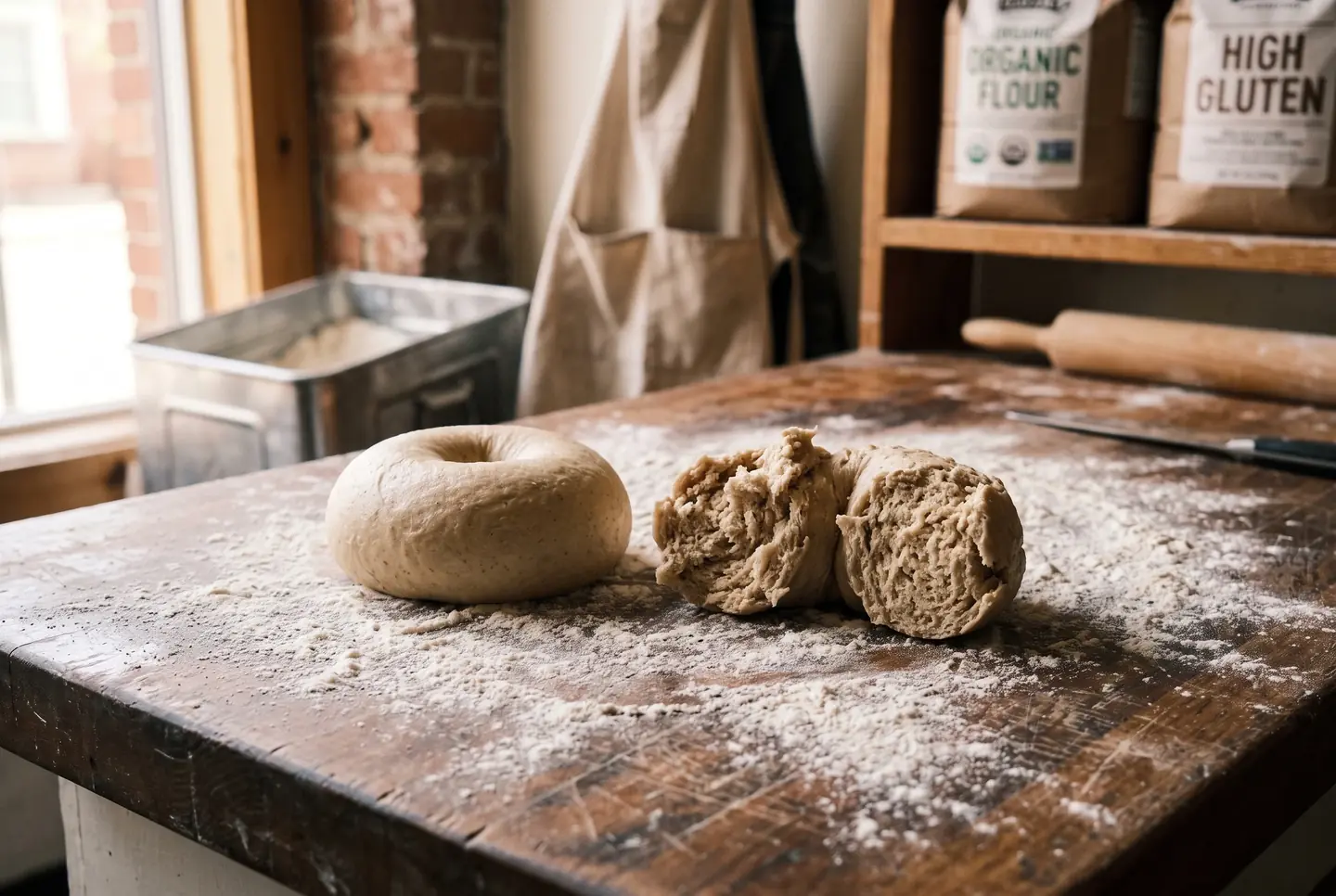
Bagel dough feels stiff and dry on purpose. Here is why it runs at 50 to 60% water and high protein flour, how to knead it, and the windowpane to aim for.
6 min read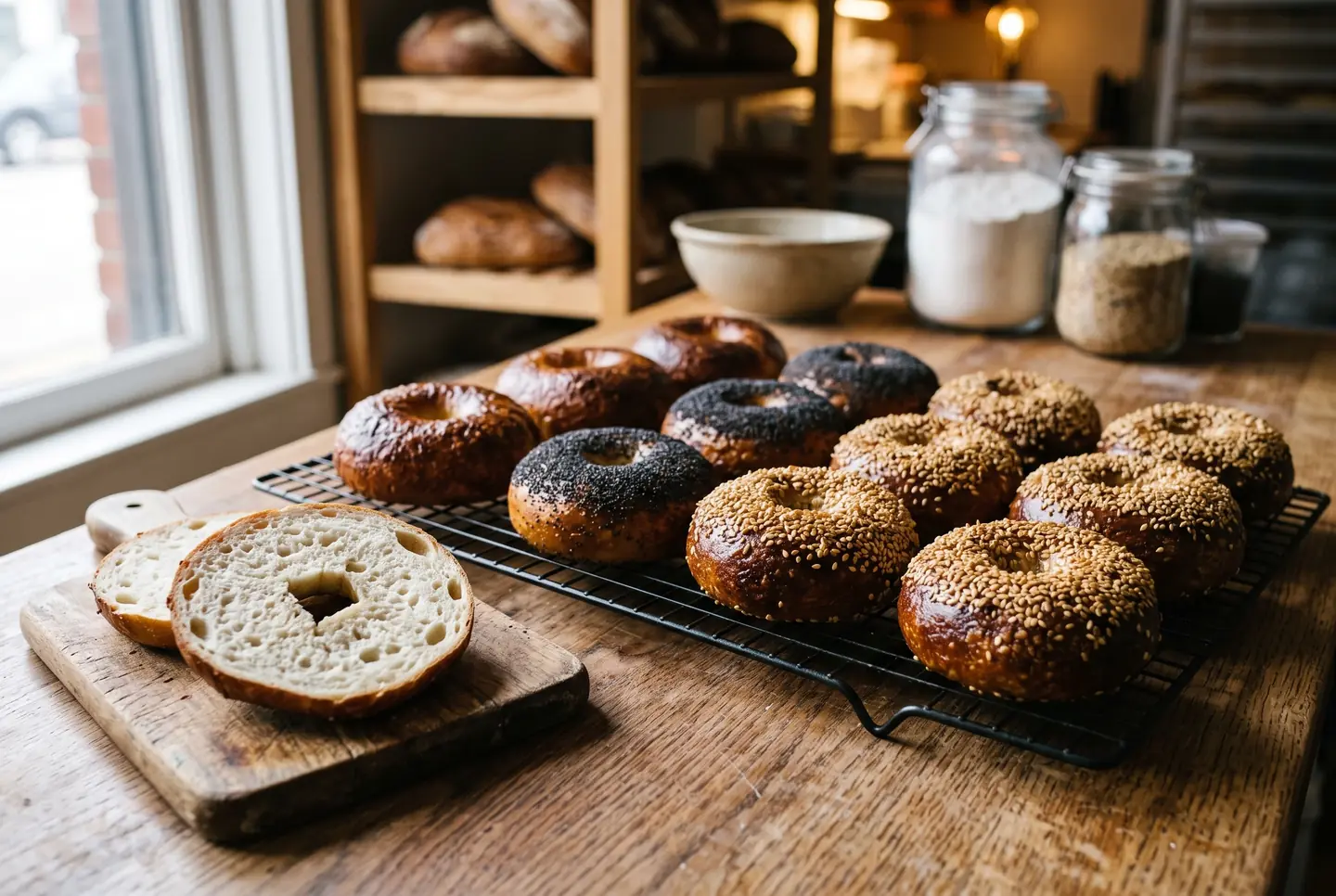 Guide
Guide
Bagel Recipe: New York Style, Step by Step
A weight-based New York bagel recipe, step by step: the firm 58% dough, an overnight cold retard, how long to boil, and the oven heat that sets a glossy crust.
6 min read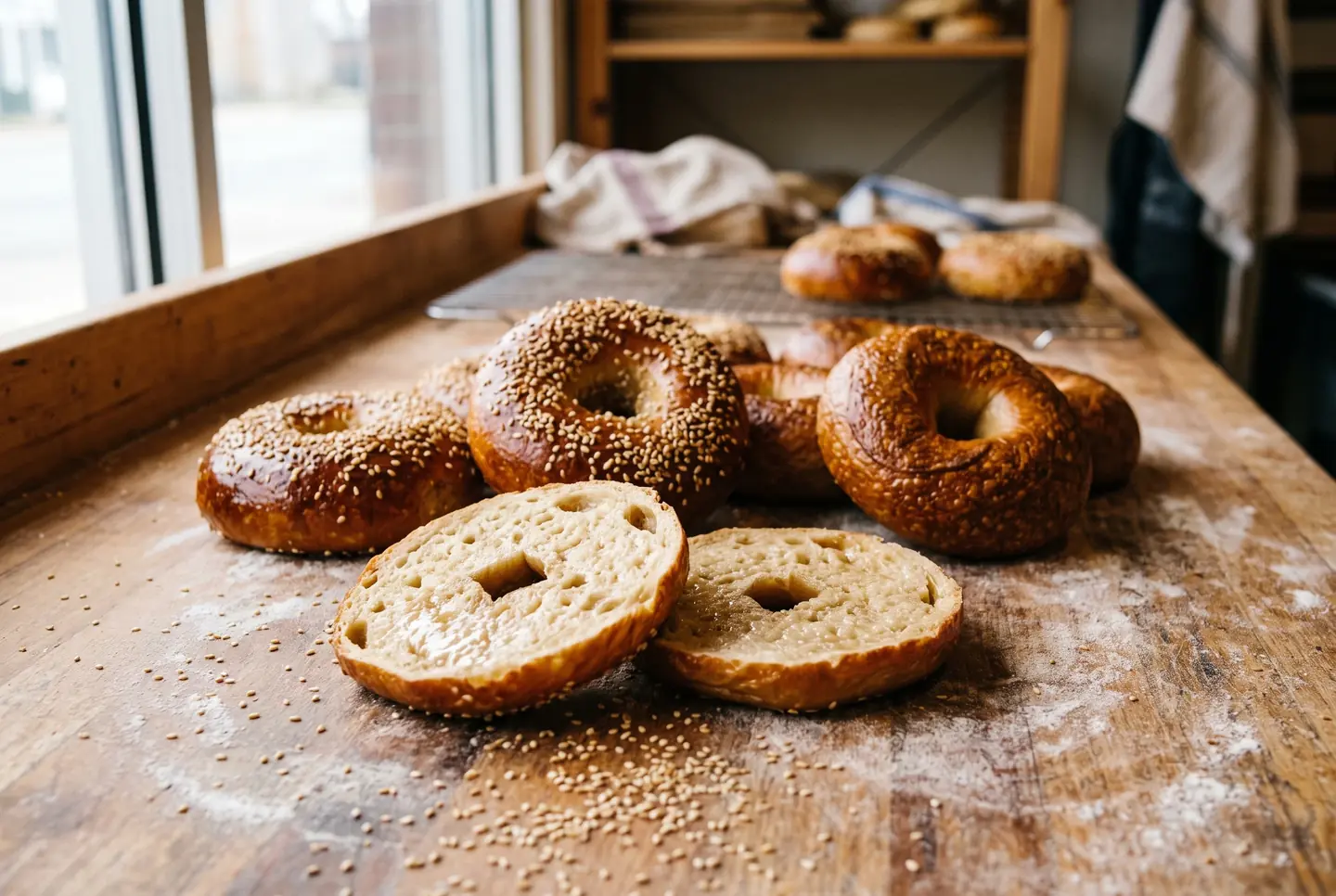 Complete guide
Bagels: The Complete Guide
Make a real bagel at home: the firm 58% dough, why bagels are boiled before baking, New York vs Montreal, sourdough and gluten free, and how to fix flat ones.
18 min read