Guide
Cold Retard Sourdough: 12, 24 and 48 Hours in the Fridge
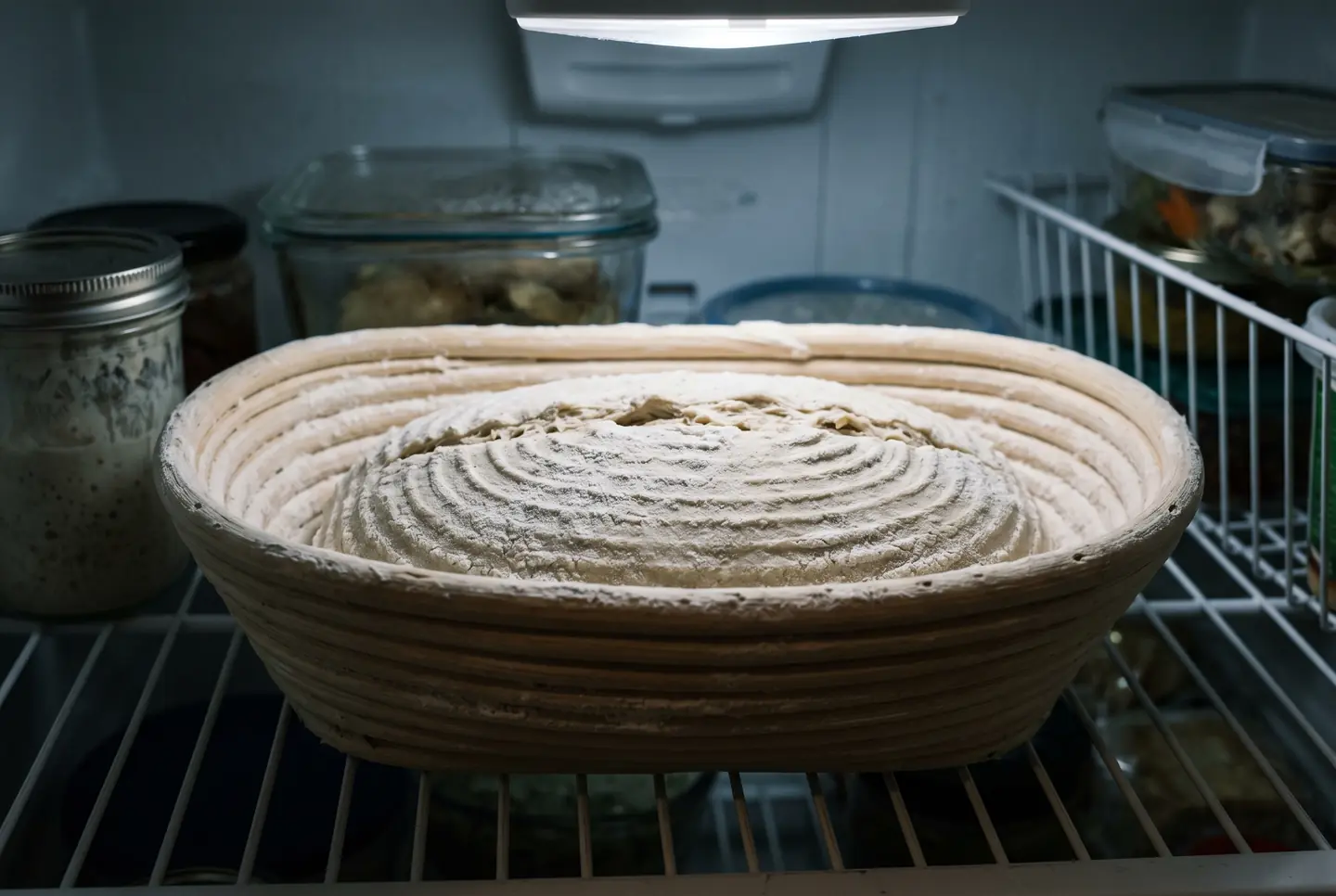
Once your loaf is shaped, the best thing you can do with it is put it in the fridge overnight. A cold retard is a long, slow final proof at refrigerator temperature, and it does two useful jobs at once: it deepens the flavour as slow acids keep building, and it firms the dough so it is far easier to score and handle cold than warm and slack. For most home loaves the answer to "how long" is a single overnight, and the range worth knowing runs from about 12 hours to 48.
The cold does not stop fermentation, it slows it unevenly. Yeast activity drops off sharply in the cold, while the bacteria keep working at a reduced rate, so the loaf gains complexity and a deeper crust colour without gaining much more rise (The Perfect Loaf). This step is one part of the larger process in the complete sourdough bread guide; here we look at what each length of retard actually gives you, and how to keep a long one from tipping into over-proof.
What the cold retard is for
A retard is not just a delay for your convenience, though it is that too. Chilling a shaped loaf changes it in three ways worth naming. It builds flavour, because the acid-producing bacteria stay active long after the yeast has effectively paused, so the crumb turns more complex and more tangy the longer it sits. It improves the bake, because a cold dough scores with a clean, deliberate cut instead of dragging, and it colours darker and springs better in the oven. And it fits bread into a working life: you can bake a fresh loaf on a weekday morning because the slow part happened while you slept.
That last point is the practical heart of it. A shaped loaf is patient in the cold in a way it never is at room temperature, so the retard is what lets you separate the day you mix from the day you bake.
12, 24 or 48 hours
Within the overnight range, time in the cold is a dial you can turn for flavour, and the trade is flavour against the risk of over-proofing. These are the general tendencies bakers report; your own fridge and dough will shift the exact hours.
| Retard | Flavour | Best for | Watch for |
|---|---|---|---|
| ~12 hours | Mild, gentle tang | A morning bake, a milder loaf, a very active dough | Under-developed flavour if the dough was young |
| ~24 hours | Deeper, more complex, clearly tangy | The all-round sweet spot for most loaves | Little; this is the safe middle |
| ~48 hours | Sharp, sour, chewy end of the range | A dough shaped a touch under-fermented, sour-bread lovers | Over-proof and a slack, sticky surface if the dough was already fully fermented |
The pattern is that 24 hours or so is where most loaves are happiest: enough time for real depth, not so long that anything degrades. Twelve gives you a cleaner, milder loaf and an early bake; pushing toward 48 deepens the sourness and the chew, but it is the end where things can go wrong, and only a dough with rising left in it should go that far.
Match the retard to the fermentation
This is the judgement that separates a good long retard from a ruined one, and it is why "just leave it 48 hours for more flavour" is bad advice on its own. The cold slows fermentation, it does not freeze it, so a dough that was already fully fermented when it went in will keep creeping toward over-proof across a long retard, and come out slack, sticky and prone to spreading flat.
So the length of the retard and the state of the dough have to be set together. A dough you fermented fully and shaped tight wants a shorter cold proof, around 12 to 24 hours, and should be baked before it goes too far. A dough shaped a touch under-fermented, on purpose, can take a longer 36 to 48 hour retard, because it has room to finish proofing slowly in the cold. If your long-retard loaves come out flat and gummy, the fix is usually to shape them a little younger, not to shorten the fridge time and lose the flavour.
Temperature and setup
A standard home refrigerator, around 3 to 4 °C (38 to 40 °F), is the target, and the typical overnight is about 16 hours at that temperature (The Perfect Loaf). A warmer fridge ferments faster and shortens your safe window; a colder one slows everything and lets you stretch the retard longer.
Set the shaped loaf seam-side up in a floured banneton, cover it so the surface does not dry into a skin, and give it a short rest on the counter, around 20 minutes, before it goes in. It does not need to warm up before baking: you take it straight from the fridge, score it cold, and bake. A cold loaf holds its shape while it goes into a screaming-hot pot, and that is exactly when you want it firm.
Scoring and baking straight from the fridge
The cold retard and the score are a pair, because the firmness the fridge gives you is what makes a clean cut possible. Take the loaf out, turn it from the banneton onto your baking surface, and score it right away while it is cold and taut, before it warms and slackens. This is the same reason a slack, room-temperature loaf tears rather than opens: it has no firmness to cut against. Scoring depth, angle and getting an ear is its own skill covered next in the pillar.
Everything up to this point rests on a loaf that was tensioned properly, so if your cold loaves still spread when they hit the oven, look back at how you shaped the boule or batard before blaming the retard.
Frequently asked questions
How long should I cold retard sourdough? Around 24 hours suits most loaves, giving deep flavour without over-proofing. Twelve hours makes a milder loaf ready for a morning bake, and 36 to 48 hours suits a dough shaped slightly under-fermented for a sourer result.
Can you retard sourdough too long? Yes. The cold slows fermentation but does not stop it, so a fully fermented dough left too long, generally past 48 hours, over-proofs and turns slack and sticky. Match a long retard to a dough shaped a little young.
What temperature should the fridge be for cold proofing? A normal home fridge at about 3 to 4 °C (38 to 40 °F). A warmer fridge shortens your window; a colder one lets you retard longer.
Do I need to bring the dough to room temperature before baking? No. Bake it straight from the fridge. A cold loaf is firmer, scores cleanly and holds its shape as it goes into the hot pot.
Does cold retarding make sourdough more sour? Yes, up to a point. The acid-producing bacteria stay active in the cold while the yeast slows, so flavour deepens and turns tangier the longer the retard, becoming sharp and chewy toward 48 hours.
Can I cold retard during bulk fermentation instead of after shaping? You can, but the common home method is to retard the shaped loaf during its final proof, which is what firms it for scoring. Retarding earlier changes the timing of the whole rise and is a more advanced adjustment.
Where I checked
Keep reading
 Guide
Guide
Bagel Dough: Why It Is So Firm, and How to Knead It
Bagel dough feels stiff and dry on purpose. Here is why it runs at 50 to 60% water and high protein flour, how to knead it, and the windowpane to aim for.
6 min read Guide
Guide
Bagel Recipe: New York Style, Step by Step
A weight-based New York bagel recipe, step by step: the firm 58% dough, an overnight cold retard, how long to boil, and the oven heat that sets a glossy crust.
6 min read Complete guide
Bagels: The Complete Guide
Make a real bagel at home: the firm 58% dough, why bagels are boiled before baking, New York vs Montreal, sourdough and gluten free, and how to fix flat ones.
18 min read