Flour
Rice flour: what it is, why it behaves nothing like wheat, and where it wins
Rice flour is not a gluten-free stand-in for wheat that you swap in and forget. It carries no gluten at all, so it builds no dough and no stretch. What it does instead is another set of jobs, and it does some of them better than wheat ever could.
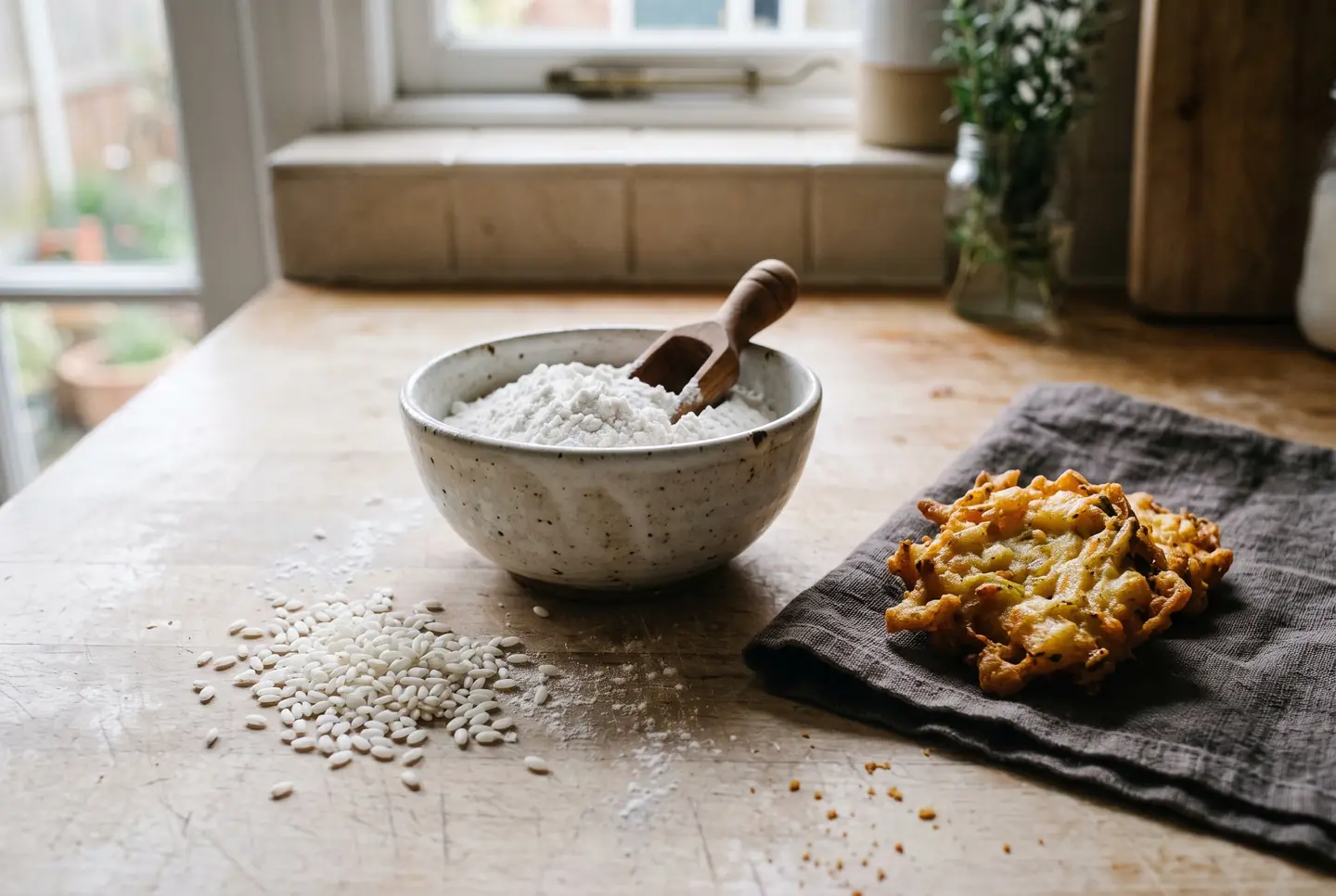
At a glance
- Strength (W)
- not measured
- Protein
- 5.9% to 7.5%
- Water absorption
- not measured
- Stability
- not measured
- Ash
- 0.6% to 1.6%
- Origin
- Ásia (baixo vale do Yangtzé, China); hoje moída no mundo todo
- Grain
- arroz (Oryza sativa), cereal sem glúten; branco (polido) ou integral
What it is called in each country
| Country | Called |
|---|---|
| English | rice flour (white or brown); distinct from rice starch and from glutinous/sweet rice flour (mochiko) |
| Português | farinha de arroz (branca ou integral); não confundir com amido de arroz nem com farinha de arroz glutinoso (mochiko) |
| Italiano | farina di riso (bianca o integrale); non confonderla con l'amido di riso né con la farina di riso glutinoso (mochiko) |
| Français | farine de riz (blanche ou complète); distincte de l'amidon de riz et de la farine de riz gluant (mochiko) |
| Español | harina de arroz (blanca o integral); no es lo mismo que el almidón de arroz ni la harina de arroz glutinoso (mochiko) |
What it is for
Frying is where rice flour shines, and it is measured, not folklore: its starch takes up less oil and fries crisper than wheat, which is why the lightest tempura and the crunchiest fried chicken coatings lean on it. It thickens sauces clean and clear, without the raw-flour taste of a wheat roux. It is the backbone of gluten-free baking, from cookies to the crumb of a loaf, as long as it has help holding together. And glutinous rice flour, its sticky cousin, is what gives mochi, dango and chewy rice cakes their elastic bite.
How to substitute it
Swapping rice flour one for one into a wheat recipe is the single most common way it disappoints. Take the wheat out of a bread and you take out the gluten, which means you take out the structure: the batter will not hold gas, and without a binder like xanthan or psyllium it bakes dense and crumbly. Going the other way, rice flour steps in for cornflour as a thickener at close to the same ratio, and it holds up better through reheating and freezing. What you cannot do is trade regular rice flour for the glutinous kind, or the reverse. They are different rice: one sets firm, the other stays sticky and stretchy, and a mochi made with plain rice flour simply will not chew.
When not to use it
On its own it cannot make a risen, chewy loaf, and no amount of kneading will change that, because there is no network to build. In delicate cakes a coarse grind turns up as grittiness on the tongue. And rice starch stales fast: a plain rice bake goes firm and dry within a day as the starch retrogrades, which is why it wants fat, sugar or a hydrocolloid to stay tender.
How to use it
Three habits fix most of the trouble. Hydrate generously and think batter, not dough: rice flour drinks a lot of water and needs it to soften the starch. Give it a binder when structure matters, xanthan gum or ground psyllium husk, which stand in for the missing gluten and hold the gas. And let it rest, or better, scald part of it: pouring boiling water over a portion of the flour, the yudane trick, gelatinises the starch and makes the crumb softer and slower to stale. For frying, keep the batter cold and thin; the fine particles and high-amylose starch are what buy you the crunch, and heavy batter throws that away.
How to choose one when buying
Three flours share a shelf and are not interchangeable. Plain rice flour, white or brown, is milled from ordinary rice: white is neutral and fine, brown carries the bran, more flavour, more fibre and a shorter shelf life. Glutinous or sweet rice flour, often sold under the Thai Erawan brand with a green label against the red of the plain kind, is milled from waxy rice and turns sticky, not structural, despite the word glutinous, which has nothing to do with gluten. Rice starch is a third thing, the isolated starch with the protein washed out, finer still and used for the silkiest textures. Check the grind too: superfine bakes and fries smoother, a coarse bag leaves grit. Buy fresh, keep brown rice cold.
The story
Rice was domesticated from wild Oryza rufipogon in the lower Yangtze valley of China, with the clearest archaeological signal of selection for non-shattering grain landing around 9,000 years ago.
That is why rice flour sits at the base of so much Asian cooking rather than at its margins: the rice noodles of Vietnam and southern China, the rice cakes of the Philippines and Japan, the batters of the whole region. Wheat was the northern grain and the bread grain; rice was the southern grain, and it grew its own way of becoming flour, one that never went looking for a loaf.
Frequently asked
- Is glutinous rice flour gluten-free?
- Yes. Despite the name, glutinous rice flour contains no gluten at all: glutinous describes how sticky the cooked rice is, not the wheat protein. It is safe for coeliacs, like all rice flour, but it behaves very differently from the plain kind.
- Can I replace wheat flour with rice flour one for one?
- Not in anything that needs to rise or stretch. Without gluten there is no structure, so a straight swap in bread or cake bakes dense and crumbly. It works far better as a thickener, in frying batters, or in gluten-free blends built around a binder.
- What is the difference between rice flour and rice starch?
- Rice flour is the whole milled grain, starch plus a little protein and fibre. Rice starch is the isolated starch with the protein removed, so it is finer and more neutral, used where you want pure texture: silky thickening, tender crumb, dusting.
- Why did my rice flour bread turn out gritty and dry?
- Usually a coarse grind and not enough water or rest. Choose a superfine flour, hydrate it well, let the batter sit so the starch can soften, and add fat or a hydrocolloid to slow staling, since plain rice bakes firm up fast.