Guide
How to Store Roti and Keep It Soft: Fridge and Freezer
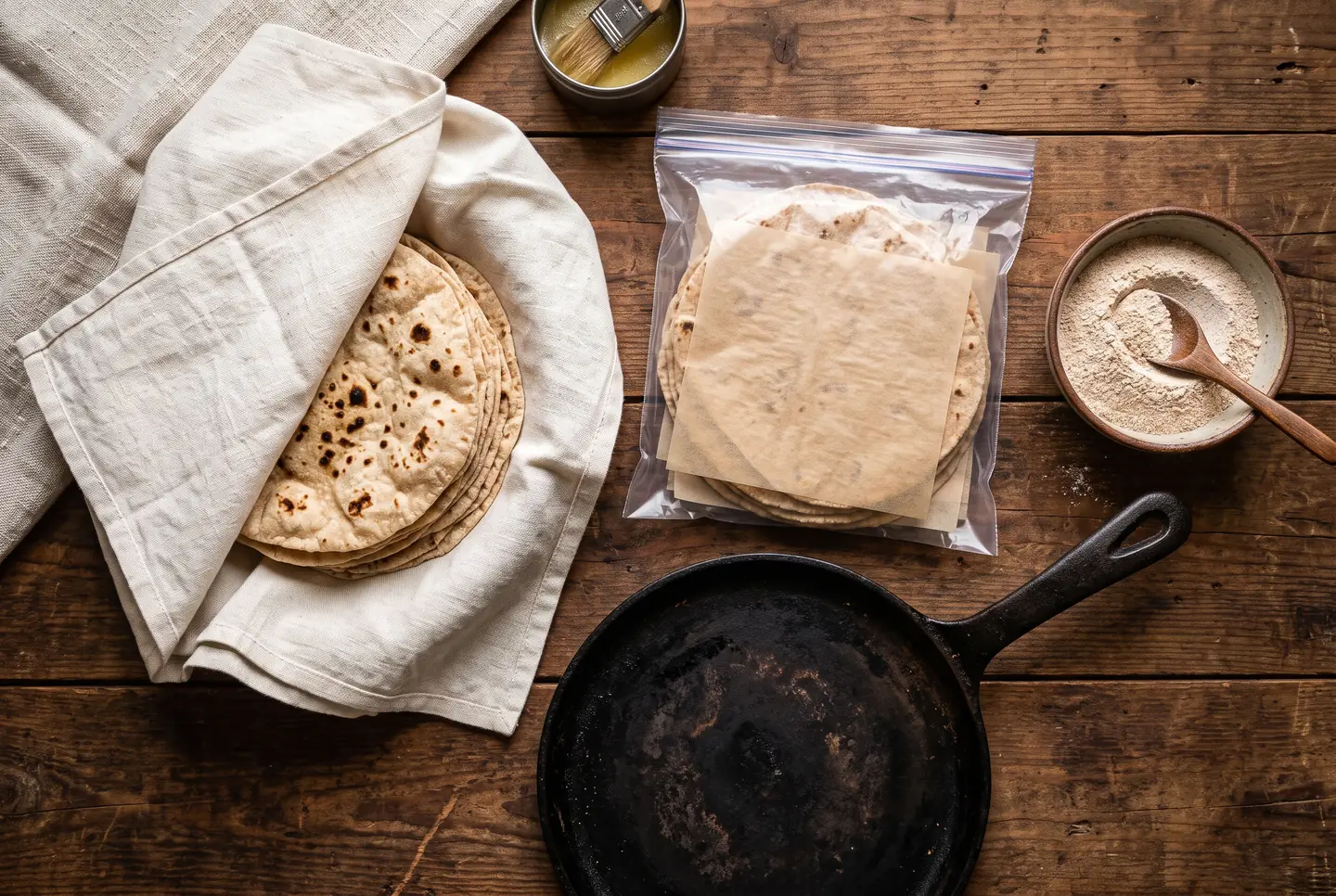
The short answer: wrap the rotis while they are still warm, keep them covered and away from air, and reheat them on a hot dry pan. For the same day, a cloth or paper towel plus a covered container is enough. For longer, the fridge or freezer will do the job.
The thing that ruins stored roti is air, not time. A roti left open to the kitchen turns stiff quickly, while one wrapped well can stay soft for hours and, frozen, for much longer. This page goes deeper than the storage section of the complete guide to roti, with a method for each situation.
How should you store roti at a glance?
| Where | How | How long | Reheat |
|---|---|---|---|
| Counter, same day | Cooled slightly, wrapped in a clean cloth or paper towel, in an airtight container | About 8 to 12 hours if covered and dry (Onmanorama) | Usually just warm on a tawa |
| Fridge | Wrapped in foil with a paper towel inside | No number in the sources: keep it short and check smell and texture | Dry tawa with a sprinkle of water |
| Freezer | Cooled, parchment between each, sealed in a freezer bag | No number in the sources: date the bag and use the oldest first | Straight from frozen onto a hot tawa |
Only the room-temperature time comes from a source. For the fridge and freezer, neither source gives a number, so go by smell and texture, not the calendar.
Why does roti go hard in the first place?
A fresh roti is soft because of the steam trapped inside it. Once it leaves the pan, that moisture starts escaping into the air, and the surface dries and stiffens first.
That is why the fix is always the same: slow the drying down. Wrapping the roti traps its own steam, and a tight seal keeps the air away. If the roti is already stiff before you wrap it, the dough may be the cause, and where roti goes wrong covers that.
What do you do with roti on the day you cook it?
Wrap them while they are warm, but not scorching hot. Onmanorama advises letting rotis cool slightly before packing, then wrapping them in a clean cloth or paper towel and putting them in an airtight container.
At room temperature they keep for about 8 to 12 hours that way, as long as they stay covered and dry. If you are cooking for dinner, this is all you need.
A word of care on safety. Do not leave rotis for hours in a hot, sealed, humid spot, because that is where they spoil. If the room is very warm, use the fridge instead.
How do you store roti in the fridge?
Use the same idea, with one useful detail. Cook with Manali wraps the rotis in foil with a paper towel, and notes that only foil or only paper towel makes them soggy. The towel soaks up extra moisture, and the foil keeps the air out.
Cool the rotis first so no steam turns to water inside the package. Neither source gives a number of days, so go by smell and texture rather than the calendar.
Onmanorama adds a tip worth following: do not reheat the same batch again and again. Take out only what you plan to eat.
How do you freeze roti?
Freezing is the best option when you want a stock ready for busy weeks. Let the rotis cool fully, then lay a piece of parchment between each one. Cook with Manali does exactly this and slides the stack into a freezer bag.
Onmanorama also says to use butter paper between them and seal tightly. Squeeze out the air before you close the bag, because air is what dries them out in the freezer too.
The parchment matters more than it seems. Without it, the rotis freeze into one block and tear when you pull them apart. With it, you take out one or two and leave the rest.
There is another option, mentioned in a reply to a comment on Cook with Manali: half-cook the rotis before freezing, then finish them on the tawa when you want them. It is a handy trick if you like the just-made taste, though it is a cook's tip rather than a tested rule.
Neither source gives a freezer time, so label the bag with a date and use the oldest first.
How do you reheat roti so it is soft again?
The best way is a hot, dry tawa. Warm the roti a few seconds on each side. A tiny sprinkle of water on the roti helps bring back the softness, which is also what Cook with Manali suggests.
A frozen roti needs no thawing. Onmanorama says it goes straight onto a hot tawa.
If you want the microwave, cover the roti with a damp cloth and heat it for about 30 seconds, or sprinkle it with a little water, again per Cook with Manali. Onmanorama warns that a roti microwaved without a damp cloth goes stiff in under a minute.
If you want a fresh puff, the pan method in how to bake roti works on reheated rotis too.
What are the most common storage mistakes?
Most stiff rotis come from a short list of errors.
- Leaving them uncovered. Air dries them out fast.
- Wrapping when piping hot. Too much steam can make them damp, so let them cool slightly first.
- Using only foil or only paper towel. Cook with Manali says either one alone makes them soggy.
- Skipping the parchment in the freezer. They stick together and tear.
- Microwaving with no cover. They go stiff quickly.
- Reheating the same batch again and again. Take out only what you will eat.
Can you tell when roti has gone bad?
Trust your nose and your fingers. A sour smell, any mold, or a slimy feel means the roti goes in the bin. When in doubt, throw it out.
Dryness is different: a stiff roti is not spoiled, just dried out. It will often recover on the tawa with a little water.
What is a practical routine for the week?
Here is a simple pattern that works for most homes.
- Cook a full batch and stack the rotis as they come off the pan.
- Keep what you will eat today in a cloth and container.
- Cool the rest and wrap a small batch for the fridge.
- Freeze the extra with parchment between each in a bag, dated.
- Reheat only what you need, on a hot dry tawa.
If you are working with a different dough, the same method applies. A softer, well-rested roti dough stays pliable longer, and the notes also suit gluten-free roti and sourdough roti, though they may behave a little differently.
Questions
How long does roti stay soft at room temperature?
About 8 to 12 hours if it is wrapped in a clean cloth or paper towel, kept in an airtight container and stays dry, according to Onmanorama. Do not leave it for hours in a hot, humid, sealed space.
Can you keep roti in the fridge?
Yes. Wrap the cooled rotis in foil with a paper towel, as Cook with Manali does. Neither source gives a number of days, so check the smell and texture before eating.
Can you freeze roti, and for how long?
Yes. Cool them, put parchment between each, and seal them in a freezer bag. Neither source gives a freezer time, so date the bag and use the oldest first.
Do you need to thaw frozen roti?
No. Onmanorama says frozen roti goes straight onto a hot tawa.
How do you reheat roti in the microwave?
Cover it with a damp cloth and heat for about 30 seconds, or sprinkle it with a little water first. Without a damp cloth, it goes stiff in under a minute.
Is it safe to eat old roti?
Not if it smells sour, shows mold or feels slimy. Throw it out. A roti that is just dry and stiff is fine and can be revived on a tawa.
A little care when the rotis come off the pan means soft bread tomorrow, and a freezer stocked for the busy days.
Where I checked
Keep reading
 Guide
Bagel Dough: Why It Is So Firm, and How to Knead It
Bagel dough feels stiff and dry on purpose. Here is why it runs at 50 to 60% water and high protein flour, how to knead it, and the windowpane to aim for.
6 min read Guide
Bagel Recipe: New York Style, Step by Step
A weight-based New York bagel recipe, step by step: the firm 58% dough, an overnight cold retard, how long to boil, and the oven heat that sets a glossy crust.
6 min read Complete guide
Bagels: The Complete Guide
Make a real bagel at home: the firm 58% dough, why bagels are boiled before baking, New York vs Montreal, sourdough and gluten free, and how to fix flat ones.
18 min read