Guide
Roti Dough: Hydration and the Right Feel
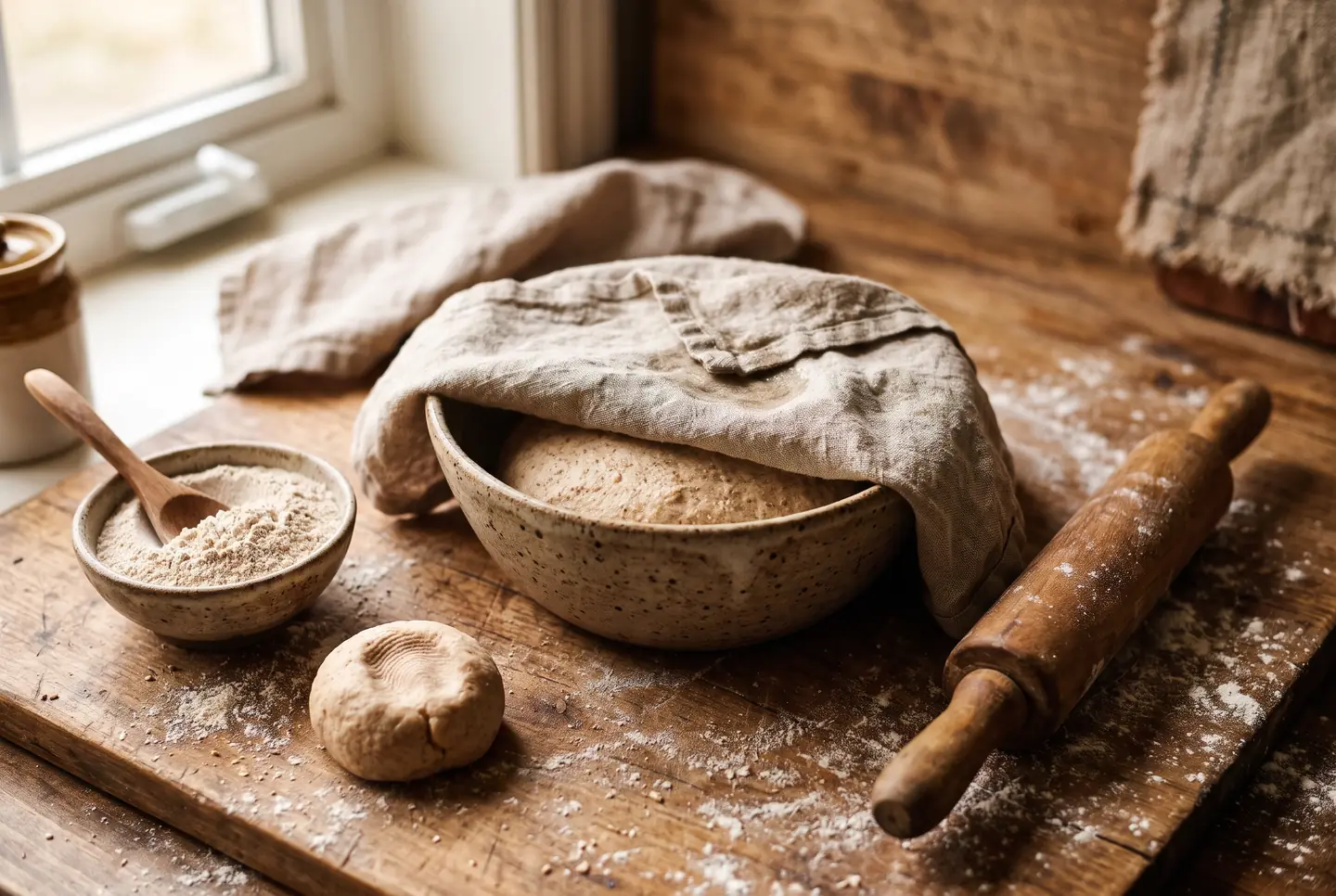
Good roti dough is atta and water, mixed at roughly 70 to 80 percent water by flour weight, kneaded until soft and slightly tacky, then rested under a damp cloth for 10 to 30 minutes. It should feel supple, take a fingerprint and spring back slowly. If it does, the roti will roll thin and puff.
The exact water number moves with the flour, the brand and the weather, so treat the percentage as a starting line and let your hands make the final call. The rest of this page is about reading the dough: what it should feel like, what the water does, why the rest matters and how to rescue a dough that went wrong. For the whole bread, from flour to flame, see the complete roti guide.
The numbers in one table
Published recipes for the same style of dough land in a fairly tight band. Here is how two popular ones work out, with the one rule of thumb that tends to run higher.
| Source | Atta | Water | Water as % of flour weight | Rest |
|---|---|---|---|---|
| Cook with Manali | 270 g | about 195 ml | about 72% | 20 to 30 min |
| Tea for Turmeric | 280 g | 227 g | about 81% | 10 to 15 min |
| America's Test Kitchen | n/a | "80 percent as much water as flour" suggested as a bare minimum starting point | 80% or more | about 30 min before salt |
The percentages for the first two rows are simple arithmetic on the quantities those recipes print (water divided by flour, treating 1 ml of water as 1 g). The third row reports a rule of thumb quoted in the America's Test Kitchen article, which attributes it to Krish Ashok. Put together, the useful range is about 70 to 80 percent, and the wetter end is where soft, pliable rotis tend to live.
What hydration really means here
Hydration is the weight of water divided by the weight of flour. If you use 250 g of atta and 190 g of water, that is 76 percent. Weigh both if you can: a cup of atta can differ by 30 g or more depending on how it was scooped, which is why two cooks with the "same" recipe get different dough.
Atta is a finely milled whole-wheat flour, and the bran and germ in it hold on to a lot of water. That is why atta dough that feels loose at the start firms up after resting: the flour keeps drinking. Mix to a dough that feels a little softer and stickier than you think you want, and give it time before adding more flour.
Atta versus ordinary whole-wheat flour
Atta is not the same thing as the whole-wheat flour on most Western shelves. Tea for Turmeric points out that atta is "different in variety and processing" from the 100 percent whole wheat flour sold in American stores, and America's Test Kitchen names chakki atta, finely milled whole-wheat flour, as the traditional choice and suggests whole-wheat pastry flour if you cannot find it.
In practice that changes how you handle the dough:
| Atta (chakki) | Ordinary whole-wheat flour | |
|---|---|---|
| Grind | Fine, even | Often coarser, with visible bran flecks |
| Water appetite | High, keeps absorbing during the rest | Usually lower, so add water more slowly |
| Dough feel | Smooth, pliable | Can feel gritty and tear more easily |
| If you only have this | Use as is | Cut with some white flour, or use whole-wheat pastry flour |
Tea for Turmeric tried a blend of 70 percent white whole wheat and 30 percent all-purpose flour as a stand-in and found it mimics the flavor and texture "somewhat" without matching real atta. That is a fair summary: the substitute works, and it is not the same.
Mixing and kneading
Add the water a little at a time rather than all at once. Both Tea for Turmeric and Cook with Manali pour it in gradually while mixing, then keep some in reserve. Tea for Turmeric kneads about 4 minutes by hand after the water is in, and America's Test Kitchen, which rests the flour and water first, needs only about 2 minutes of kneading afterward.
That second point is worth taking in. You are not building a bread dough. Roti does not need a strong gluten network, only enough structure to hold a thin sheet together and trap steam. A few minutes of kneading until the ball is smooth, plus a rest, does the job. Long, hard kneading of whole-wheat dough tends to make a tight dough that fights the pin.
Water temperature
Most home recipes use room-temperature water, as Tea for Turmeric does. America's Test Kitchen goes a different way: flour absorbs more hot water than cold, so its method cooks a small paste of atta and water and builds the dough from that, which lets the dough carry more liquid. It is a useful trick for very soft rotis, but plain room-temperature water gives a perfectly good everyday dough, and warm water falls somewhere in between.
How the dough should feel
Texture is a better guide than any percentage. Tea for Turmeric describes the finished dough as "soft to the touch, supple, and pliable," slightly sticky but not clinging to your fingers if your hands are wet. Use these checks:
| Check | Right | Too dry | Too wet |
|---|---|---|---|
| Press with a fingertip | Leaves a dent that fills back slowly | Dent stays sharp, edges crack | Dent fills fast and sticks to the finger |
| Surface | Smooth, a little tacky | Rough, flaky, patchy | Shiny, wet, smears on the bowl |
| Roll a small ball | Holds shape, no cracks | Cracks around the rim | Slumps and flattens |
| Rolling out | Glides under the pin | Tears, springs back stiff | Sticks, needs heavy dusting |
The fingerprint test is the one to learn. If you can press a ball and the dent springs back slowly, you are in the right place.
Why the dough needs to rest
Resting does two jobs. It lets the flour finish absorbing water, and it relaxes the gluten you just worked. Without it, the dough snaps back when you roll and the rounds shrink as soon as you lift the pin.
Sources give different numbers because the rest is forgiving:
| Rest | Where it appears | What to expect |
|---|---|---|
| 10 to 15 minutes | Tea for Turmeric | Enough for a soft, easy dough |
| 20 to 30 minutes | Cook with Manali | The usual working window |
| About 30 minutes | America's Test Kitchen (flour and water rested before the salt goes in) | Very relaxed, easy to roll thin |
| Refrigerated, up to 3 days | Tea for Turmeric | Convenient, bring to near room temperature before rolling |
If your dough resists, rest it ten minutes longer before you reach for more water. A tense dough is more often underrested than too dry. Keep it covered while it sits, since a skin on the surface turns into hard flecks in the roti. A damp cloth over the bowl is the traditional answer.
Fixing the dough
Most dough problems fix themselves with small moves. Make them in teaspoons, not splashes.
| Problem | What you see | Fix |
|---|---|---|
| Too dry | Cracks, crumbles, stiff when rolled | Wet your hands and knead; Tea for Turmeric adds 1 to 2 tbsp of water for a dry or tough dough |
| Too wet | Sticks to hands, bowl and pin | Knead in 1 to 2 tbsp of atta, as Tea for Turmeric does, and rest again |
| Tight and springy | Shrinks back as you roll | Cover and rest 10 minutes |
| Dry skin on top | Hard bits that show in the roti | Cover tightly, rub a drop of oil over the ball |
| Cold from the fridge | Stiff, tears at the edge | Leave out until close to room temperature |
Wet dough is easier to rescue than dry dough. You can dust a sticky dough with atta and rest it, but a dry dough that has already been kneaded hard takes time to soften. That is a good reason to start near the low end of the water range and add more.
Roti, chapati, phulka and paratha
The dough is the least of what separates these. Tea for Turmeric describes roti as a broad term for "any type of unleavened Desi flatbread," calls chapati the most common roti (also sold as phulka, where phulka means "puff"), and says the dough is "the same whether you're making Roti or Paratha." The Wikipedia entry on roti also treats the family as unleavened wheat flatbreads cooked on a flat griddle.
What changes is what you do after the dough rests. A plain roti or chapati is rolled thin and cooked dry. A phulka is the same round, finished over the open flame so it inflates. A paratha starts from the same dough, with fat worked into it as it is folded and rolled, which is why a stiff or underrested dough shows up more in a paratha as tearing than in a roti as a failure to puff. In short: if you can make one dough well, you can make all of them, and the shaping decides the name. The shaping step is covered in the roti recipe.
Adding fat and salt
Both are optional. Tea for Turmeric lists salt at about 3 g for 280 g of atta (1/4 tsp, up to 1/2 tsp) and treats it as optional, and many cooks add a teaspoon of oil or ghee for a softer finish. Fat coats the flour and slightly shortens the gluten strands, which makes the dough a little easier to roll and the finished roti a little softer. If you add salt after a flour-and-water rest, as America's Test Kitchen does, you simply knead it in at the end.
Questions
What is the right water ratio for roti dough?
About 70 to 80 percent of the flour weight is a reasonable range: Cook with Manali works out to roughly 72 percent and Tea for Turmeric to roughly 81 percent. Start low and add water until the dough is soft and pliable, because the flour decides the final amount.
How do I know when roti dough is ready?
It should be soft, smooth and a little tacky, and a fingertip press should leave a dent that fills back slowly. Cracks at the edge mean it needs water. A dough that clings to wet fingers needs a spoonful of atta.
How long should roti dough rest?
Recipes cover a window of about 10 to 30 minutes. Ten minutes is workable, 20 to 30 is more relaxed, and a refrigerated dough keeps for a few days (Tea for Turmeric gives up to 3) if you bring it near room temperature before rolling.
Can I use regular whole-wheat flour for roti dough?
Yes, with adjustments. It is usually coarser and takes up less water than atta, so add water gradually. Blending it with some all-purpose flour, or using whole-wheat pastry flour as America's Test Kitchen suggests, gives a softer result.
Why is my roti dough hard?
Usually too little water, too little rest, or too much hard kneading. Add a spoonful of water with wet hands, cover the dough and give it another 10 to 15 minutes before you roll.
Is the dough different for roti, chapati and paratha?
Not meaningfully. The dough is the same, and what changes is the treatment after it rests: dry and thin for roti or chapati, puffed over flame for phulka, folded with fat for paratha.
Once you have made the dough a few times, you stop measuring it. A short press with your thumb tells you what the water and the rest have already done.
Where I checked
Keep reading
 Guide
Bagel Dough: Why It Is So Firm, and How to Knead It
Bagel dough feels stiff and dry on purpose. Here is why it runs at 50 to 60% water and high protein flour, how to knead it, and the windowpane to aim for.
6 min read Guide
Bagel Recipe: New York Style, Step by Step
A weight-based New York bagel recipe, step by step: the firm 58% dough, an overnight cold retard, how long to boil, and the oven heat that sets a glossy crust.
6 min read Complete guide
Bagels: The Complete Guide
Make a real bagel at home: the firm 58% dough, why bagels are boiled before baking, New York vs Montreal, sourdough and gluten free, and how to fix flat ones.
18 min read