Guide
How to Bake Focaccia: Oil, Temperature and a Crisp Base
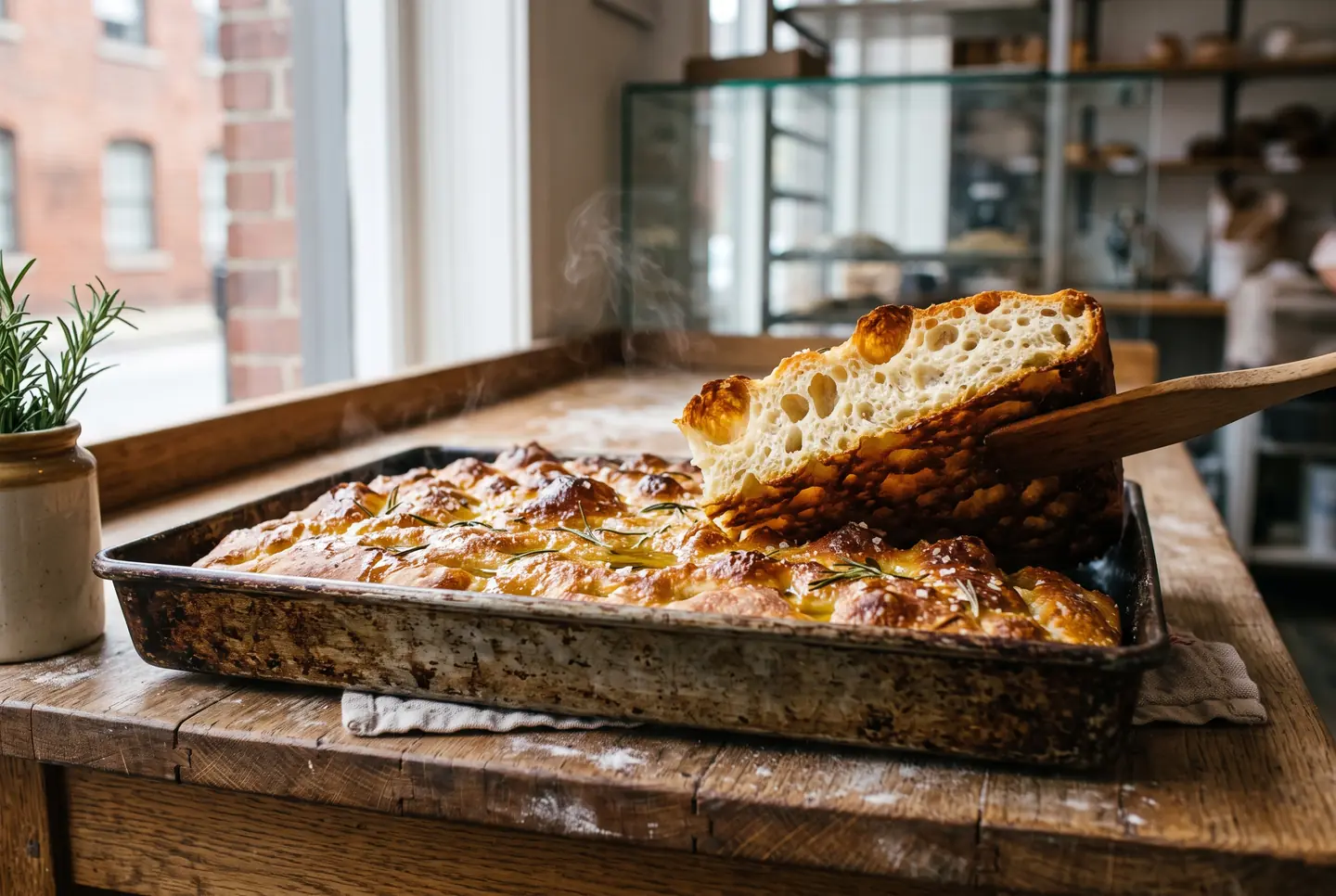
Bake focaccia hot, around 450 F (232 C), for roughly 20 to 30 minutes depending on thickness, and it is done when the inside reads 190 to 210 F (88 to 99 C) on an instant-read thermometer (ThermoWorks). Those numbers get you most of the way. The part that decides whether it comes out golden and crisp underneath or pale and soft is not on the dial: it is how much oil sits under the dough and where in the oven you put the pan.
Focaccia lives or dies on two things in the oven, enough oil beneath it and enough heat coming up from below, and the base is where home ovens struggle, exactly as they do with pizza in a home oven. This page is the baking step of the complete focaccia guide: temperature, rack height, and the surface that finally browns the bottom.
The temperature, by style
There is no single focaccia temperature, because a thin genovese and a tall high-hydration slab want different bakes. What they share is that focaccia bakes hot: generally 220 to 250 C, about 425 to 480 F.
| Style | Temperature | Time | Why |
|---|---|---|---|
| High-hydration pan focaccia | ~230 C / 450 F | ~25 min | Thick and wet, needs time for the crumb to set (Baking Steel) |
| Genovese, thin | ~230 C / 450 F | 15 to 20 min | Thin, so the top must crisp before it dries out (Italian Recipe Book) |
| Everyday home pan | 220 to 230 C / 425 to 450 F | 20 to 30 min | Depends on thickness; go by internal temp |
When in doubt, hotter and a preheated surface beats cooler and longer. A slow oven dries the crumb before the outside colours.
Oil: the base is fried, not baked
The oil in the pan is not there to stop sticking. It shallow-fries the bottom of the focaccia into the crisp golden shell that defines a good one, so be generous: a real film of olive oil across the pan, not a wipe. Skimp on it and the base bakes pale and soft no matter how hot the oven.
The dimples matter here too. Each well catches oil and the salamoia brine and, because oil holds far more heat than air, those pockets fry the dough around them into crisp golden craters while the ridges stay soft. That is the crisp-edge, tender-crumb contrast people love, and it comes from oil plus heat, not from the flour.
The base: where home ovens fail, and the fix
A crisp underside needs heat coming up from below, and most home ovens push heat down from a top element or circulate it with a fan. That is why a focaccia can look done on top and come out pale and floppy underneath.
Three moves fix it, in order of impact:
- Preheat a heavy surface with the oven. A baking steel, a pizza stone or a heavy inverted tray, left to heat for at least 30 to 45 minutes, then set the focaccia pan directly on it. The hot surface gives the base a head start the instant the dough lands. Baking straight on a preheated steel is the single most effective route to a crisp bottom (Baking Steel).
- Bake low in the oven. The lowest rack puts the base closest to the heat and the preheated surface. This alone rescues a soft bottom.
- Use a metal pan, not glass or ceramic. Aluminium and steel conduct heat into the base far better; glass and ceramic insulate it and keep the bottom pale.
How to know it is done
Colour is the first tell: a proper focaccia is deep golden on top and browned, not blond, underneath. Lift a corner with a spatula and look at the base before you trust the top.
The reliable tell is temperature. The crumb is fully baked at 190 to 210 F (88 to 99 C) in the centre (ThermoWorks). For a tall or wet focaccia, aim for the upper end so the middle is not gummy; one baked to become a sandwich base especially wants the top of that range so it sets firm. A thin genovese, by contrast, will be past done before a thermometer is even useful, so go by the crisp top and fried base instead.
Do you cover it, add steam, or use the fan?
- No lid, no steam. Focaccia wants a dry, crisp top and a fried base, the opposite of a crusty lean loaf. Skip the covered pot and the tray of water.
- Fan or no fan, both work. A fan (convection) browns faster and more evenly; if you use it, drop the temperature about 20 C and watch the colour. A conventional top-and-bottom setting is more forgiving for beginners.
- Broiler for the last minute, optional. If the top is pale but the base is done, a brief pass under the broiler (grill) crisps and colours the surface. Watch it, it goes from golden to burnt fast.
| Trouble at the oven stage | Cause | Fix |
|---|---|---|
| Pale, soft bottom | Not enough heat from below | Preheat a steel or tray; bake low; use a metal pan |
| Greasy and heavy | Oil never got hot enough to fry | Hotter oven, preheated surface, bake lower |
| Golden top, raw middle | Under-baked, or oven too hot too fast | Go by internal temp (190 to 210 F); lower the heat slightly |
| Dry and tough | Oven too cool, baked too long | Bake hotter for less time; do not overshoot the internal temp |
FAQ
What temperature should I bake focaccia at? Hot: around 450 F (232 C) for most home focaccia, and 220 to 250 C (425 to 480 F) across the styles. A thin genovese and a thick high-hydration slab both bake near 230 C; the difference is time, not heat.
How long does focaccia take to bake? Roughly 20 to 30 minutes depending on thickness. A thin genovese is done in 15 to 20 minutes; a tall high-hydration pan focaccia takes about 25. Judge by internal temperature, not the clock.
How do I get a crispy bottom on focaccia? Plenty of oil in the pan, a metal pan set on a preheated steel or heavy tray, and bake low in the oven. Heat from below plus oil is what fries the base crisp.
What internal temperature should focaccia reach? The crumb is fully baked at 190 to 210 F (88 to 99 C) in the centre. Aim high in that range for tall or wet focaccia so the middle is not gummy.
Should I bake focaccia with the fan on? You can. Convection browns faster and more evenly, so lower the temperature by about 20 C and watch the colour. A conventional setting is more forgiving if you are unsure.
Do I need a pizza stone or steel to bake focaccia? No, but a preheated stone or steel is the most effective way to get a crisp base at home. Without one, use a metal pan on the lowest rack and preheat the oven well.
Get the heat right and the base is the part that will surprise you: that fried, golden bottom is what tells you the focaccia came out of a real oven and not a compromise. Everything else is just deciding how tall you want it.
Where I checked
Keep reading
 Guide
Guide
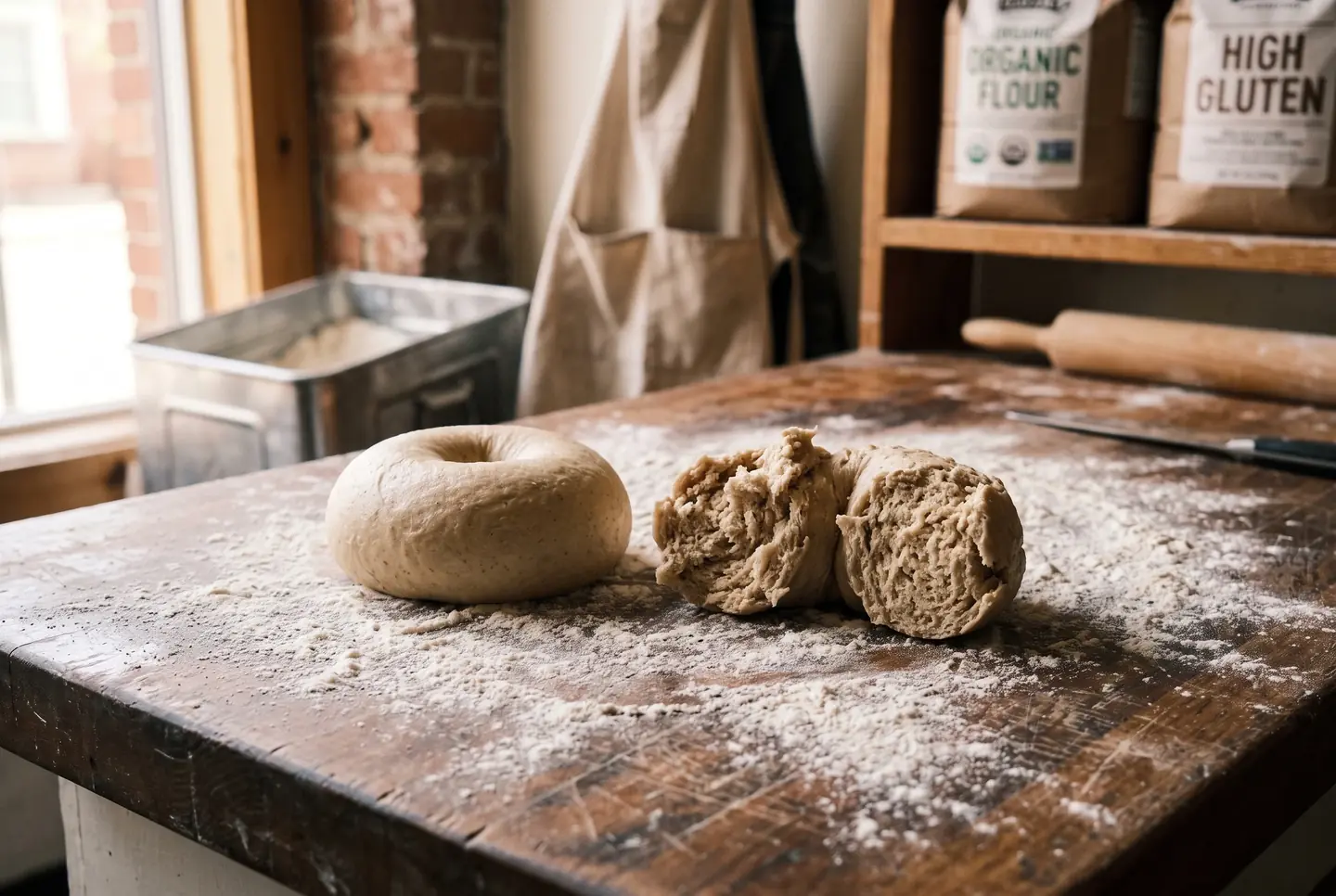
Bagel Dough: Why It Is So Firm, and How to Knead It
Bagel dough feels stiff and dry on purpose. Here is why it runs at 50 to 60% water and high protein flour, how to knead it, and the windowpane to aim for.
6 min read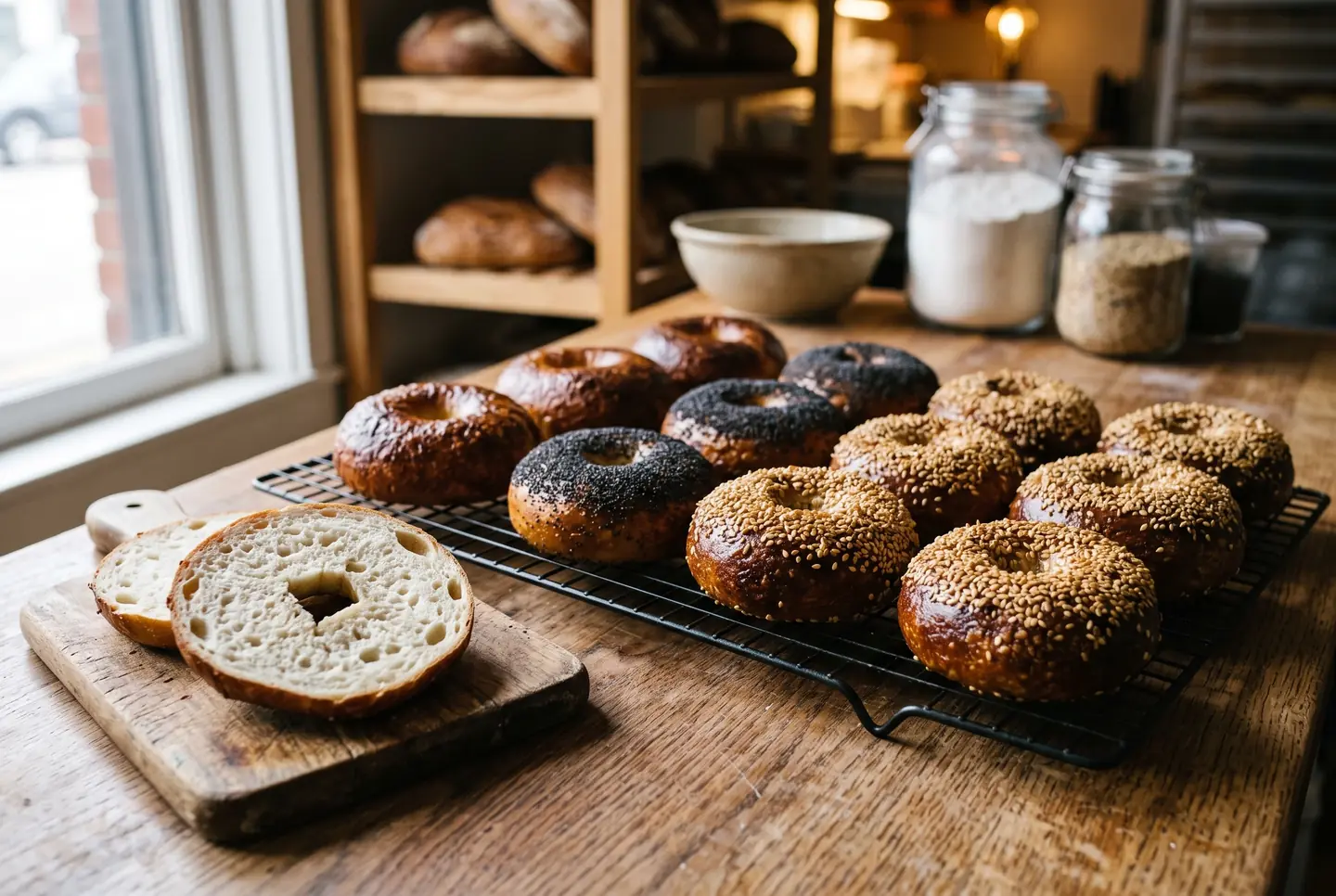 Guide
Guide
Bagel Recipe: New York Style, Step by Step
A weight-based New York bagel recipe, step by step: the firm 58% dough, an overnight cold retard, how long to boil, and the oven heat that sets a glossy crust.
6 min read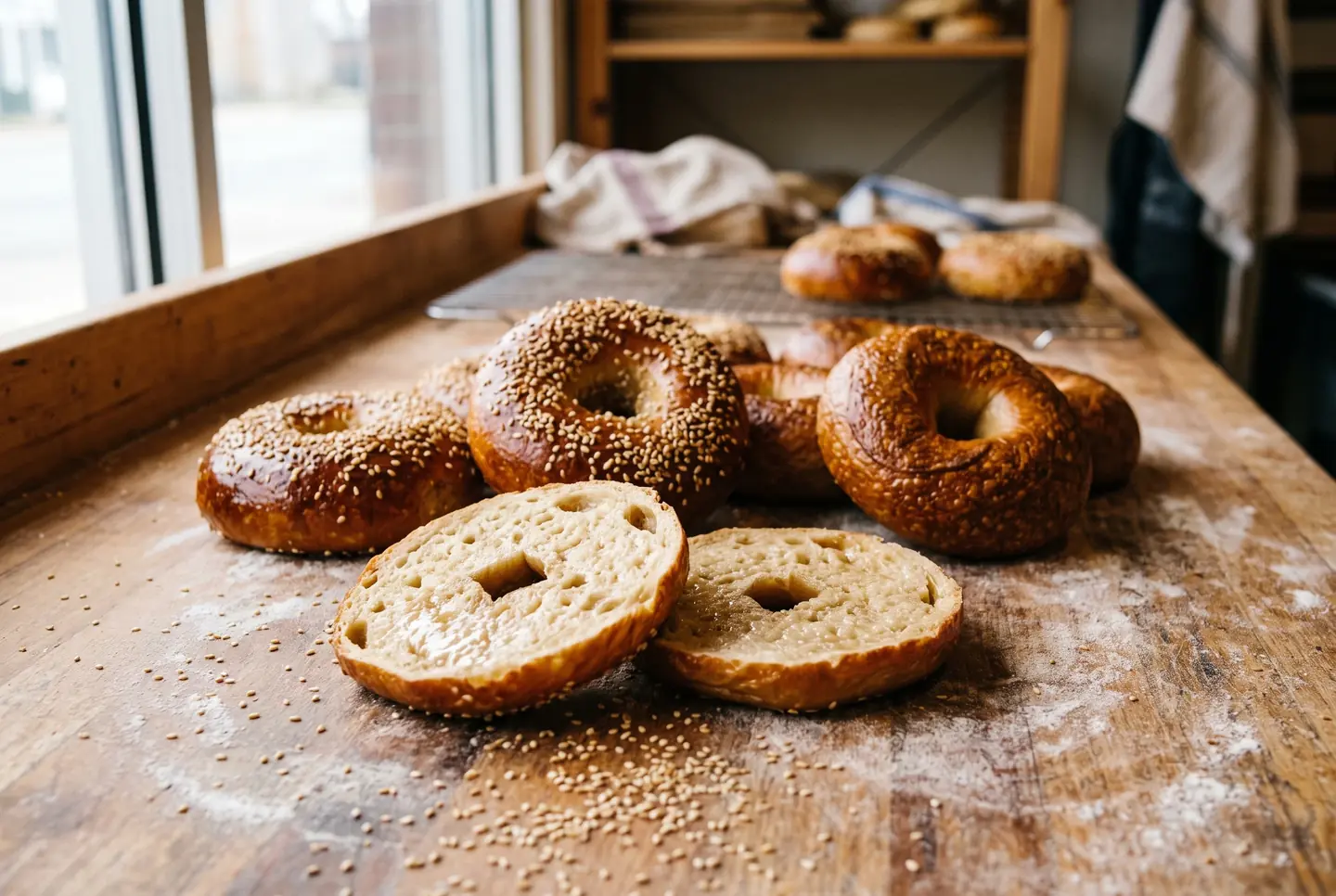 Complete guide
Bagels: The Complete Guide
Make a real bagel at home: the firm 58% dough, why bagels are boiled before baking, New York vs Montreal, sourdough and gluten free, and how to fix flat ones.
18 min read