Guide
Char Siu Bao: The BBQ Pork Filling, Step by Step
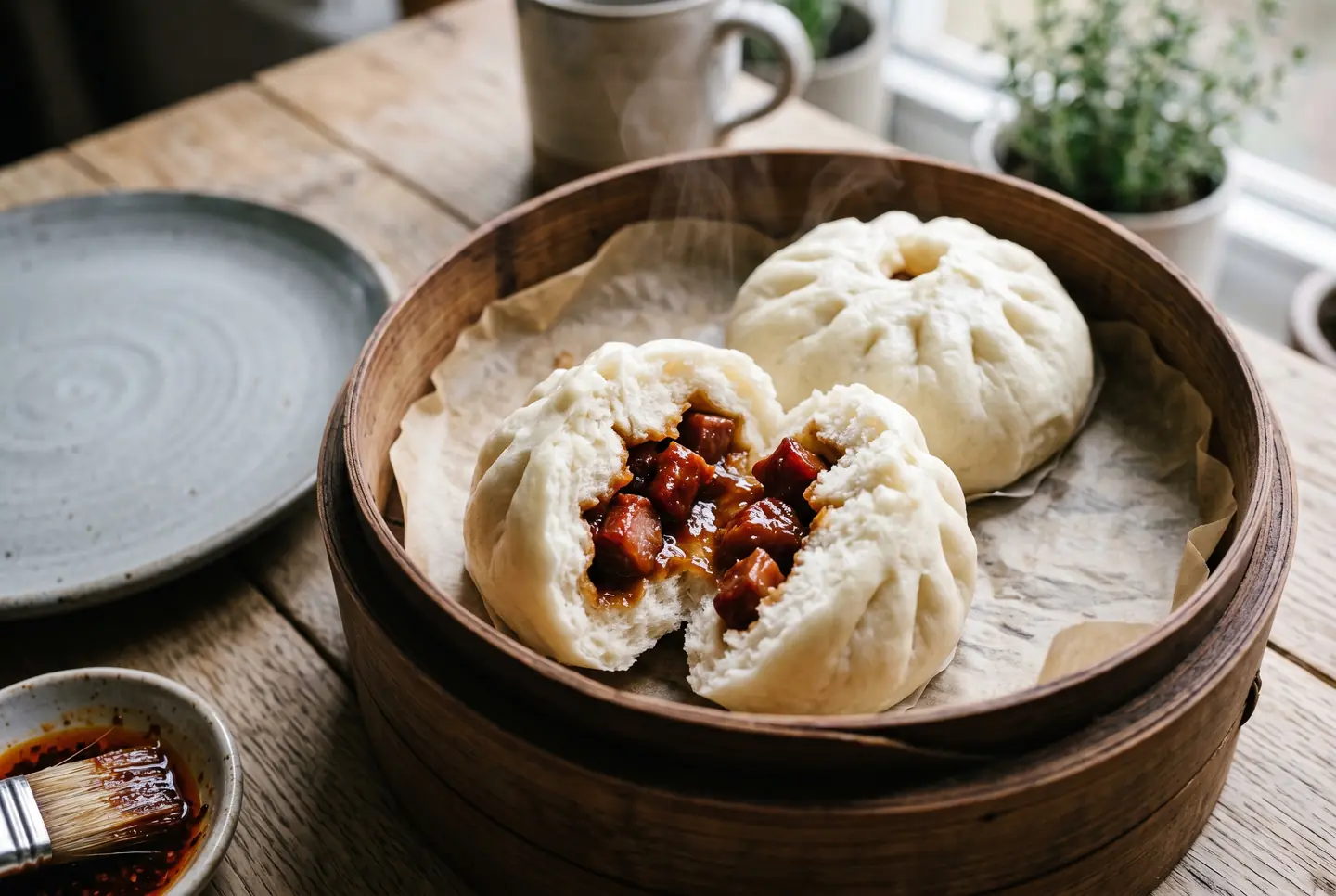
Char siu bao is the pleated, dome-shaped bun that flowers open on top in a dim sum basket, filled with sweet Cantonese barbecue pork. Get two things right and the rest is dough you already know how to make: a filling that is chopped char siu bound in a thick, glossy sauce, and a hot steam that splits the pleats into that signature crack. The most common mistakes both happen before the buns go in the steamer, in how you build and chill the filling.
This is the char siu section of the complete bao buns guide taken all the way down to the pork, and it assumes you can already pleat a baozi and know how the steam behaves. The quick version: cook a jammy sauce, fold in chopped char siu, chill it firm, wrap it in pleated dough, rest the buns, then steam them on high.
Char siu bao, baozi, gua bao: which bun is this
The word bao covers several very different buns, and char siu bao is the pleated, closed one, not the folded open one. A gua bao is the flat, taco-style fold you stuff at the table; a baozi is fully enclosed and pleated shut at the top, and char siu bao is the most famous baozi of all. That pleated top is the point: steamed hard, it bursts open to show a hint of the dark filling inside, which is why a good char siu bao looks like a little flower.
Because it is a closed bun, the filling has to be self-contained. There is no lettuce leaf, no fresh garnish, no sauce added later. Whatever flavor and moisture the bun has must be sealed inside it before steaming, which is why the filling gets more attention here than in any other bao.
The filling is two things, not one
A char siu bao filling is chopped barbecue pork plus a sauce that binds it, and treating those as one step is where home versions go wrong. The pork brings the flavor and the body; the sauce turns a pile of dry chopped meat into something that clings, coats and does not leak through the dough (The Woks of Life).
You can use leftover char siu you roasted yourself or good shop-bought barbecue pork; either way you chop it small, into pieces that pack neatly into a bun rather than poking holes in the dough. Small dice also means every bite gets pork and sauce together instead of one big lump.
Building the glossy sauce
The classic sauce is built on sweet-savory Cantonese flavors and thickened with a starch slurry until it is jammy enough to coat the pork. Omnivore's Cookbook builds it from stock, hoisin, oyster sauce, Shaoxing wine, sugar and a little five spice, simmered briefly and then thickened with a cornstarch slurry until you can draw a line across the bottom of the pan (Omnivore's Cookbook).
| Element | What it does | Note |
|---|---|---|
| Hoisin and oyster sauce | The sweet-savory Cantonese base | The backbone of the flavor |
| Soy sauce, sugar or honey | Round out salt and sweetness | Adjust to the pork you have |
| Shaoxing wine, a little five spice | Depth and aroma | Optional but traditional |
| Cornstarch slurry | Thickens the sauce to a jam | Cook it in until glossy, not runny |
The target texture is a sauce thick enough to hold its shape, not a gravy. If it is thin, it will soak into the dough or run out of the pleats while steaming; if it is jammy, it stays put. Fold the chopped pork into the cooled, thickened sauce so every piece is coated.
Why you chill the filling before wrapping
This is the step almost every first attempt skips, and it is the difference between clean pleats and a sticky mess. A warm, loose filling smears as you fold, sticks to your fingers and the dough edge, and refuses to seal. Chilled until firm, usually about 30 minutes in the fridge, the same filling behaves like a solid scoop you can drop into the center and pleat around (Omnivore's Cookbook).
Cold filling also protects the dough. A hot filling starts proofing the dough unevenly from the inside and can make the base gummy. So thicken the sauce, fold in the pork, and let the whole thing go cold and firm before it meets a single round of dough. It is worth doing the filling first, even the day before, so it is fully chilled when you shape.
Rest, then steam on high: the crack
Char siu bao is the one bao you steam hard on purpose. Where a smooth gua bao wants gentle, medium steam to stay pale and unwrinkled, the pleated baozi wants a burst of high heat, because that fast, forceful steam is what splits the pleated top open into the flowering crack (Red House Spice).
Two things have to line up for the crack to happen. First, rest the shaped, pleated buns for about 20 to 30 minutes before steaming, so the dough proofs and puffs; a cold, underproofed bun stays tight and will not open (China Sichuan Food). Second, steam them on high, roughly 12 to 15 minutes for standard buns, then turn off the heat and leave the lid on for about 5 minutes before opening, the same rest that stops any steamed bun from shrivelling (Omnivore's Cookbook). Proof plus high heat gives you the open top; skip either and you get a sealed, pale dumpling instead.
Where char siu bao goes wrong
| Problem | Likely cause | Fix |
|---|---|---|
| Filling leaks out while steaming | Sauce too thin, or pleats not sealed | Thicken the sauce to a jam; pinch the pleats shut |
| Sticky, unmanageable filling | Wrapped it warm | Chill 30 min until firm before folding |
| Top stays closed, no crack | Underproofed, or steam too gentle | Rest buns 20 to 30 min, then steam on high |
| Gummy base under the filling | Filling too hot or too wet | Cook the sauce down, chill it, fold pork in cold |
| Buns shrivel when opened | Lid whipped off at the end | Rest 5 min, heat off, then open slowly |
Notice that the two flagship faults, a leaking bun and a sealed top, come from opposite ends of the process: the filling being too loose and the buns being too gentle. Firm filling and hot steam are the whole game.
Frequently asked questions
What is the sauce in char siu bao made of? A sweet-savory Cantonese base of hoisin and oyster sauce with soy, sugar or honey, often a splash of Shaoxing wine and a little five spice, simmered and then thickened with a cornstarch slurry until it is jammy enough to coat the chopped pork.
Why do you chill char siu bao filling? Because a warm, loose filling smears and sticks when you try to pleat the dough around it, and a hot filling can make the base gummy. Chilled firm, about 30 minutes, it scoops cleanly and seals easily.
Why won't the top of my char siu bao open up? Two usual causes: the buns were underproofed, or the steam was too gentle. Rest the pleated buns 20 to 30 minutes so they puff, then steam on high so the burst of heat cracks the top.
Do you steam char siu bao on high or low heat? High. Unlike a smooth gua bao, which wants gentle steam, the pleated char siu bao is steamed hard so the top splits open into the classic flowering crack.
How long do you steam char siu bao? About 12 to 15 minutes on high for standard buns, then turn off the heat and leave the lid on for 5 minutes before opening slowly.
Can I use shop-bought char siu? Yes. Chop good barbecue pork small and bind it in the glossy sauce; the sauce is what makes the filling, so a solid shop-bought char siu works well.
What is the difference between char siu bao and gua bao? Char siu bao is a closed, pleated baozi filled with sauced barbecue pork and steamed on high to crack open; a gua bao is an open, folded bun you fill at the table and steam gently to keep smooth.
Where I checked
Keep reading
 Guide
Guide
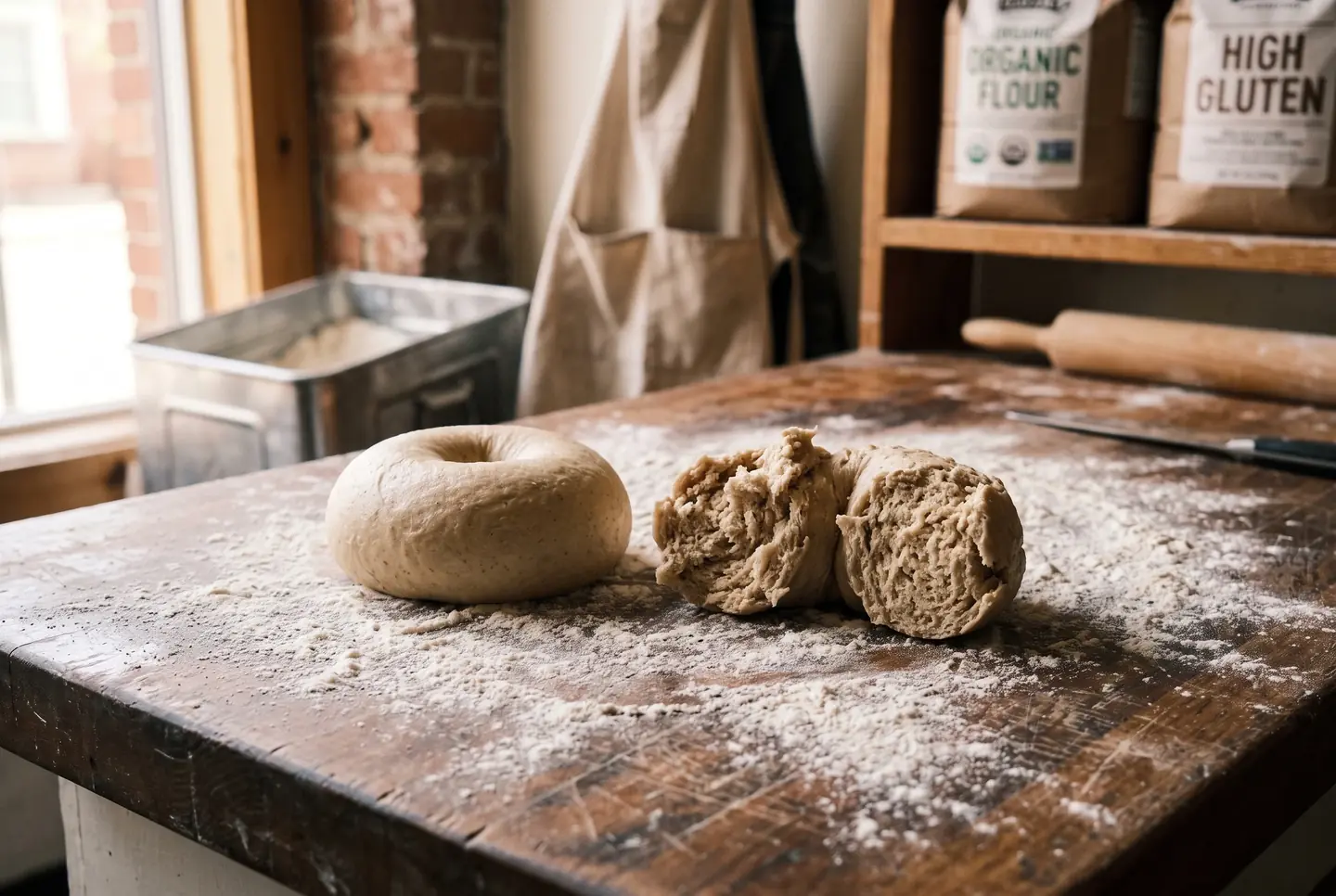
Bagel Dough: Why It Is So Firm, and How to Knead It
Bagel dough feels stiff and dry on purpose. Here is why it runs at 50 to 60% water and high protein flour, how to knead it, and the windowpane to aim for.
6 min read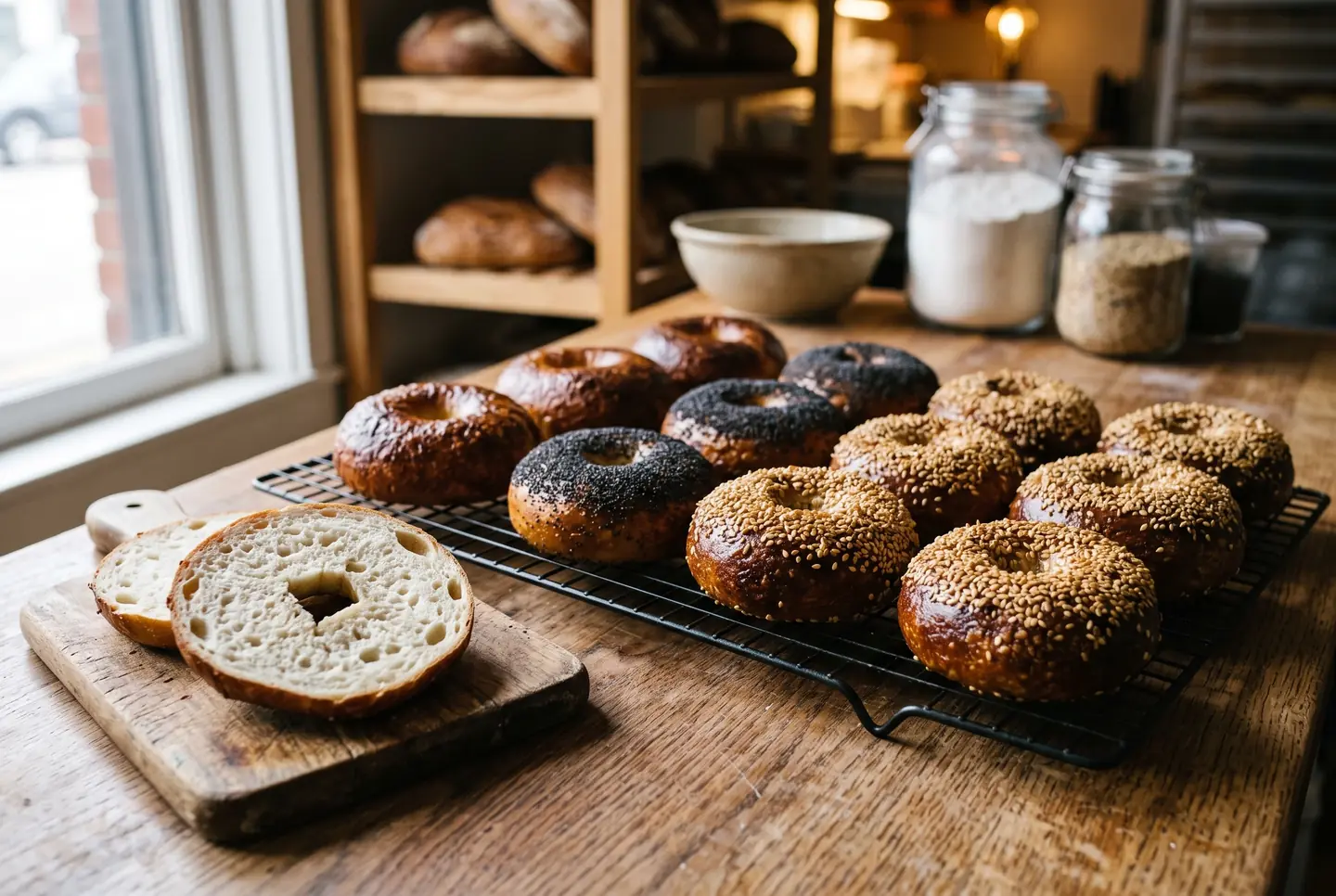 Guide
Guide
Bagel Recipe: New York Style, Step by Step
A weight-based New York bagel recipe, step by step: the firm 58% dough, an overnight cold retard, how long to boil, and the oven heat that sets a glossy crust.
6 min read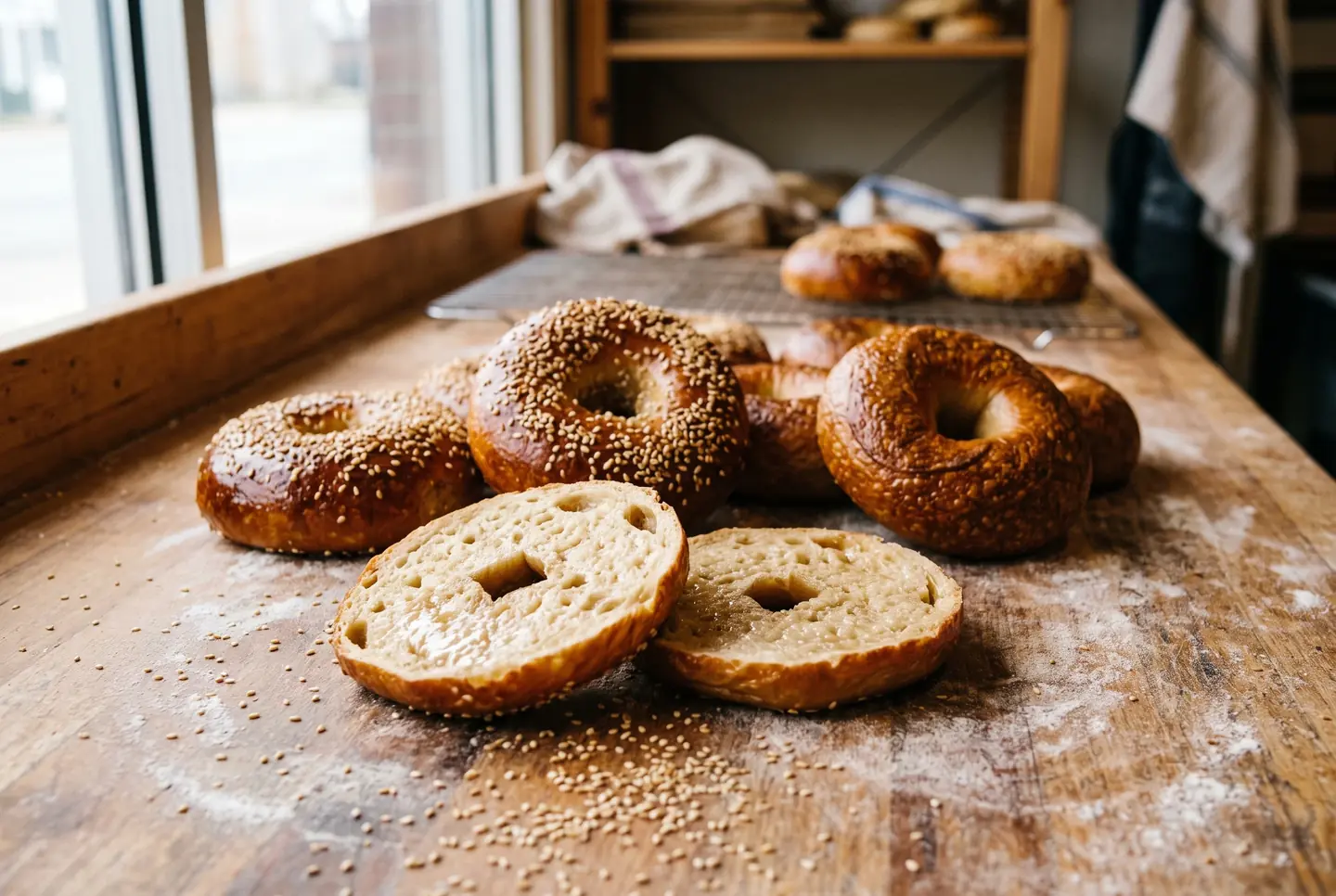 Complete guide
Bagels: The Complete Guide
Make a real bagel at home: the firm 58% dough, why bagels are boiled before baking, New York vs Montreal, sourdough and gluten free, and how to fix flat ones.
18 min read