Guide
How to Make Sourdough Less Sour (and More, on Purpose)
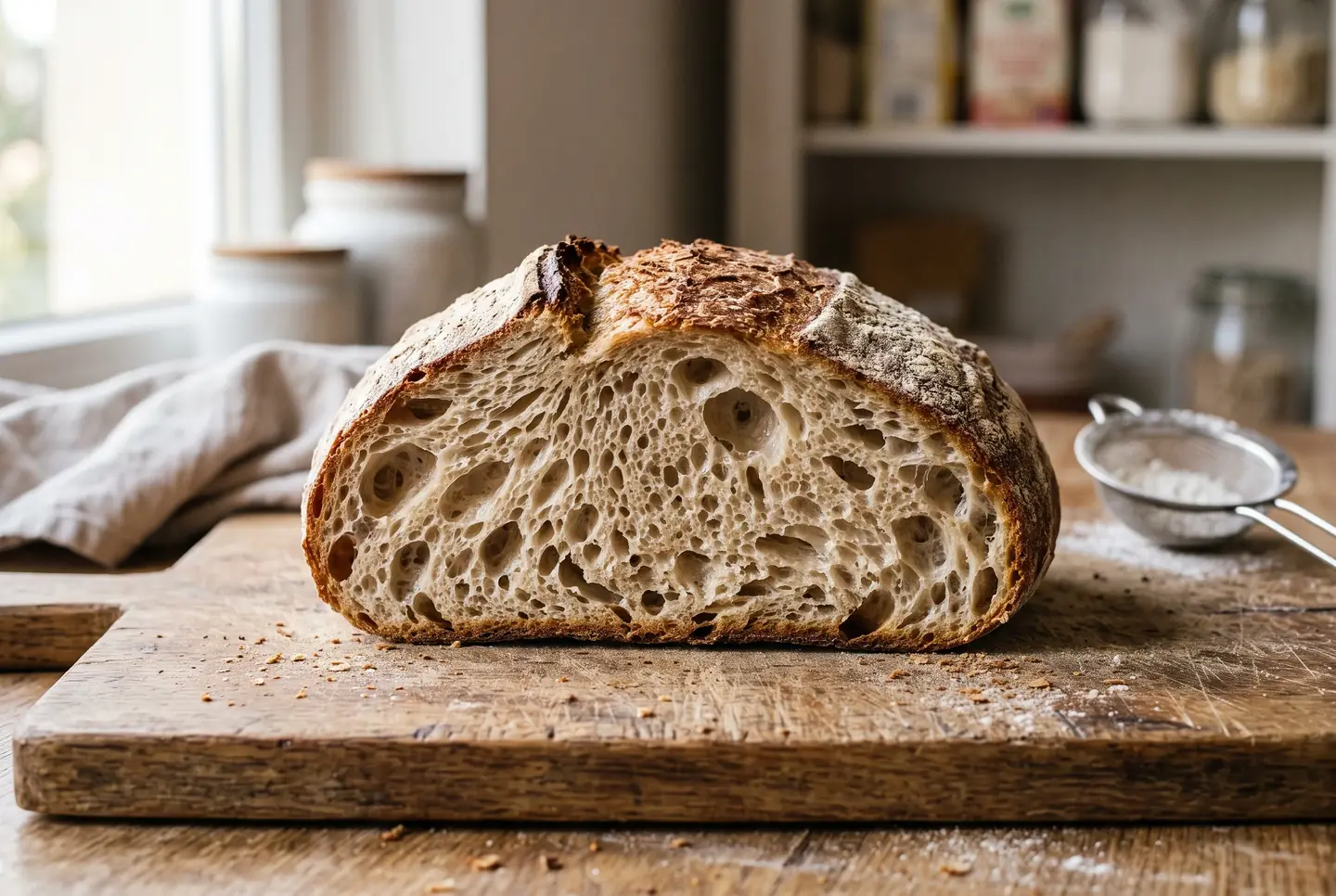
To make sourdough less sour, feed the starter more often, use it at peak instead of after it collapses, keep the fermentation warm rather than cold, and lean on white flour over wholegrain. Each of those does the same thing: it stops acid from piling up. To go the other way and make a loaf sharper, you reverse every lever.
The mistake nearly everyone makes first is chasing sourness by neglecting the jar. That does build acid, but it also builds a tired culture that struggles to raise the loaf, so you get a dense, sharp brick instead of a tangy, open one. Sourness comes from the fermentation schedule, not from an abused starter. This is one part of the complete guide to sourdough starters; here we look only at steering the tang.
Sourness is two acids, not one
A sourdough culture makes two acids, and they taste different.
- Lactic acid is the rounder, yoghurt-like, milky sourness. It is produced more readily in warmer, wetter, frequently fed conditions.
- Acetic acid is the sharp, vinegary bite. It is favoured by cooler, stiffer, less frequently fed conditions, and by wholegrain and rye.
When people say a loaf is "too sour" they almost always mean too much acetic bite. So the whole game of making bread milder is nudging the culture away from the acetic side and toward the lactic one, or simply giving it less time to accumulate either.
| You want | Push these levers | Which acid it favours |
|---|---|---|
| Milder, rounder | Warm ferment, higher hydration, feed more often, use at peak | Lactic, and less total acid |
| Sharper, more bite | Cooler ferment, stiffer starter, feed less often, add rye or wholegrain | Acetic |
| Simply less sour overall | Shorter bulk and proof, use the starter young, whiter flour | Less of both |
The levers that make a loaf milder
Each of these works on its own. Change one at a time so you can taste the effect, rather than pulling all of them and losing track of what did what.
Use the starter at peak, not after. A starter used the moment its dome goes flat carries the least acid it will ever have in that cycle. Wait until it has sunk and gone soupy and you are folding hours of extra acid straight into the dough. Reading that moment is a skill of its own, covered in how to tell your starter is active.
Feed more often, at a bigger ratio. A well-fed, frequently refreshed starter rarely gets hungry enough to turn sharp. Moving from a once-a-day 1:1:1 to a twice-a-day 1:2:2 or 1:5:5 keeps it mild. This is the same dilution logic covered in how to feed a starter.
Keep the ferment warm. Warmth speeds the lactic side and shortens the whole timeline, so less acid accumulates before the loaf is ready. King Arthur's bakers treat temperature as a scheduling dial, holding a starter warmer to get it active fast and cooler to slow it down (King Arthur Baking). A warm, quick ferment reads mild; a long, cold one reads sharp.
Ferment for less time. The longer the dough sits, the more acid the culture makes. A shorter bulk and a shorter final proof both cut sourness directly. If your schedule allows, bake the loaf a touch younger than you think.
Reach for whiter flour. Wholegrain and rye ferment faster and push the acetic, sharp side. A dough that is mostly white bread flour, with wholegrain as a minority, lands milder. Which flour does what to a young culture is covered in which flour to use.
The cold retard myth, straightened out
The most tangled piece of advice online is about the fridge. Here is the honest version.
A long, cold retard in the fridge, common for that blistered, open crumb, tends to build more acetic sharpness, not less, because the cold favours the acetic side even as it slows everything down. So a baker who retards overnight for looks and then complains the loaf is too sour is fighting their own method.
If you love the retard for its crust and crumb but want it milder, you have two clean options:
- Shorten the retard. A shorter cold proof still buys you the schedule flexibility and the crust, with less time to accumulate acid.
- Retard the shaped loaf, not the bulk. Doing the warm bulk first and only retarding the final shaped dough gives you a good balance: most of the rise happens warm and mild, and the fridge is only holding it, not fermenting it for hours.
The Perfect Loaf's framing is the one to keep: manage the fermentation deliberately, because the flavour is a result of the schedule you chose, not an accident that happens to the dough (The Perfect Loaf).
Why neglect is the wrong shortcut
It is worth stating plainly, because it is the trap. Leaving a starter unfed for days does produce a very sour jar. It also produces a weak one. Acid, past a point, attacks the gluten the loaf needs to rise, so the sour starter you built by neglect gives you a flat, gummy loaf that happens to taste sharp.
If what you want is genuine tang and a good rise, you get there by fermenting a healthy, well-fed culture for longer and cooler, on purpose, not by starving it. A strong jar taken slightly past peak, or a dough given a longer cool bulk, is sharp and still lifts. A neglected jar is sharp and dead.
| Approach | Sourness | Rise | Verdict |
|---|---|---|---|
| Healthy jar, used at peak, warm quick ferment | Mild | Strong | Best for a soft, open, gentle loaf |
| Healthy jar, slightly past peak, long cool bulk | Sharp | Strong | Best for a tangy loaf that still rises |
| Neglected, unfed, hungry jar | Very sharp | Weak | The flavour you did not really want |
A quick recipe-side checklist for a milder loaf
If you want to dial sourness down without rethinking your whole method, work through this in order and stop when the loaf tastes right:
- Use the starter right at peak.
- Feed it twice a day for two days before you bake.
- Move the bulk ferment somewhere a little warmer.
- Cut the final proof, or the cold retard, shorter.
- Shift the flour blend whiter.
Change one step per bake. Sourness is a slow dial, not a switch, and the point of going one at a time is that you end up knowing your own bread instead of copying someone else's.
Frequently asked questions
Why is my sourdough so sour? Usually one of three things: a starter used well past peak, a long cold retard, or a jar that had gone hungry before you baked. Warm, well-fed and used-at-peak is the mild combination; cold, neglected and overproofed is the sharp one.
Does a longer ferment make bread more or less sour? More sour. The longer the culture works, the more acid it produces. Shortening the bulk and the proof is one of the most direct ways to cut tang, as long as the dough has still risen enough.
Will feeding my starter more often make my bread less sour? Yes. A frequently fed starter rarely gets hungry enough to turn sharp, and using it at peak folds the least acid into your dough. Once or twice a day at room temperature keeps it mild.
Does cold retarding make sourdough more sour? It tends to. Cold favours the sharp, acetic side of the culture, so a long overnight retard usually reads more sour, not less. If you retard for the crust and crumb but want a milder taste, retard the shaped loaf briefly rather than fermenting cold for many hours.
Can I make my starter itself less sour? Yes, by feeding it more often, at a larger ratio, and keeping it warm and used young. A jar that smells mildly of yoghurt and green apple at peak will give milder bread than one that smells sharp and vinegary from sitting hungry.
Is sour sourdough bad or unsafe? No. Sourness is a flavour, not a safety signal, and a sharp loaf is perfectly good to eat. The one thing to take seriously on a starter is visible mould or off colours, which is a separate question from tang and is covered in the main guide.
Sourness, in the end, is just the fermentation schedule showing up on your tongue. Once you can read your starter at peak and feed it on a rhythm, steering the tang up or down becomes a choice you make, not a surprise the loaf hands you.
Where I checked
Keep reading
 Guide
Guide
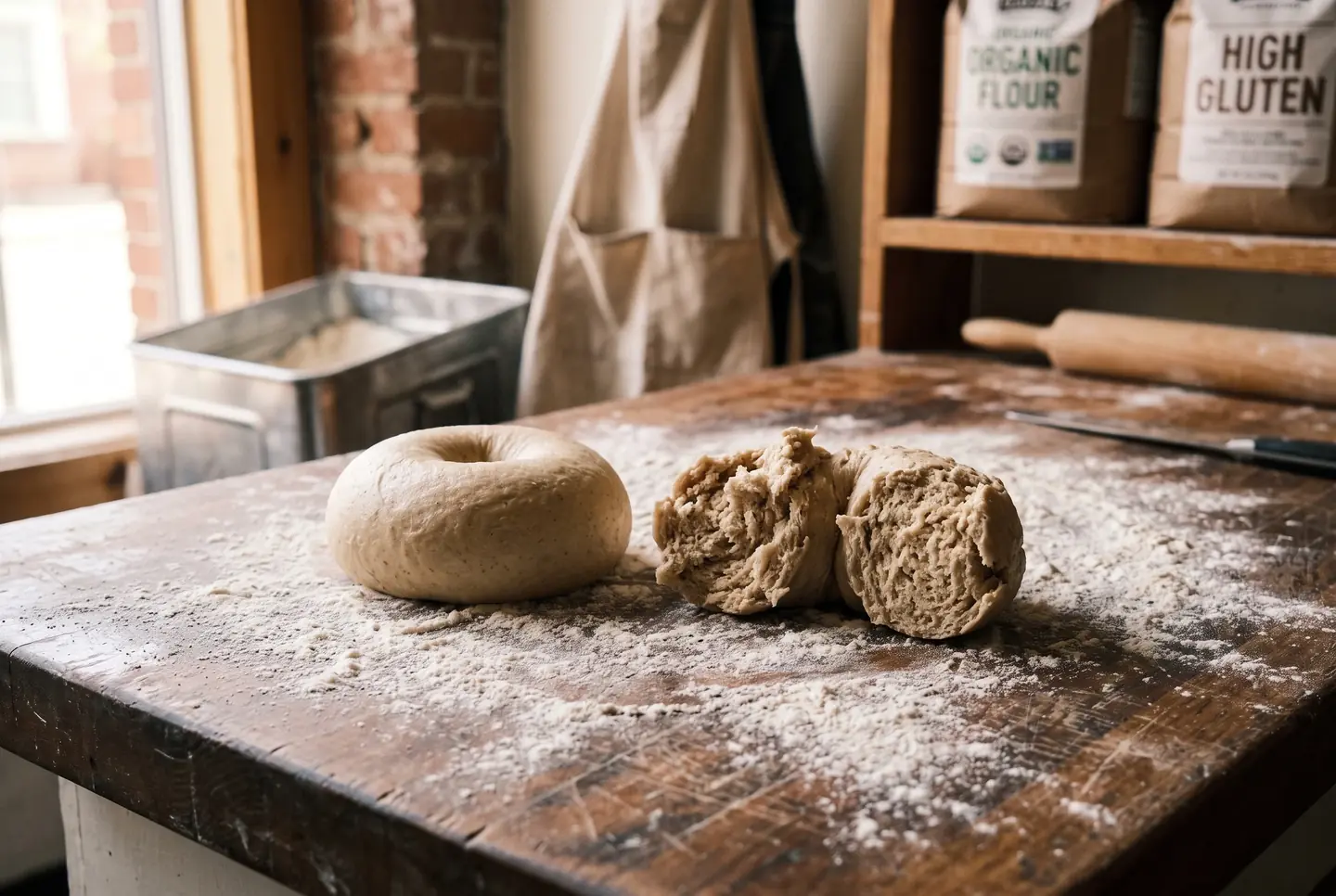
Bagel Dough: Why It Is So Firm, and How to Knead It
Bagel dough feels stiff and dry on purpose. Here is why it runs at 50 to 60% water and high protein flour, how to knead it, and the windowpane to aim for.
6 min read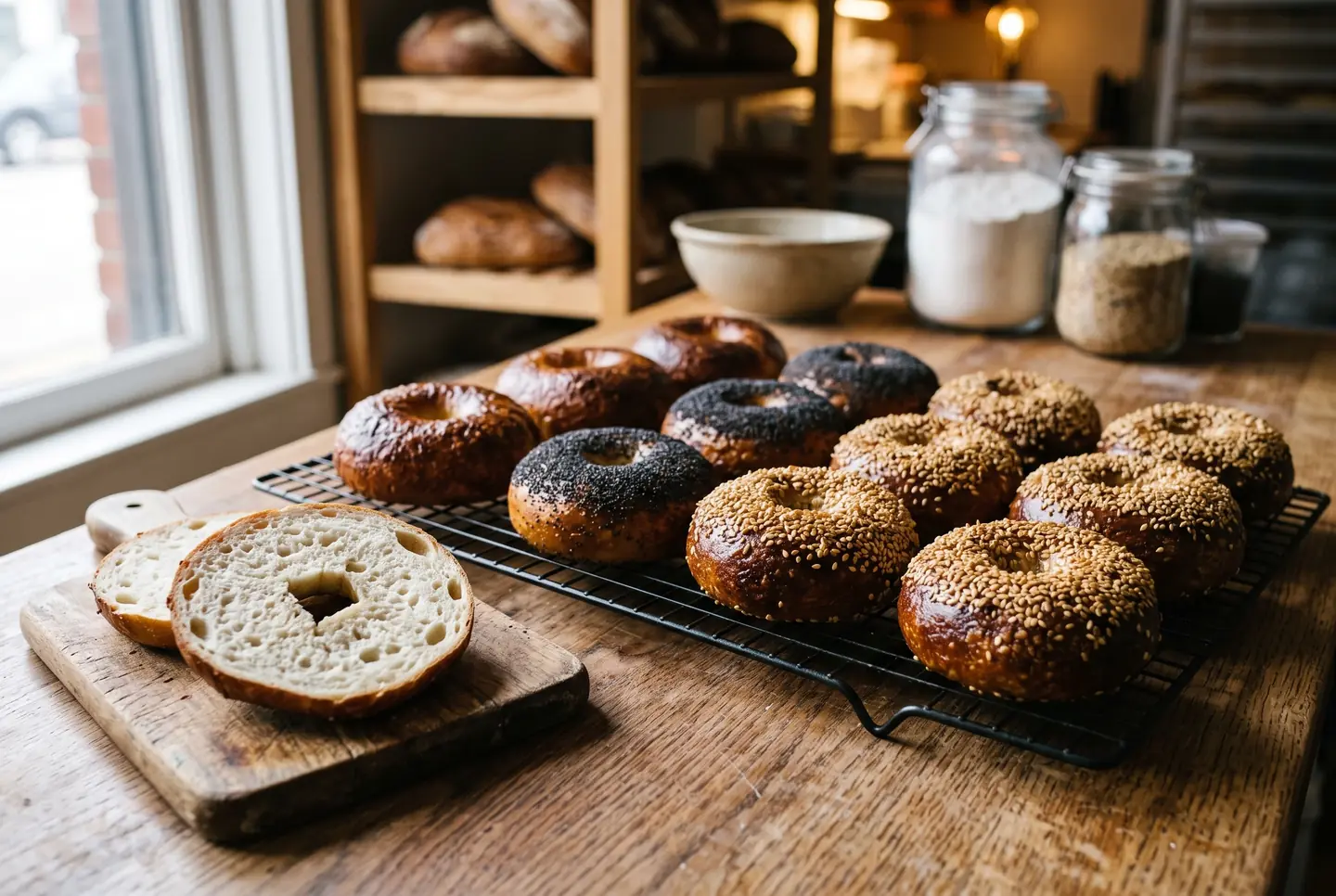 Guide
Guide
Bagel Recipe: New York Style, Step by Step
A weight-based New York bagel recipe, step by step: the firm 58% dough, an overnight cold retard, how long to boil, and the oven heat that sets a glossy crust.
6 min read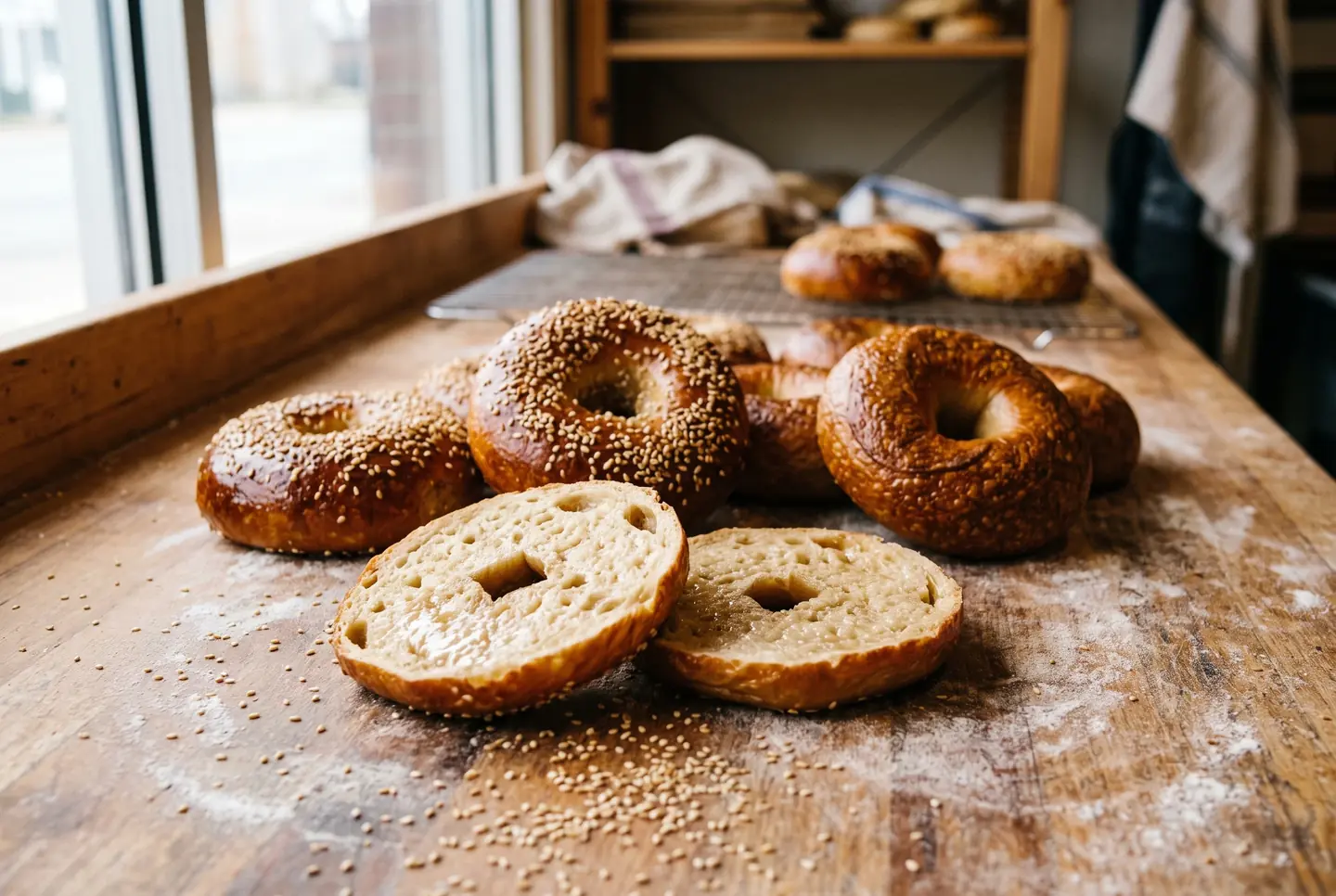 Complete guide
Bagels: The Complete Guide
Make a real bagel at home: the firm 58% dough, why bagels are boiled before baking, New York vs Montreal, sourdough and gluten free, and how to fix flat ones.
18 min read