Guide
Types of Roti: Chapati, Phulka, Tandoori and More
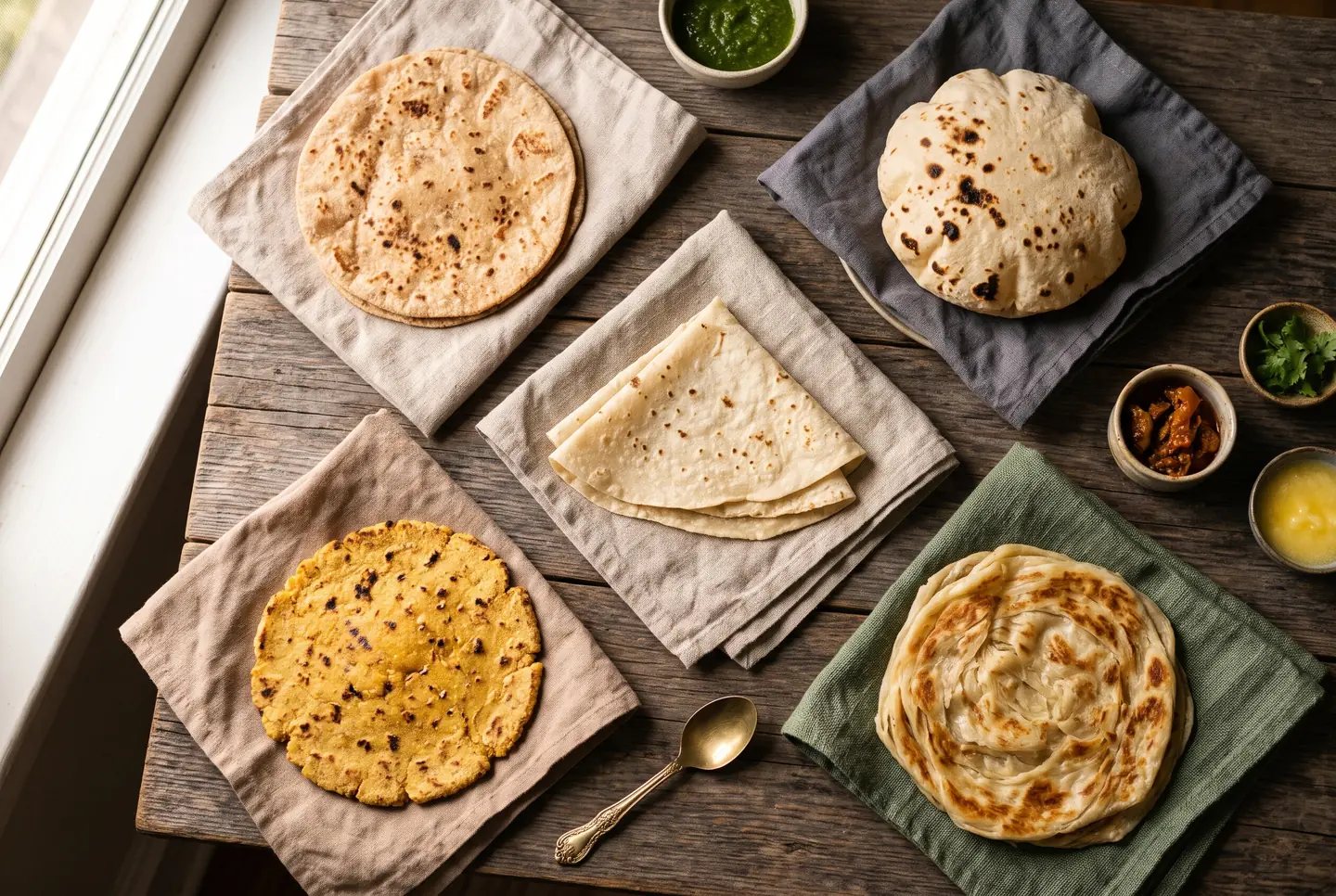
Roti is not one bread but a family of flatbreads, and the type you get depends on the flour, the region and how the dough meets the heat. The most common are chapati (whole wheat, cooked on a hot tawa), phulka (the chapati that puffs like a balloon as it cooks), tandoori roti (cooked in a clay oven), rumali (a thin handkerchief roti) and regional rotis made from maize, gram flour, sorghum, pearl millet, finger millet or rice.
The short version of how to tell them apart: look at the grain, then at the cooking method. Roti canai, a layered flatbread from Southeast Asia, is a different thing again. Below is a tour of each, with where it comes from and what makes it distinct. For the foundation of the whole bread, the complete roti guide is the place to start.
What makes something a roti, and how is it different from naan?
At its simplest, roti is an unleavened flatbread made from wholemeal atta, rolled out and cooked on a tawa until it is browned and blistered. SBS Food describes it as a North Indian staple, an everyday bread rather than a special one.
Naan sits on the other side of the line. It is made with maida (refined flour), leavened with yeast and baked in a tandoor, and SBS calls it restaurant and special occasion food. So the quick test is this: no yeast and wholemeal flour usually means roti, while yeast and refined flour usually means naan.
That definition is a starting point, not a rule. As you will see below, plenty of rotis use other grains, some use a mix of flours and one famous cousin is layered and made with ghee.
What are the main types of roti at a glance?
Here is a quick map before the details. Regions and flours follow DESIblitz's guide to different rotis and the other sources listed at the end.
| Type | Main flour | Where it comes from | What sets it apart |
|---|---|---|---|
| Chapati | Whole wheat atta | Punjab, Gujarat | Cooked on a hot tawa, also called phulka |
| Phulka | Whole wheat | Punjab (Punjabi and Saraiki name) | Puffs like a balloon as it cooks |
| Tandoori roti | Whole wheat | Pakistan, Mughal influence | Dark burnt spots, no oil or ghee while cooking |
| Rumali | Whole wheat and refined flour (3 to 1) | Mughal influence | Thin handkerchief roti |
| Makki di roti | Maize flour | Punjab, Haryana | Served with sarson ka saag |
| Missi roti | Wheat and gram flour | North India | Spiced dough |
| Jowar roti | Sorghum | Maharashtra, Karnataka | Naturally gluten free |
| Bajra roti | Pearl millet | Gujarat, Maharashtra | Millet based |
| Ragi roti | Finger millet | Southern India | Millet based |
| Akki roti | Rice flour with vegetables | Karnataka | A breakfast roti |
| Roti canai | Flour, ghee and water | Southeast Asia (roti prata in Singapore) | Folded, oiled, layered dough |
What is chapati, and is it the same as roti?
In most home kitchens the two words overlap. Chapati is made from whole wheat atta and cooked on a hot tawa, and DESIblitz places it in Punjab and Gujarat. Many cooks simply say roti for the same thing.
DESIblitz also notes that chapati is known as phulka, which is covered next. If you want to make one at home, the roti recipe walks through the dough, and how to shape roti covers the rolling.
What is a phulka?
Phulka is another name for chapati. DESIblitz says chapati is also known as phulka because the air trapped inside warms up and the bread looks like an inflated balloon. Wikipedia likewise gives phulka as the Punjabi and Saraiki name for whole-wheat roti.
So think of phulka as a name for the same whole wheat roti, noted for the way it puffs as it cooks. If you want the stovetop details, how to bake roti explains the heat side of things.
What is tandoori roti, and what flour is it made from?
Tandoori roti is popular in Pakistan and shows Mughal influence. DESIblitz describes a dough of whole wheat flour with oil or ghee and salt, cooked in a tandoor, the clay oven, until it has dark burnt spots. No oil or ghee is applied while it cooks. You can also make it on a stovetop or tawa if you do not have a tandoor.
It is best eaten hot and soft, since DESIblitz notes it gets tough if left to sit.
What is rumali roti?
Rumali roti is the thin one. DESIblitz says it is made with 3 parts whole wheat flour to 1 part refined flour and cooked on an inverted hot tawa, rolled out very thin and then folded into triangles.
DESIblitz translates rumali as handkerchief roti and says Mughal emperors introduced it because they needed something soft and thin to wipe their hands on.
What are makki di roti and missi roti?
These are two rotis where wheat is not the only star.
Makki di roti is made with maize flour. DESIblitz places it in Punjab and Haryana and pairs it with sarson ka saag, the mustard greens dish.
Missi roti is a north Indian roti made with wheat flour, gram flour (chickpea flour) and spices such as asafoetida, plus onions and, optionally, fenugreek leaves. It is a good choice when you want a roti that has more going on than plain whole wheat.
What are jowar, bajra, ragi and akki rotis?
These are the grain rotis of the regions, and they are a big part of the picture because roti is not only about wheat.
- Jowar roti is made with sorghum. DESIblitz places it in Maharashtra and Karnataka, where it is known as jwarichi bhakri, and notes it is naturally gluten free.
- Bajra roti is made with pearl millet and comes from Gujarat and Maharashtra.
- Ragi roti is made with finger millet and is associated with southern India.
- Akki roti is made with rice flour and vegetables, comes from Karnataka and is eaten at breakfast.
If you are cooking for someone who avoids gluten, these are the natural place to start, and the gluten free roti page covers the flours and the fixes for tearing in detail. As always with a gluten free diet, check that the flour is labeled as such.
What is roti canai, and why is it called roti prata in Singapore?
Roti canai is the odd one out, because it is layered rather than simple and flat. According to Wikipedia's entry on roti canai, it is an Indian-influenced flatbread of Southeast Asia. The unleavened dough is made from fat (usually ghee), flour and water, then repeatedly kneaded, flattened, oiled and folded to create layers. In Singapore it is called roti prata, from paratha or parotta.
This matters for search and for ordering: roti canai and roti prata are the same layered bread under two names, and a different tradition that shares the word roti.
How do you choose which type of roti to make?
A simple way to decide is to start from what you are serving and what flour you have.
- Everyday meals: chapati, also called phulka.
- A weekend spread or a dish with mustard greens: makki di roti with sarson ka saag.
- Something spiced: missi roti.
- A soft, thin bread: rumali.
- A gluten free table: jowar, bajra or akki, with a labeled flour.
- No tandoor, but you want the style: tandoori roti made on a tawa or the stovetop, as DESIblitz suggests. Eat it hot.
Start with plain chapati. It is the simplest place to begin before you branch out to the rest of this list.
Questions
What are the different types of roti?
The best known are chapati, phulka, tandoori roti, rumali roti, makki di roti and missi roti. Regional grain rotis include jowar (sorghum), bajra (pearl millet), ragi (finger millet) and akki (rice). Roti canai, or roti prata in Singapore, is a layered flatbread of Southeast Asia.
What is the difference between chapati and roti?
In everyday use they often mean the same whole wheat flatbread cooked on a tawa. DESIblitz also notes chapati is known as phulka.
What is the difference between phulka and roti?
Phulka is a name for whole wheat roti in Punjabi and Saraiki, and DESIblitz says chapati is called phulka because it puffs like a balloon as it cooks. It is largely a different name for the same bread, not a different dough.
Which types of roti are gluten free?
Jowar (sorghum) roti is naturally gluten free, and makki (maize) and other millet or rice based rotis do not rely on wheat. Always check that the flour is labeled gluten free, since cross contamination is possible. Wheat based types such as chapati, phulka, rumali and missi are not gluten free.
Is tandoori roti the same as naan?
No. Tandoori roti is made from whole wheat dough and nothing is applied while it cooks, while naan is made with refined flour, leavened with yeast and baked in a tandoor. Both can use a tandoor, but the dough is different.
What is roti canai?
Roti canai is a layered flatbread from Southeast Asia, made from fat (usually ghee), flour and water, folded into layers, and called roti prata in Singapore.
Pick one type, make it a few times, and then wander to the next. A table with a stack of phulkas and one regional roti beside it is a good way to taste how much range this one word covers.
Where I checked
Keep reading
 Guide
Bagel Dough: Why It Is So Firm, and How to Knead It
Bagel dough feels stiff and dry on purpose. Here is why it runs at 50 to 60% water and high protein flour, how to knead it, and the windowpane to aim for.
6 min read Guide
Bagel Recipe: New York Style, Step by Step
A weight-based New York bagel recipe, step by step: the firm 58% dough, an overnight cold retard, how long to boil, and the oven heat that sets a glossy crust.
6 min read Complete guide
Bagels: The Complete Guide
Make a real bagel at home: the firm 58% dough, why bagels are boiled before baking, New York vs Montreal, sourdough and gluten free, and how to fix flat ones.
18 min read