Guide
How to Store Focaccia: Keep It Fresh, Freeze, Reheat Crisp
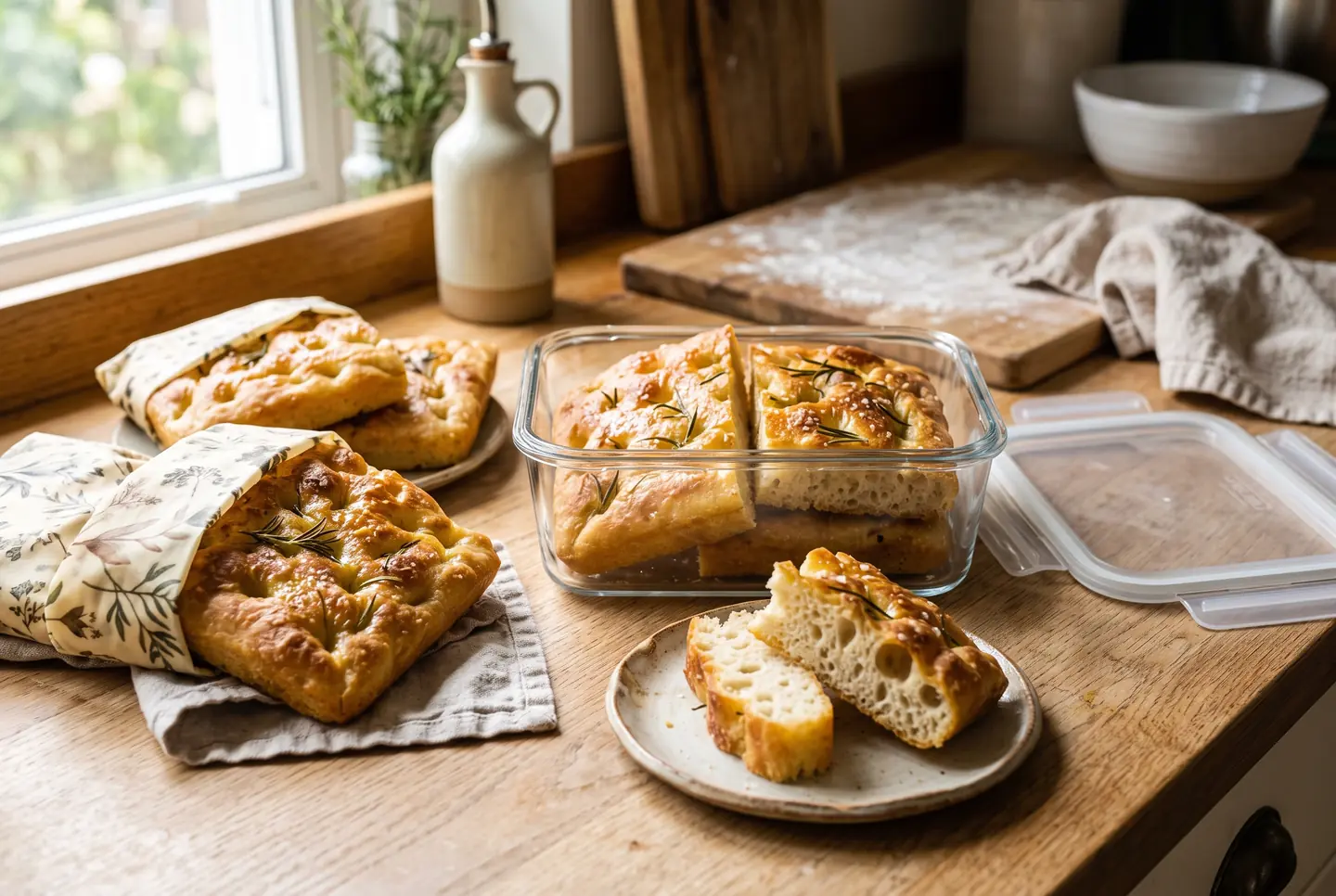
Focaccia is best the day it is baked, but store it right and it holds up better than most homemade breads because of all that oil. For a day or two, keep it at room temperature, wrapped or in a bag, and not in the fridge, which stales bread faster. For longer than that, freeze it: it freezes very well. And when you reheat, use a hot oven, never the microwave, because the oven brings the crisp crust back and the microwave turns it soft and leathery.
That is the whole answer, and the one part people get wrong is the fridge. This page is the storage step of the complete focaccia guide, and the short version is: room temperature for now, freezer for later, oven to revive. If your focaccia came out gummy in the first place, storage will not save it, so check why focaccia goes wrong first: it should be baked through, to 88 to 99 C inside (ThermoWorks), before it ever cools.
Room temperature: the first two days
Leftover focaccia keeps at room temperature for a day or two, wrapped or in an airtight bag or container (King Arthur). The oil worked into the crumb slows staling, which is why focaccia stays edible longer than a lean loaf of the same age. The barese with potato in the dough keeps best of all, because the cooked potato holds moisture and pushes the stale-by point out further.
The one thing not to do is put it in the fridge. Refrigerator temperature is the fastest zone for bread to go stale, because it speeds up the process where the starch firms and dries. Cold focaccia comes out drier and harder the next day than the same piece left on the counter. The only exception is topping: a focaccia loaded with fresh cheese, cured meat or anything perishable does belong in the fridge for food safety, and you accept the slightly faster staling as the trade.
| Where you keep it | How long | Notes |
|---|---|---|
| Room temperature, wrapped | 1 to 2 days | Best texture; oil slows staling |
| Fridge | Avoid for plain focaccia | Stales faster; use only for perishable toppings |
| Freezer, well wrapped | About 1 month, up to 3 | Best for anything past two days |
The freezer is the real answer past two days
Focaccia freezes so well that the freezer, not the fridge, is where extra focaccia should go. Let it cool completely first, because wrapping it warm traps steam that turns to ice and then to sogginess. Then wrap it tightly, in plastic and again in foil or a freezer bag, to keep air off the surface. It holds its quality for about a month and stays safe well beyond that, up to around three months.
The trick that makes frozen focaccia genuinely useful is to slice it before it goes in. Cut it into portions or sandwich-sized pieces, freeze them in a single layer, then bag them, and you can pull out one piece at a time and reheat it straight from frozen without thawing the whole slab. A focaccia baked tall for a sandwich freezes and revives especially well this way.
Reheating: the oven brings the crust back
Reheating is where focaccia is won or lost, and the rule is simple: a hot oven, not a microwave. The microwave heats the water inside the crumb and steams the crust soft and chewy, the opposite of what you want. A moderately hot oven, on the other hand, drives moisture off the surface and re-crisps the top and base the way they were on baking day.
A reliable method:
- Heat the oven to about 190 C (375 F). A moderate oven reheats through without over-drying the crumb.
- Optionally sprinkle a few drops of water on the surface and wrap the piece loosely in foil, which warms the inside without drying it out.
- Heat for 7 to 10 minutes if it started at room temperature, or 10 to 12 minutes straight from frozen.
- Open the foil for the last few minutes so the top and base crisp again. This is the step that separates a revived focaccia from a merely warm one.
A quicker route for a single piece is a dry skillet over medium heat, cut-side down, which re-crisps the base in a couple of minutes. Either way, reheat only what you will eat now: focaccia does not like being warmed twice.
FAQ
How do I keep focaccia fresh? At room temperature, wrapped or bagged, for a day or two. Do not refrigerate plain focaccia, because the fridge stales bread faster. For anything longer, freeze it.
Can I store focaccia in the fridge? Avoid it for plain focaccia; the fridge is the fastest place for bread to go stale, so it comes out drier and harder. The exception is focaccia topped with perishable ingredients like cheese or cured meat, which needs the fridge for safety.
How do I freeze focaccia? Cool it completely, then wrap it tightly and freeze, ideally sliced into portions in a single layer so you can reheat one piece at a time. It keeps its quality for about a month and stays good up to roughly three months.
What is the best way to reheat focaccia? A hot oven, around 190 C (375 F), for 7 to 10 minutes from room temperature or 10 to 12 from frozen, with the foil opened for the last few minutes to re-crisp the crust. Never the microwave, which makes it soft and leathery.
Can I reheat focaccia from frozen? Yes, and it is one of the reasons to slice it before freezing. Put the frozen piece straight into a 190 C (375 F) oven for 10 to 12 minutes, opening any foil near the end so the crust crisps.
Why does my reheated focaccia go soft and rubbery? Almost certainly the microwave. It steams the crumb instead of drying the surface, so the crust goes leathery. Use the oven or a dry skillet and the crisp comes back.
How long does focaccia last? One to two days at room temperature at its best, and about a month frozen with good quality, up to three months safely. It is always best the day it is baked, so store what you cannot finish rather than leaving it out for days.
Store it on the counter, freeze the extra sliced, and reheat in a hot oven, and a batch of focaccia stretches across a week without ever tasting like leftovers. The oil that makes focaccia rich is the same thing that makes it keep.
Where I checked
Keep reading
 Guide
Guide
Bagel Dough: Why It Is So Firm, and How to Knead It
Bagel dough feels stiff and dry on purpose. Here is why it runs at 50 to 60% water and high protein flour, how to knead it, and the windowpane to aim for.
6 min read Guide
Guide
Bagel Recipe: New York Style, Step by Step
A weight-based New York bagel recipe, step by step: the firm 58% dough, an overnight cold retard, how long to boil, and the oven heat that sets a glossy crust.
6 min read Complete guide
Bagels: The Complete Guide
Make a real bagel at home: the firm 58% dough, why bagels are boiled before baking, New York vs Montreal, sourdough and gluten free, and how to fix flat ones.
18 min read