Guide
Focaccia Troubleshooting: Hard, Oily or Raw, and the Fix
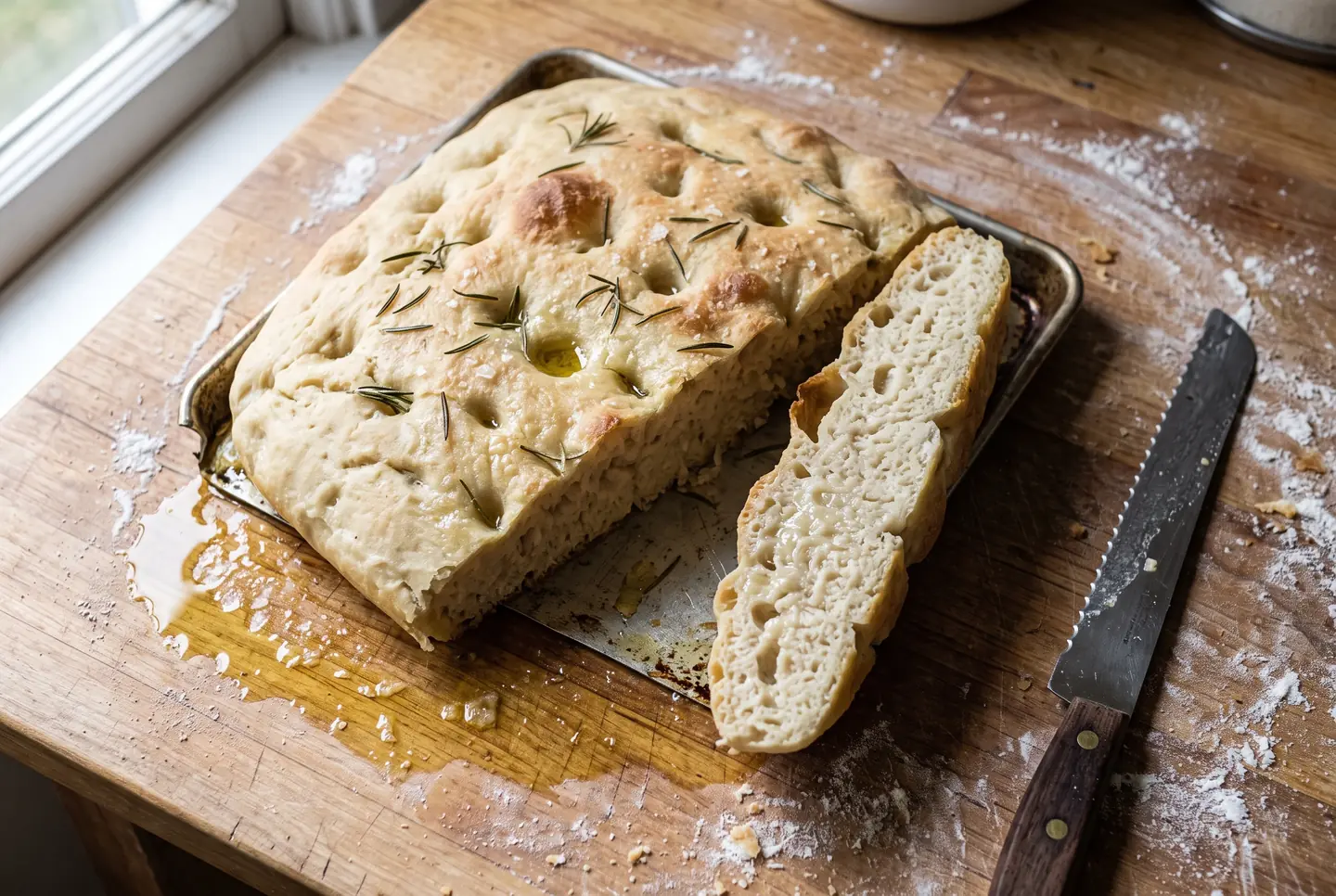
Almost every failed focaccia is one of three things: hard and dense, greasy and heavy, or raw and gummy in the middle. The useful part is that each one has a single main cause. Hard and dense is nearly always under-proofing or a dough that was too dry, so it never built an airy crumb. Greasy and heavy is not too much oil, it is oil that never got hot enough to fry. Raw and gummy is under-baking, often made worse by wet toppings steaming the surface soft before the inside sets.
Work backwards from the symptom and the fix is usually obvious. This page is the troubleshooting step of the complete focaccia guide: read your result against the table below, find the one cause that matches, and change that one thing next time. The counter-intuitive one, the one people get wrong most, is greasiness, so it gets its own section.
The one table that covers it
| Symptom | Likely cause | Fix |
|---|---|---|
| Hard, dense, tight crumb | Under-proofed, or dough too dry | Longer final proof; raise hydration to 70 percent or more |
| Chewy and tough | Dough overworked, too much gluten developed | Mix gently, use folds not kneading; let it relax |
| Greasy, heavy base | Oven or pan not hot enough to fry the oil | Preheat a steel; bake hotter and lower in the oven |
| Pale top, no colour | No salamoia brine, or oven too cool | Brush the water-oil-salt emulsion; more heat |
| Raw, gummy middle | Under-baked; wet toppings steaming it | Bake longer, to 88 to 99 C inside; drier toppings, cut-side up |
| Flat, no rise at all | Dead yeast, or dough went in cold | Fresh yeast; let a cold dough warm and puff first |
Everything below is that table, unpacked.
Hard and dense: the proof, not the recipe
A focaccia that bakes into something tight and bread-roll-like almost never has a recipe problem. It has a time problem. Focaccia dough should be wet, 70 percent hydration or more, and it should rise until it is visibly puffy and jiggly before it goes in the oven (King Arthur). If it still looks flat and feels dense when you dimple it, it is not ready, and no amount of oven heat will open a crumb that never proofed.
The other half is water. A dough on the dry side, closer to 60 percent, bakes structured and firm rather than airy. If your genovese is meant to be thin and crisp that is fine, but if you wanted the tall, open high-hydration pan focaccia, you simply need more water and more patience. There is a third, quieter cause: overworking. Knead a wet dough hard and you build too much tight gluten, and it comes out chewy and dense instead of light. Handle focaccia with folds, not kneading.
Greasy and heavy: it is the heat, not the oil
This is the one that sends people to cut the oil, which makes it worse. Greasiness is oil that sat in the pan and soaked into the dough because it never got hot enough to fry. Focaccia's crisp golden base is shallow-fried in that oil, and frying needs real heat: a genuinely hot oven and, ideally, a preheated steel or heavy tray low in the oven so the base browns the instant the pan lands on it (Baking Steel). Give the oil that heat and it crisps the bottom; deny it and the same oil just makes the crumb heavy.
So the fix for a greasy focaccia is counter-intuitive: keep the generous oil, and get the base hotter. Bake low, preheat a heavy surface, and use a metal pan rather than glass or ceramic, which insulate the base pale. The full logic of oil plus heat from below is in how to bake focaccia for a crisp base.
Raw or gummy: bake it to temperature
A focaccia that looks golden on top but is gummy in the middle is under-baked, full stop. The crumb is not done until the centre reaches 88 to 99 C (190 to 210 F) on an instant-read thermometer, and for a tall or wet one you want the upper end (ThermoWorks). Colour on the top is a poor guide on its own, because the surface browns from the oil and salamoia long before the inside sets. Trust a thermometer over the clock and over the tan.
Wet toppings make this worse by steaming the surface soft. Fresh tomato and other juicy toppings release liquid that keeps the top from crisping and hides how underdone the inside is, which is why the toppings guide puts them on cut-side up and sparingly. If your middle is consistently gummy, bake a few minutes longer, drop wet toppings, and check the internal temperature before you pull it.
Pale on top: the salamoia you skipped
If the focaccia bakes up dry and blond rather than golden and glossy, the usual missing piece is the salamoia, the brine of water, olive oil and salt brushed over the dough before baking (Italian Recipe Book). It is what gives real focaccia its seasoned, lacquered top; without it the surface bakes pale. An oven running too cool does the same thing, so brush the emulsion and bake hot.
FAQ
Why is my focaccia hard instead of soft and airy? Almost always too little proofing time, sometimes combined with a dough that was too dry. Focaccia dough should be 70 percent hydration or more and should rise until it looks puffy and jiggly before baking. A stiff, under-risen dough bakes dense.
Why does my focaccia turn out greasy? Because the oil never got hot enough to fry the base, not because there was too much oil. Keep the generous oil, but bake hotter and lower, ideally on a preheated steel or heavy tray, so the base crisps instead of soaking.
Why is the middle of my focaccia gummy or raw? It is under-baked. Bake until the centre reads 88 to 99 C (190 to 210 F), and aim for the top of that range on a tall or high-hydration focaccia. Wet toppings steam the surface and hide an underdone middle, so use them sparingly.
Why did my focaccia not rise at all? Either the yeast was dead or the dough went into the oven cold and flat. Check that your yeast is in date and active, and let a refrigerated dough come up to room temperature and puff before baking.
Can I fix a dense focaccia after baking? Not really; density is set during proofing. What you can rescue is a pale or slightly soft one: a few minutes back in a hot oven crisps the top and base. For next time, the fix is more proofing time and more water.
Why is my focaccia dense even though I followed the recipe? The two silent causes are under-proofing and overworking. If the dough was not visibly puffy before baking, it needed more time; if you kneaded a wet dough hard, you built too much gluten. Use folds, not kneading, and let it rise until jiggly.
Get these three failures sorted and focaccia becomes one of the most forgiving breads there is: a wet dough, a long rise, a hot oven and enough oil underneath. Once you can read the result and name the cause, you stop guessing and start fixing.
Where I checked
Keep reading
 Guide
Guide
Bagel Dough: Why It Is So Firm, and How to Knead It
Bagel dough feels stiff and dry on purpose. Here is why it runs at 50 to 60% water and high protein flour, how to knead it, and the windowpane to aim for.
6 min read Guide
Guide
Bagel Recipe: New York Style, Step by Step
A weight-based New York bagel recipe, step by step: the firm 58% dough, an overnight cold retard, how long to boil, and the oven heat that sets a glossy crust.
6 min read Complete guide
Bagels: The Complete Guide
Make a real bagel at home: the firm 58% dough, why bagels are boiled before baking, New York vs Montreal, sourdough and gluten free, and how to fix flat ones.
18 min read