Guide
Focaccia Toppings: What to Add and When to Add It
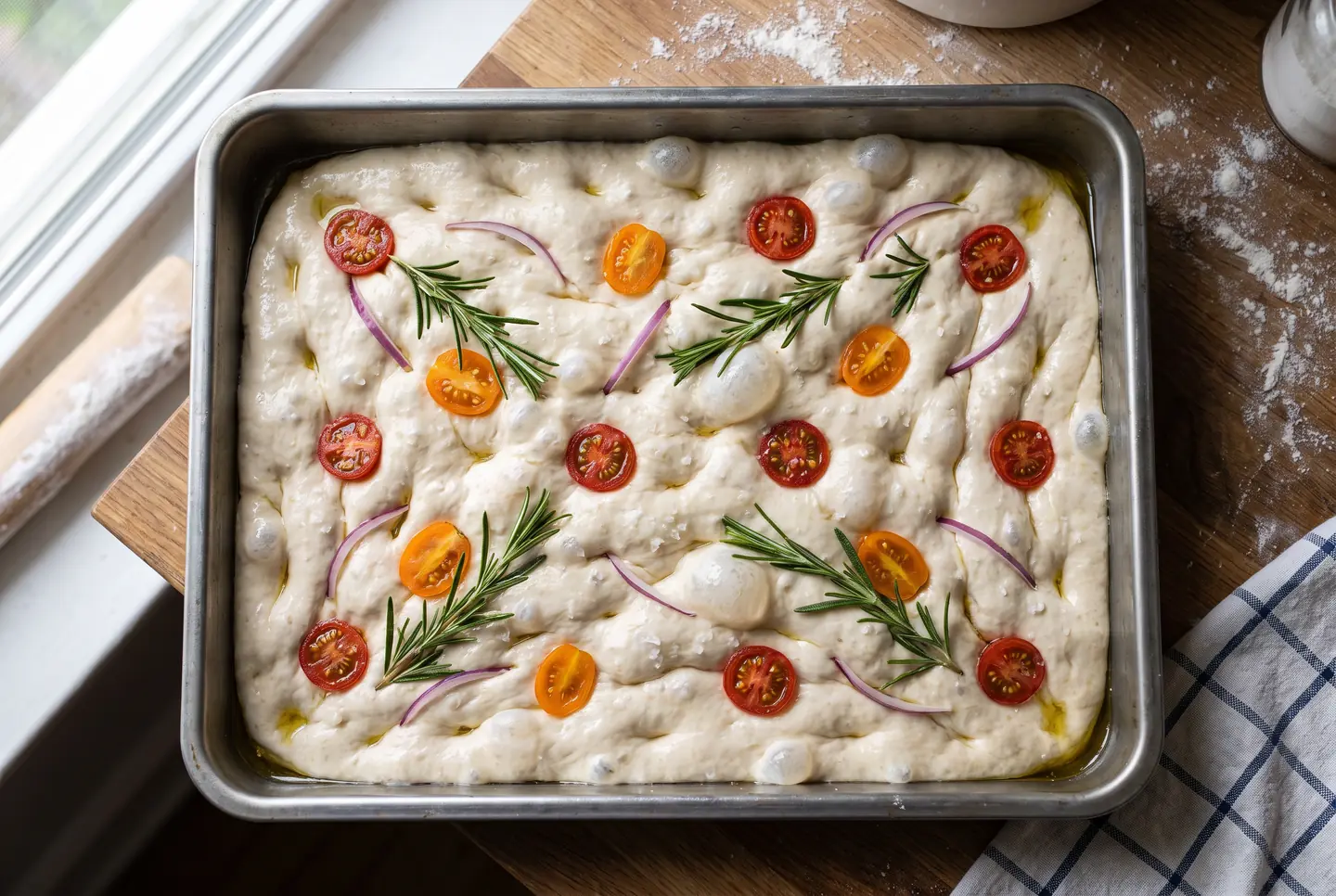
The one rule that keeps focaccia toppings from failing is about water and sugar. Wet toppings like fresh tomato release liquid that steams the crust soft, so they go on sparingly and cut-side up; sugary ones like onion and grape burn if left exposed to a hot oven, so they get pressed into the dough or added part-way through the bake. Sort your toppings by those two traits and you avoid the two classic failures, a soggy top and scorched bits.
Rosemary and flaky salt are the default focaccia finish, and they are foolproof because they are neither wet nor sugary. Everything past that needs a moment's thought about when it goes on. This page sorts the common toppings by timing; it works hand in hand with how to dimple focaccia, because most toppings are anchored in the wells, and it sits inside the complete focaccia guide.
The classics: rosemary and salt
Fresh rosemary and coarse flaky salt are all a good focaccia needs. Press small sprigs of rosemary into the dimples before baking so they anchor and do not slide off, and scatter the salt after the salamoia brine so it sits on top and stays crunchy rather than dissolving into the dough. A whisper of the salamoia over both ties them into the oiled surface.
This is the finish to master first, because it teaches the two moves every topping uses: tuck it into a well so it stays put, and season on top of the oil, not under it.
Wet toppings: tomato, and the water problem
Fresh tomato is the topping people most often get wrong. It carries a lot of water, and water is the enemy of a crisp top: pile on juicy tomato and it steams the surface soft as it bakes. The fixes are simple. Use halved cherry tomatoes rather than slices of a big beefsteak, press them cut-side up into the dimples so they roast rather than sit in a puddle, and use them sparingly, dotted around, not carpeting the surface.
| Topping | Trait | How to handle it |
|---|---|---|
| Rosemary, salt | Neutral | Press in or scatter before baking |
| Cherry tomato | Wet | Cut-side up, in the dimples, sparingly |
| Onion | Sugary | Press in, or add part-way through the bake |
| Grape | Sugary | Press in; watch for scorching |
| Olives | Neutral | Press whole into the dimples |
| Hard cheese | Browns fast | Add late so it melts without burning |
Roasted vegetables, which have already given up their water, are safer than raw wet ones and can go on before baking.
Sugary toppings: onion and grape
Onion and grape both bring sugar, and sugar burns before the bread is done. Thinly sliced onion left exposed on top of a hot focaccia will blacken at the edges; grapes, which make a wonderful sweet-savoury focaccia, will scorch the same way. Two ways around it: press them down into the dimples so the surrounding dough shields them, or add them part-way through the bake once the top has begun to set, so they have less time in the heat.
If you want deeply cooked onion without the risk, soften it in a pan first. Pre-cooked onion is sweet and jammy and will not burn the way raw slices do.
Building a topped focaccia
The order that works: dimple the dough, pour the salamoia so it fills the wells, then add the toppings that bake for the full time (rosemary, olives, pressed-in tomato), holding back anything sugary or quick-browning for later or for a protected spot in the dimples. Finish with flaky salt after the oil. If a topping starts to colour too fast in the oven, a loose sheet of foil over the top for the last stretch protects it while the base finishes.
Keep it restrained. A focaccia is a bread first, so the toppings should decorate the oiled, dimpled surface, not bury it. A few sprigs, a scatter of tomatoes and good salt beat a crowded top every time.
Frequently asked questions
What are the best toppings for focaccia? Rosemary and flaky salt are the classic, foolproof finish. Beyond that, cherry tomato, olives, thin onion and grape all work, as long as you handle wet and sugary ones with the right timing.
When do I put toppings on focaccia? Most go on after dimpling and the salamoia, before baking, pressed into the wells. Sugary toppings like raw onion or grape are the exception: press them in for protection, or add them part-way through the bake so they do not burn.
Why do my focaccia toppings burn? They are probably sugary, like onion or grape, left exposed on top. Press them into the dimples so the dough shields them, add them later in the bake, or pre-cook onion so it caramelises without scorching.
Why does my tomato focaccia go soggy? Fresh tomato releases water that steams the crust soft. Use halved cherry tomatoes cut-side up in the dimples, use them sparingly, and avoid carpeting the surface with juicy slices.
Can you put cheese on focaccia? Yes, but hard cheese browns fast, so add it late in the bake so it melts and colours without burning. It pairs well with the salt and oil already on the bread.
Where I checked
Keep reading
 Guide
Guide
Bagel Dough: Why It Is So Firm, and How to Knead It
Bagel dough feels stiff and dry on purpose. Here is why it runs at 50 to 60% water and high protein flour, how to knead it, and the windowpane to aim for.
6 min read Guide
Guide
Bagel Recipe: New York Style, Step by Step
A weight-based New York bagel recipe, step by step: the firm 58% dough, an overnight cold retard, how long to boil, and the oven heat that sets a glossy crust.
6 min read Complete guide
Bagels: The Complete Guide
Make a real bagel at home: the firm 58% dough, why bagels are boiled before baking, New York vs Montreal, sourdough and gluten free, and how to fix flat ones.
18 min read