Guide
How to Store Bao Buns: Fridge, Freezer and Reheating
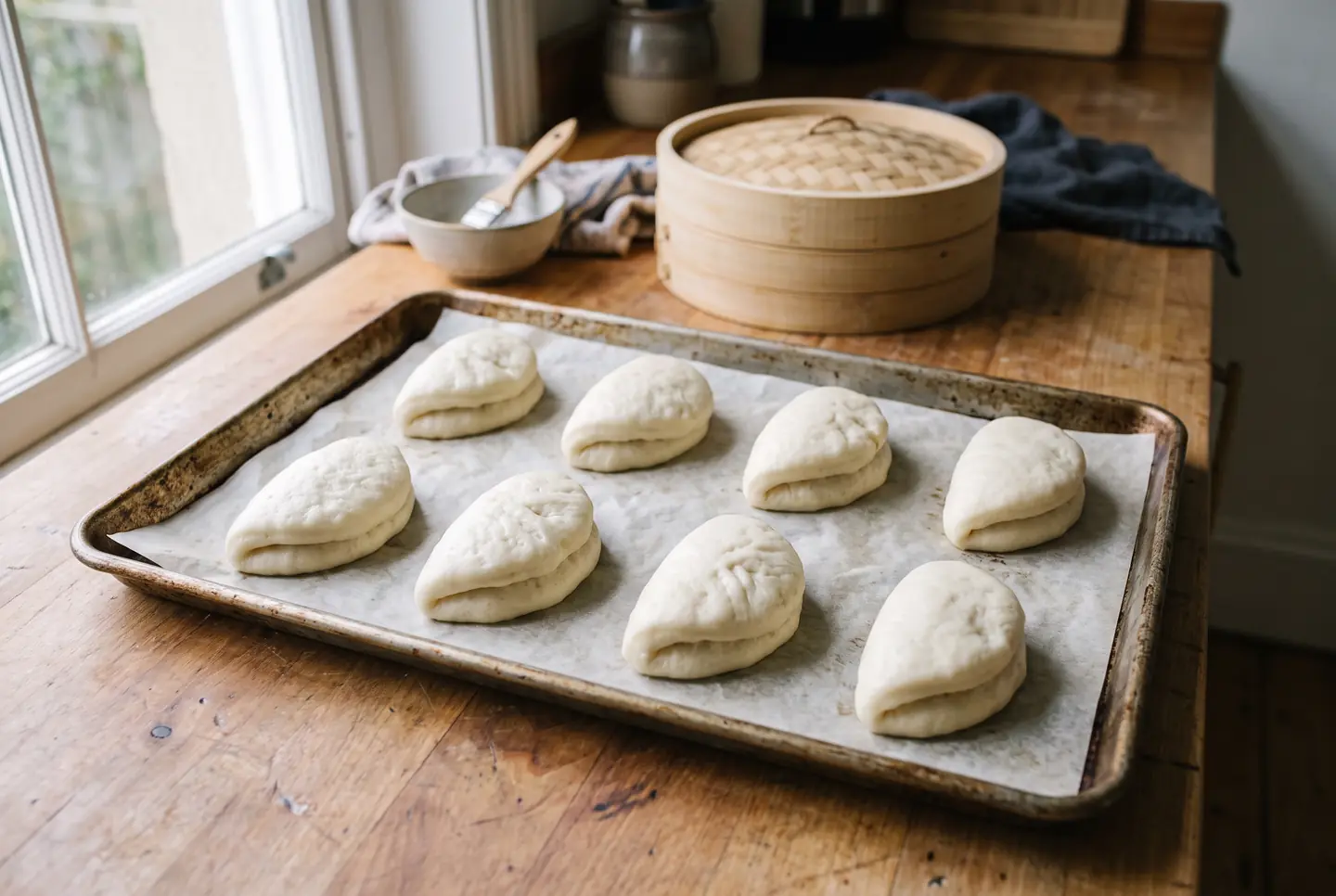
The short answer surprises people: for anything beyond a day, do not refrigerate your bao, freeze them. Steamed buns keep well in the freezer for up to three months (Pantry & Larder), and they come back soft and fresh when you steam them again. The fridge, the place most of us reach for out of habit, is the one spot where a bao goes stale fastest.
That last part is the reason this guide exists. A plain steamed bun is a delicate, high-moisture bread, and it stales the way all breads stale, only faster in the cold. So the whole storage plan comes down to a simple choice: eat it today, or freeze it for later, and mostly skip the middle. This is the storage branch of the complete bao buns guide, which has the full dough, shaping and steaming method.
The three storage windows
You have three realistic options, and they are not equal.
| Where | How long | What happens |
|---|---|---|
| Room temperature | Same day, a few hours | Stays soft if kept covered and out of a draught |
| Refrigerator | 3 to 4 days | Safe, but stales noticeably more each day |
| Freezer | Up to 3 months | Staling stops; reheats close to fresh |
At room temperature a bun eaten the same day needs almost nothing: keep it covered so the surface does not dry, and out of the fridge. In the refrigerator a cooked bun lasts three to four days in an airtight container (Pantry & Larder), but it gets drier and firmer with each passing day, so treat that window as a last resort, not a plan.
Why the fridge is the worst place for a bao
This is the part most storage guides skip. Bread does not go stale simply because it dries out. It stales because the starch inside recrystallizes, a process called retrogradation, and that process runs fastest at refrigerator temperatures, not at room temperature and not in the freezer. A soft steamed bun, which is almost all tender starch and water, feels the effect quickly: two days in the fridge and it is chewy and tight in a way a day on the counter never manages.
The freezer sidesteps the whole problem. Below freezing the starch cannot recrystallize, so the staling clock essentially stops. That is why the frozen bags of bao in the shop are so good, and why a bun you steam, cool and freeze yourself comes back pillowy rather than stale. If you are not going to eat your extra buns within a day, the freezer beats the fridge every time.
Freeze cooked, not raw
When you freeze bao, freeze them fully steamed and cooled, not as raw shaped dough. Cooked buns reheat on a predictable clock and come back with the texture they had fresh. Raw buns can be frozen too, but the steaming time afterward becomes far less predictable (Pantry & Larder), and an under or over proofed frozen raw bun is hard to rescue. Steam first, freeze second, is the reliable order.
The method takes two steps so the buns do not weld into a block:
- Steam the buns fully and let them cool to room temperature. A warm bun sealed in a bag will sweat and turn soggy.
- Flash freeze them first: lay them apart on a parchment lined tray for about an hour until firm, then transfer to a sealed bag or container (Pantry & Larder). If you skip this and bag them straight away, slip a square of parchment between any buns that touch so they do not fuse.
One more thing for filled buns: take out any loose, wet filling and store it separately. A juicy char siu or a saucy mushroom filling will waterlog the bun from the inside as it freezes and thaws, so the bun and the wet filling keep better apart, then meet again at reheating.
How to reheat, and the numbers that matter
Reheating is where the freezer plan pays off, and the golden rule is the one people find hardest to believe: do not thaw first. Frozen bao go straight into the steamer, no defrosting, because thawing on the counter just makes them soggy (Pantry & Larder).
| From | Method | Time |
|---|---|---|
| Refrigerator | Steam | 2 to 3 minutes |
| Freezer | Steam, straight from frozen | 7 to 8 minutes |
| Refrigerator | Microwave, wrapped in a damp towel | 20 to 30 seconds |
Steaming is the best route for both fridge and frozen buns, because wet heat is exactly what gave them their texture in the first place. A frozen bun needs roughly seven to eight minutes over the steam to heat all the way through; a fridge bun only two to three (Pantry & Larder). Line the basket with parchment, the same as when you first steamed them, described in the steaming without collapsing guide.
The microwave works in a pinch, but only with a trick. A bun microwaved dry turns rubbery and tough in seconds. Wrap it in a damp paper towel first, which turns the microwave into a tiny steamer, and give a refrigerated bun 20 to 30 seconds (Pantry & Larder). It will never be quite as good as a real steam, but it is fast, and the damp towel is the difference between soft and inedible.
Common storage mistakes
A few habits quietly ruin good buns. Bagging them while still warm traps steam and makes them soggy. Refrigerating them for a week because they are still safe, when they went stale on day two. Thawing frozen buns before reheating, which drops them into a wet, dense state. And microwaving a plain gua bao dry, which is the fastest way to turn a cloud into a hockey puck. If a reheated bun comes out gummy or tight, that is usually a reheating problem, not a lost cause: the full symptom list is in the bao troubleshooting guide.
Frequently asked questions
Can you freeze bao buns? Yes, and it is the best way to keep them. Steam the buns fully, let them cool, flash freeze them on a tray for about an hour, then seal them in a bag for up to three months. Freezing stops the staling that the fridge speeds up, so they reheat close to fresh.
How long do bao buns last in the fridge? About three to four days in an airtight container. They stay safe but get drier and firmer each day, because starch stales fastest at refrigerator temperatures. If you will not eat them within a day or two, freeze them instead.
Do you need to defrost frozen bao buns before reheating? No. Put them straight into the steamer from frozen and add time, roughly seven to eight minutes over steady steam. Thawing first only makes the buns soggy and does not help them heat any more evenly.
What is the best way to reheat bao buns? Steaming. It is the same wet heat that gave the buns their soft texture, so it brings them back closest to fresh. Steam refrigerated buns for two to three minutes and frozen buns for seven to eight, on a parchment lined basket.
Can you reheat bao buns in the microwave? Yes, but wrap the bun in a damp paper towel first so it steams rather than dries out, and give a refrigerated bun about 20 to 30 seconds. A bun microwaved dry turns rubbery quickly, so the damp towel is not optional.
Should you store the filling inside the bun? For open gua bao you fill at the table, there is no filling to store. For saucy or juicy fillings, take the loose filling out and store it separately, so it does not waterlog the bun during freezing and reheating. Reunite them once the bun is hot.
Steam a big batch, freeze what you will not finish, and you are always ten minutes from a warm bun. The freezer is your friend here; the fridge, less so.
Where I checked
Keep reading
 Guide
Guide
Bagel Dough: Why It Is So Firm, and How to Knead It
Bagel dough feels stiff and dry on purpose. Here is why it runs at 50 to 60% water and high protein flour, how to knead it, and the windowpane to aim for.
6 min read Guide
Guide
Bagel Recipe: New York Style, Step by Step
A weight-based New York bagel recipe, step by step: the firm 58% dough, an overnight cold retard, how long to boil, and the oven heat that sets a glossy crust.
6 min read Complete guide
Bagels: The Complete Guide
Make a real bagel at home: the firm 58% dough, why bagels are boiled before baking, New York vs Montreal, sourdough and gluten free, and how to fix flat ones.
18 min read