Guide
The History of Bao Buns: From China to the World
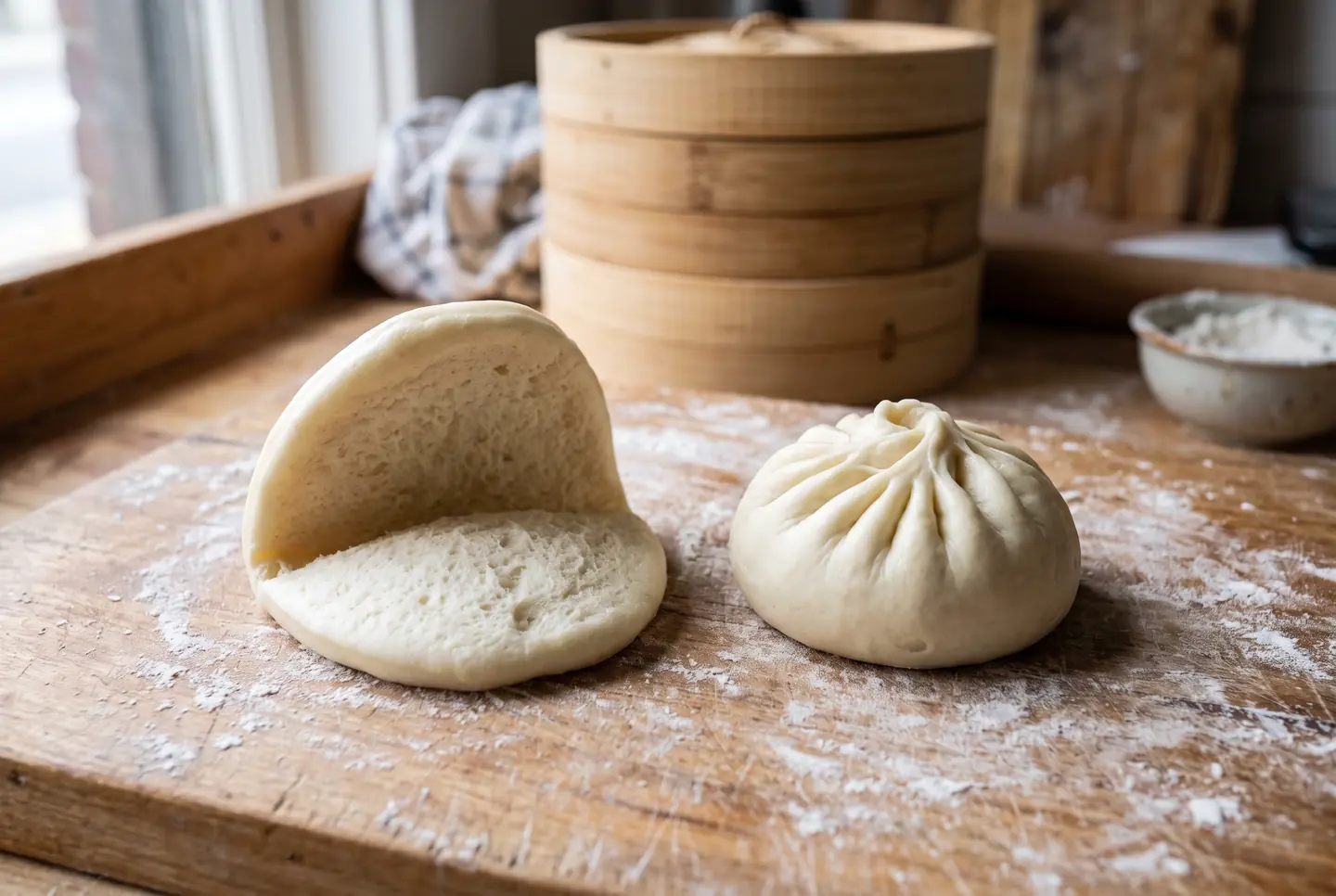
The bao you meet in a Western restaurant, the folded white bun holding a slab of pork belly, has two histories that often get tangled into one. There is the ancient story of the Chinese steamed bun, which goes back many centuries, and there is the recent, traceable story of how one particular Taiwanese street snack became a global restaurant dish in about twenty years. Telling them apart is the honest way to answer where bao comes from, and it is the thread of this guide.
This is the history branch of the complete bao buns guide, which covers how to actually make them. Here we stay with where they came from, and we will separate what is legend from what is recorded, because the two get repeated as if they were the same thing.
The legend and the record
The most famous origin story is a good tale, and it is worth telling as exactly that, a tale. It credits the filled steamed bun to Zhuge Liang, the strategist of the Three Kingdoms era (roughly 220 to 280 CE), who is said to have made meat filled buns shaped like human heads to offer to a river, in place of the human sacrifices a local custom demanded. It is a vivid story and it may hold a grain of truth, but it is folklore, not documentation, and careful sources treat it that way.
What the record does support is plainer and older. The plain steamed bun, mantou, and its filled cousin, baozi, grew out of Chinese wheat and flour milling and have been staples across China for many centuries (Britannica). Northern China, where wheat rather than rice was the grain, is the home of the steamed bun. The word tells the story: baozi means the filled, pleated, sealed bun, and mantou means the plain one without filling. Everything else in the bao family is a variation on those two ideas.
| Name | What it is |
|---|---|
| Mantou | Plain steamed bun, no filling |
| Baozi | Filled, pleated, sealed steamed bun |
| Gua bao | Open, folded clamshell bun, filled at the table |
Gua bao: the Taiwanese bun the West calls "bao"
Here is where the two histories are most often confused. When a Western menu says "bao", it almost always means gua bao, the open folded bun, and gua bao is not a generic ancient Chinese food. It is a specific regional dish with a specific home.
Gua bao descends from the kong bak pau, a Hokkien snack from southern Fujian province, carried to Taiwan by immigrants from that region and developed there into its own thing (Resy). In Taiwan it is a beloved street food, and its classic build is precise: red braised pork belly, pickled mustard greens, cilantro, and a dusting of ground peanuts, all folded into the white clamshell bun. Taiwanese cooks consider the peanut powder essential, not optional.
It even has a nickname that tells you how it is meant to look. Gua bao is sometimes called "tiger bites pig", because the folded bun holding its dark pork looks like a tiger's mouth clamped on a piece of meat, and the phrase doubles as a homophone for holding onto good fortune (Resy). None of that is generic. It is Taiwanese, and it is worth saying so clearly.
How a New York menu made it global
The reason so many people met the bao through a fusion filling before they ever met the traditional one is recent and traceable. In the mid-2000s the chef David Chang put a folded pork belly bun on the menu at Momofuku in New York, reportedly born from wanting to use braised pork belly, and it became one of the defining restaurant dishes of the decade (Resy). From there the folded bun spread across menus worldwide, often simply labeled "bao", and the format opened up to every filling imaginable, from fried chicken to mushrooms.
That popularity came with a cost worth naming. As the bun spread, its Taiwanese roots often got left behind, until the pork bun became, in the words of one critic, indistinctly Asian and stripped of its history (Resy). Chang popularized the dish; he did not invent the gua bao, which was already generations old in Taiwan. Both things are true, and a good history holds them together rather than choosing the flattering half.
Why the history shows up in the bun
None of this is trivia for its own sake, because the history explains the bun. The steam, not an oven, is why a bao is white and soft, and that comes straight from the northern Chinese steamed bun tradition where the wet heat, never passing 100 °C (212 °F), was the whole cooking method. The clamshell fold comes from gua bao's job as a street food you fill by hand. Even the pairing of rich pork with a sharp pickle and ground peanuts, the balance that makes the classic gua bao work, is a Taiwanese inheritance, not a modern restaurant invention. Understanding where the bun comes from is really understanding why it is built the way it is, which is exactly what the complete bao buns guide puts to work.
Frequently asked questions
Where do bao buns come from? The steamed bun family comes from China, where the plain mantou and the filled baozi have been staples for many centuries, rooted in northern Chinese wheat cooking. The specific open folded bun that Western menus call "bao", gua bao, comes from Taiwan, developed from a Hokkien snack from Fujian province.
Are bao buns Chinese or Taiwanese? Both, depending on which bun you mean. The broad steamed bun tradition, mantou and baozi, is Chinese and old. The open, folded gua bao that most Westerners picture is Taiwanese, descended from a Fujianese Hokkien snack, and it is the one that became famous abroad.
Who invented bao buns? No single person did. A famous legend credits the filled bun to the strategist Zhuge Liang in the Three Kingdoms era, but that is folklore, not record. The steamed bun evolved over centuries in China. David Chang popularized the gua bao in the West in the mid-2000s, but he did not invent it.
What is gua bao? Gua bao is the open, folded clamshell bun, steamed empty and filled at the table. The classic Taiwanese version holds red braised pork belly, pickled mustard greens, cilantro and ground peanuts. It is sometimes nicknamed "tiger bites pig" for the way the folded bun grips the meat.
What is the difference between bao, baozi and mantou? Mantou is the plain steamed bun with no filling. Baozi is the filled, pleated, sealed bun. Bao, on most Western menus, means the open folded gua bao you fill yourself. All three are steamed yeasted buns from the same family of doughs.
How did bao buns become popular in the West? Largely through New York restaurants in the mid-2000s, when David Chang's folded pork belly bun at Momofuku became a signature dish and spread across menus worldwide. The format then opened to countless fillings, though its Taiwanese origins were often lost along the way.
Make the traditional gua bao once, pork belly, pickle, cilantro and peanuts, and the history stops being abstract: you are eating a Taiwanese street snack that took a long road to your kitchen.
Where I checked
Keep reading
 Guide
Guide
Bagel Dough: Why It Is So Firm, and How to Knead It
Bagel dough feels stiff and dry on purpose. Here is why it runs at 50 to 60% water and high protein flour, how to knead it, and the windowpane to aim for.
6 min read Guide
Guide
Bagel Recipe: New York Style, Step by Step
A weight-based New York bagel recipe, step by step: the firm 58% dough, an overnight cold retard, how long to boil, and the oven heat that sets a glossy crust.
6 min read Complete guide
Bagels: The Complete Guide
Make a real bagel at home: the firm 58% dough, why bagels are boiled before baking, New York vs Montreal, sourdough and gluten free, and how to fix flat ones.
18 min read