Guide
Sourdough Bagels: How to Convert the Recipe
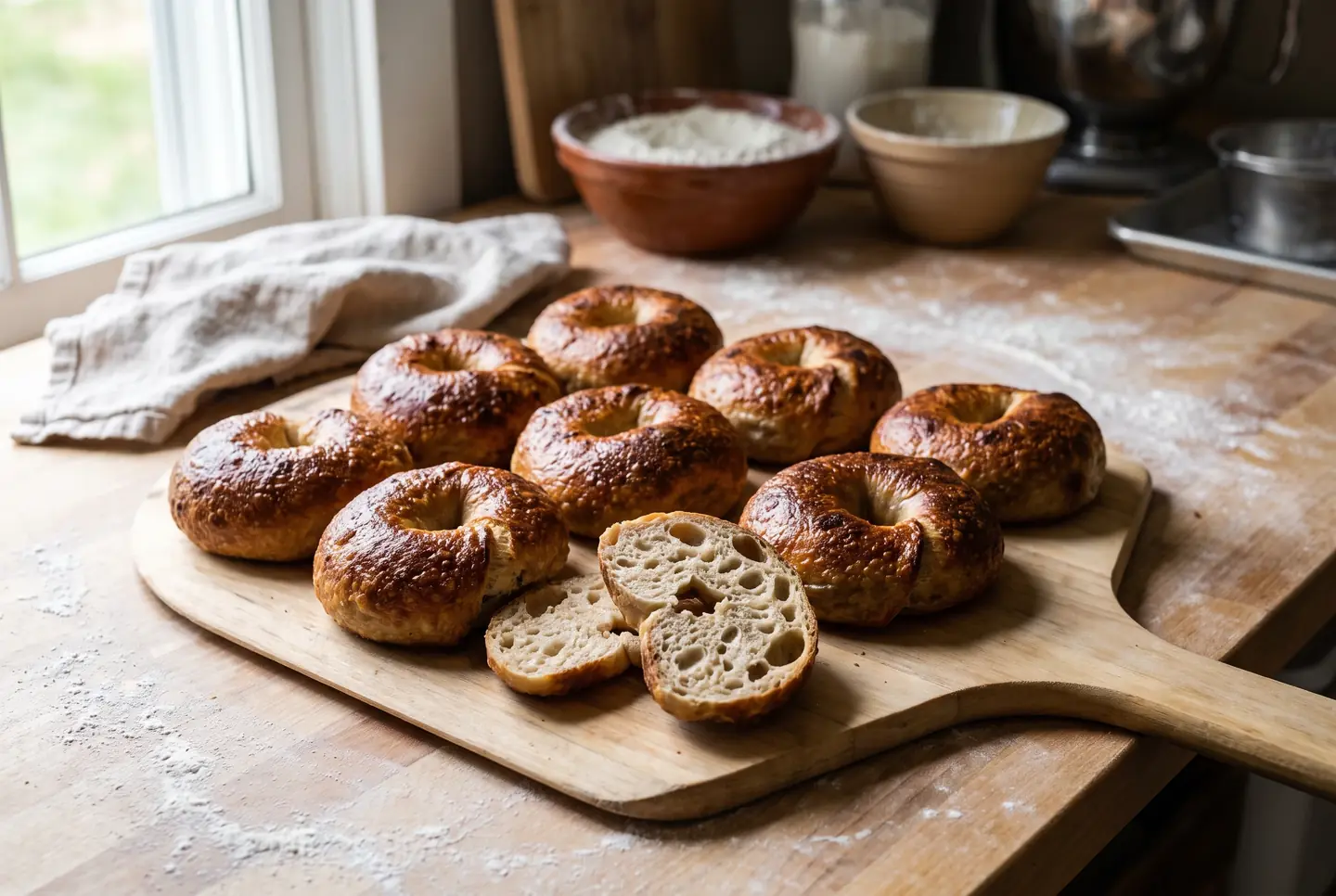
A sourdough bagel is not a different bread from a regular bagel. It is the same firm, boiled, low hydration bagel, with the commercial yeast swapped for a stiff levain and a long cold ferment doing the rising. If you can already make a bagel, you are most of the way there. The three things that change are the leaven, the timing and a touch of the hydration, and nothing else about the method moves.
That is the whole trick, so here it is up front: build a stiff levain instead of adding yeast, keep the dough firm (The Perfect Loaf mixes its sourdough bagel dough at just 55% hydration), and let a cold overnight stay in the fridge, which a good bagel gets anyway, double as the sourdough fermentation. The rest of the recipe, the shape, the boil, the bake, comes straight from the complete bagel method. This guide is about the conversion, not a second recipe to learn from scratch.
The three changes, and nothing else
Take your bagel recipe and change these three things. Leave everything else exactly as it is.
| What you change | Yeasted bagel | Sourdough bagel |
|---|---|---|
| Leaven | commercial yeast | a stiff levain built the night before |
| Time | a few hours, same day | across two days, most of it cold and passive |
| Hydration | firm, often 57% to 60% | firm, often a touch lower, around 55% |
The leaven is the real swap. The timing follows from it, because a levain works more slowly than a spoon of yeast and wants the long, cold retard to develop flavour. The hydration nudge is small and optional: some bakers drop a few points because a slack sourdough dough will not hold the ring, and the ring is the whole point of a bagel.
Everything downstream stays put. The shaping, the boil before the bake, the malt or honey in the water, the oven: none of that cares whether the rise came from yeast or from a starter.
Building the levain
A sourdough bagel wants a stiff levain, not a loose one. Where a rustic loaf might use a 100% hydration liquid starter, a bagel leans stiffer to keep the dough firm and the structure tight. Andrew Janjigian, writing at Wordloaf, makes the general case for matching the levain to the bread you want, and a bagel is about as firm and structured as bread gets.
The practical version: the night before you mix, take a spoonful of active starter and build it into a stiff levain, then leave it out overnight to ferment, roughly 10 to 12 hours at cool room temperature. The Perfect Loaf builds its levain stiff, at 50% hydration, and ferments it about 12 hours overnight, which is what keeps the crumb tight. What matters is that the levain is ripe and awake when you mix, because it is doing the job the yeast used to do.
If your starter is not reliably strong, fix that before you make bagels. A sluggish culture will not lift a dense, low hydration dough on its own. The care and feeding of the culture is its own subject, covered in the starter guide; a bagel is where a healthy one earns its keep.
Keep the dough firm
The single most common way a sourdough bagel goes wrong is too much water. A bagel is defined by a firm, dry dough that holds a clean ring through proofing and boiling, and sourdough does not change that requirement. If anything it sharpens it, because a long ferment slackens a dough over time, and a bagel that started wet will be wetter by morning.
So aim low. Around 55% hydration is a sound target for a sourdough bagel, firm enough to feel stiff and slightly resistant under your hands. It will be a stiffer dough than most sourdough you have kneaded, and that is correct. If it feels like a soft, extensible loaf dough, it is too wet for a bagel and the hole will close in the boil.
Let the cold retard do the work
Here is the part that makes sourdough bagels less trouble than they sound. A good bagel, yeast or not, is very often given a cold overnight rest in the fridge, because that slow cold proof deepens flavour and firms the dough for shaping. In a sourdough bagel, that same overnight retard is also the fermentation. You are not adding a step, you are asking one step to do two jobs.
A workable two day rhythm looks like this:
| When | Step |
|---|---|
| Evening, day one | build the stiff levain, leave it overnight |
| Morning, day two | mix, a short bulk ferment (The Perfect Loaf runs about 3 hours), shape into rings |
| A rest | a room temperature proof, then into the fridge |
| Overnight, into day three | cold retard: the flavour and the rise happen here |
| Next morning | boil and bake straight from cold |
The active hands on time is short. The long stretches are passive: the levain fermenting, the dough retarding. That is why a sourdough bagel costs a day of planning but not a day of work.
What you get, and what it costs
The trade is time for flavour and keeping quality. A yeasted bagel is a few hours from mix to plate. A sourdough bagel spans two days, most of it hands off, and in return the crumb tastes more complex, faintly tangy and deeper, and it goes stale more slowly than a quick yeasted one. The long ferment is doing both of those at once.
It will not taste sharply sour, and it should not. A bagel dough is firm and the ferment is mostly cold, so the acidity stays gentle. If you want an aggressive tang, a bagel is the wrong bread for it. What you get is roundness and depth, not vinegar.
If you already keep a starter, this is one of the best places to point it. The bagel's dense, slow structure suits a long ferment better than almost anything, and the boil and bake you already know from the base recipe carry over unchanged.
Frequently asked questions
What is the difference between a sourdough bagel and a regular bagel? Only the leaven and the timing. A sourdough bagel uses a stiff levain and a long cold ferment instead of commercial yeast, and it is spread across two days. The dough, the shape, the boil and the bake are the same firm, low hydration bagel.
Can I convert my usual bagel recipe to sourdough? Yes, and that is the easiest way in. Swap the commercial yeast for a ripe stiff levain, keep the dough firm at around 55% hydration, and let a cold overnight retard do the fermenting. Leave the rest of the method alone.
What hydration should a sourdough bagel be? Firm and low, around 55%. The Perfect Loaf mixes its sourdough bagel dough at 55%. A wet sourdough dough will not hold the ring through proofing and the boil, so keep it stiffer than ordinary sourdough.
Do sourdough bagels taste very sour? No. The dough is firm and most of the ferment is cold, which keeps the acidity mild. You get a deeper, faintly tangy flavour and better keeping quality, not a sharp sour bite.
How long do sourdough bagels take? Plan on two days, but the hands on time is short. Most of the schedule is passive: the levain fermenting overnight, then the shaped bagels retarding cold in the fridge until you boil and bake them the next morning.
Does a sourdough bagel still need to be boiled? Yes. The boil is what makes a bagel a bagel, and sourdough changes nothing about it. Boil before baking exactly as you would a yeasted bagel, using the same times from the boiling guide.
Feed the starter, plan the two days, and let the fridge do the patient part. A sourdough bagel is a regular bagel that took the scenic route.
Where I checked
Keep reading
 Guide
Guide
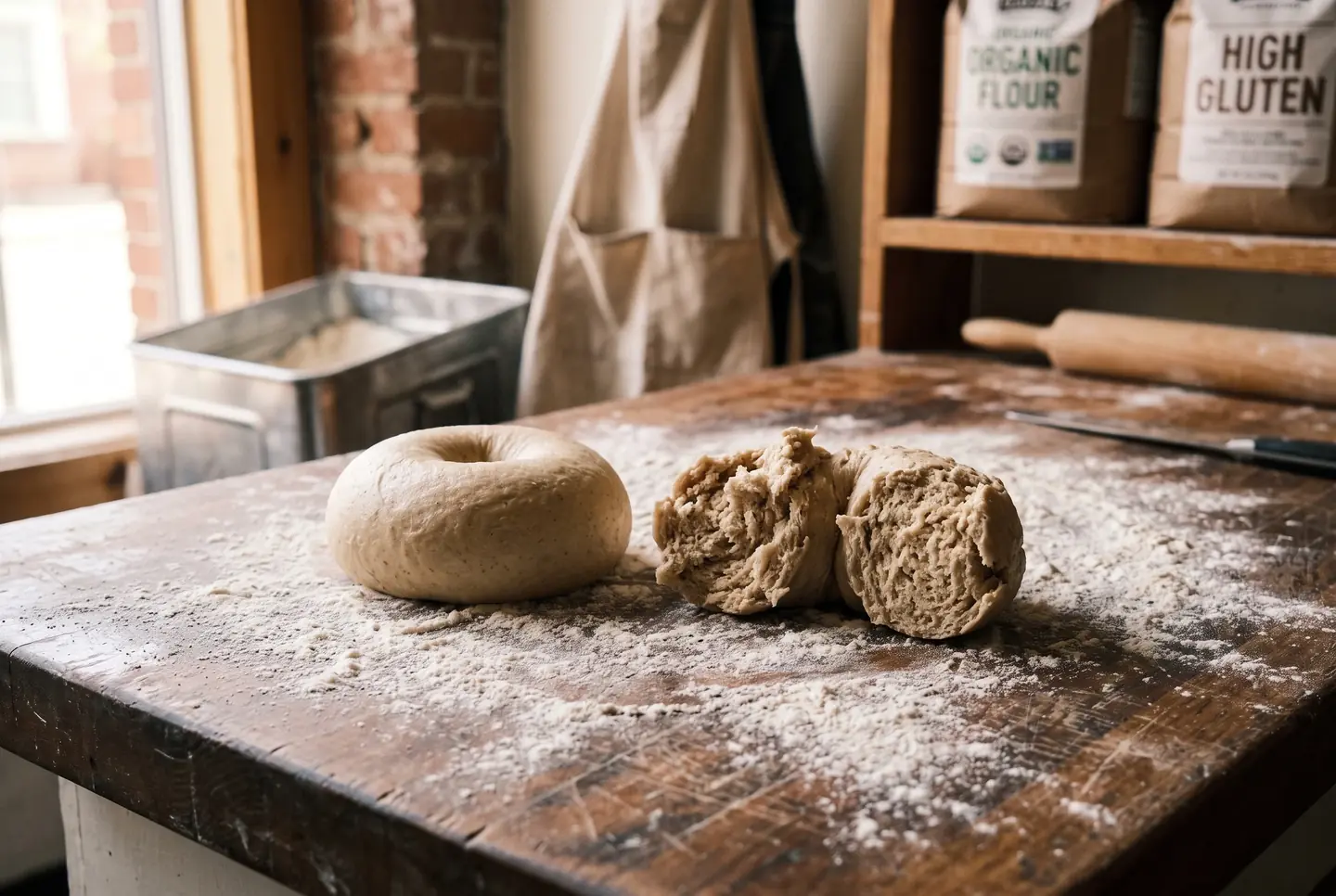
Bagel Dough: Why It Is So Firm, and How to Knead It
Bagel dough feels stiff and dry on purpose. Here is why it runs at 50 to 60% water and high protein flour, how to knead it, and the windowpane to aim for.
6 min read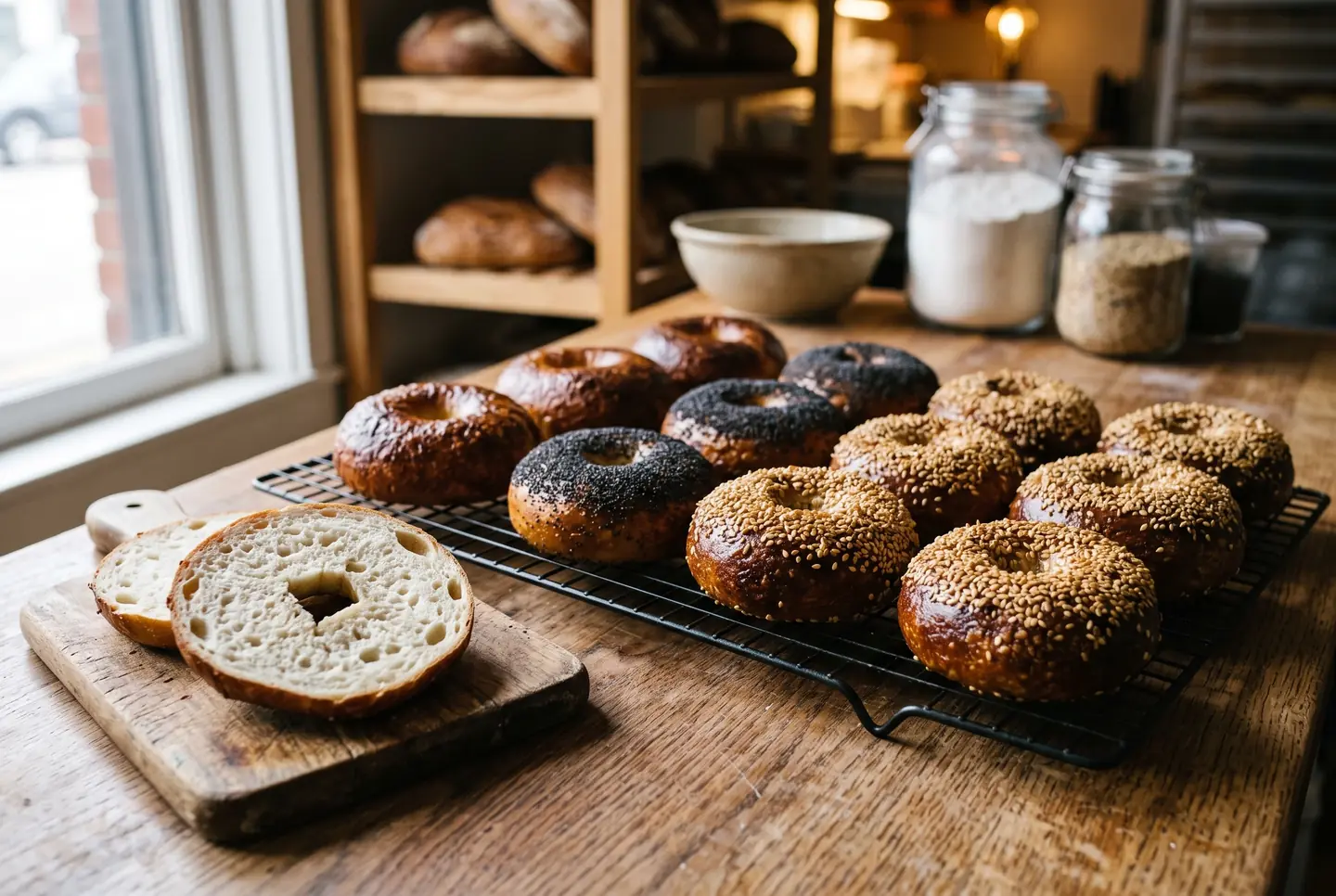 Guide
Guide
Bagel Recipe: New York Style, Step by Step
A weight-based New York bagel recipe, step by step: the firm 58% dough, an overnight cold retard, how long to boil, and the oven heat that sets a glossy crust.
6 min read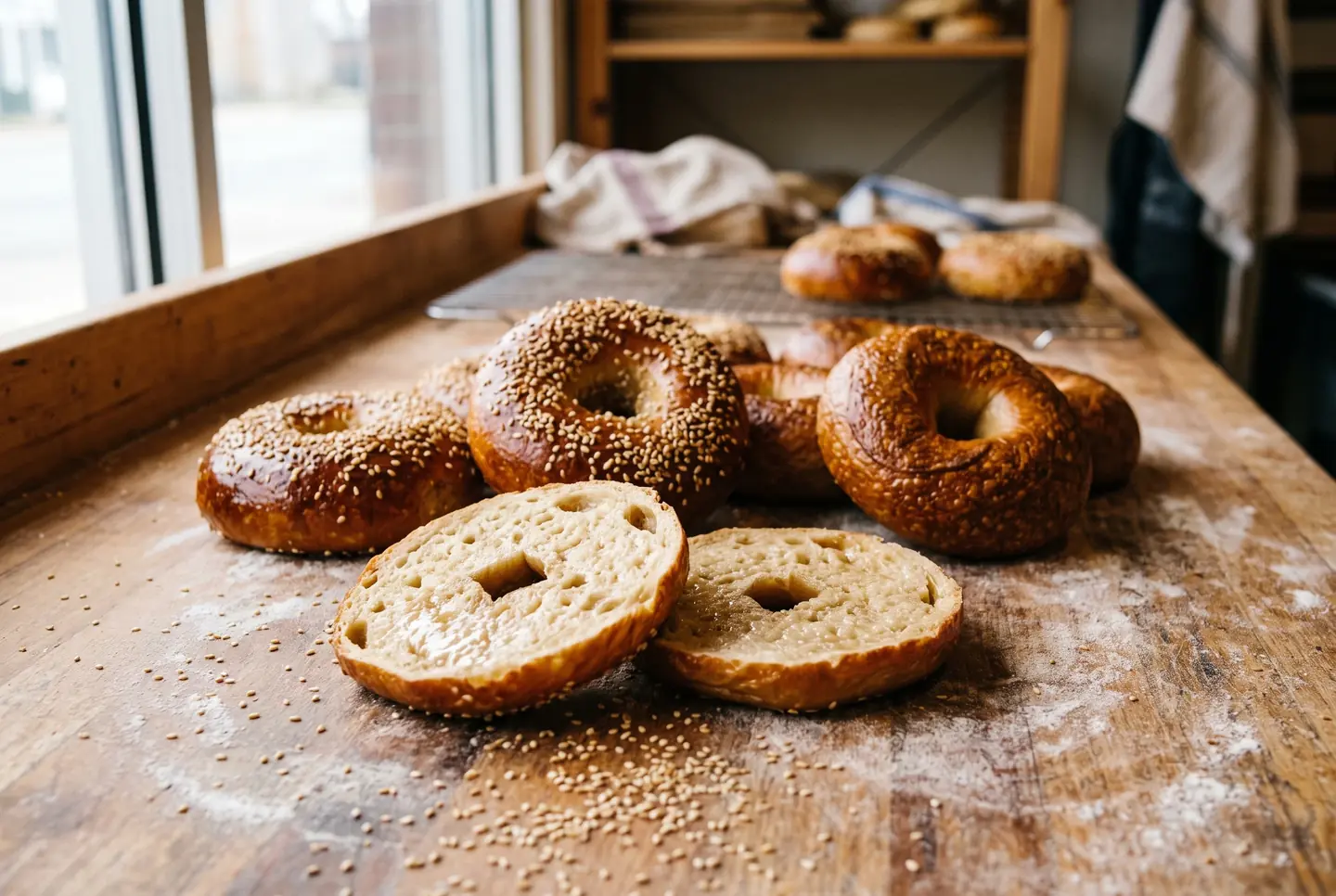 Complete guide
Bagels: The Complete Guide
Make a real bagel at home: the firm 58% dough, why bagels are boiled before baking, New York vs Montreal, sourdough and gluten free, and how to fix flat ones.
18 min read