Guide
How to Shape Bagels: The Hole That Stays Open
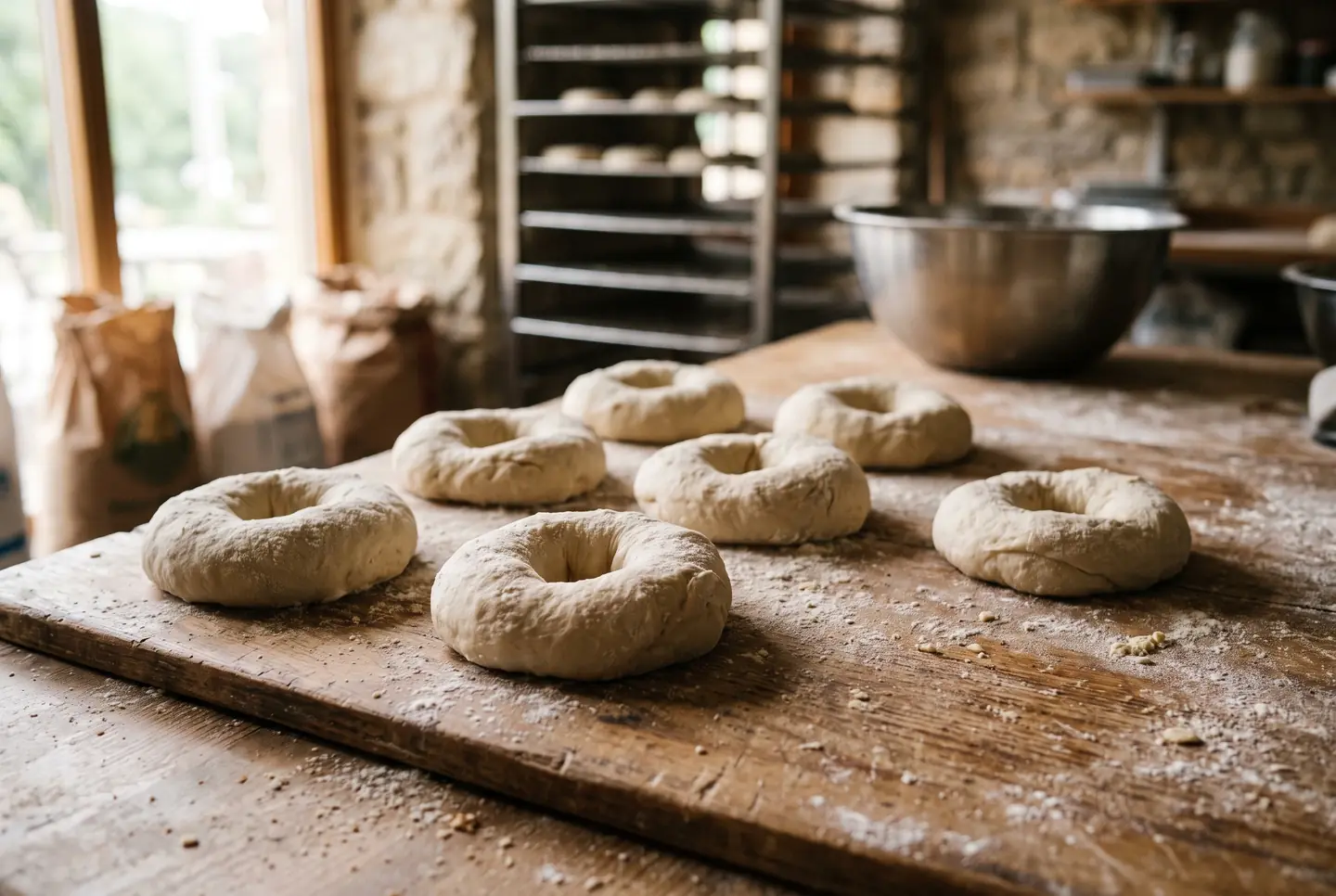
The short answer: roll the dough into a rope, wrap it around your hand, and seal the join, and make the hole far bigger than looks right, because it shrinks twice before you eat it. That is the whole problem in one sentence. A bagel hole closes in the boil and closes again in the oven, so a ring that looks correct on the counter bakes into a solid disc with a dimple.
This guide is the shaping half of the complete bagel guide: which of the two methods to use, how big to open the hole, and the fixes for the ring that snaps back or tears at the seam.
Rope method vs poke method
There are two ways to shape a bagel, and the argument between them is older than most bakeries.
The rope method. Roll a piece of dough into a rope about 20 cm long, wrap it around four fingers so the ends overlap in your palm, then roll the seam against the counter to weld it shut (King Arthur). It is the traditional hand method and gives the sturdiest join.
The poke method. Roll the dough into a tight ball, press your thumb through the centre, then twirl the ring around two fingers to widen the hole. It is faster and beginner friendly, but the hole tends to close.
| Rope method | Poke method | |
|---|---|---|
| Speed | slower | faster |
| Hole that stays open | better | worse, tends to close |
| Seam strength | strong, welded join | none, no seam to fail |
| Chew | fuller, tension built in | can bake softer |
| Best for | the classic open ring | a first batch, learning |
There is a reason the rope wins on chew and not just looks. Wrapping and rolling a rope builds tension all the way around the ring, and a taut skin is what holds the shape through the boil and gives the dense bite. The poke, by contrast, presses a hole into an otherwise tight ball, which releases some of that tension right at the centre (wordloaf). You can make a good bagel either way, but if yours come out slack and roll like, the rope is the first thing to try.
Why the hole closes, and how big to make it
This is the single most common shaping complaint, and it is not a shaping mistake at all. The hole shrinks in the boil and again in the oven. The gluten relaxes and puffs, the ring swells outward, and the opening fills in from every side.
So you compensate at the counter. Aim for a hole two to three times wider than you want in the finished bagel, roughly the size that looks almost comically large. It will close to about right. A shy hole, the kind that looks correct raw, bakes shut.
| What you make | What you get |
|---|---|
| A neat, "correct" looking hole | a solid disc with a dimple |
| A hole 2 to 3 times too wide | a proper open ring |
| No hole, just a dent | a round roll |
If you are unsure, err large every time. An over open ring closing to the right size is a non event; a closed one cannot be reopened after it has set.
Rest before you boil
Shape the rings, then let them sit a few minutes before they go anywhere near the water. A freshly shaped dough is tight and springy, and if you drop it straight into the pot it snaps back and puckers. A short rest lets the gluten relax so the ring holds the shape you gave it.
Many recipes go further and rest the shaped rings cold. An overnight in the fridge, called a retard, both develops flavour and firms the rings so they hold their shape better when they hit the water (The Curious Chickpea). If you have the time, a shaped ring is a good place to pause.
One rough check before boiling is the float test, and it is worth reading carefully, because it measures density, not proof. Drop a room temperature ring into a bowl of water: if it bobs up within a few seconds it is well aerated and ready. A ring taken straight from the cold retard is a different case. It is dense from the fridge and usually sinks even when it is perfectly ready, so a cold ring on the bottom is telling you it is cold, not that it is underproofed. Judge cold rings by the boil instead: a ready one drops, then lifts off the bottom within seconds, and only one that stays pinned down through the whole boil is genuinely underproofed (The Bagel Board).
Fixing the ring that fights you
Three shaping failures cover almost everything that goes wrong, and each has one cause.
| Symptom | Cause | Fix |
|---|---|---|
| Ring snaps back, will not stay open | dough too tight, no rest | let shaped rings relax a few minutes, then reopen |
| Seam splits in the boil | join not welded | roll the seam hard against the counter; add a drop of water and reroll |
| Hole closes to nothing | opened too small, or under rested | open it 2 to 3 times wider; rest before boiling |
Notice that two of the three are the same problem, a dough shaped while still too tight, and the fix is patience rather than technique. Bagel dough is firm and low in water by design, which makes it springier than a soft loaf, so it needs that pause to settle before it will sit still.
Get the ring open and welded and rested, and the boil and the bake fall into line. Shaping is where the bagel's final form is decided, and the one number to remember is that the hole you make is not the hole you get.
Frequently asked questions
Why does my bagel hole keep closing? Because it shrinks twice, once in the boil and again in the oven. Open the hole two to three times wider than you want it to end up, and rest the shaped rings before boiling so the gluten relaxes and stops snapping back.
Rope method or poke method, which is better? The rope method gives a stronger join and a hole that stays open, and it builds tension for a fuller chew. The poke method is faster and friendlier for a first batch but the hole tends to close. Start with poke to learn, move to rope for the classic ring.
How big should the hole in a raw bagel be? Two to three times wider than you want in the finished bagel, large enough to look almost comical. It will close to about right as the ring swells in the boil and the oven.
Should I rest bagels after shaping? Yes. A few minutes at room temperature lets the gluten relax so the ring holds its shape. Resting the shaped rings overnight in the fridge also deepens flavour and firms them for the boil.
Why does the seam split when I boil? The join was not fully welded. Roll the overlapping ends firmly against the counter until they fuse, and if the dough is dry, a drop of water at the seam helps it bond before you reroll.
Shape one badly, on purpose, so you see the closed hole for yourself. After that the giant raw ring stops looking wrong and starts looking right.
Where I checked
Keep reading
 Guide
Guide
Bagel Dough: Why It Is So Firm, and How to Knead It
Bagel dough feels stiff and dry on purpose. Here is why it runs at 50 to 60% water and high protein flour, how to knead it, and the windowpane to aim for.
6 min read Guide
Guide
Bagel Recipe: New York Style, Step by Step
A weight-based New York bagel recipe, step by step: the firm 58% dough, an overnight cold retard, how long to boil, and the oven heat that sets a glossy crust.
6 min read Complete guide
Bagels: The Complete Guide
Make a real bagel at home: the firm 58% dough, why bagels are boiled before baking, New York vs Montreal, sourdough and gluten free, and how to fix flat ones.
18 min read