Guide
Pizza Not Cooking on the Bottom: A Fix-It Guide
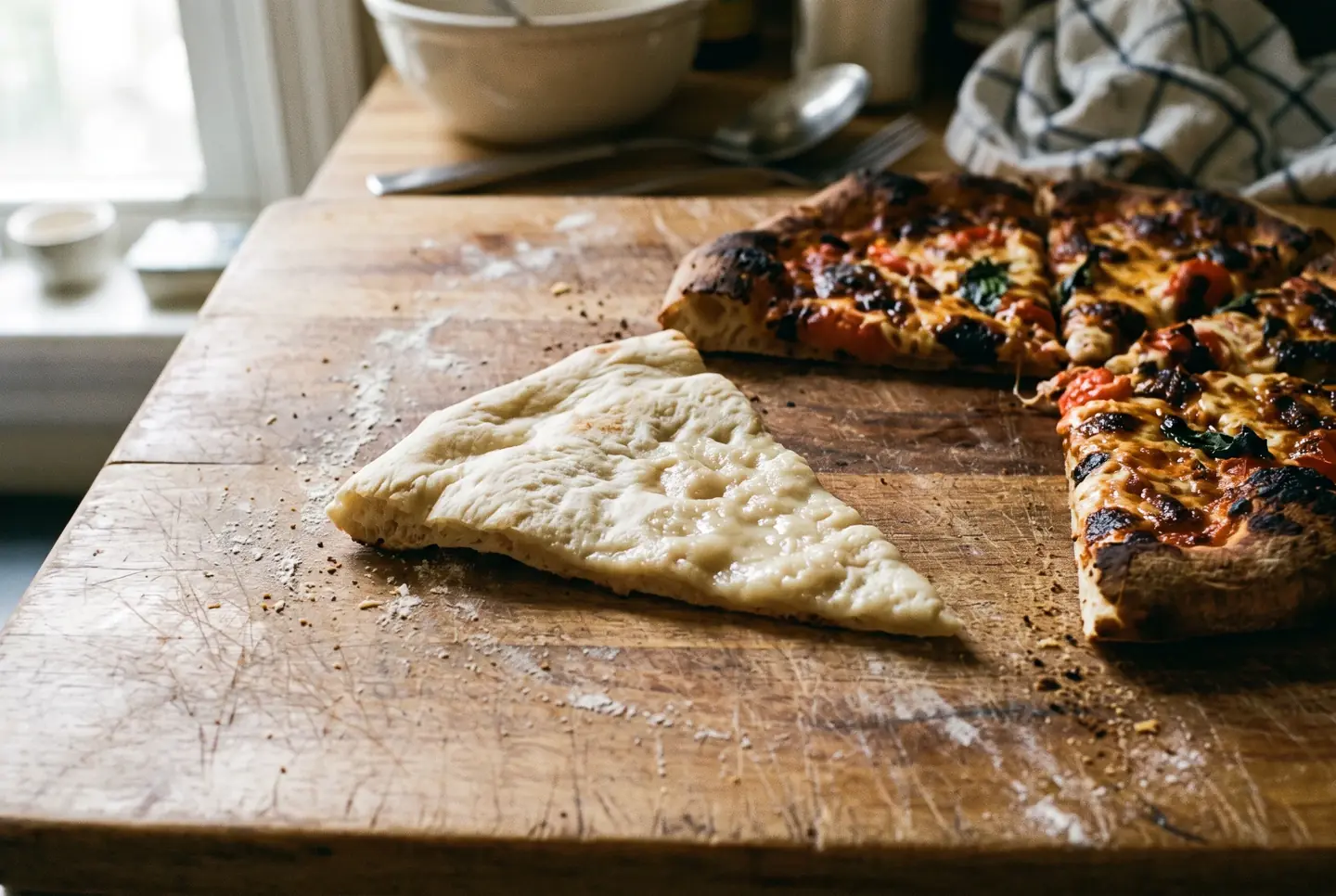
If your pizza comes out with a raw, gummy or pale bottom while the top looks done, the cause is almost always heat, not dough. The base needs a hard blast of stored heat the instant it lands, and a cool or under-preheated surface simply cannot deliver it. Nine times out of ten the fix is a fully preheated stone or steel and a hotter position in the oven, not a change to your recipe.
So before you rewrite your dough, work down the list below in order. The top causes are far more common than the bottom ones, and most of them trace straight back to how you are using your home oven. This page is the troubleshooting companion to the complete pizza dough guide: find your symptom, apply the fix, and move on.
Match the symptom to the cause
A soggy base and a burnt base are opposite problems with opposite fixes, so start by naming what you actually see. This table is the fastest route from symptom to solution.
| Symptom | Most likely cause | Fix |
|---|---|---|
| Pale, soft base, cooked top | Surface too cool or not preheated | Use a preheated steel or stone; full preheat; launch high in the oven |
| Gummy, wet base | Too much water for the heat, or a wet sauce | Drop the hydration, or heat the surface more; drain the sauce and use less |
| Base burns before the top cooks | Surface too hot relative to the top | Move down a rack, or finish under the broiler to catch the top up |
| Soggy after it leaves the oven | Cut and stacked while steaming | Cool a minute on a rack so steam escapes the base |
| Sticks and tears on launch | Not enough flour or semolina on the peel | Dust the peel, work fast, shake it before you commit |
Most home bakers reading this have the first row. Let us take the causes one at a time.
Cause 1: the surface is too cool (the usual suspect)
This is the overwhelming favourite. A bare oven rack or a cold sheet pan conducts almost no heat into the dough, so the base cooks by slow warm air while the top, closer to the element, finishes first. The result is a cooked top over a pale, floppy bottom.
The fix is a preheated baking surface. Steel conducts heat about 18 times more efficiently than stone, so it crisps a base faster, but a stone works too. King Arthur's whole argument for a crisp bottom, on pies as well as pizza, is to bake directly on a preheated stone or steel. The catch is the preheat: it takes longer than you think. A steel needs 45 to 60 minutes at the oven's maximum to saturate through; a stone needs 60 to 75. The surface can feel hot at the surface long before its core is, and the core is what cooks your base. If you take one thing from this page, make it the preheat.
Cause 2: too much water, on the dough or the sauce
If the base is not pale but genuinely gummy and wet, the problem is moisture the surface cannot boil off fast enough. Two sources:
- Dough hydration too high for your heat. A 75% dough is glorious in a 450 °C oven and a liability in a slow home one, where the extra water never fully drives off. In a weaker oven, a lower hydration cooks through more reliably. The hydration guide covers matching the water to your oven.
- A wet sauce and wet toppings. Watery sauce, dripping fresh mozzarella and raw vegetables all release liquid onto the base as they cook. Drain your sauce, go lighter on it, pat fresh mozzarella dry or switch to a low-moisture cheese, and pre-cook watery vegetables. Piling on toppings also weighs the crust down and slows it.
Cause 3: the base burns before the top is done
The opposite failure, and rarer at home, but it happens with a very hot steel low in the oven. The base chars while the top stays under-cooked. Two fixes: move the pizza down a rack so it is closer to the top element and further from the fierce surface heat, or finish it under the broiler for a minute to catch the top up. This is really a balance problem between top and bottom heat, and the broiler is the lever that balances them.
Cause 4: it was fine, then went soggy on the plate
Sometimes the base comes out crisp and turns soft within a minute. That is not a baking fault, it is a cooling one. Cut a pizza straight from the oven and stack the slices, and the trapped steam condenses on the base you just crisped. Let the pizza sit on a wire rack for thirty to sixty seconds so steam escapes from underneath before you cut it.
A note on parchment paper
Parchment is a friendly way to launch a pizza without it sticking, but it sits between the dough and the hot surface and traps a thin layer of steam, which can hold the base back from crisping. Use it to launch if you need to, then slide it out from under the pizza once the base has set, usually a couple of minutes in. That gives you the easy launch and the direct-contact crust.
The one change that fixes most of these
If you strip this page down to a single action, it is this: preheat a proper surface, fully, and bake high with the broiler. Get the heat right and the pale base, the gummy base and the slow bake mostly disappear on their own, which brings us right back to the home oven method. The dough is almost never the villain of a raw bottom. The heat is.
Frequently asked questions
Why is my pizza not cooking on the bottom? Almost always because the surface under it is too cool. A base needs a blast of stored heat the moment it lands, which only a fully preheated stone or steel delivers. Bake directly on a preheated surface high in the oven, and give a steel 45 to 60 minutes to heat through first.
How do I fix a soggy or gummy pizza base? Attack the water and the heat. Preheat a steel or stone properly, drop your dough hydration if your oven is on the cooler side, and cut the moisture on top by draining the sauce and drying or reducing the cheese. Then cool the baked pizza on a rack for a minute so steam does not soften the base.
Should I bake pizza on the top or bottom rack? Usually the upper third. That is where the top browns and where the broiler helps, and a preheated surface up there crisps the base at the same time. Move down a rack only if the base is burning before the top cooks.
Does a lower hydration dough cook through better in a home oven? Often, yes. Very high hydration doughs shine in fierce heat but can stay gummy in a slower home oven that never drives off the extra water. If your base keeps coming out wet, a slightly lower hydration is an easy thing to try.
Is parchment paper making my pizza base soggy? It can. Parchment traps a little steam between the dough and the hot surface. Use it to launch if you like, then slide it out once the base has set, a couple of minutes in, so the crust finishes in direct contact with the steel or stone.
Where I checked
Keep reading
 Guide
Guide
Bagel Dough: Why It Is So Firm, and How to Knead It
Bagel dough feels stiff and dry on purpose. Here is why it runs at 50 to 60% water and high protein flour, how to knead it, and the windowpane to aim for.
6 min read Guide
Guide
Bagel Recipe: New York Style, Step by Step
A weight-based New York bagel recipe, step by step: the firm 58% dough, an overnight cold retard, how long to boil, and the oven heat that sets a glossy crust.
6 min read Complete guide
Bagels: The Complete Guide
Make a real bagel at home: the firm 58% dough, why bagels are boiled before baking, New York vs Montreal, sourdough and gluten free, and how to fix flat ones.
18 min read