Guide
Pizza in a Home Oven: Getting Close to 450C
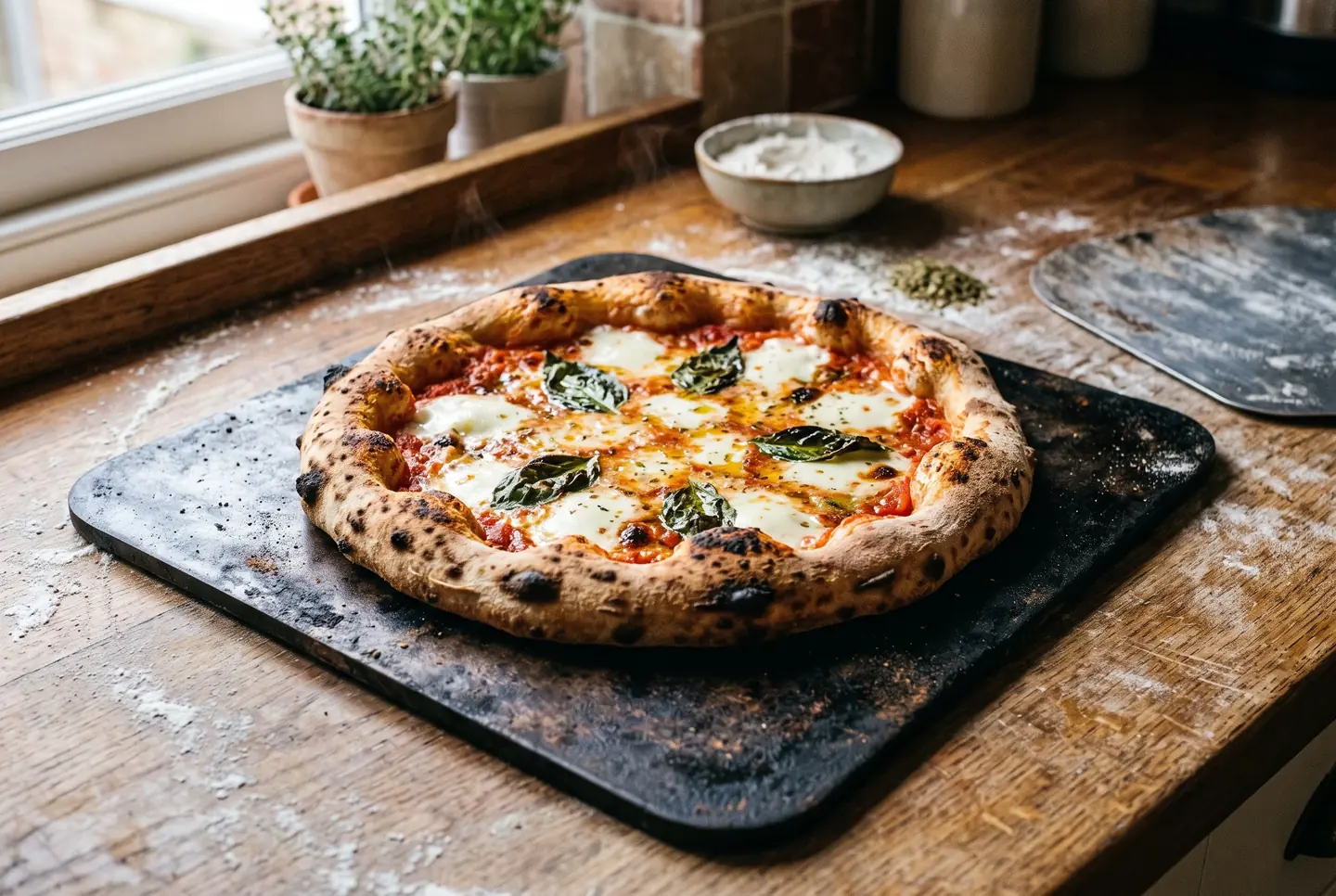
The short answer: you will never turn a kitchen oven into a wood-fired one, but you can get startlingly close, and the dough is not where you do it. A true Neapolitan pizza bakes on a floor of around 430 to 480 °C and is done in 60 to 90 seconds, per the official Neapolitan pizza association standard. A home oven maxes out at roughly 250 to 290 °C (500 to 550 °F). That gap is the single biggest reason a homemade pizza comes out pale and soft-bottomed next to a pizzeria's. You close it with the baking surface and one trick most recipes skip, not with a better recipe. The complete pizza dough guide gets the dough right; this page gets the heat right.
Why the dough is not the problem
It is worth being clear about what is actually happening, because the fix follows from it. Your oven can only push its air so hot. The lever that matters is not air temperature, it is how much heat the surface under the pizza holds and how fast it dumps that heat into the base. A bare rack or a cold sheet pan barely conducts, so the base cooks slowly while the top races ahead. That mismatch, a cooked top over a pale base, is the classic home-oven failure, and no amount of tweaking hydration fixes it. It is a heat problem.
A preheated, heavy surface solves it by hitting the raw dough with a wall of stored heat the instant it lands. King Arthur makes the same point about pie crusts: bake them on a preheated stone or steel and the bottom sets and crisps instead of going soggy. Pizza is the extreme version of that logic.
Steel or stone: pick your surface
If you buy one thing for home pizza, buy a baking surface. The choice comes down to steel versus stone, and they behave differently enough to matter.
| Surface | How it behaves | Preheat | Bake at 500-550 °F | Verdict |
|---|---|---|---|---|
| Bare rack or cold sheet | Almost no stored heat; base cooks slowly | none | slow, pale base | Avoid for pizza |
| Pizza stone | Holds heat, transfers it slowly | 60 to 75 min | 8 to 10 min | Good and forgiving, but can crack from thermal shock |
| Baking steel | Holds heat, transfers it fast | 45 to 60 min | 5 to 7 min | Best home option, nearly indestructible |
Steel conducts heat about 18 times more efficiently than stone, which is why a steel at 500 °F does what a stone floor needs a much hotter oven to do: it moves heat into the base fast enough to crisp it before the top overcooks. Serious Eats' testing landed on steel for exactly this reason. Stone still works and costs less; it is just slower and it can shatter if you shock it with a sudden temperature change. Steel does not crack, chip or shatter, which is a real advantage when you are launching a pizza in a hurry.
Preheat is not optional, and it is longer than you think
This is where most home pizzas are lost before the dough goes in. A surface that looks hot on the outside can still be cool at its core, and the core is what cooks your base. Baking Steel is blunt about it: do not preheat for less than 45 minutes, and a full 45 to 60 minutes is what a steel needs to saturate all the way through. A stone needs even longer, closer to 60 to 75 minutes. Set the oven to its maximum, put the surface on an upper rack, and wait it out. The steel should come within about 20 °F of your oven's set temperature before you launch.
Skip this and even the best surface is just a cold plate. There is no shortcut here; the wait is the technique.
The broiler trick that changes everything
Here is the move that genuinely transforms a home pizza, and it costs nothing. Your broiler throws intense radiant heat from above, the same kind of overhead blast a pizza oven gives the top of the pie. Used with a steel, it attacks the pizza from both sides at once.
The method, following Baking Steel's broiler approach:
- Put the steel on an upper rack, about 15 to 18 cm (6 to 7 inches) from the broiler element.
- Preheat on bake at maximum for 45 to 60 minutes.
- Switch to the broiler for the last 5 to 10 minutes before you launch. This drives the steel's surface hotter than the oven's bake setting alone can reach.
- Launch the pizza, and let the broiler blast the top for 90 to 120 seconds while the screaming-hot steel crisps the base.
- If the top is charring faster than the base cooks, switch back to bake for the last couple of minutes to even it out.
Steel below, broiler above, and you get leopard-spotted char on the rim and a total bake under five minutes. It is the closest a standard home oven gets to the real thing.
Position, launch and the small stuff
A few habits separate a good result from a frustrating one:
- Bake high, not low. The upper third of the oven is where the broiler helps and where the top browns. A pizza stranded on the bottom rack browns underneath and stays pale on top.
- Launch clean. Dust your peel with semolina or flour and give it a shake before you commit; a stuck pizza that folds on launch is heartbreaking. Beginners can build on parchment and slide it out halfway through, though parchment traps a little steam, so pull it as soon as the base sets.
- Do not drown it. Wet sauce and a pile of fresh mozzarella flood the base with water the surface then has to boil off. A thin layer of sauce and well-drained cheese let the crust win.
- Cool it for a minute. Cut and stack a pizza straight from the oven and the trapped steam softens the base you worked to crisp. Thirty seconds on a rack fixes it.
If the base still comes out pale or gummy after all this, work through the base-won't-cook diagnosis, which runs the failures down by symptom. Almost every one traces back to the two levers on this page: the surface and the preheat.
Frequently asked questions
What temperature should I bake pizza in a home oven? As hot as it goes, which for most home ovens is 250 to 290 °C (500 to 550 °F). There is no benefit to holding back: the whole challenge is a lack of heat, not an excess. Use the maximum, a preheated surface and the broiler to make up the difference from a pizzeria's 450 °C floor.
Do I need a pizza stone or steel to make good pizza at home? It is the single highest-impact thing you can add. A preheated steel or stone is what crisps the base; without one, a home oven struggles to cook the bottom before the top overcooks. Steel is faster and tougher, stone is cheaper and still a big upgrade over a bare pan.
How long should I preheat a pizza steel or stone? Longer than feels necessary. A steel needs 45 to 60 minutes at the oven's maximum to saturate through; a stone needs 60 to 75. The surface can feel hot well before its core is, and the core is what cooks your base, so wait the full time.
Does the broiler really make a difference for home pizza? Yes, and it is the biggest free upgrade there is. The broiler adds overhead radiant heat the bake setting cannot reach, pushing a steel hotter than the bake setting alone reaches and blistering the rim. Preheat on bake, switch to broil before launching, and bake near the top of the oven.
Why is my home pizza pale and soft on the bottom? Almost always a cool or under-preheated surface. The base needs a blast of stored heat the moment it lands, which only a fully preheated stone or steel delivers. Fix the surface and the preheat first; the dough is rarely the culprit.
Where I checked
Keep reading
 Guide
Guide
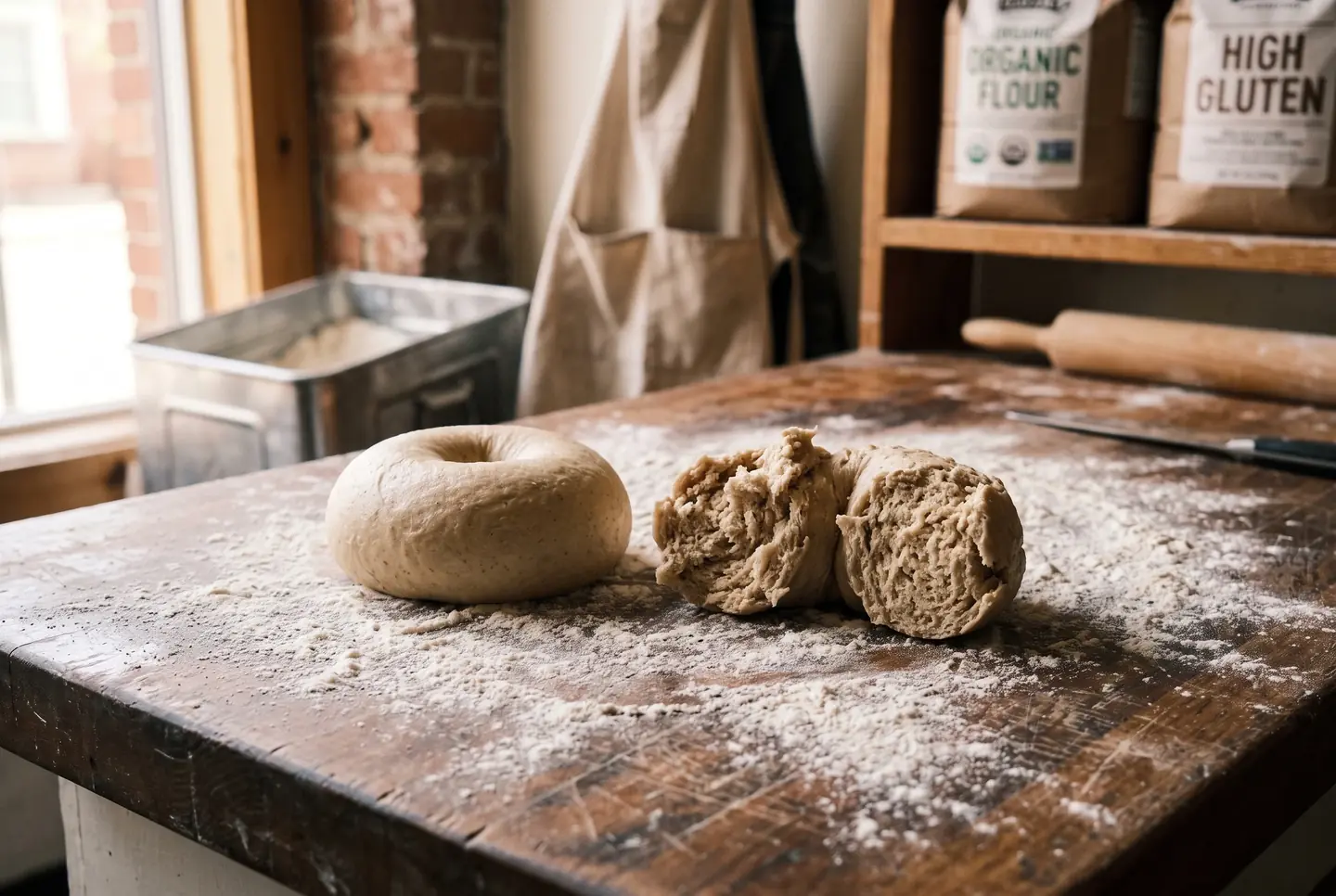
Bagel Dough: Why It Is So Firm, and How to Knead It
Bagel dough feels stiff and dry on purpose. Here is why it runs at 50 to 60% water and high protein flour, how to knead it, and the windowpane to aim for.
6 min read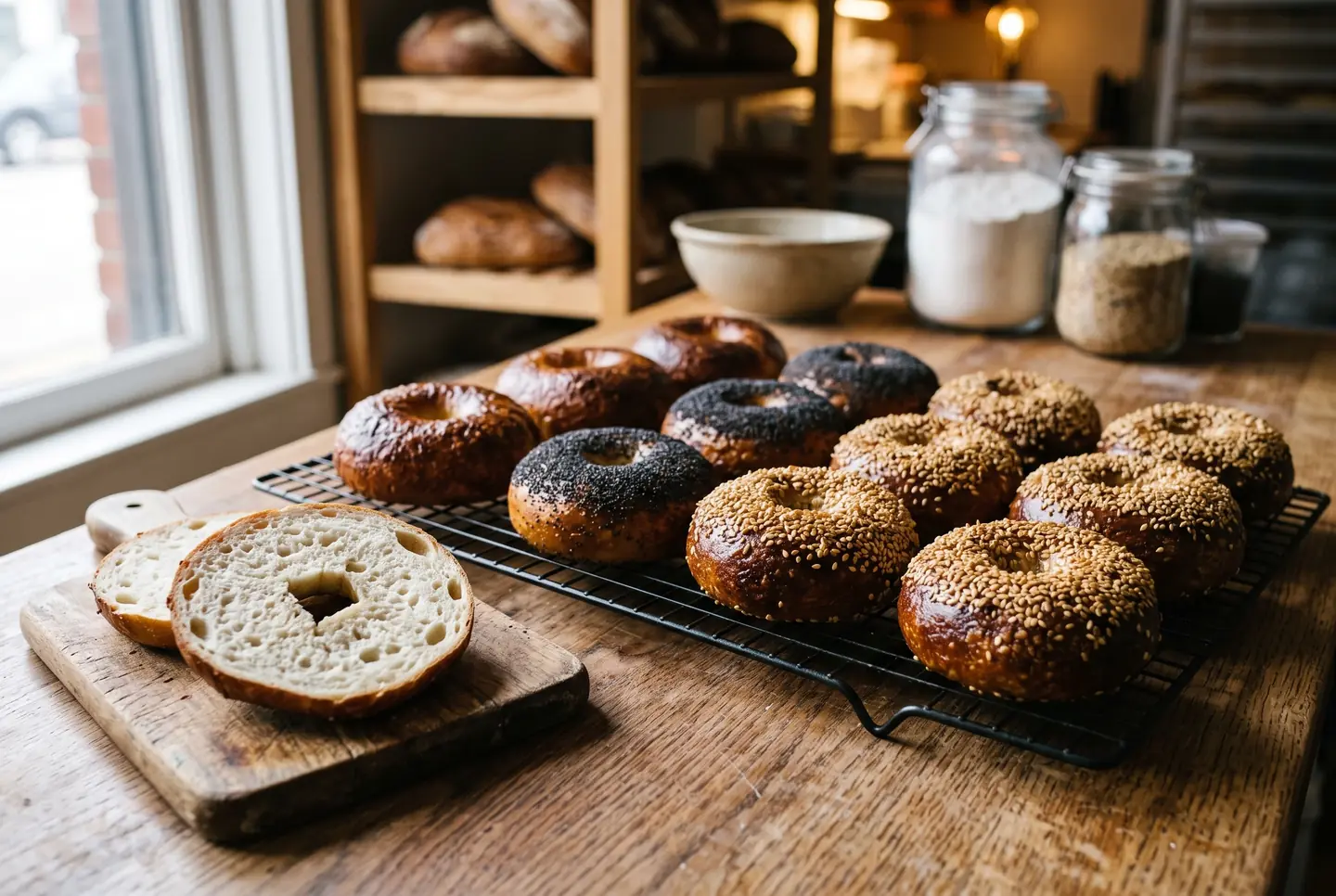 Guide
Guide
Bagel Recipe: New York Style, Step by Step
A weight-based New York bagel recipe, step by step: the firm 58% dough, an overnight cold retard, how long to boil, and the oven heat that sets a glossy crust.
6 min read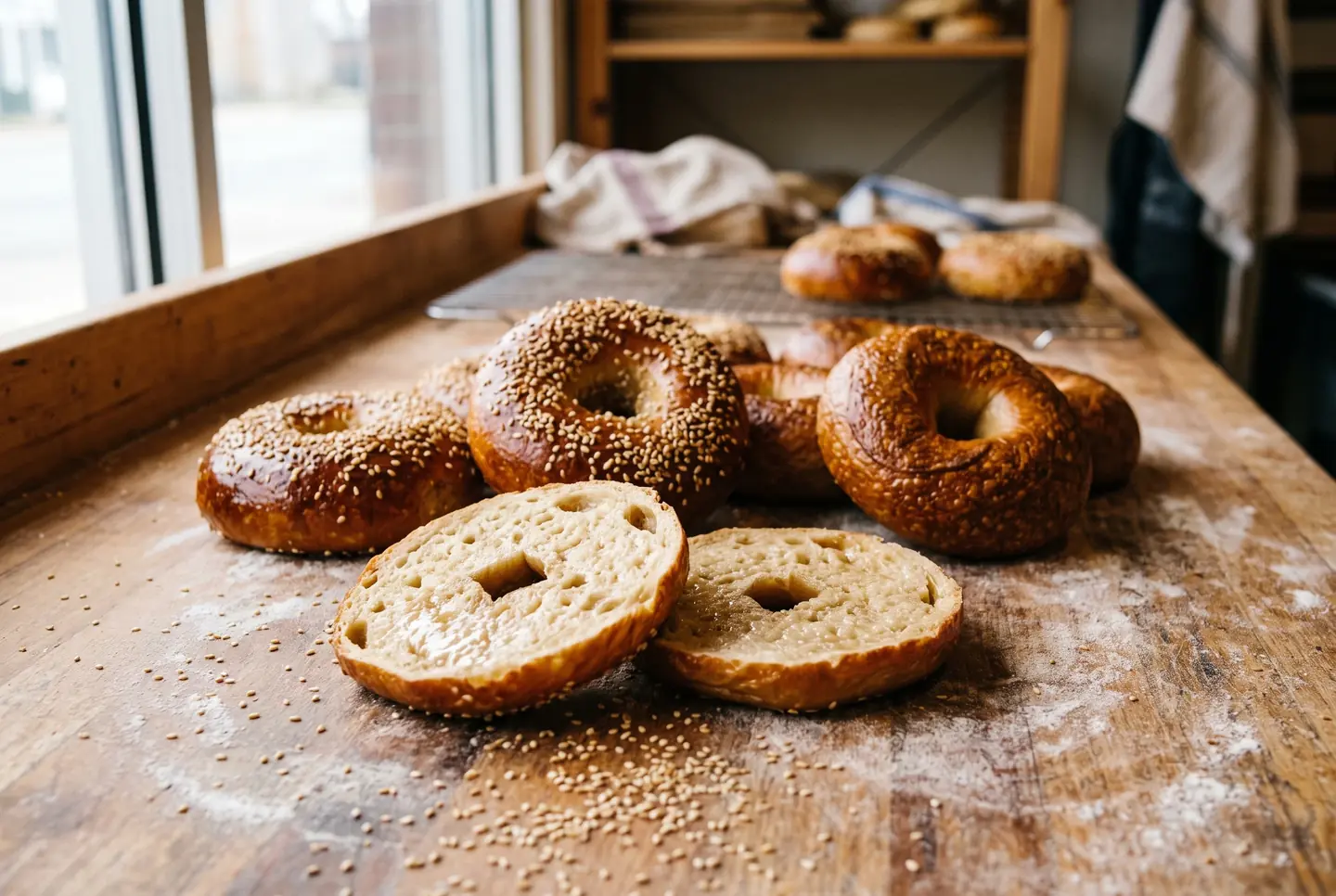 Complete guide
Bagels: The Complete Guide
Make a real bagel at home: the firm 58% dough, why bagels are boiled before baking, New York vs Montreal, sourdough and gluten free, and how to fix flat ones.
18 min read