Guide
Pizza Dough Hydration: The Right Percentage for Your Oven
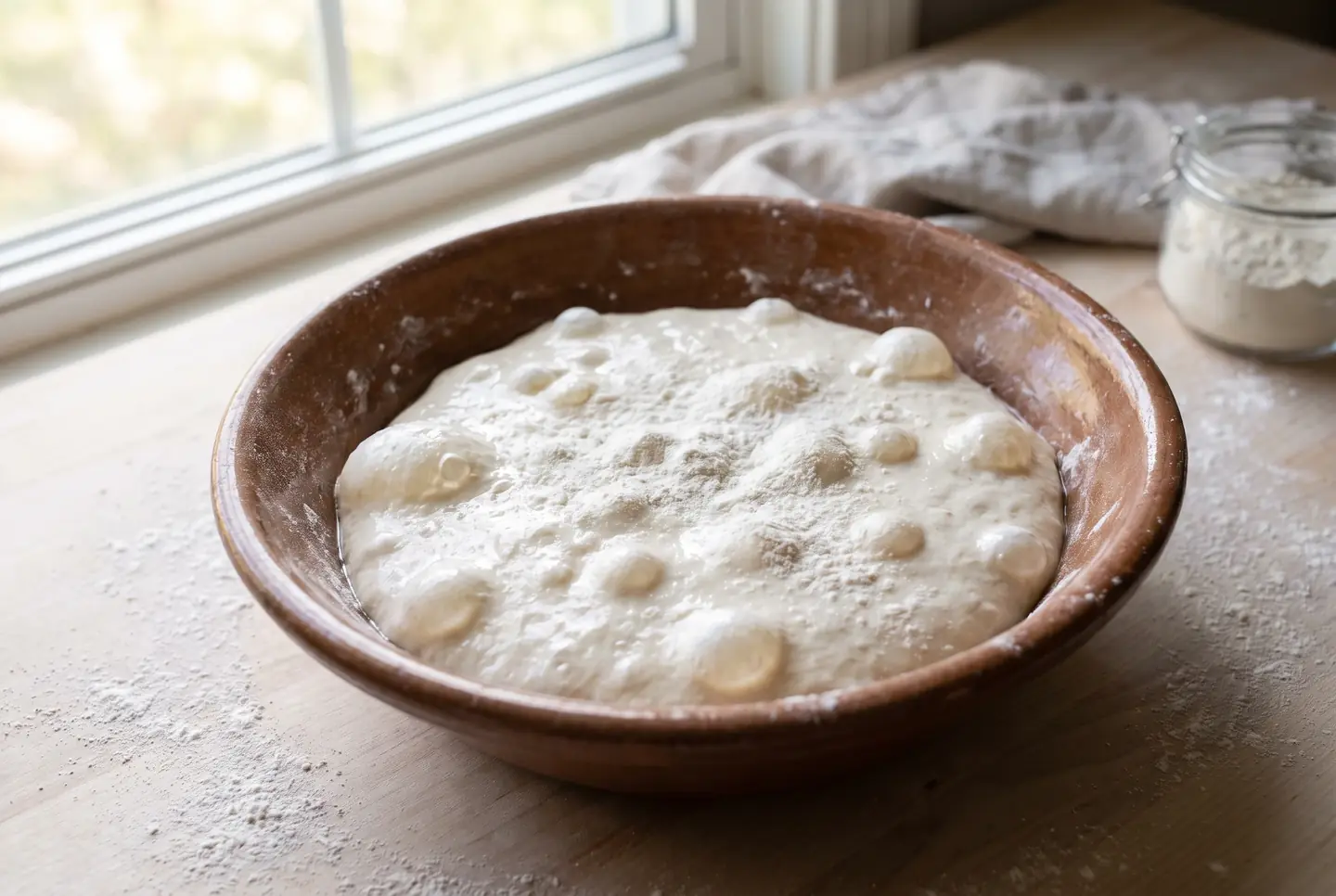
Hydration is the weight of water in a dough divided by the weight of flour, written as a percentage. A dough at 65 percent hydration has 650 grams of water for every 1,000 grams of flour. For most home pizza, the sweet spot is 60 to 65 percent: firm enough to shape without a fight, open enough to bake into a good crust. Push higher only when your oven runs very hot or you are comfortable handling a slack, sticky dough.
That single number is the biggest lever on how your dough feels and how the crust turns out, which is why it is worth understanding on its own. It is one line in the complete pizza dough guide; this page is the deep dive on that one line, so you can choose your water on purpose instead of copying whatever a recipe happened to use.
What hydration changes
Water does two jobs. It lets the flour form gluten, and it turns to steam in the oven, which is what pushes the crust open into those airy holes. More water means a wetter, more extensible dough and, if the oven is hot enough, a lighter and more open crumb. Less water means a stiffer dough that is easier to shape and more forgiving, with a tighter, chewier crust.
The catch is that the steam only helps if the oven can cash the check. A wet dough in a hot enough oven springs open beautifully. The same wet dough in a lukewarm oven just sits there, pale and gummy, because there was never enough heat to set the open structure before the moisture dragged it down. This is the single most useful thing to understand about hydration: the right number depends on your oven, not on which recipe looks most impressive online.
Match the water to the oven
Here is the practical map, from a standard home oven to a dedicated pizza oven.
| Setup | Peak temperature | Hydration to aim for | Why |
|---|---|---|---|
| Home oven, tray or basic stone | 230 to 250 C | 58 to 62% | Lower heat needs a firmer, drier dough to brown before it dries out |
| Home oven with steel, well preheated | 250 to 290 C | 62 to 65% | The steel's fast heat transfer can set a wetter crumb |
| Outdoor or countertop pizza oven | 400 to 480 C | 62 to 70% | High heat flashes the water to steam fast, so more water pays off |
A standard home oven tops out around 250 C (Serious Eats). A baking steel does not raise that number, but it moves heat into the base far faster than a stone, which is why a slightly wetter dough works on steel where it would flop on a cold tray (Baking Steel). A true pizza oven reaching 430 to 480 C is the only setup where very high hydration, up in the high 60s, reliably rewards you (Associazione Verace Pizza Napoletana). Notice that the Neapolitan standard itself sits at 55 to 62 percent, not higher: even the hottest ovens do not demand extreme water, they simply tolerate it.
Why more water is harder to handle
A dough at 70 percent is not a "better" dough, it is a more demanding one. As hydration climbs, the dough gets stickier, slacker and harder to shape into a round without tearing. It needs a different technique: wetter hands or a little oil instead of a heavy dusting of flour, folds during the first rise instead of a knead, and a gentler touch when you open the ball so you do not deflate it.
If you add flour on the bench to fight the stickiness, you are quietly lowering the hydration you worked to hit and stiffening the crust you wanted to keep light. Better to leave the water where it is and change your hands. Start at a hydration you can shape calmly. A dough you can actually round beats a wetter one that ends up as a puddle, every time.
How to change hydration without breaking the recipe
Because hydration is written against the flour, you can move it up or down without touching anything else. Multiply the flour weight by the hydration you want, as a decimal, to get the water. For 500 grams of flour at 62 percent, that is 500 times 0.62, which is 310 grams of water. Want to try 65 percent next time? Same flour, 325 grams of water, and every other ingredient stays put. This is the same weigh-do-not-measure logic behind the whole recipe: a cup of flour can vary by roughly a third depending on how you scoop it, which is enough to swing your real hydration by ten points without your ever moving the water (King Arthur). A cheap scale removes the guesswork.
Flour matters here too. Stronger, higher-protein flours drink more water and can carry a higher hydration comfortably; weaker flours turn to paste sooner. If you switch to a thirstier bread flour, you can usually add two or three points of water before the dough feels the same in your hands.
A simple way to dial it in
Change one thing at a time. Make your usual dough at 62 percent and bake it. Next batch, go to 65 and change nothing else, then compare. You will feel the difference at shaping and see it in the crumb, and you will learn which end of the range your oven and your hands actually prefer. That is worth far more than any single number a stranger swears by, because the right hydration is the one that fits your kitchen.
Frequently asked questions
What hydration should a beginner start with? Sixty to 62 percent. It shapes without sticking to everything and bakes into a good crust in a home oven. Move higher once handling a wetter dough feels comfortable.
Does higher hydration always mean a better crust? Only if your oven is hot enough to turn the extra water into steam before the crust dries. In a standard home oven, a very wet dough usually bakes gummy, not airy. Match the water to the heat.
My dough is too sticky to shape. Should I add flour? Try wet hands or a light film of oil first. Adding bench flour lowers your hydration and stiffens the crust. If it is still unworkable, drop two or three points of water on the next batch instead.
Why does the same percentage feel different with a new flour? Stronger, higher-protein flours absorb more water, so the same hydration feels firmer; weaker flours feel wetter at the same number. Adjust by two or three points when you change flour.
Can I measure hydration if my recipe is in cups? Not reliably, because a cup of flour is not a fixed weight. Weigh one batch as you make it, write down the grams, and from then on you can set hydration to the point.
Once you think in terms of water to flour, pizza stops being a fixed recipe and becomes a dough you can tune to your own oven. Start firm, climb slowly, and let the crust tell you when you have found your number.
Where I checked
Keep reading
 Guide
Guide
Bagel Dough: Why It Is So Firm, and How to Knead It
Bagel dough feels stiff and dry on purpose. Here is why it runs at 50 to 60% water and high protein flour, how to knead it, and the windowpane to aim for.
6 min read Guide
Guide
Bagel Recipe: New York Style, Step by Step
A weight-based New York bagel recipe, step by step: the firm 58% dough, an overnight cold retard, how long to boil, and the oven heat that sets a glossy crust.
6 min read Complete guide
Bagels: The Complete Guide
Make a real bagel at home: the firm 58% dough, why bagels are boiled before baking, New York vs Montreal, sourdough and gluten free, and how to fix flat ones.
18 min read