Guide
00 Flour Pizza Dough: What It Changes, and When
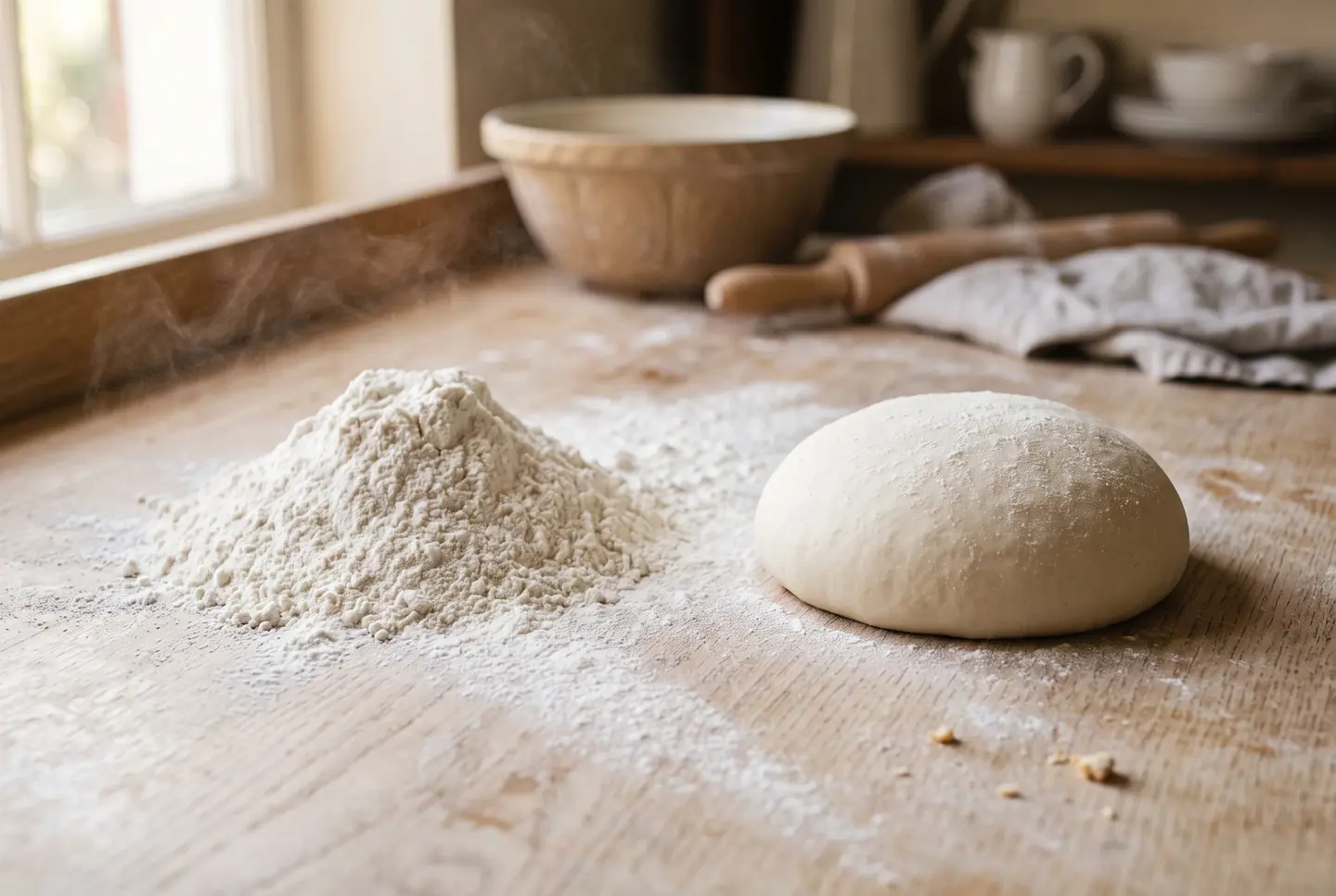
The short answer first: 00 flour makes a genuinely better pizza dough when your oven is very hot, roughly 400 C and up, and it can make a worse one in a standard home oven that tops out near 260 to 290 C. Tipo 00 is not a magic upgrade. It is a flour tuned for a fast, fierce bake, and matching it to the wrong oven is the most common way people are disappointed by the bag they paid extra for.
The reason comes down to what 00 actually is, and to two numbers that do not always move together. For the whole dough method, from mixing to bake, see the complete pizza dough guide. This page is about the one question that guide leaves open: should the flour in your pizza dough be 00 at all?
What 00 really means
Tipo 00 is an Italian milling grade, not a protein rating. The number describes how finely the wheat is ground and how much bran is left in: 00 is the finest grade, talcum soft, with almost no bran. That fine grind is part of why a Neapolitan crust opens into a tender, pillowy rim.
What it does not tell you is strength. A pizza 00 like Caputo carries plenty of protein; a supermarket 00 sold for cakes is fine and weak, and it will give you a slack, tearing dough. So 00 on the bag answers the grind question and leaves the strength question open, which is exactly the trap.
The two numbers that decide the dough
Protein and absorption are what actually shape the dough, and 00 sits in a specific place on both.
| Flour | Typical protein | Approx. absorption | Best for |
|---|---|---|---|
| Pizza 00 (e.g. Caputo Pizzeria) | 12.5% | 55-57% | Neapolitan, very hot and fast bakes |
| Bread flour | 13-14% | around 62% | New York, pan, longer home-oven bakes |
| All-purpose | 10-11.5% | 58-60% | works, softer and less chewy |
Caputo Pizzeria is milled to 00 and runs about 12.5 percent protein, and the maker is explicit that it is built for high-temperature ovens, 700 F and up, for bakes of 60 to 120 seconds (Pizza University). That is the whole design brief: fine crumb, moderate absorption, fast blast.
Because 00 drinks less water (around 55 to 57 percent) than bread flour (around 62 percent), you cannot swap one for the other at the same hydration and expect the same dough. Move from bread flour to 00 without dropping the water and the dough turns soupy (Serious Eats). The absorption gap is small on paper and large in the hand.
Which 00 to buy for pizza
If you have settled on 00 and a hot oven, the Caputo lineup is the clearest way to see how one grade splits into different flours.
- Caputo Pizzeria (blue). The classic wood-fired Neapolitan choice, around 12.5 percent protein, best at 60 to 65 percent hydration and short high-heat bakes (Pizza University).
- Caputo Cuoco (red). Stronger, W 300 to 320, made for long cold ferments of 24 to 72 hours; it holds structure at higher hydration (lapa.ch).
- Caputo Nuvola (blue, type 0). A touch coarser grade at W 260 to 280, aimed at the airy modern crust and hydrations of 65 to 70 percent (lapa.ch).
The takeaway is that "00" alone does not tell you which bag to grab. Match the flour's strength to how long you plan to ferment and how wet you want to work, not to the grade number on the front.
The honest home-oven caveat
Here is the part the pretty bags skip. In a home oven that maxes out around 260 to 290 C, a true pizza 00 often bakes pale and soft rather than blistered, because it was engineered for a heat your oven cannot reach. At that temperature, bread flour is frequently the more forgiving choice: it drinks more water, tolerates the longer bake a cooler oven forces, and browns better in the extra time on the stone.
So before you buy 00, look at your oven. If it goes to 300 C or you run a pizza steel or a dedicated pizza oven that hits 400 C and beyond, 00 will reward you. If it does not, a good bread flour will usually make a better pizza than 00 will, and cost less doing it.
Blending, and how to swap without a soupy dough
You do not have to choose all or nothing. A blend of roughly half 00 and half bread flour is a common home compromise: some of the tender bite of 00, some of the strength and browning of bread flour, in an oven that is hotter than a New York bake but cooler than a Naples one.
If you do swap toward 00 from a bread-flour recipe, drop the water by about five points to match its lower absorption, then adjust from there by feel. Going the other way, from 00 up to bread flour, add water. The number to chase is the feel of the dough, not a fixed hydration, because that feel is what the absorption difference is really telling you.
| If your oven maxes at | Reach for | Why |
|---|---|---|
| 260-290 C (standard home oven) | Bread flour, or a 50/50 blend | Browns and holds up over a longer bake |
| ~300 C (hot home oven or steel) | 50/50 blend or a strong 00 | Fast enough to start rewarding 00 |
| 400 C+ (pizza oven) | Pizza 00 (Pizzeria, Cuoco, Nuvola) | The heat 00 was designed for |
What about all-purpose flour?
Plenty of people never buy pizza flour at all and make good pizza with the all-purpose flour already in the cupboard. All-purpose runs around 10 to 11.5 percent protein and absorbs 58 to 60 percent water, which puts it between 00 and bread flour on both counts (Serious Eats). The crust it gives is softer and less chewy than a bread-flour crust, and less tender than a true Neapolitan 00 crust, but in an ordinary home oven that difference is smaller than the difference the oven itself makes. If you are choosing between spending on a bag of imported 00 and just using what you have, the honest answer for most home ovens is that all-purpose or bread flour will get you most of the way there, and the money is better spent on a pizza steel that actually raises your baking temperature. Save the 00 for the day the oven can match it.
Frequently asked questions
Is 00 flour better than bread flour for pizza? Only if your oven is hot enough. Above roughly 400 C, 00 gives a more tender, classic Neapolitan crust. In a standard home oven near 260 to 290 C, bread flour usually browns better and is more forgiving.
Can I use 00 flour in a regular home oven? You can, but expect a paler, softer crust than the bag promises, because 00 is tuned for much higher heat. A blend with bread flour, or bread flour on its own, tends to do better there.
Do I need to change the water if I switch to 00? Yes. 00 absorbs less water than bread flour, so drop the hydration by about five points when moving to 00, then adjust by feel. Keeping the same water makes the dough slack.
Which Caputo flour should I buy for pizza? Pizzeria for classic short, hot Neapolitan bakes; Cuoco for long 24 to 72 hour cold ferments; Nuvola for a lighter, airier modern crust at high hydration.
Is all 00 flour strong enough for pizza? No. A supermarket 00 sold for cakes is fine but weak and will tear. Look for a flour sold specifically for pizza, or check that the protein is around 12 percent or higher.
One last word from the kitchen: buy the flour your oven can pay off, not the one with the most Italian on the label. The bag is only as good as the heat you can give it.
Where I checked
Keep reading
 Guide
Guide
Bagel Dough: Why It Is So Firm, and How to Knead It
Bagel dough feels stiff and dry on purpose. Here is why it runs at 50 to 60% water and high protein flour, how to knead it, and the windowpane to aim for.
6 min read Guide
Guide
Bagel Recipe: New York Style, Step by Step
A weight-based New York bagel recipe, step by step: the firm 58% dough, an overnight cold retard, how long to boil, and the oven heat that sets a glossy crust.
6 min read Complete guide
Bagels: The Complete Guide
Make a real bagel at home: the firm 58% dough, why bagels are boiled before baking, New York vs Montreal, sourdough and gluten free, and how to fix flat ones.
18 min read