Guide
Sourdough Focaccia: The Starter Dose and Overnight Timing
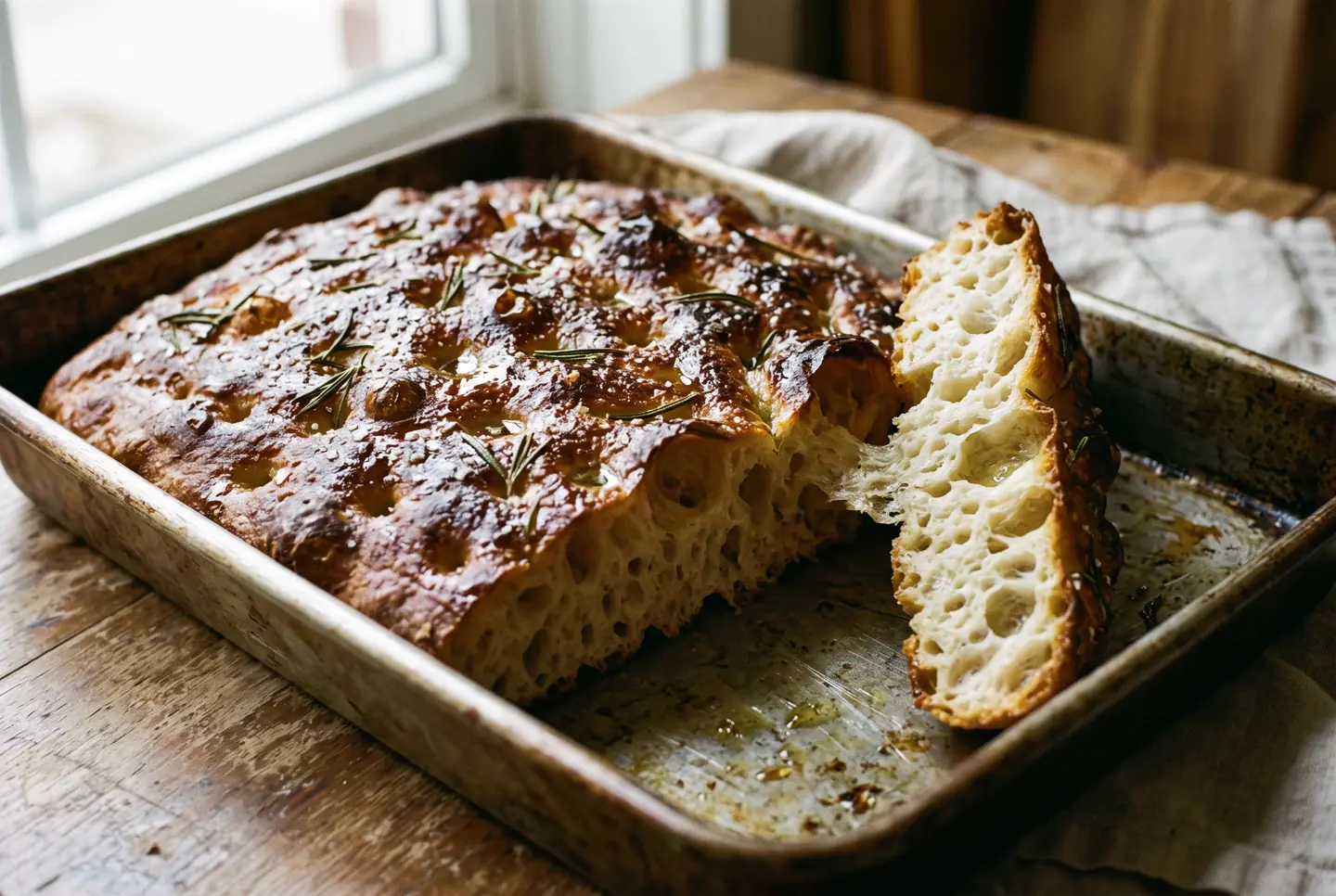
You can absolutely make focaccia with a sourdough starter, and it is one of the best uses for one. The important thing to understand up front is that it is a fermentation swap, not a different recipe: the same wet, oily, high-hydration dough, leavened by an active starter instead of a packet of yeast. The dough, the pan, the dimples and the salamoia are all the same.
The one real adjustment is time and dose. A starter leavens more slowly than commercial yeast, so a sourdough focaccia is planned around an overnight rise rather than an afternoon, which happens to suit a wet focaccia dough anyway. Get the starter percentage and the schedule right and it is ready to bake when you are, not at three in the morning. This page sets the dose and the timing; for the base method it builds on, see the complete focaccia guide and the high-hydration focaccia technique.
How much starter
The starter takes the place of the yeast, and how much you use decides how long the rise takes: more starter is faster, less is slower and more flavourful. A common working range, in line with the King Arthur sourdough focaccia and The Perfect Loaf, is roughly 10 to 20 percent of the flour weight in active, ripe starter.
| Starter (of flour weight) | Rough effect |
|---|---|
| ~10% | Slower rise, deeper flavour, longer schedule |
| ~15% | A dependable middle for an overnight plan |
| ~20% | Faster, milder, good when time is short |
The starter must be active and ripe when it goes in, meaning fed and risen to near its peak, bubbly and domed. A sluggish starter straight from the fridge will not leaven a wet dough well and is the usual reason a sourdough focaccia comes out dense.
The overnight schedule
The reliable plan is to mix in the evening, let the dough do a long, slow bulk fermentation, and bake the next day. Because the dough is very wet and only lightly leavened, time does the work: a long rise is what lets a barely-leavened, high-hydration dough build both flavour and strength on its own.
A workable outline, to adjust to your kitchen temperature:
- Evening: mix flour, water, salt, olive oil and the ripe starter. Do a few sets of stretch-and-folds over the first couple of hours to build strength.
- Overnight: let it bulk ferment. A cool room stretches this out; a warm kitchen speeds it up, so watch the dough, not only the clock.
- Next day: transfer to the oiled pan, let it relax and proof, then dimple, brine and bake.
Warmth is the main variable. In a cold kitchen the overnight bulk may need a warm spot or a longer window; in a hot kitchen it can over-ferment by morning, so a stint in the fridge overnight is the safer choice. The dough is ready for the pan when it is puffy, jiggly and dotted with bubbles.
Reading the dough, not the clock
Sourdough timing is never fixed, because it depends on how lively your starter is and how warm the room is. Judge by the dough: after the bulk it should be noticeably risen, airy and bubbly; in the pan after its final proof it should be puffed and wobbly before you dimple. If it is sluggish and dense, it needs more time or a livelier starter; if it is slack and collapsing, it has gone too far.
This is the same patience the pilar asks for elsewhere: with sourdough, the schedule bends to the dough. An overnight cold proof in the fridge, in particular, is forgiving, because it slows everything down and widens the window when the dough is ready to bake.
Frequently asked questions
Can you make focaccia with sourdough starter? Yes, and it is one of the best uses for a starter. You swap the commercial yeast for an active, ripe starter and plan for a longer, usually overnight, fermentation, which suits a wet focaccia dough well.
How much starter for focaccia? Roughly 10 to 20 percent of the flour weight in active starter. Around 15 percent is a dependable middle for an overnight plan; more is faster and milder, less is slower and more sour.
Do I still use yeast in sourdough focaccia? No. The starter replaces the yeast entirely. Some bakers add a pinch of yeast as insurance, but a healthy, ripe starter leavens a focaccia on its own.
How long does sourdough focaccia take? Plan on an overnight bulk fermentation plus a proof in the pan the next day, so from mixing to baking is usually somewhere in the range of a half day to a full day, depending on starter strength and kitchen warmth.
Why is my sourdough focaccia dense? Usually an underactive starter or too little fermentation time. The starter should be ripe and bubbly when it goes in, and the dough should be visibly risen and airy before it bakes.
Where I checked
Keep reading
 Guide
Guide
Bagel Dough: Why It Is So Firm, and How to Knead It
Bagel dough feels stiff and dry on purpose. Here is why it runs at 50 to 60% water and high protein flour, how to knead it, and the windowpane to aim for.
6 min read Guide
Guide
Bagel Recipe: New York Style, Step by Step
A weight-based New York bagel recipe, step by step: the firm 58% dough, an overnight cold retard, how long to boil, and the oven heat that sets a glossy crust.
6 min read Complete guide
Bagels: The Complete Guide
Make a real bagel at home: the firm 58% dough, why bagels are boiled before baking, New York vs Montreal, sourdough and gluten free, and how to fix flat ones.
18 min read