Guide
How to Make Detroit Pizza: Built Upside Down
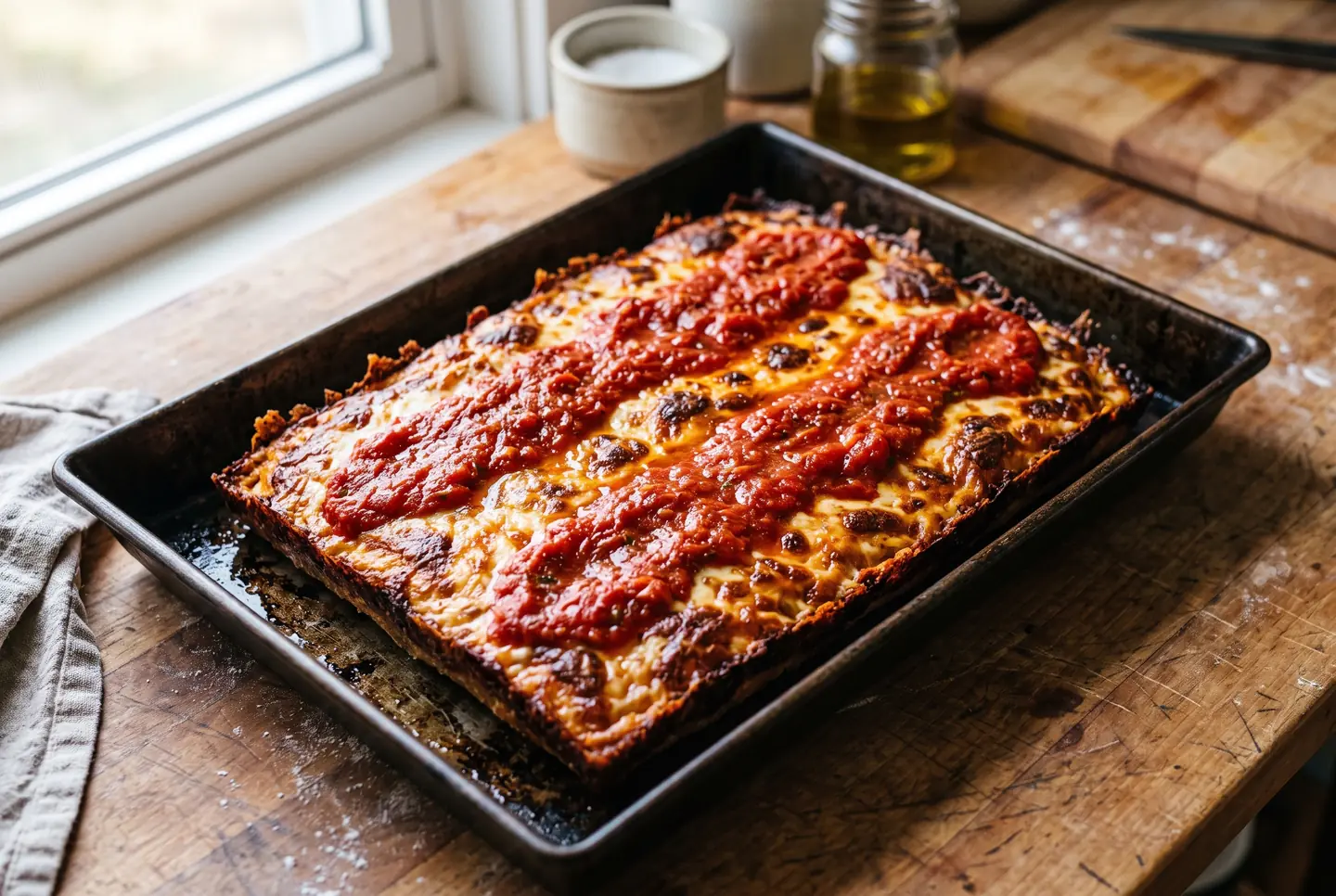
The one thing that trips people up about making a Detroit pizza is the order. A normal pizza goes dough, then sauce, then cheese. A Detroit is built upside down: cheese first, straight onto the dough and out to the edges, then the toppings, and the sauce goes on last, over the top. Get that order right and everything else is just patience.
That reversed order is not a quirk, it is the whole design. Because the sauce is the final layer, the style is sometimes called "red top," and that top sauce is why the crust does not get soggy and the cheese stays anchored to the rim. This page is the deep version of the assembly step from the complete Detroit-style pizza guide; for exact quantities and timings, follow the step-by-step recipe.
The order, and why it is flipped
On a classic round pizza the sauce protects the crust from the cheese and toppings. On a Detroit, the pan and the frico change everything, so the layers flip. The cheese needs to touch the dough and the oiled walls to caramelize, and the sauce needs to stay off the base so the bottom fries crisp instead of stewing. Put those two needs together and the order writes itself.
| Layer | Round pizza | Detroit pizza |
|---|---|---|
| On the dough | Sauce | Cheese, to the edges |
| Middle | Cheese | Toppings |
| Top | Toppings | Sauce ("red top") |
If your homemade Detroit keeps coming out with a damp, pale bottom, the layering is the first thing to check. Sauce under the cheese is the most common reason a good dough bakes up soggy.
Step by step
Assume the dough has already had its cold rise and is puffing in the oiled pan, and the oven is hot. From here the build is quick. This is the assembly; the dough, the pan and the cheese each have their own page if you want the detail.
- Dimple the risen dough gently with oiled fingertips so it holds its air but sits level.
- Lay the cheese on in cubes or a coarse shred, pushing it all the way to the walls of the pan. The edge is where the frico forms, so load it generously.
- Add your toppings over the cheese. If you use pepperoni, it can go under the cheese or on top, depending on the look you want (more on that below).
- Spoon the cooked sauce on last, in a few stripes or scattered dollops. Do not cover the whole surface; you want cheese and sauce both visible.
- Bake until the top is set and the edges are deep golden and crisp, then run a knife or offset spatula around the rim to free the frico before lifting the pizza out.
The whole assembly takes two minutes. The reason to keep it fast is that the puffed dough is delicate; work gently and let the oven do the transforming.
Why the sauce goes on top
Sauce on top is the move that defines the style, and it solves two problems at once. First, it keeps the base crisp: with no wet sauce sitting on the dough, the oiled bottom fries clean and the crust does not get soggy. Second, it protects the cheese: the sauce on top means the cheese stays anchored to the rim instead of being pushed around, so the frico sets where you want it.
There is a timing variant worth knowing. Many pizzerias bake with the sauce already on top, while others add the sauce after the pizza comes out of the oven, so it stays bright and fresh. Both are traditional. Baked-on sauce melds into the pizza; after-bake sauce tastes livelier. Try each and keep the one you like.
Racing stripes or full cover
You do not blanket a Detroit in sauce. The classic look is stripes, two or three lines of sauce run down the length of the pizza, the famous "racing stripes," or a scatter of dollops. Leaving cheese and toppings showing between the stripes is part of the style, and it keeps any single bite from being all sauce.
| Sauce style | Look | Best for |
|---|---|---|
| Racing stripes | Two or three lines down the pan | The classic Detroit look |
| Dollops | Scattered spoonfuls | Even coverage without drowning it |
| After-bake stripes | Added out of the oven | Brightest, freshest tomato flavor |
Use a thick, cooked sauce, not a thin raw passata. A loose sauce spreads and slides; a reduced one holds its stripe and does not water down the top.
Where the pepperoni goes
Pepperoni is the one topping with two right answers. Placed directly on the crust, under the cheese, its fat seeps into the dough and it cups and crisps under the cheese blanket. Placed on top of the cheese, it curls into crisp little cups in the open air. Neither is wrong; they are just two different textures.
Other toppings follow the cheese, tucked over it before the sauce. Keep them light: a Detroit is already a rich, deep pizza, and a mountain of toppings weighs down the airy crumb the dough worked so hard to build. A few well-placed things beat a heavy pile.
Common assembly mistakes
Most Detroit assembly problems come down to the order or the sauce, and each has a quick fix.
| Mistake | What happens | Fix |
|---|---|---|
| Sauce under the cheese | Soggy, pale base | Sauce goes on top, always |
| Cheese short of the walls | No frico, bready edge | Push cheese to the metal |
| Sauce covering everything | Wet top, no frico showing | Use stripes or dollops, not a blanket |
| Thin, raw sauce | Watery top, spreads out | Cook and reduce the sauce first |
| Heavy topping pile | Dense, weighed-down crumb | Keep toppings light and few |
Fix the order first. Nine times out of ten, a Detroit that disappoints was built like a normal pizza, and simply flipping the layers is the whole repair.
Frequently asked questions
What order do you build a Detroit-style pizza? Cheese first, straight onto the dough and out to the edges, then toppings, then sauce on top. It is built upside down compared to a normal pizza, and that reversed order is what gives the crisp base and the caramelized cheese edge.
Why does the sauce go on top of Detroit pizza? Sauce on top keeps the crust from getting soggy and keeps the cheese anchored to the rim so the frico sets. Because the sauce is the last layer, the style is sometimes called "red top."
What are the racing stripes on Detroit pizza? They are the two or three lines of sauce spooned down the length of the pizza after baking or before it, the classic Detroit look. You can also use scattered dollops. The point is to leave cheese and toppings showing rather than blanketing the top in sauce.
Do you put pepperoni under or over the cheese? Both are traditional. Under the cheese, the pepperoni fat seeps into the dough and it crisps beneath the blanket; on top, it cups and crisps in the open. Choose the texture you prefer.
Can I add the sauce after baking? Yes. Many people add the cooked sauce once the pizza is out of the oven so it stays bright and fresh. Baking the sauce on melds it into the pizza; adding it after keeps the tomato flavor livelier.
Why is my homemade Detroit pizza soggy? Almost always because the sauce went under the cheese. Build it in the Detroit order, cheese on the dough, sauce on top, and use a thick cooked sauce rather than a thin raw one, so no water sits on the base.
Flip the order and the rest falls into place: cheese to the walls, toppings, then a few stripes of sauce over the top. It feels backwards the first time and completely obvious by the second.
Where I checked
Keep reading
 Guide
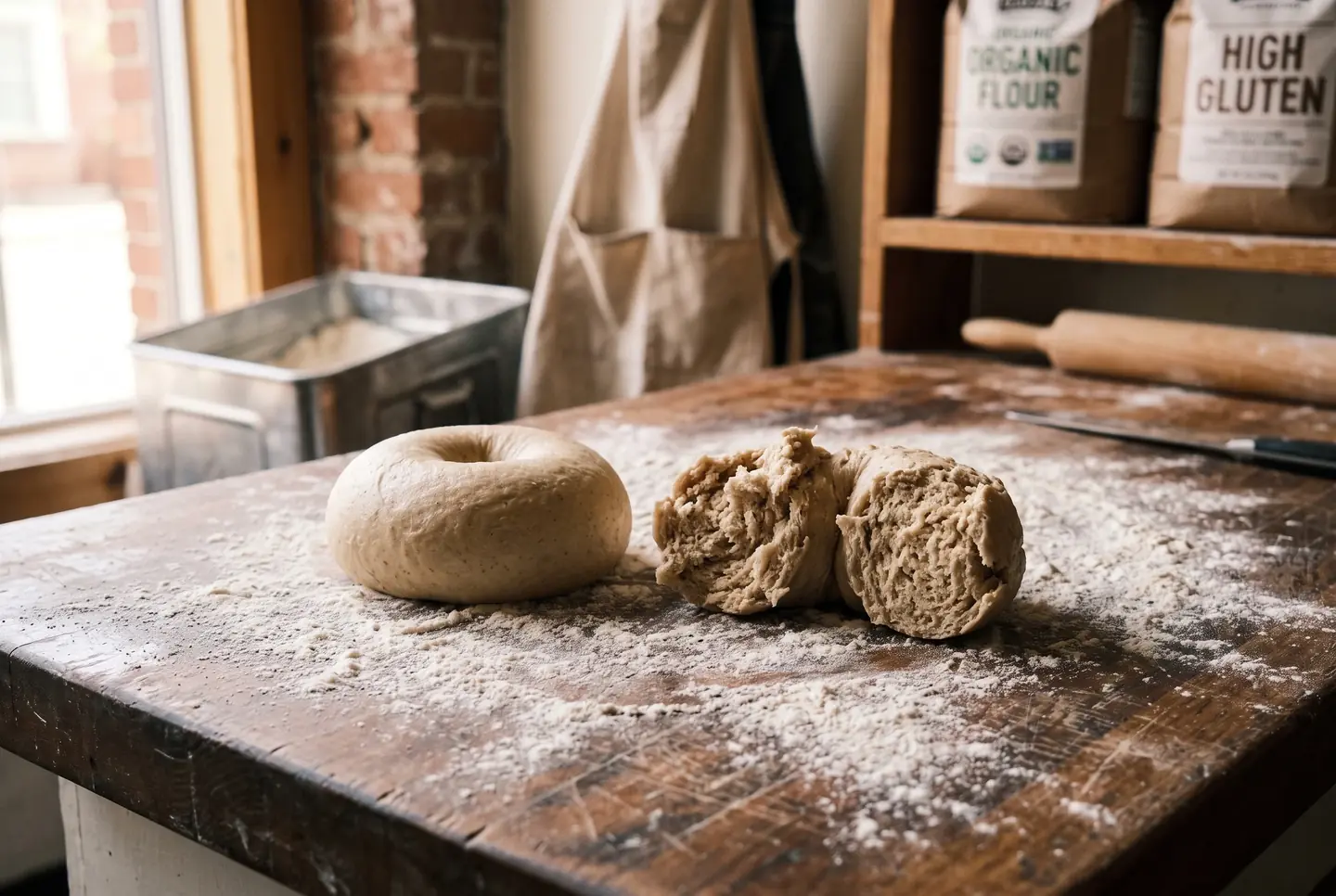
Bagel Dough: Why It Is So Firm, and How to Knead It
Bagel dough feels stiff and dry on purpose. Here is why it runs at 50 to 60% water and high protein flour, how to knead it, and the windowpane to aim for.
6 min read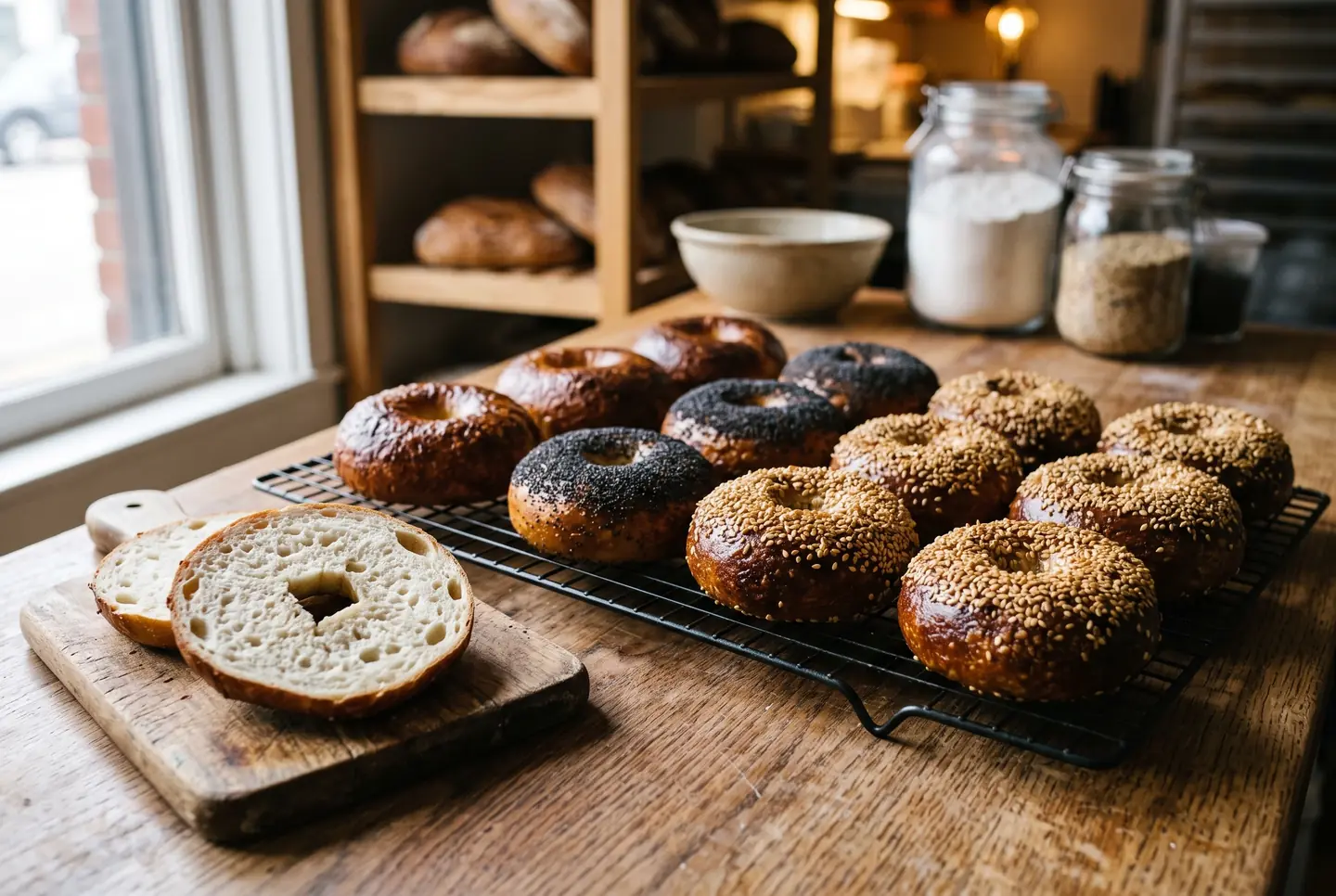 Guide
Bagel Recipe: New York Style, Step by Step
A weight-based New York bagel recipe, step by step: the firm 58% dough, an overnight cold retard, how long to boil, and the oven heat that sets a glossy crust.
6 min read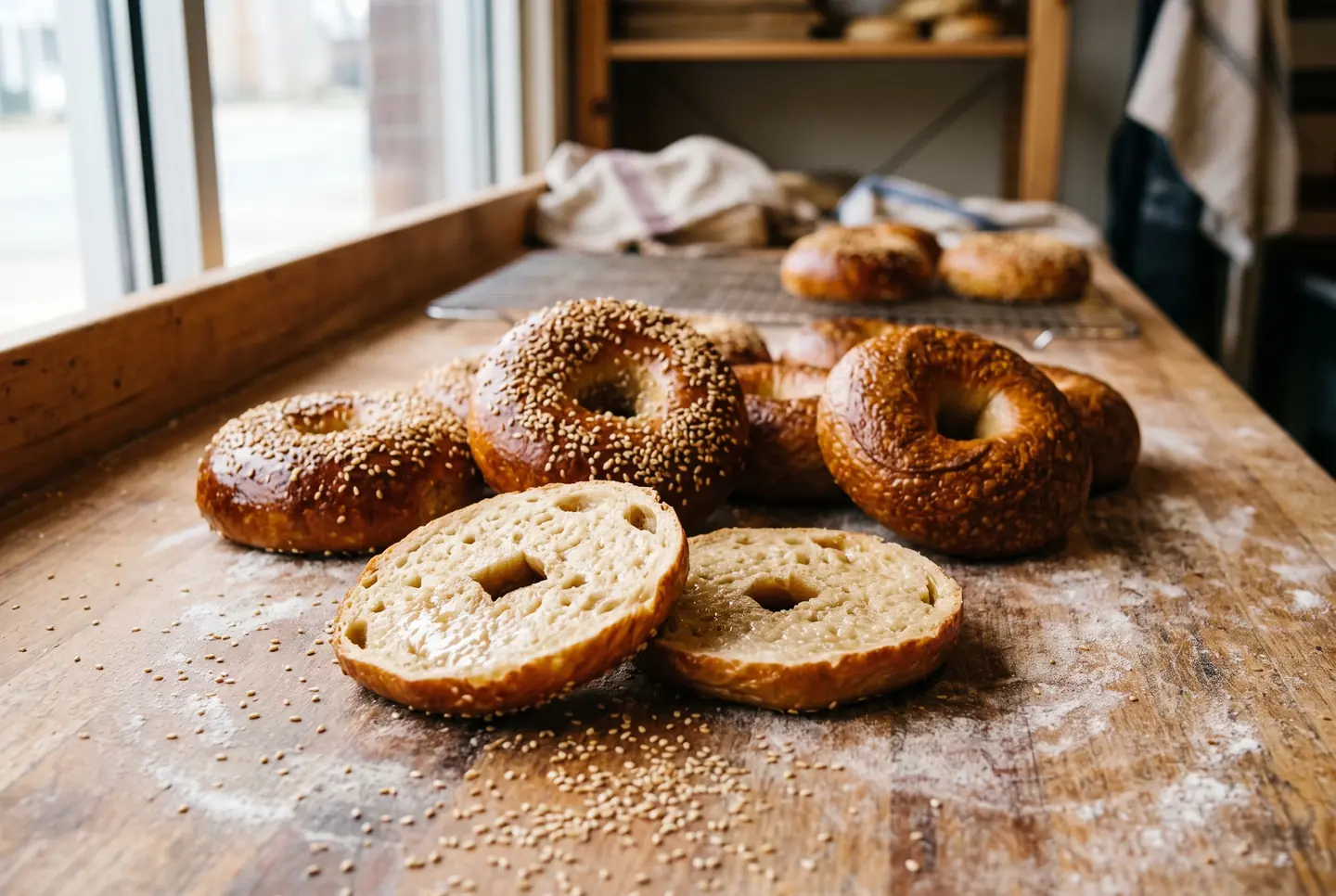 Complete guide
Bagels: The Complete Guide
Make a real bagel at home: the firm 58% dough, why bagels are boiled before baking, New York vs Montreal, sourdough and gluten free, and how to fix flat ones.
18 min read