Guide
Detroit Pizza Dough: High Hydration, Made Easy
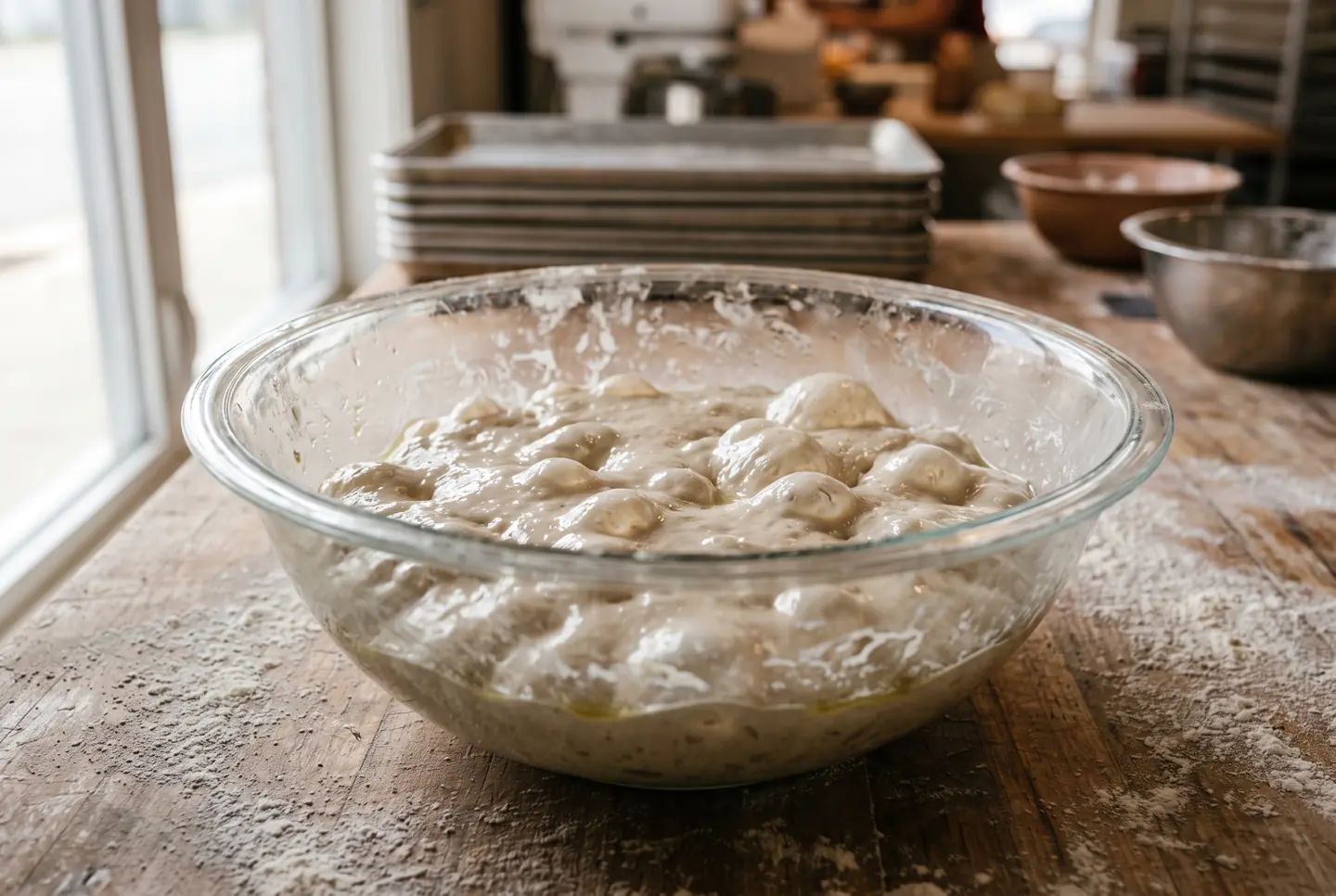
Detroit pizza dough is wet, and that is the whole point. It sits around 70% hydration, which means about 70 grams of water for every 100 grams of flour, and some recipes push to 72 or 75%. That much water is what gives the inside its open, almost focaccia-like holes and its light chew, while the oiled pan fries the bottom crisp underneath. If your Detroit comes out tight and bready, the dough was almost always too dry.
The wet dough is also why people panic: it is sticky, it does not behave like a stiff pizza ball, and it will not stretch by tossing. The fix is not less water. It is a strong flour, a slow cold rise, and pressing the dough into the pan instead of stretching it in the air. This page is the deep version of the dough step from the complete Detroit-style pizza guide; if you want the full build and bake in one place, the step-by-step recipe has it.
Why so much water
Hydration is just the ratio of water to flour, written as a baker's percentage, and Detroit lives high on that scale. Guides on pizza dough hydration place pan styles like Detroit in the 70 to 75% band, with 72% as the common middle, precisely because the pan does the shaping work and lets you run the dough slacker than a hand-tossed round could survive.
The water is not just for softness. As the dough bakes, the extra moisture turns to steam inside the crumb, and that steam is what blows the open holes and sets a thin, crackling shell instead of leaving the inside gummy. Counterintuitive as it sounds, more water gives you a lighter, drier eating texture, not a soggier one, as long as the oven is hot enough to drive it off.
| Hydration | Crumb result | Handling |
|---|---|---|
| Around 65% | Tighter, more bread-like | Easy to handle, less open |
| 70 to 72% | Open, airy, the Detroit standard | Sticky but workable with a rest |
| 75% and up | Very open, focaccia-like | Slack, needs a cold rise and a light touch |
Start near 70% for your first one. It is forgiving, it fills the pan, and it teaches you what a Detroit crumb should feel like before you chase the wetter end.
The flour that holds the water
Water alone does not make an open crumb. Something has to trap it, and that something is gluten. Use a strong bread flour, not all-purpose. Bread flour carries more protein, in the range of 13 to 14%, and general guidance on hydration notes that higher-protein flour absorbs more water and comfortably handles the 65 to 80% range that Detroit sits in. All-purpose, at around 10 to 12% protein, turns to soup at 70% and bakes up flat.
The protein builds the gluten network that holds all that water in a real structure, so the dough puffs in the pan instead of spreading into a puddle. If bread flour is all you change, a struggling Detroit dough often comes together on the next try.
Let the fridge do the work
The single move that makes a wet Detroit dough easy is time in the cold. A slow rise in the fridge, over one to two days, does three things at once: it deepens the flavor, it firms the sticky dough enough to handle, and the long enzyme activity relaxes the gluten so the dough stretches without fighting back.
There is a catch worth knowing. At high hydration the gluten is already under stress, and a cold ferment makes the dough even slacker the longer it goes, so a 72-hour dough is looser than a 24-hour one. To keep it from over-fermenting on that timeline, cut the yeast back: hydration guides suggest reducing yeast by 30 to 40% for extended cold ferments above 65%, and many overnight Detroit recipes run as low as 0.3 to 0.5% instant yeast for exactly this reason.
| Rise plan | Yeast (instant) | Notes |
|---|---|---|
| Same-day, warm rise | About 1% | Fastest, less flavor development |
| Overnight in the fridge | 0.5% or so | The sweet spot for most home cooks |
| Two to three days cold | 0.3 to 0.5% | Best flavor, slackest dough, handle gently |
Pull the dough out and let it warm and proof in the oiled pan for a few hours before baking, so it is puffed and at room temperature when it hits the oven.
A starting frame in weights
Numbers help, but hold them loosely. This makes enough for one small rectangular pan, roughly 20 by 25 cm (8 by 10 inches). Scale the flour up or down for a bigger or smaller pan and keep the percentages the same.
| Ingredient | Amount | Baker's percentage |
|---|---|---|
| Bread flour | 250 g | 100% |
| Water | 175 g | 70% |
| Salt | 5 g | 2% |
| Instant yeast | 1.5 to 3 g | 0.6 to 1.2%, lower for a long cold rise |
| Olive oil (in the pan, not the dough) | 15 to 20 g | for frying the base |
The one number to protect is the water. Keep it near 70% and the crumb stays open. The oil belongs in the pan, not the dough: it is there to fry the bottom, not to enrich the crumb.
Stretching without tearing your hair out
You do not toss Detroit dough, you coax it. A wet dough resists being forced, but it goes wherever you want if you give it a rest. The move is stretch, rest, stretch:
- Oil the pan well and lay the risen dough in the middle.
- Press and stretch it toward the corners with oiled fingertips, as far as it wants to go without tearing.
- When it springs back, stop. Cover it and walk away for ten minutes so the gluten relaxes.
- Come back and stretch again. It will now reach the corners with no fight.
Trying to force it to the corners in one go is the most common reason a Detroit dough will not fill the pan and tears instead. The gluten is tight straight out of the fridge; ten minutes of patience does what muscle cannot.
Where the dough goes wrong
Most dough problems trace to one of a few causes, and each has a plain fix.
| Symptom | Likely cause | Fix |
|---|---|---|
| Dense, bready inside | Too little water, or underproofed | Raise water toward 70%, give a full rise in the pan |
| Dough spreads into a puddle | All-purpose flour, or hydration too high for the flour | Switch to bread flour, or drop the water a little |
| Will not reach the corners | Gluten too tight, stretched in one go | Stretch, rest ten minutes, stretch again |
| Flat, no puff in the pan | Yeast dead, or not enough proof time | Fresh yeast, let it puff at room temperature before baking |
| Sticky and unmanageable | Skipped the cold rise | Chill it: cold dough is far easier to handle |
The pattern behind almost all of them is that Detroit dough wants water, time and a light hand, in that order. Give it those and the pan and the heat do the rest.
Frequently asked questions
What hydration should Detroit pizza dough be? Around 70%, meaning 70 grams of water per 100 grams of flour, with the common range running 70 to 75%. That much water is what gives the open, airy crumb. Start near 70% for your first one and push higher once you are comfortable handling a wet dough.
What flour is best for Detroit pizza dough? A strong bread flour, roughly 13 to 14% protein. The extra protein builds the gluten that holds all that water into a structure. All-purpose flour, around 10 to 12% protein, cannot handle 70% hydration and bakes up flat and dense.
Can I make Detroit dough the same day? Yes, with a warm rise and a little more yeast, but a slow cold rise in the fridge over one or two days gives more flavor and, surprisingly, an easier dough to handle. If you go long, cut the yeast back so it does not over-ferment.
Why is my Detroit dough so sticky? High-hydration dough is sticky by nature, and that is normal. A rest in the fridge firms it up, and oiled fingertips plus the stretch-rest-stretch method let you handle it without adding flour, which would dry out the crumb.
Do I put oil in the Detroit dough? No. The oil goes in the pan, not the dough. Its job is to fry the bottom of the crust crisp. The dough itself is just flour, water, salt and yeast.
How long does Detroit dough need to proof in the pan? After the cold rise, let it warm and puff in the oiled pan for a few hours until it looks airy and has reached room temperature. Baking it straight from the fridge gives a denser, less risen crumb.
Get the water right and the rest is patience. Keep it near 70%, let the fridge tame it, and stretch it in two goes with a rest between: that wet, slack dough is the whole reason a Detroit tastes the way it does.
Where I checked
Keep reading
 Guide
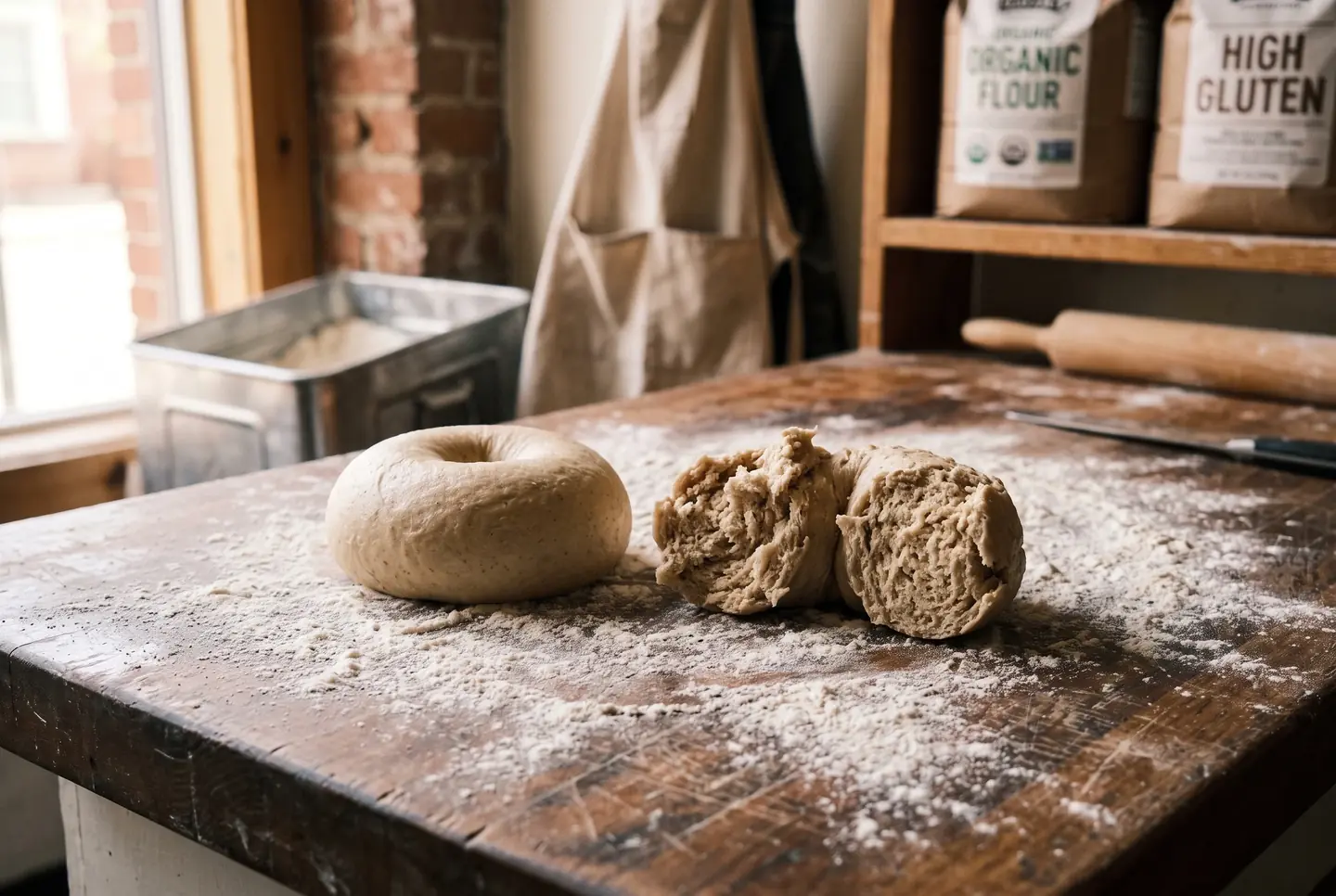
Bagel Dough: Why It Is So Firm, and How to Knead It
Bagel dough feels stiff and dry on purpose. Here is why it runs at 50 to 60% water and high protein flour, how to knead it, and the windowpane to aim for.
6 min read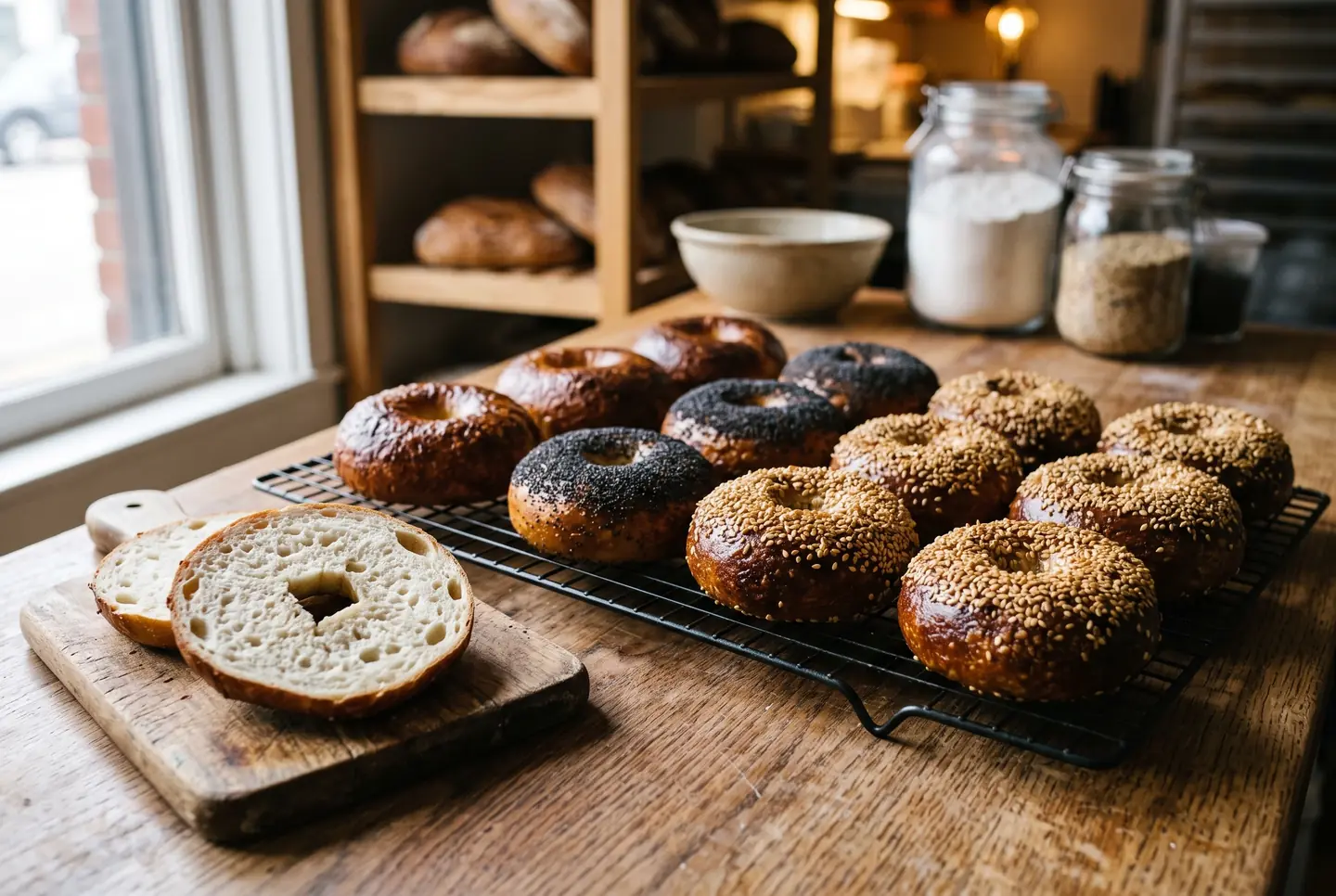 Guide
Bagel Recipe: New York Style, Step by Step
A weight-based New York bagel recipe, step by step: the firm 58% dough, an overnight cold retard, how long to boil, and the oven heat that sets a glossy crust.
6 min read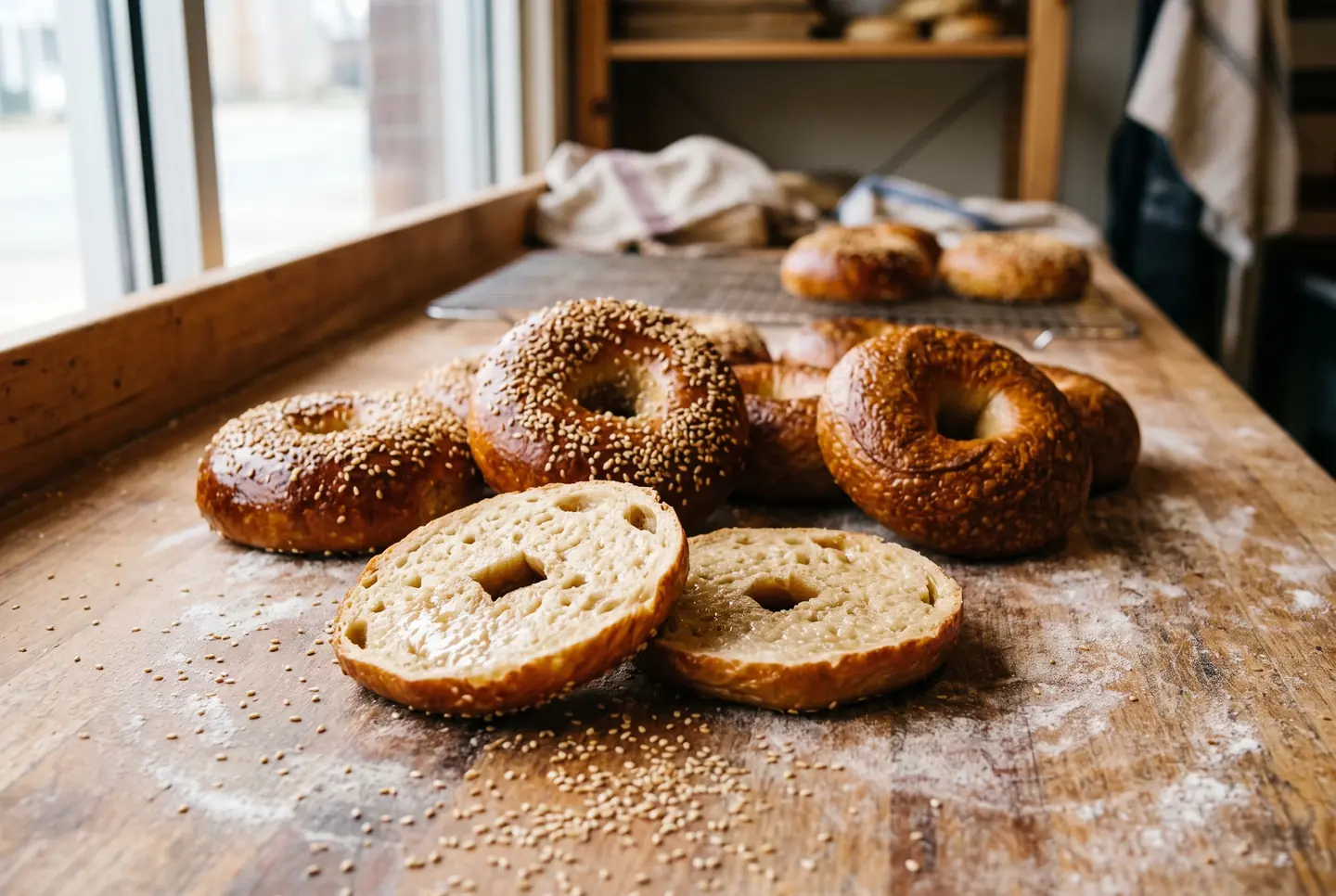 Complete guide
Bagels: The Complete Guide
Make a real bagel at home: the firm 58% dough, why bagels are boiled before baking, New York vs Montreal, sourdough and gluten free, and how to fix flat ones.
18 min read